The Affair of the Sausages: History for March 9

The idea that the Protestant Reformation began with Martin Luther nailing the ninety-five theses to the door of All Saints’ Church in Wittenberg, Germany is fairly well known.  Less known is that the spark for Reformation in nearby Switzerland was a controversy over sausages.

March 9th was the first day of Lent in 1522, and Huldrych Zwingli, a pastor in Zurich, Switzerland, was the guest of printer Christoph Froschauer, who published some of Zwingli’s sermons and later his translation of the Bible into German.  Froschauer, working long hours with his staff, invited Zwingli to dinner on March 9th and served slices of smoked sausage to fortify everyone for the work ahead.  However, during Lent eating meat was illegal under the Catholic church-run government at the time, and Zwingli was arrested along with others at the dinner.

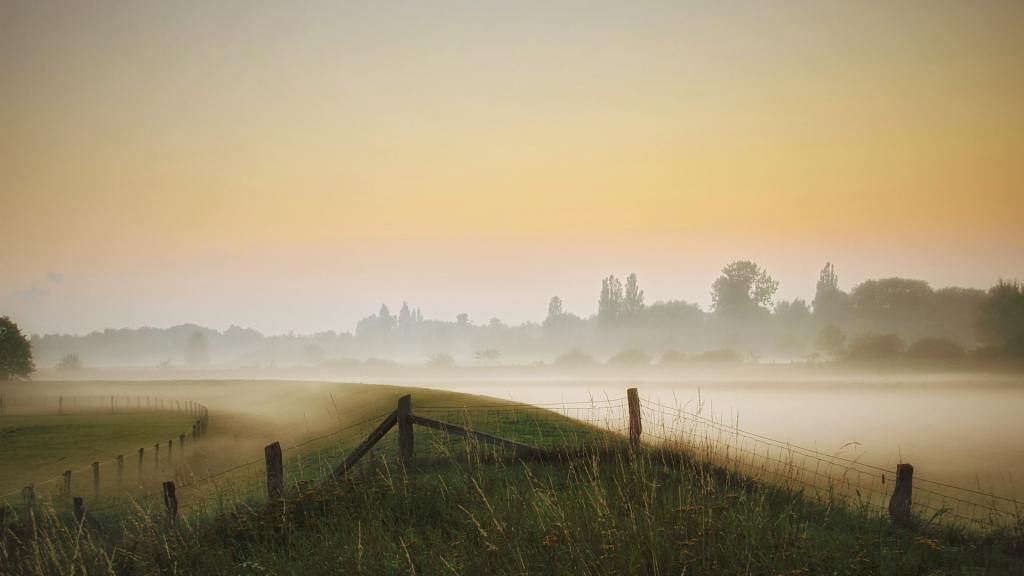
Photo by Rich Smith on Unsplash

Zwingli said he did not eat any sausage and so was spared the indignity of arrest, but the event was a turning point for him, and about one month later he preached a sermon titled “Freedom of Choice and Selection of Food” where he argued for freedom of conscience regarding observance of Lent.  The sum of the sermon was: “if you want to fast, do so; if you do not want to eat meat, don’t eat it; but allow Christians a free choice.”[1]

Zwingli, having previously been only loosely connected to Martin Luther and other Reformation figures and ideas, was appalled by the prioritization of state and priestly authority over the authority of God in each person’s heart:

“If you would be a Christian at heart, act in this way. If the spirit of your belief teaches you thus, then fast, but grant also your neighbor the privilege of Christian liberty, and fear God greatly, if you have transgressed his laws, nor make what man has invented greater before God than what God himself has commanded…You should neither scorn nor approve anyone for any reason connected with food or with feast days whether observed or not.”

Also in the sermon, Zwingli emphasizes the “why” a Christian does what he does over the “what”:

“Here is another sign of the times. I think that there is danger of this age being evil and corrupt rather than reaching out towards everlasting righteousness. Further, simple people think everything is all right if they go to confession in Lent only, observe the fast, take Communion and thus account for the whole year. God should, however, be acknowledged at all times and our life should be one of piety, whereas we act to the contrary when we think that it is quite enough if we pay attention only to the times of fasting whereas Christ says, ‘Be vigilant: for you know not the day or the hour’”

In an earlier post on Lent, I wrote that whatever our liturgy, it is useless as a “bargaining chip” with God, and that “if we do not value the prize – God Himself – nothing we give up for Lent will make us – or God Himself – happy.”  Zwingli became a forceful voice during the Reformation arguing that external pressure from church and state can strip us of grace and enslave us to legalism, but he also recognized with Paul that “Every athlete exercises self-control in all things[2]  Self-control cannot be forced by others, but in search of an “imperishable” prize, each should prayerfully consider the disciplines that help them better serve God, in accordance with His word, while showing grace towards others who God may ask to behave differently.  Not all athletes compete in the same events and train the same way.

Closing Note
I once considered naming this blog “Lenten Sausages” after the events described above, but that might have defined the blog as what it’s against.  Instead, the current name emphasizes the common destiny of all for whom Christ was crucified.  Every Christian became one because of Christ.  Before there were Protestants there were Christians.  Many of them.  After there were Protestants there are Catholic believers and Protestant nonbelievers, and vice versa.  One man’s liturgy is sometimes another man’s legalism.  Regardless of what’s on the sign in front of your church, it’s what’s inside that matters.

Soli Deo Gloria


[1] Zwingli, Huldrych.  “Freedom of Choice and Selection of Food.”  (1522)
[2] 1 Corinthians 9:25

Victory by Storm: History for March 5

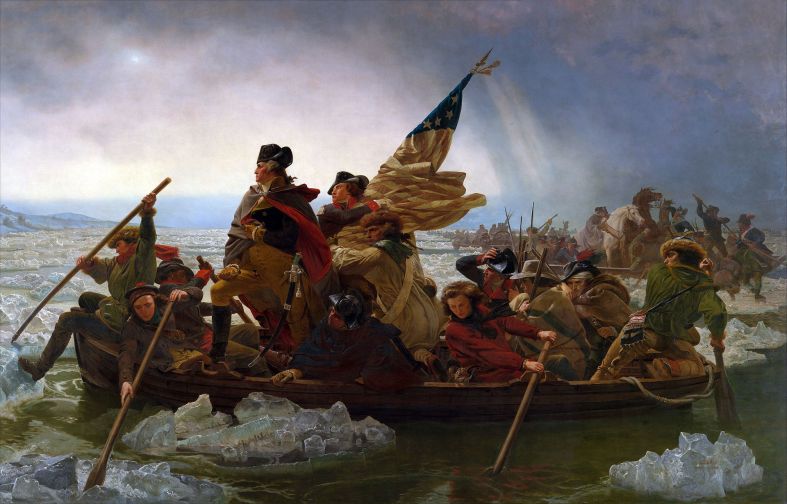
During the American Revolutionary war, British troops besieged Boston leading to a long stand-off with troops led by George Washington.  Seeking a decisive move to gain advantage and end long weeks of inactivity that weighed on troop morale, George Washington ordered his men to fortify Dorchester Heights, a hill overlooking Boston, in the middle of the night.  These fortifications included artillery that had been painstakingly snuck down from Fort Ticonderoga over rough winter terrain by boat and sleds pulled by oxen.  These cannons had earlier been abandoned by the French.  The date of March 5th was intentionally chosen by Washington in part because it was the 6-year anniversary of the Boston Massacre, giving it symbolic meaning and motivating the troops.

On the morning of March 5th, the British awoke to find the Heights fortified, “with an expedition equal to that of the genie belonging to Aladdin’s wonderful lamp”, according to an unattributed letter to London newspapers.  Some, remembering losses sustained at Bunker Hill, urged retreat, but British General Howe was determined to drive the Americans off the Heights.  However, sudden, sustained storms including high winds and sleet, caused Howe to reconsider, leaving no option but to evacuate Boston.[1]

Because of this sudden change in weather, a long, deadly battle was avoided, and Boston was surrendered by the British without loss of life on either side.  This would not be the last time that weather – or Providence – would play a key role in the American struggle to break away from British rule.

Let every people and nation seek the LORD this day, who can wield nature itself in favor of – or against – the very nations.

“Are there any among the false gods of the nations that can bring rain?
            Or can the heavens give showers?
Are you not he, O LORD our God?
            We set our hope on you,
            for you do all these things.” – Jeremiah 14:22


[1] McCullough, David.  1776 (2005).  P. 90-97.

“Consider Well Her Ramparts”: Participating in the Psalms

Reading the Psalms is a great devotional habit, and every now and then a Psalm or a section of a Psalm gives instructions to its reader.  The author is inviting us to participate in something about God that they have experienced by taking specific actions.  Earlier posts on participating in the Psalms (here, here, and here) have covered Psalms 96 and 100, which asked us to sing a new song and to give thanks, respectively.  Today’s post is about Psalm 48, which is a little harder to see how to participate.  Most of the Psalm praises God by talking about His city, Jerusalem, and His mountain, Mount Zion.  If our God’s dwelling place is worthy of praise, then He must be as well.  The “participating” part comes at the end, with verses 12-14:

Walk about Zion, go around her,
            number her towers,
consider well her ramparts,
            go through her citadels,
that you may tell the next generation
            that this is God,
our God forever and ever.
            He will guide us forever.

The Psalmist wrote in ancient times that it was worth it to take the time to walk around Zion, to consider the things of God and not just gloss over them quickly, but how do we do that when Christians do not consider Jerusalem and Mount Zion to be the dwelling place of God?  How do we “consider well her ramparts”?

Photo by Boris Izmaylov on Unsplash

Currently, what was represented by the temple in Jerusalem on Mount Zion is represented by His body of believers, indwelt by His Holy Spirit.  Peter wrote that members of the church, “like living stones are being built up as a spiritual house, to be a holy priesthood, to offer spiritual sacrifices acceptable to God through Jesus Christ.”[1]  Therefore, do we participate in this Psalm by considering God’s strength through the church throughout history?  When we consider the “towers”, “ramparts”, and “citadels” of the church, do we consider the great “cloud of witnesses” listed in Hebrews 12, in addition to the faithful members of the church through the centuries since then?

Do we consider well not only the strength God has given His church through history, but also the strength that He protects it with even now?  Do we consider our own “ramparts” – the armor of God listed in Ephesians 6:13-17 –

Therefore take up the whole armor of God, that you may be able to withstand in the evil day, and having done all, to stand firm.  Stand therefore, having fastened on the belt of truth, and having put on the breastplate of righteousness, and, as shoes for your feet, having put on the readiness given by the gospel of peace.  In all circumstances take up the shield of faith, with which you can extinguish all the flaming darts of the evil one; and take the helmet of salvation, and the sword of the Spirit, which is the word of God.

Consideration takes time, so to participate in this Psalm take some time, if not today then soon, to consider God’s strength as shown through a person in the Bible, in church history, or even your own community or family.  Praise God for His strength and protection over His faithful!

As the “Sons of Korah” who wrote Psalm 48 believed, it’s worth the time and effort to:

Walk about Zion, go around her,
            number her towers,
consider well her ramparts,
            go through her citadels,
that you may tell the next generation
            that this is God,
our God forever and ever.
            He will guide us forever.

Many of this blog’s posts on History (click here) are a decent starting point.


[1] 1 Peter 2:5

From the Ruins of Rome

I really enjoy travelling when I can and one of my favorite places is Bath, England, which I’ve visited twice.  Bath is almost a 3-hour drive west of London and a great place to spend a weekend.  The relatively consistent Georgian architecture in the city is amazing, there are lots of interesting shops to visit, including along the Pulteney Bridge, and certainly a lot of history.  What the city is really known for, and what it is named for, are the Roman Baths that have been there for over 2,000 years.

A photo of the Roman Baths I took in 2022.

Built by the Romans around AD 60 and in use until about the 5th century, the Roman Baths are a symbol of the geographical breadth and technological achievement of the Roman Empire, the greatest civilization the world had ever seen.  Britain was about as far away from Rome one could go and still be in the Empire, and the city was almost like a resort for Roman soldiers to help them deal with being stationed so far from home.  The Romans believed the hot waters of the baths contained magical blessings from the goddess Sulis, and much later in the Victorian Era, the British would drink the hot spring water believing it had healing properties.

The baths themselves were an impressive engineering accomplishment for the time.  In addition to a complex series of baths and springs, a temple was built alongside to facilitate the worship of Sulis and other gods.  One of the most amazing things you learn when visiting the baths is that many of the pools were lined by the Romans with interlocking copper tiles, and that many of these are still waterproof today!

But, as great as Rome was, and the baths were, it is now just ruins.  The gods worshiped at the baths are mostly forgotten by the modern world.  Over time, the Roman Baths were completely abandoned and buried, only rediscovered centuries later.  The springs were used in the early 1700s, but much of what we can now see of the Roman Baths was not excavated until the late 1800s and early 1900s, but they remain in ruins.

The view of the Abbey from the Baths in 2022.

What I like better about visiting Bath is what you see when you look up from the Roman Baths: Bath Abbey, one of my favorite buildings.  Like the stone from Daniel’s vision that destroyed the image of this world’s kingdoms and “became a mountain that filled the while earth[1], the Abbey to me symbolizes the expansion of God’s eternal church, and when you look up at the Abbey from within the baths, it almost seems to have risen right out of the ruins.

Mankind likes to celebrate our achievements, our breadth of knowledge and technological achievement, but the view of the Abbey from the ruins of the Roman Baths reminds us that all human civilization will one day be less than ruins.  Even Bath Abbey won’t last forever, but the church it represents will, in a new earth.  God will discard this world, which will “wear out like a garment” and He will “change them like a robe.”[2]  Starting over, God will create a new, perfect world where all of our accomplishments will seem as nothing in comparison, and where we will be able to create even more amazing things as reborn children of God, giving God all the glory.

Until then, thinking of Bath, England reminds me that everything we see here is temporary, no matter how impressive it seems.  That all of our work here should be done for the glory of God, as it will be in heaven.  That everything man accomplishes here won’t last, but that God’s church is eternal.

Amen.


[1] Daniel 2:35
[2] Psalm 102:26

Let Justice Roll: History for Today

On January 15, 1929, Dr. Martin Luther King Jr. was born in Atlanta, Georgia.  A leader in the U.S. civil rights movement in the 1950’s and 60’s, he is the only non-president to have a national holiday in his name, celebrated on the 3rd Monday of every January. During this holiday, many will cite positives and negatives from King’s life and legacy, and here I will focus on one, specific positive.

His father and maternal grandfather had both been pastors of Ebenezer Baptist Church in Atlanta, and he carried this religious heritage into his own studies and activism.  In pastor Tim Keller’s book “Making Sense of God” he writes that the strength of King’s arguments comes from his knowledge “that human rights have no power if they are simply created by a majority or imposed by judicial fiat. They have power only if they are really ‘there,’ existing on their own, dependent only on the fact that the wronged person before you making the claim against you is a human being.”[1]

King applied the teaching that “God created man in His own image” from Genesis 1:26-27 to argue that this image gives every person: “a uniqueness, it gives him worth, it gives him a dignity. And we must never forget this as a nation: there are no gradations in the image of God. Every man from a treble white to a bass black is significant on God’s keyboard, precisely because every man is made in the image of God.”[2]

A mighty stream. Photo by Daniel J. Schwarz on Unsplash

In one of my favorite quotes from King, he cites the American institutions of democracy and its founding documents, but knows that even these must be rooted in religious truth to be effective: “One day the South will know that when these dis­in­her­ited chil­dren of God sat down at lunch coun­ters, they were in re­al­ity stand­ing up for what is best in the Amer­i­can dream and for the most sa­cred val­ues in our Ju­deo-Chris­t­ian her­itage, thereby bring­ing our na­tion back to those great wells of democ­racy which were dug deep by the found­ing fa­thers in their for­mu­la­tion of the Con­sti­tu­tion and the De­c­la­ra­tion of In­de­pen­dence.”[3]

Keller continues in his chapter titled “A Justice That Does Not Create Oppressors” that “Martin Luther King Jr. did not ask white America to make African Americans free to pursue rational self-interest, their own individual definitions of a fulfilling life. Rather, quoting Amos 5:24, he called them to not be satisfied until ‘justice rolls down like waters, and righteousness like a mighty stream.’[4]  God provides, and demands, more than “life, liberty, and the pursuit of happiness.”

While His justice and righteousness will only be made fully manifest in eternity, when we bring a bit of it into this world, we provide something available no other way to our neighbors, communities and beyond.  We should not be satisfied with anything less.


[1] Keller, Timothy.  Making Sense of God (2016).  P. 199.
[2] From a sermon King preached at Ebenezer Baptist Church in Atlanta, Georgia on July 4, 1965.  Cited in Making Sense of God, P. 199.
[3] From “Letter from Birmingham Jail”, dated April 16, 1963.
[4] From King’s “I Have a Dream” speech in Washington, DC on August 28, 1963.  Cited in Making Sense of God, P. 199.