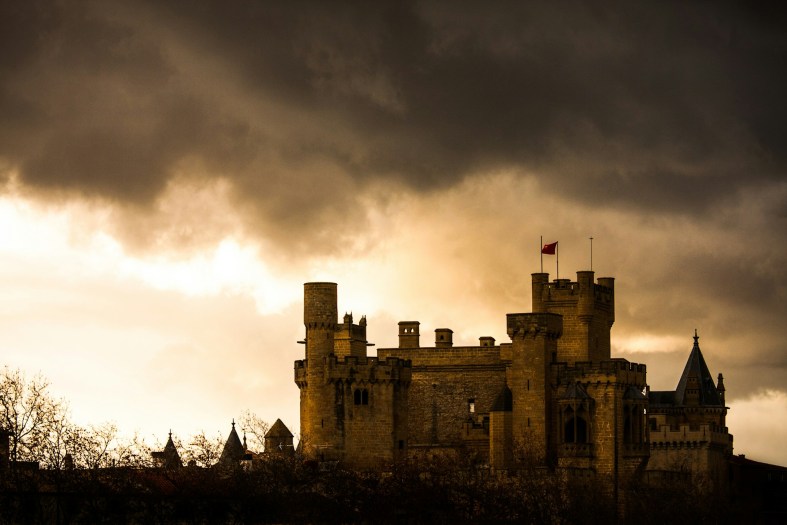
We Will Not Live in Tents Forever

The apostle Paul was likely one of the finest Old Testament scholars of his day, and sometimes draws on existing imagery to make a point.  One example might be Proverbs 14:11-12, where the second verse is more widely known than the first, but not unrelated:

The house of the wicked will be destroyed,
            but the tent of the upright will flourish.
There is a way that seems right to a man,
            but its end is the way to death.

Physically, it seems obvious that a house is far more durable than a tent, but both of these Proverbs tell us not to judge by appearances.  Looks and reputation may suggest otherwise, but it is righteousness that determines eternal destiny, specifically acceptance of Jesus’ righteousness.

In 2 Corinthians 5:1-3, Paul gives an example of why we should focus not on what “seems right”, but instead focus on the unseen things that matter for eternity, drawing on the tent image:

For we know that if the tent that is our earthly home is destroyed, we have a building from God, a house not made with hands, eternal in the heavens.  For in this tent we groan, longing to put on our heavenly dwelling, if indeed by putting it on we may not be found naked.”

Photo by Hendrik Morkel on Unsplash

Paul, defending his apostleship to the Corinthians amidst his suffering while other false apostles lived in ease, knew that an upright tent was better than a wicked house in God’s eyes, and therefore being less comfortable was entirely worth it, since there was an eternal reward waiting in heaven.

Commenting on 2 Corinthians 5, Warren Wiersbe notes that “Heaven was not simply a destination for Paul: it was a motivation.  Like the heroes of faith in Hebrews 11, he looked for the heavenly city and governed his life by eternal values.”[1]

When frustrated by your earthly limitations, or frustrated by discomfort in this world, know that we will not live in these tents forever.  For His faithful, God is preparing an eternal dwelling for us.  While it “seems right to a man” to think a house is better than a tent, every tent and house in this world is temporary.  Hebrews 1:12 says of all creation, the earth and all the heavens, that:

like a robe you will roll them up,
            like a garment they will be changed.
But you are the same,
            and your years will have no end.

Do we long for our new, eternal heavenly dwelling?  Does this longing motivate us to live for God?  Let us keep Driving Toward Morning today!


[1] Wiersbe, Warren.  Be Encouraged (2 Corinthians) (1994).  P. 69.

Christianity is Not in Decline. Ever.

The tomb is still empty!

Too much of what we hear and read in this world is filled with phrases like “post-Christian world,” or “Christianity’s decline.”  Or we could read that we’re “living in the ruins of Christendom.”  However, because Hebrews 11:1 says, “Now faith is the assurance of things hoped for, the conviction of things not seen,” our hope is not based on any ruin or decline we see in the communities and world around us.  While other things may end up in ruins or in decline, Christianity does not.  It was not in decline on Good Friday when Jesus died on the cross and it is not in decline now.

The best of the kingdom of God is always in the future, never in the past.  His kingdom is advancing daily.

Today, many will hear the good news of the kingdom of Jesus, and some may hear and be saved!  Also today, none will be snatched out of His hand! (See John 10:28)

When We Feel Downcast

We all have bad days.  Sometimes on those days it’s hard not to dwell on what’s gone wrong.  It’s hard not to make a list of the reasons why we’re feeling bad and focus on them.  It’s hard not to think about ways to immediately fix whatever problem we’re having.  However, Psalm 42 recommends a different approach.  Verse 6 of that Psalm ends with:

My soul is cast down within me;
            therefore I remember you
from the land of Jordan and of Hermon,
            from Mount Mizar.

When we feel like our “soul is cast down,” we might say therefore we need to spend our time thinking about why.  We might say therefore I’ll just feel bad for myself.  We might say therefore the world is a bad place, or therefore the universe is conspiring against us.

But I got helpful advice from a friend years ago that when you find a “therefore” in the Bible, you should ask what it’s there for.  Everything in the list above are not what this “therefore” is there for.

According to Psalm 42, the right “therefore” is to remember God.  The therefore is there to give us something to think about when we feel “cast down.”  But what does it mean to “remember” God?  How is it helpful?  It means to meditate on God’s works, in the world, in the Bible, and in our lives, as reminders that He is bigger than our problems.

We may have many, many reasons to feel down, and the Psalmist knows this.  In verse 7 is written:

Deep calls to deep
            at the roar of your waterfalls;
all your breakers and your waves
            have gone over me.

Breakers and waves – difficulties in life – can constantly come one after the other and can seem to have no end, especially if we dwell on them, but note that the Psalmist refers to the breakers and waves as “your breakers” and “your waves.”  They belong to God, and do not come to us without His permission.  Often its more natural for us to think “I need a solution” than to think “I need God,” but He is always what we need.

While difficulties can go on and on, God’s love has no end either, as written in verse 8:

“By day the LORD commands his steadfast love,
            and at night his song is with me,
            a prayer to the God of my life.”

His love is steadfast, meaning He cares for us “by day … and at night.”  He is always with us and ready to remind us of His love, even when all we can see are waves crashing over us.  If your soul is cast down, remember Him and His works.

Amen.

An Ebenezer in the Sky

Photo by Stainless Images on Unsplash

Ebenezer the squirrel, the blog’s mascot, represents memorials of God’s intervention in the world and in our lives.  The times when He changes the course of events, and when the narrative is changed by the words “but God.”  In the ESV Bible, this phrase appears 43 times, including:

But God remembered Noah and all the beasts and all the livestock that were with him in the ark. And God made a wind blow over the earth, and the waters subsided.” – Genesis 8:1

The phrase first was used in Genesis 3:3, when Eve says to the serpent, “but God said, ‘You shall not eat of the fruit of the tree that is in the midst of the garden, neither shall you touch it, lest you die.’”  As we know, Adam and Eve fell to temptation, eating the fruit and therefore providing us a warning that we should live by God’s words, not just quote them.

However, the second time we see “but God” it is a reminder that God intervenes to save sinners.  Sin started with one rejection of God’s word, but by Noah’s time, “the earth was corrupt in God’s sight, and the earth was filled with violence.  And God saw the earth, and behold, it was corrupt, for all flesh had corrupted their way on the earth.[1]  God had Noah build an ark for his family to escape the coming flood of judgement, and the last verse before Genesis 8:1 says, “the waters prevailed on the earth 150 days.[2]  Even for Noah and his family, the ones God chose to save, 5 months alone in an ark may not have felt like salvation.  “But God…made a wind blow over the earth, and the waters subsided.

Today, if salvation seems far away, if the flood around us feels like it’s not going away, even if it’s been months since we’ve had a “good day”, God gave us an Ebenezer especially for this occasion: the rainbow.  Genesis 9:14-16 says:

When I bring clouds over the earth and the bow is seen in the clouds, I will remember my covenant that is between me and you and every living creature of all flesh. And the waters shall never again become a flood to destroy all flesh.  When the bow is in the clouds, I will see it and remember the everlasting covenant between God and every living creature of all flesh that is on the earth.

When you see a rainbow, in the sky or anywhere, remember it as a sign of God’s love for His people, for sinners who rejected Him, but who He chose to save anyway.  He will deliver all of God’s children from the flood because His covenant is everlasting.


[1] Genesis 6:11-12
[2] Genesis 7:24

Meet Ebenezer, the Blog’s Mascot

Every blog needs a mascot, right?  Well, maybe not every blog, but I decided this one does.  Before I introduce him, a little backstory on where he came from.

Boston is one of my favorite places to visit, and when I was there in October 2022, we got this great picture of a squirrel in Boston Common.  The squirrels there ignore people most of the time, instead of running away like squirrels usually do.  But this one was not afraid of us at all; he walked right up and stared us down.  He stayed like this long enough for us to take a picture and was still around after we walked away.  For squirrels, fear of humans is a learned behavior and, in some environments, they just go about their business, unconcerned.

Ebenezer, at home in Boston Common

He was a great contrast to the “squirrel moments”[1] dogs (and people) have when they are “distracted by random nothingness.”  The Facebook page where I share this blog is called “A place to inject hopeful reminders of eternity into the distraction that is Facebook.”  I’ve used this squirrel as my social media picture before to joke that it was the best way to draw attention, and if people are easily distracted by squirrels, why not use one to distract people toward the blog?

So, this squirrel is now the mascot for Driving Toward Morning!  But he needs a name.  What to call him?

Meet Ebenezer
Many people know the name Ebenezer from Scrooge in A Christmas Carol, but in the Bible an Ebenezer is a stone monument constructed as a tangible and visible reminder of God’s past help for His people.  Ebenezer means “stone of help,” and such monuments were built in Genesis 28:18, 35:14, Joshua 4:9, 1 Samuel 7:12 and elsewhere.  When I write, I’m often trying to create a type of written Ebenezer.

For example, inspired by a devotional about Ephesians 2:4, I wrote a post about the power of the words “but God.”  In it, James Montgomery Boice says: “The words ‘but God’ show what God has done. If you understand those two words – ‘but God’ – they will save your soul. If you recall them daily and live by them, they will transform your life completely.”[2]

So, I’ve decided to name him “Ebenezer, the ‘But God…’ Squirrel,” but you can just call him Ebenezer.  Whenever I see Ebenezer, I hope to be pulled back into awareness of God’s help when I am distracted or frustrated.  I hope to be reminded to store up treasure in heaven as squirrels store food for the winter.  I hope to fear God and not man.  I hope to be encouraged to “pray without ceasing” (1 Thessalonians 5:17), as every squirrel I see reminds me that interrupting the seeming chaos of the world with “but God” can change everything.

Next time, and every time, you see a squirrel, I hope you are reminded of the same.  The world is not random, and God is relevant to your situation, whatever it is.

If you’re ever in Boston and see Ebenezer, say hello to him for me.


[1] https://www.urbandictionary.com/define.php?term=SQUIRREL%21%21
[2] From “November 7.” James Montgomery Boice and Marion Clark. Come to the Waters: Daily Bible Devotions for Spiritual Refreshment.  (2017).