Perfecting Faith Through Struggle

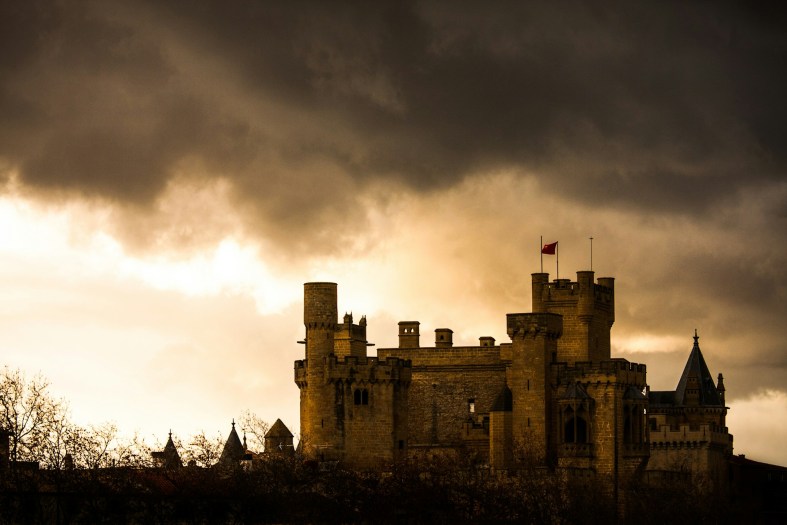
King David wrote many Psalms during the difficult times in his life.  Psalm 18, written “on the day when the LORD delivered him from the hand of all his enemies, and from the hand of Saul,[1] is a song David wrote to praise God for His deliverance from difficulties in the past.  David describes the depths of the troubles he faced in verses 4 and 5:

The cords of death encompassed me;
            the torrents of destruction assailed me;
the cords of Sheol entangled me;
            the snares of death confronted me.”

There were many moments where David faced enemies seeking to kill him, a situation we may never face.  But, like David we all face struggles and, while not literally life-threatening, some of them may feel like what David describes.  Our enemies may be external or internal, physical or spiritual, and Psalm 18 can be applied to them all.  David magnifies the powers that assailed him, which John Calvin wrote, “enhances and magnifies so much the more the glory of his deliverance. As David had been reduced to a condition so desperate that no hope of relief or deliverance from it was apparent, it is certain that he was delivered by the hand of God, and that it was not a thing effected by the power of man.”  David was truly in a desperate situation and sometimes we are too.

So, how can this Psalm help us in our struggles?  I’m going to focus on a only a few of the Psalm’s 50 verses, including verses 1 to 3:

I love you, O LORD, my strength.
The LORD is my rock and my fortress and my deliverer,
            my God, my rock, in whom I take refuge,
            my shield, and the horn of my salvation, my stronghold.
I call upon the LORD, who is worthy to be praised,
            and I am saved from my enemies.

Note that these verses come before the ones quoted earlier because before coming to God with his problems, David contemplated who God is and what he has learned about Him from experience.  When we’re struggling, we should also take the time to contemplate the nature of our God so we can get the right perspective.

David uses some military metaphors to tell us about God.  David says God is a rock, a fortress, a shield, a horn, and a stronghold.  These tell us that God:

  • is a rock, immovable by our enemies and our problems.
  • is a fortress and stronghold, a secure place to flee from our enemies, where they cannot get in.
  • is a shield that protects us from harm.  Our enemies weapons can’t pierce God’s protection.
  • is a horn, with all the power we need to defeat our enemies.  A horn was a symbol of might in the Bible.

God is all these things for us too!

In verse 7, David added that when God answered his call for help, “the earth reeled and rocked; the foundations also of the mountains trembled and quaked, because he was angry.”  God’s power, His “horn”, is so powerful that even the earth fears it, but we need to learn to trust in it, and it alone.

There is no sure way to learn to trust a fortress or shield, other than to test them in battle.  C.S. Lewis wrote that “God allows us to experience the low points of life in order to teach us lessons that we could learn in no other way.”  When we’re fighting an external battle against an enemy or against painful circumstances.  When we’re fighting an internal battle against temptation, a bad habit, an addiction, or maybe an unattractive character trait, God can teach us about who He is through the pain of those battles, and we can learn to trust Him more.

Although we will not defeat all of our enemies while we live in this world, and we may be frustrated knowing God is powerful enough to win, but we still fail anyway, we know that:

The steadfast love of the LORD never ceases;
            his mercies never come to an end;
they are new every morning;
            great is your faithfulness.”[2]

He is faithfully by our side in every struggle, and eager to restore us when we fall, even if it’s every day.  But most importantly, we know that He is working in all things -even our fiercest battles – to perfect us and that He will not fail.  Even if we are unfaithful at times, He remains faithful always, and it’s His faithfulness that makes the difference.

If you’re fighting something today, remember that God is your rock, fortress, shield, horn, and stronghold, and you can trust Him.

And I am sure of this, that he who began a good work in you will bring it to completion at the day of Jesus Christ.”  – Philippians 1:6


[1] Psalm 18:0 (title)
[2] Lamentations 3:22-23

The Part of Us That Matters

The Apostle Paul wrote an amazing contrast in 2 Corinthians 4:16-18, which says:

So we do not lose heart. Though our outer self is wasting away, our inner self is being renewed day by day. For this light momentary affliction is preparing for us an eternal weight of glory beyond all comparison, as we look not to the things that are seen but to the things that are unseen. For the things that are seen are transient, but the things that are unseen are eternal.

Photo by Aaron Burden on Unsplash

On the one hand, there are things that are transient, described as: outer, wasting away, light, momentary, affliction, and seen.

On the other hand, what is eternal is: inner, being renewed, weighty, glorious, beyond all comparison, and unseen.

These things are part of each of us, but what is eternal matters infinitely more than the other. Don’t confuse the two, or you may lose heart because Paul earlier assured us in verse 14 that “he who raised the Lord Jesus will raise us also with Jesus and bring us with you into his presence.”  At that time, only what is eternal will remain.

Amen.

We Will Not Live in Tents Forever

The apostle Paul was likely one of the finest Old Testament scholars of his day, and sometimes draws on existing imagery to make a point.  One example might be Proverbs 14:11-12, where the second verse is more widely known than the first, but not unrelated:

The house of the wicked will be destroyed,
            but the tent of the upright will flourish.
There is a way that seems right to a man,
            but its end is the way to death.

Physically, it seems obvious that a house is far more durable than a tent, but both of these Proverbs tell us not to judge by appearances.  Looks and reputation may suggest otherwise, but it is righteousness that determines eternal destiny, specifically acceptance of Jesus’ righteousness.

In 2 Corinthians 5:1-3, Paul gives an example of why we should focus not on what “seems right”, but instead focus on the unseen things that matter for eternity, drawing on the tent image:

For we know that if the tent that is our earthly home is destroyed, we have a building from God, a house not made with hands, eternal in the heavens.  For in this tent we groan, longing to put on our heavenly dwelling, if indeed by putting it on we may not be found naked.”

Photo by Hendrik Morkel on Unsplash

Paul, defending his apostleship to the Corinthians amidst his suffering while other false apostles lived in ease, knew that an upright tent was better than a wicked house in God’s eyes, and therefore being less comfortable was entirely worth it, since there was an eternal reward waiting in heaven.

Commenting on 2 Corinthians 5, Warren Wiersbe notes that “Heaven was not simply a destination for Paul: it was a motivation.  Like the heroes of faith in Hebrews 11, he looked for the heavenly city and governed his life by eternal values.”[1]

When frustrated by your earthly limitations, or frustrated by discomfort in this world, know that we will not live in these tents forever.  For His faithful, God is preparing an eternal dwelling for us.  While it “seems right to a man” to think a house is better than a tent, every tent and house in this world is temporary.  Hebrews 1:12 says of all creation, the earth and all the heavens, that:

like a robe you will roll them up,
            like a garment they will be changed.
But you are the same,
            and your years will have no end.

Do we long for our new, eternal heavenly dwelling?  Does this longing motivate us to live for God?  Let us keep Driving Toward Morning today!


[1] Wiersbe, Warren.  Be Encouraged (2 Corinthians) (1994).  P. 69.

The Cross of Christ is History

Christians rightly focus on the historical fact of the life, death, and resurrection as the foundation of their faith.  Paul writes in 1 Corinthians 15:14 – “And if Christ has not been raised, then our preaching is in vain and your faith is in vain.”  For Christianity to matter, these things must have actually happened.  Therefore, a lot has been written providing evidence that these events happened, and that Christian faith is not based on speculation, but on solid history.

Today I’m going to take a different angle on the significance of the “historical” part of “historical fact.”  This post is about the more straight-forward meaning that these events happened in the past.

Why This Matters
Because Christ lived in the past, the life of righteousness He lived for us, and that we inherit through faith, is unchangeable.  There is no other life that could be lived, or will be lived, that could be better or achieve more than what God intended it to achieve.  Perfection is assured because it already happened.  He has not fallen short.

Because Christ died on the cross in the past, He did it in consideration of every past, present, and future sin of His people.  Nothing you, or I, or any of His people have done, are doing now, or will do in the future, can undo the cross, because it has already happened.  He will not change His mind, and He will stand by those who have faith in Him.

Because Christ was resurrected in the past, He has proven that death cannot hold Him and that He will raise His people to new life as well.  He is alive now, and aware of everything happening not only in the global 24/7 news cycle, but also in the hearts and minds of every man.  The same power that raised Him works in His people, telling them through His Spirit that there is no better plan than the cross to create a world where man perfectly loves God and loves his fellow man.

For if we have been united with him in a death like his, we shall certainly be united with him in a resurrection like his. We know that our old self was crucified with him in order that the body of sin might be brought to nothing, so that we would no longer be enslaved to sin. For one who has died has been set free from sin. Now if we have died with Christ, we believe that we will also live with him. We know that Christ, being raised from the dead, will never die again; death no longer has dominion over him. For the death he died he died to sin, once for all, but the life he lives he lives to God. So you also must consider yourselves dead to sin and alive to God in Christ Jesus.” – Romans 6:5-11

In a world full of pain and despair, “Preach the gospel at all times. And if necessary, use words.” – St. Francis of Assisi

Will Green Be Greener in Paradise?

Psalm 98:7 declares: “Let the sea roar, and all that fills it; the world and those who dwell in it!” In Romans 8:19 Paul adds that “the creation waits with eager longing for the revealing of the sons of God.”

Pastor James Montgomery Boice connects these ideas and says, “The world will one day be renewed.”  Nature already shows God’s glory, but it also, like mankind, is not yet as it shall be.  Boice adds: “I think of the way C.S. Lewis developed this idea in The Lion, the Witch, and the Wardrobe. In the first section of that book, when Narnia was under the power of the wicked Witch of the North, the land was in a state of perpetual winter. Spring never came. But when Aslan rose from the dead, the ice began to melt, flowers bloomed, and the trees turned green.”[1] Creation shares the hope of mankind – regeneration in a future paradise at the coming of its Lord!

Even now, we get an occasional glimpse of nature that’s somehow better than what we’re used to, and perhaps it is a glimpse of the paradise beyond the renewal of all things.  We were recently in Wales, on Mount Snowdon and a nearby trail in Llanberis, and below are some pictures from that day.  Some of these show the many brilliant shades of green, which seemed more glorious than the greens near our home in the U.S. We don’t often see rocks interact with the greenery like this here.

So, will paradise be even greener than this?  Will it seem like a perpetual winter has finally lifted?  I’m eagerly waiting to find out someday. In the meantime, enjoy these:


[1] From “April 19.” James Montgomery Boice and Marion Clark. Come to the Waters: Daily Bible Devotions for Spiritual Refreshment.  (2017).