The Part of Us That Matters

The Apostle Paul wrote an amazing contrast in 2 Corinthians 4:16-18, which says:

So we do not lose heart. Though our outer self is wasting away, our inner self is being renewed day by day. For this light momentary affliction is preparing for us an eternal weight of glory beyond all comparison, as we look not to the things that are seen but to the things that are unseen. For the things that are seen are transient, but the things that are unseen are eternal.

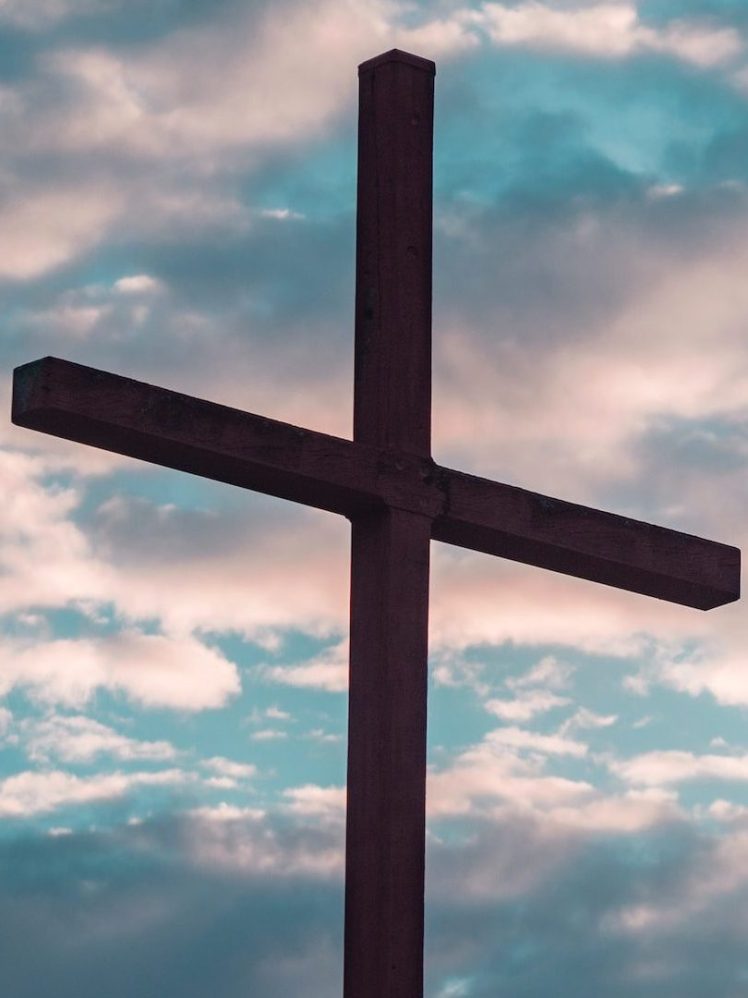
Photo by Aaron Burden on Unsplash

On the one hand, there are things that are transient, described as: outer, wasting away, light, momentary, affliction, and seen.

On the other hand, what is eternal is: inner, being renewed, weighty, glorious, beyond all comparison, and unseen.

These things are part of each of us, but what is eternal matters infinitely more than the other. Don’t confuse the two, or you may lose heart because Paul earlier assured us in verse 14 that “he who raised the Lord Jesus will raise us also with Jesus and bring us with you into his presence.”  At that time, only what is eternal will remain.

Amen.

We Will Not Live in Tents Forever

The apostle Paul was likely one of the finest Old Testament scholars of his day, and sometimes draws on existing imagery to make a point.  One example might be Proverbs 14:11-12, where the second verse is more widely known than the first, but not unrelated:

The house of the wicked will be destroyed,
            but the tent of the upright will flourish.
There is a way that seems right to a man,
            but its end is the way to death.

Physically, it seems obvious that a house is far more durable than a tent, but both of these Proverbs tell us not to judge by appearances.  Looks and reputation may suggest otherwise, but it is righteousness that determines eternal destiny, specifically acceptance of Jesus’ righteousness.

In 2 Corinthians 5:1-3, Paul gives an example of why we should focus not on what “seems right”, but instead focus on the unseen things that matter for eternity, drawing on the tent image:

For we know that if the tent that is our earthly home is destroyed, we have a building from God, a house not made with hands, eternal in the heavens.  For in this tent we groan, longing to put on our heavenly dwelling, if indeed by putting it on we may not be found naked.”

Photo by Hendrik Morkel on Unsplash

Paul, defending his apostleship to the Corinthians amidst his suffering while other false apostles lived in ease, knew that an upright tent was better than a wicked house in God’s eyes, and therefore being less comfortable was entirely worth it, since there was an eternal reward waiting in heaven.

Commenting on 2 Corinthians 5, Warren Wiersbe notes that “Heaven was not simply a destination for Paul: it was a motivation.  Like the heroes of faith in Hebrews 11, he looked for the heavenly city and governed his life by eternal values.”[1]

When frustrated by your earthly limitations, or frustrated by discomfort in this world, know that we will not live in these tents forever.  For His faithful, God is preparing an eternal dwelling for us.  While it “seems right to a man” to think a house is better than a tent, every tent and house in this world is temporary.  Hebrews 1:12 says of all creation, the earth and all the heavens, that:

like a robe you will roll them up,
            like a garment they will be changed.
But you are the same,
            and your years will have no end.

Do we long for our new, eternal heavenly dwelling?  Does this longing motivate us to live for God?  Let us keep Driving Toward Morning today!


[1] Wiersbe, Warren.  Be Encouraged (2 Corinthians) (1994).  P. 69.

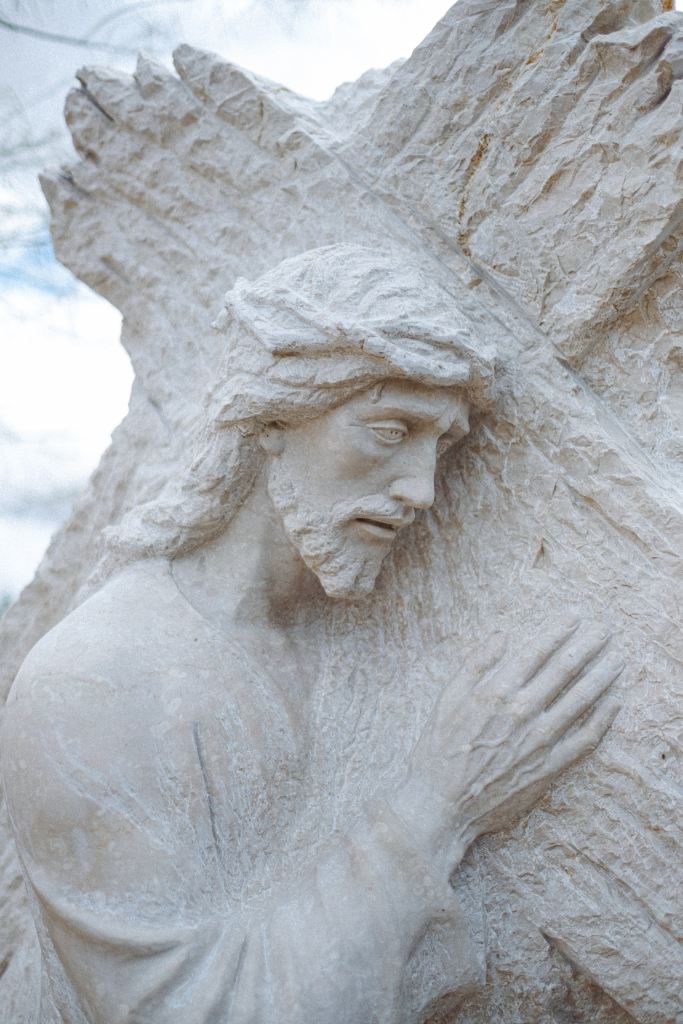
The Cross of Christ is History

Christians rightly focus on the historical fact of the life, death, and resurrection as the foundation of their faith.  Paul writes in 1 Corinthians 15:14 – “And if Christ has not been raised, then our preaching is in vain and your faith is in vain.”  For Christianity to matter, these things must have actually happened.  Therefore, a lot has been written providing evidence that these events happened, and that Christian faith is not based on speculation, but on solid history.

Today I’m going to take a different angle on the significance of the “historical” part of “historical fact.”  This post is about the more straight-forward meaning that these events happened in the past.

Why This Matters
Because Christ lived in the past, the life of righteousness He lived for us, and that we inherit through faith, is unchangeable.  There is no other life that could be lived, or will be lived, that could be better or achieve more than what God intended it to achieve.  Perfection is assured because it already happened.  He has not fallen short.

Because Christ died on the cross in the past, He did it in consideration of every past, present, and future sin of His people.  Nothing you, or I, or any of His people have done, are doing now, or will do in the future, can undo the cross, because it has already happened.  He will not change His mind, and He will stand by those who have faith in Him.

Because Christ was resurrected in the past, He has proven that death cannot hold Him and that He will raise His people to new life as well.  He is alive now, and aware of everything happening not only in the global 24/7 news cycle, but also in the hearts and minds of every man.  The same power that raised Him works in His people, telling them through His Spirit that there is no better plan than the cross to create a world where man perfectly loves God and loves his fellow man.

For if we have been united with him in a death like his, we shall certainly be united with him in a resurrection like his. We know that our old self was crucified with him in order that the body of sin might be brought to nothing, so that we would no longer be enslaved to sin. For one who has died has been set free from sin. Now if we have died with Christ, we believe that we will also live with him. We know that Christ, being raised from the dead, will never die again; death no longer has dominion over him. For the death he died he died to sin, once for all, but the life he lives he lives to God. So you also must consider yourselves dead to sin and alive to God in Christ Jesus.” – Romans 6:5-11

In a world full of pain and despair, “Preach the gospel at all times. And if necessary, use words.” – St. Francis of Assisi

Will Green Be Greener in Paradise?

Psalm 98:7 declares: “Let the sea roar, and all that fills it; the world and those who dwell in it!” In Romans 8:19 Paul adds that “the creation waits with eager longing for the revealing of the sons of God.”

Pastor James Montgomery Boice connects these ideas and says, “The world will one day be renewed.”  Nature already shows God’s glory, but it also, like mankind, is not yet as it shall be.  Boice adds: “I think of the way C.S. Lewis developed this idea in The Lion, the Witch, and the Wardrobe. In the first section of that book, when Narnia was under the power of the wicked Witch of the North, the land was in a state of perpetual winter. Spring never came. But when Aslan rose from the dead, the ice began to melt, flowers bloomed, and the trees turned green.”[1] Creation shares the hope of mankind – regeneration in a future paradise at the coming of its Lord!

Even now, we get an occasional glimpse of nature that’s somehow better than what we’re used to, and perhaps it is a glimpse of the paradise beyond the renewal of all things.  We were recently in Wales, on Mount Snowdon and a nearby trail in Llanberis, and below are some pictures from that day.  Some of these show the many brilliant shades of green, which seemed more glorious than the greens near our home in the U.S. We don’t often see rocks interact with the greenery like this here.

So, will paradise be even greener than this?  Will it seem like a perpetual winter has finally lifted?  I’m eagerly waiting to find out someday. In the meantime, enjoy these:


[1] From “April 19.” James Montgomery Boice and Marion Clark. Come to the Waters: Daily Bible Devotions for Spiritual Refreshment.  (2017).

Suffering of the Beloved

Many Psalms contemplate the reality of evil and suffering in the world, but in most cases, those Psalms end on a note of hope.  For example, Psalm 73 details the Asaph’s envy of the success and prosperity of the wicked in this world.  He considered following their path, and verse 2 says “But as for me, my feet had almost stumbled, my steps had nearly slipped.”  But by verse 28, the last verse of the Psalm, the writer is hopeful and returning to praise for God in faith:

But for me it is good to be near God;
            I have made the Lord GOD my refuge,
            that I may tell of all your works.

In contrast, Psalm 88 begins like this:
O LORD, God of my salvation,
            I cry out day and night before you.”

And ends like this (verse 18):
You have caused my beloved and my friend to shun me;
            my companions have become darkness.”

This is perhaps the low point of the Psalms, or even the whole Bible, ending with neither hope or praise, but only faith expressed in desperate prayer.  The Psalmist, Heman[1] the Ezrahite according to the introduction, describes himself like this: “For my soul is full of troubles, and my life draws near to Sheol” (verse 3).  And like this: “Afflicted and close to death from my youth up” (verse 15).  After writing that his companions have shunned him, he says that “my eye grows dim through sorrow,” which I take to mean that his sorrow is so great it is clouding his perception of everything.  Sorrow is all he can see.  Heman feels he is near death, perhaps because of sickness or depression, or maybe because society has rejected him, and he feels left for dead (verse 8).

Such despair isn’t as uncommon as we might think in the face of trouble.  The apostle Peter needed to encourage his first-century audience with these words in 1 Peter 4:12: “Beloved, do not be surprised at the fiery trial when it comes upon you to test you, as though something strange were happening to you.”  Note that to Peter, suffering is not “strange” for a Christian, nor should we “be surprised” by it.  Peter’s comment was immediately referring to persecution, but the same idea applies more broadly.  Suffering is part of life in this world – for anyone.

But also notice the first word in the verse: “Beloved.

Peter begins his statement about suffering with this so that those experiencing suffering do not think that God does not love them.  Our circumstances don’t, and can never, mean that we are not loved by God.  For us in modern times, we might be “surprised” by trials if we live in places friendly and welcoming to Christian culture.  Those who live in places hostile to Christianity may not be as surprised at trials that come, but need reassurance that they are loved.  In these places, that trials are not “strange,” but common, could bring people to a place without hope.

Photo by Wesley Tingey on Unsplash

However, when we are feeling like Heman, God still loves us, and like Heman we can pour out all our frustration to God.  He can take it.  Even when we are in “the valley of the shadow of death,[2] He remains with us and will sustain us.  When it seems we have nothing else, He will be there and listen.

Consider whether the Father did not love the Son when He suffered, or whether His suffering was proof that He loves us?   Therefore, Peter goes even farther in 1 Peter 4:13-14 – “But rejoice insofar as you share Christ’s sufferings, that you may also rejoice and be glad when his glory is revealed. If you are insulted for the name of Christ, you are blessed, because the Spirit of glory and of God rests upon you.

Good Friday was not the end of Jesus’ story, and although the day had three hours of darkness, the Son rose again and there was light!  Likewise, Psalm 88 was not the end of the Psalms; the last Psalm (150), begins like this:

Praise the LORD!
Praise God in his sanctuary;
            praise him in his mighty heavens!

And ends like this:
Let everything that has breath praise the LORD!
            Praise the LORD!

He is risen and you are Beloved.  Amen.


[1] Not He-Man, one of the fictional Masters of the Universe.
[2] Psalm 23:4