God Loves His Unfaithful People

The story of the prophet Hosea can be a controversial subject.  In only the second verse of the book, we learn that: “When the LORD first spoke through Hosea, the LORD said to Hosea, ‘Go, take to yourself a wife of whoredom and have children of whoredom’” (Hosea 1:2a).

A common interpretation of the “wife of whoredom” is “prostitute,” but it doesn’t necessarily mean that.  However, it certainly means a wife who is not faithful to her husband.  An adulteress, as Homer’s wife Gomer is described in Hosea 3:1.  They have 3 children in the story, and the last 2 may have been illegitimate.

Is it scandalous, is it even believable, that God would command His own prophet Hosea to marry this way?  The God who demands that we be holy.  Could He ask one of His spokespeople to “become one flesh” with a woman like this?  What kind of lesson can we take from this?

It only really makes sense when you realize why God did it.  The full verse of Hosea 1:2 says, “When the LORD first spoke through Hosea, the LORD said to Hosea, ‘Go, take to yourself a wife of whoredom and have children of whoredom, for the land commits great whoredom by forsaking the LORD.’

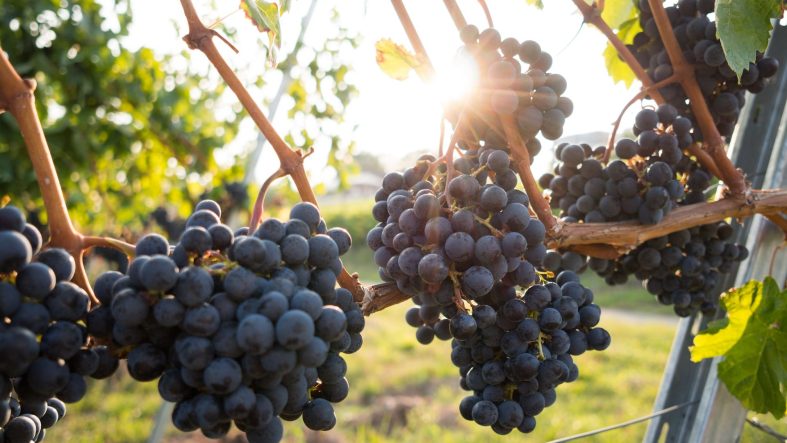
Photo by Worshae on Unsplash

Because of the word “for,” there’s a connection between the unfaithful wife and the people of the land: God’s people Israel.  It’s as if God commanded this marriage because Israel was unfaithful.  God had something to say about that.  While Hosea’s marriage was real, it was also a symbol meant to give a message: that, like Hosea marrying Gomer, God is willing to love unfaithful people.  After all, there is no other kind of person.  We all fit the description, yet He is willing to love us so much that the church is called the bride of Christ, like Gomer was the bride of Hosea.

While some think God’s command to Hosea is too scandalous to have really happened, it is no more scandalous than God choosing sinners to be His bride in Christ, which He did.  From the beginning of time God knew that His people would be unfaithful to Him, yet He designed and implemented a plan to bring those same people back into a right, intimate relationship with Him.  This plan meant taking on human flesh, being abused, and dying horribly for His people, but then being raised from the dead and taken back up into heaven.  This was the cost of restoring sinners to fellowship with their Maker who loves them.  And He thought it was worth it.

So, what is the lesson of God’s command to Hosea?  That there is no limit to who or how God can love.  Nobody deserves God’s love because all are unfaithful, but in spite of that, God loves His unfaithful people.  Why?  Because in His love He chooses to.

Praise God that He does!

Amen.

The Spirit and the Bride say, “Come.” And let the one who hears say, “Come.” And let the one who is thirsty come; let the one who desires take the water of life without price.” – Revelation 22:17

The Apostle Peter, Son of Gomer?

Peter is one of the most fascinating characters in the New Testament.  His struggles and flaws are written for all to see, but so is the patience and love Jesus had for him.  In Peter’s two letters, we get to see examples of his growth and maturity.  One of Peter’s struggles was how Jews who had become Christian should treat Gentiles.  In Galatians 2:11-21 is a story of Paul rebuking Peter for his hypocrisy toward Gentiles, and in Acts 10 and 11 is a story of Peter receiving a vision from heaven telling him not to treat Gentiles as unclean, because God can make anyone clean.

Peter ponders whether the key is for letting people in or keeping them out.

In 1 Peter 2:9-10, he shares this lesson with his readers:

“But you are a chosen race, a royal priesthood, a holy nation, a people for his own possession, that you may proclaim the excellencies of him who called you out of darkness into his marvelous light. Once you were not a people, but now you are God’s people; once you had not received mercy, but now you have received mercy.” (emphasis mine)

The bolded words clearly call back to the story of the Old Testament prophet Hosea, who God told to marry a prostitute named Gomer to teach a lesson about idolatry.  Hosea’s children by Gomer are named in Hosea 1:6-9 –

She conceived again and bore a daughter. And the LORD said to him, ‘Call her name No Mercy, for I will no more have mercy on the house of Israel, to forgive them at all.  But I will have mercy on the house of Judah, and I will save them by the LORD their God. I will not save them by bow or by sword or by war or by horses or by horsemen.’ When she had weaned No Mercy, she conceived and bore a son.  And the LORD said, ‘Call his name Not My People, for you are not my people, and I am not your God.’” (emphasis mine)

As Peter grew in Christ, he learned the same lesson Hosea learned: that all of God’s people are like Gomer and her children. Both Jews and Gentiles were once estranged from God in spiritual prostitution and adultery, but are now a beloved people, betrothed to one faithful God.  Jesus, our Holy High Priest, made the necessary sacrifice for the salvation of anyone and everyone who will come to Him.  Those He saves join His “royal priesthood”, proclaiming His excellent work to all people who have not received mercy, but who His blood covers.

Judge not, that you be not judged.  For with the judgment you pronounce you will be judged, and with the measure you use it will be measured to you.” – Matthew 7:1-2

Only God Gets the Glory for Gomer’s Goods

Photo by David Köhler on Unsplash

In the story of the Old Testament prophet Hosea, God told him to marry a prostitute named Gomer to teach a lesson about idolatry, but also God’s steadfast love and mercy.  Gomer was not only a prostitute physically, but also spiritually, worshipping other gods, which isn’t limited to literal, physical idols.  Hosea 2:8-9 explains that idolatry includes giving credit to other gods (or no gods) for things that the LORD had actually provided.  God said through Hosea:

And [Gomer] did not know
            that it was I who gave her
            the grain, the wine, and the oil,
and who lavished on her silver and gold,
            which they used for Baal.
Therefore I will take back
            my grain in its time,
            and my wine in its season,
and I will take away my wool and my flax,
            which were to cover her nakedness.”

In other words, if Gomer (who represents all of Israel) doesn’t recognize the true source of her blessings, God is fully justified in taking them away.  Fortunately, He is a God of love and mercy, who provides for our nakedness – both physical and spiritual, beginning all the way back in Genesis 3:21, which says: “And the LORD God made for Adam and for his wife garments of skins and clothed them.”  Adam and Eve had fallen and became ashamed of their condition, expecting God to judge them, but instead He covered them physically, but also set in place a plan to redeem His people by the blood of Jesus.

In Gomers case, “And the LORD said to me, ‘Go again, love a woman who is loved by another man and is an adulteress, even as the LORD loves the children of Israel, though they turn to other gods and love cakes of raisins.’  So I bought her for fifteen shekels of silver and a homer and a lethech of barley.”  (Hosea 3:1-2)

Fifteen shekels was not a lot of money, meaning other people didn’t value Gomer much, but God and Hosea were faithful and loved her.  The real price of God’s people – His own Son – was much steeper, but He decided we’re worth it even though we are unfaithful.  It is His faithfulness that really matters.

Therefore, today be thankful!  For the One who gives us “the grain, the wine, and the oil” and the “silver and gold” is the same One who died for us to make us His own people.

Soli Deo Gloria

Bible in a Year: Week of October 28 – November 3

Fellow travelers:

Below are the chapters to read this week if you’re following along in my Bible in a year schedule, divided into morning and evening readings.  Follow along any way you want: you can just do the evening reading, flip the morning and evening, or read it all.  Whatever works for you and your schedule!  It doesn’t have to be Bible in a Year for everyone.

The morning readings for the rest of the year will alternate between the minor prophets and the rest of the New Testament.  In the evening, Isaiah will take a while at one chapter a day, and then we’ll finish the year with Daniel.

Monday, October 28
Morning: Hosea 4-5
Evening: Isaiah 14

Tuesday, October 29
Morning: Hosea 6-7
Evening: Isaiah 15

Wednesday, October 30
Morning: Hosea 8-9
Evening: Isaiah 16

Thursday, October 31
Morning: Hosea 10-11
Evening: Isaiah 17

Friday, November 1
Morning: Hosea 12-14
Evening: Isaiah 18

Saturday, November 2
Morning: 1 Thessalonians 1-3
Evening: Isaiah 19

Sunday, November 3
Morning: 1 Thessalonians 4-5
Evening: Isaiah 20

Only God Gets the Glory for Gomer’s Goods

Photo by David Köhler on Unsplash

In the story of the Old Testament prophet Hosea, God told him to marry a prostitute named Gomer to teach a lesson about idolatry, but also God’s steadfast love and mercy.  Gomer was not only a prostitute physically, but also spiritually, worshipping other gods, which isn’t limited to literal, physical idols.  Hosea 2:8-9 explains that idolatry includes giving credit to other gods (or no gods) for things that the LORD had actually provided.  God said through Hosea:

And [Gomer] did not know
            that it was I who gave her
            the grain, the wine, and the oil,
and who lavished on her silver and gold,
            which they used for Baal.
Therefore I will take back
            my grain in its time,
            and my wine in its season,
and I will take away my wool and my flax,
            which were to cover her nakedness.”

In other words, if Gomer doesn’t recognize the true source of her blessings, God is fully justified in taking them away.  Fortunately, He is a God of love and mercy, who provides for our nakedness – both physical and spiritual, beginning all the way back in Genesis 3:21, which says: “And the LORD God made for Adam and for his wife garments of skins and clothed them.”  Adam and Eve had fallen and became ashamed of their condition, expecting God to judge them, but instead He covered them physically, but also set in place a plan to redeem His people by the blood of Jesus.

In Gomers case, “And the LORD said to me, ‘Go again, love a woman who is loved by another man and is an adulteress, even as the LORD loves the children of Israel, though they turn to other gods and love cakes of raisins.’  So I bought her for fifteen shekels of silver and a homer and a lethech of barley.”  (Hosea 3:1-2)

Fifteen shekels was not a lot of money, meaning other people didn’t value Gomer much, but God and Hosea were faithful and loved her.  The real price of God’s people – His own Son – was much steeper, but He decided we’re worth it even though we are unfaithful.  It is His faithfulness that really matters.

Therefore, today be thankful!  For the One who gives us “the grain, the wine, and the oil” and the “silver and gold” is the same One who died for us to make us His own people.

Soli Deo Gloria