Don’t Fear Jezebel’s Algorithm

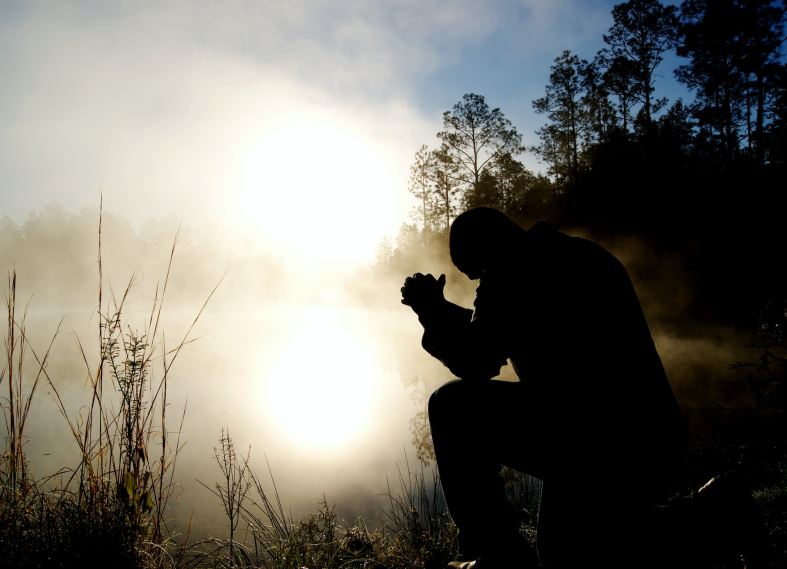
Sometimes we can get frustrated with the way the media, either traditional or social, seems to ignore or block out positive stories about God or Christianity.  Online networks like X (formerly Twitter) and Facebook can be very efficient at this, using complex algorithms to filter information, but on top of that human editors can intervene and block users they decide don’t fit their “community standards.”  However, resistance to spreading God’s word is as old as time, and God has never needed the assistance of any kind of media to accomplish what He wants to accomplish.

Consider the Old Testament story of Elijah, who prophesied during the reign of Israel’s evil king Ahab and his wife Jezebel.  According to Who’s Who in the Bible, “Jezebel devoted herself to bringing the worship of Baal and his consort Asherah to Israel. She employed 450 prophets of Baal and 400 prophetesses of Asherah (1 Kings 18:19), and persecuted the prophets of the Lord, including Elijah (1 Kings 19:1-9).”[1]  Many prophets were killed.

Elijah despaired, as written in 1 Kings 19:10 – “I have been very jealous for the LORD, the God of hosts. For the people of Israel have forsaken your covenant, thrown down your altars, and killed your prophets with the sword, and I, even I only, am left, and they seek my life, to take it away.”  It was as if all Christian voices but Elijah had been silenced by the authorities, and even he couldn’t feel safe.

Apostles also struggled to stay strong, including Paul.  When he was frustrated at resistance and lack of progress in Corinth, “the Lord said to Paul one night in a vision, ‘Do not be afraid, but go on speaking and do not be silent, for I am with you, and no one will attack you to harm you, for I have many in this city who are my people.”[2]

When Paul needed an example to encourage others to persist, he used Elijah’s story in Romans 11:2 – “God has not rejected his people whom he foreknew. Do you not know what the Scripture says of Elijah, how he appeals to God against Israel?  ‘Lord, they have killed your prophets, they have demolished your altars, and I alone am left, and they seek my life.’  But what is God’s reply to him? ‘I have kept for myself seven thousand men who have not bowed the knee to Baal.’” Corinth seemed like a lost cause, but God reminded Paul not to trust his own judgment.  God had it under control.

Therefore, our hope is not in the editors of our newspaper, or in social networks where we can share God’s message, or in the benevolence of the programmers of algorithms that choose who sees what we post, or in the regulators and legislators who monitor the public square, or in the founding political documents that give us rights.  But:

For as the rain and the snow come down from heaven
            and do not return there but water the earth,
making it bring forth and sprout,
            giving seed to the sower and bread to the eater,
so shall my word be that goes out from my mouth;
            it shall not return to me empty,
but it shall accomplish that which I purpose,
            and shall succeed in the thing for which I sent it.” – Isaiah 55:10-11

Like Jezebel killing all the prophets while promoting Baal and Asherah, censorship of Christian content may seem to be everywhere.  However, social network algorithms, editors, regulators, and governments are not our enemy, but our enemy is the one who tries to convince us we need these things more than we need the God who made them and who made us all.  His word will accomplish its purpose, and we have Elijah’s and Paul’s words and actions as evidence.

What then shall we say to these things? If God is for us, who can be against us?” – Romans 8:31


[1] Gardner, Paul D., editor.  The Complete Who’s Who in the Bible.  (1995)
[2] Acts 18:9-10

What’s in Your Temple?

When describing His holiness, God provided pictures like the one in Isaiah 6:1 – “In the year that King Uzziah died I saw the Lord sitting upon a throne, high and lifted up; and the train of his robe filled the temple.”  Because “the train of his robe filled the temple,” there is no room in the temple for anything that isn’t holy.  Or in Revelation 15:8, which says: “and the sanctuary was filled with smoke from the glory of God and from his power, and no one could enter the sanctuary until the seven plagues of the seven angels were finished.”  Until God’s judgment was complete – both on the unrepentant and on the cross for His people – there would continue to be no room in the sanctuary for anyone but the Lord.

How do these pictures apply to us?  Paul asks in 1 Corinthians 3:16-17 – “Do you not know that you are God’s temple and that God’s Spirit dwells in you?  If anyone destroys God’s temple, God will destroy him. For God’s temple is holy, and you are that temple.”  Therefore, we ask ourselves: does the train of the Lord’s robe fill our temples?

Photo by Annie Spratt on Unsplash

A transformative moment came in my Christian life when I understood sin in contrast to holiness, rather than as a list of “don’ts.”  It’s possible (perhaps even easy) to convince ourselves we are not sinners in need of grace by defining sin as things we don’t do.  However, much of the time, the word “sin” in the New Testament is a translation of the Greek word hamartia, which means “to miss the mark.”[1]  The word has athletic connotations, such as if an archer couldn’t hit the bullseye, they wouldn’t win the competition and the prize.  As we all know, archers are supposed to be accurate, and if they aren’t, they’ve “missed the mark.”

Therefore, when Paul writes in Romans 3:23 “for all have sinned and fall short of the glory of God,” he is not saying everybody failed to follow a list of dos and don’ts, but that we have not fully lived the life God intended us to live.  Romans 3:23 declares that while we wouldn’t set up idols in our church building, all of us tolerate some idols in our soul, which is where the Holy Spirit of God chooses to dwell.  The train of His robe does not fill our inner temple, and we too often trod on it with dirty feet.  We’ve “missed the mark” any time there’s other stuff in our temple, directing our thoughts and actions.  However, by the sacrifice of Jesus Christ we have both a hope of living with God and a future where His metaphorical robe does fill us.

In Paradise, God’s people will – individually and collectively – “hit the mark” perfectly for eternity.  His perfect temple will be completed in Paradise, with the living stones of all His people.

Paul returns to holiness again in 2 Corinthians 6:16 to 7:1, quoting several Old Testament passages, since holiness of His people has been the plan from the beginning –

What agreement has the temple of God with idols? For we are the temple of the living God; as God said,
             ‘I will make my dwelling among them and walk among them,
                        and I will be their God,
                        and they shall be my people.
            Therefore go out from their midst,
                        and be separate from them, says the Lord,
            and touch no unclean thing;
                        then I will welcome you,
            and I will be a father to you,
                        and you shall be sons and daughters to me,
            says the Lord Almighty.’

Since we have these promises, beloved, let us cleanse ourselves from every defilement of body and spirit, bringing holiness to completion in the fear of God.

Amen


[1] Greek Strong’s Dictionary

Leviathan Defeated!

Photo by Humble Lamb on Unsplash

Isaiah 27:1 declares: “In that day the LORD with his hard and great and strong sword will punish Leviathan the fleeing serpent, Leviathan the twisting serpent, and he will slay the dragon that is in the sea.

We must acknowledge the enemy as a powerful dragon to know the difficulty of our struggle, and also that it is the LORD who ultimately must, and will, destroy him “In that day” (rather than now or when we want Him to)

“It does not do to leave a live dragon out of your calculations” – J.R.R. Tolkien, in The Hobbit

Jesus Even Makes the Deaf Hear

Photo by Yoann Boyer on Unsplash

As a child of deaf parents, some details of stories from the life of Jesus especially catch my attention.  This miracle recorded in Mark 7:32-37 is one example:

And they brought to him a man who was deaf and had a speech impediment, and they begged him to lay his hand on him.  And taking him aside from the crowd privately, he put his fingers into his ears, and after spitting touched his tongue.  And looking up to heaven, he sighed and said to him, ‘Ephphatha,’ that is, ‘Be opened.’ And his ears were opened, his tongue was released, and he spoke plainly.  And Jesus charged them to tell no one. But the more he charged them, the more zealously they proclaimed it.  And they were astonished beyond measure, saying, ‘He has done all things well. He even makes the deaf hear and the mute speak.’”

In the second sentence, we see Jesus’ “bedside manner.”  His compassion for this individual led to specific actions, as noted by Warren Wiersbe: “Since the man was deaf, he could not hear our Lord’s words, but he could feel Jesus’ fingers in his ear and the touch on his tongue, and this would encourage the man’s faith.”[1]  Not only did Jesus heal Him, but He did it in a way that would be meaningful to this one man.

Another detail Mark records is that Jesus spoke, but why, if this man couldn’t hear him?  Jesus touched the man as a testimony to him, but these words were a testimony to anyone nearby that the power of Jesus healed this man, not the man’s response to the words, since he couldn’t hear them.  There was to be no question as to the source of the healing.

Third, the word “immediately” appears many times in Mark’s gospel, including at least 5 references to healing miracles (1:42, 2:12, 5:29, 5:42, and 10:52).  A big part of this miracle is that deaf people do not immediately “speak plainly” if they recover their hearing or begin using hearing aids.  It can take years of training.  By saying “he spoke plainly,” Mark makes clear that Jesus did not just put this man on the path to recovery; He gave Him a full recovery “immediately”!

Lastly, when the people said, “He has done all things well,” they were testifying that Jesus was fulfilling a Messianic expectation from Isaiah 35:5-6, which says:

Then the eyes of the blind shall be opened,
            and the ears of the deaf unstopped;
then shall the lame man leap like a deer,
            and the tongue of the mute sing for joy.
For waters break forth in the wilderness,
            and streams in the desert

In this miracle and others, Jesus showed that He was the fulfillment of all the hopes of the Old Testament, and of all mankind.  His kingdom could overcome any problem, and His kingdom is superior to any other kingdom.  No problem He encountered was beyond His power and He offers a way to a world where all problems are solved for those who believe in Him.

Praise Him!


[1] Wiersbe, Warren.  Be Diligent (Mark) (1987).  P. 95.

What We Need For Christmas Summary

Merry Christmas everyone!

Thank you for reading my series about what we need for Christmas.

Remember that whatever mess we find ourselves and the world in, Christmas is a reminder that God has not given up on us and on the world.  Isaiah 9:6, a prophecy from around 700 BC describes the Christ we celebrate each Christmas:

“And his name shall be called Wonderful Counselor,
Mighty God, Everlasting Father, Prince of Peace.”

To meet our deepest, most significant needs, this Christ is provided for us.
         As Wonderful Counselor, He is our source of wisdom; (covered in this post)
         As Mighty God, He will empower us to live as He did; (this post)
         As Everlasting Father, He invites us with unconditional love into His family; (this post)
         As Prince of Peace, He buys peace between us and Him, and between us and others. (this post)

“Four gifts for Christmas. They are the greatest gifts that anybody can give or we can have, and they are all in Jesus. They are for us. They are for you, if you will have them.” – James Montgomery Boice

Celebrate these gifts today!

In closing here is a video of the Royal Choral Society performing the Hallelujah Chorus from Handel’s Messiah, for He, the Christ of Christmas, shall reign forever and ever: