10 Movies I Like a Lot

Daily writing prompt
What are your top ten favorite movies?

As a change of pace today, I’ve decided to answer a writing prompt: “What are your top ten favorite movies?”  I don’t really have a top ten list, but I’ll share ten that I could probably watch over and over and not get tired of.  So, here we go…

Monty Python and the Holy Grail
Most of these won’t be ranked but this one is definitely #1.  There’s no other movie where I’m laughing constantly before things even happen because I know what’s coming.  People probably don’t like watching it with me.  Sure, the ending is terrible, but it’s so much fun along the way!

Braveheart
This one is the clear #2, but the other 8 are in no particular order.  Not many movies are 3 hours long, and you don’t mind it or feel it at all.  There’s no wasted time in this one, and it’s a great story.

The Lord of the Rings: The Fellowship of the Ring
This is my favorite of the books, and my favorite of the movies.  The scenes from Weathertop on through the Mines of Moria are probably my favorite sequence within any book or movie.  None other shall pass!

The Matrix
This was so stunning when it came out in terms of special effects and also the big ideas in it.  Philosophically, it’s still an ugly mess but it remains interesting long after you see it.  It may seem like you’ve been living two lives.

Spider Man: No Way Home
The Marvel Cinematic Universe movies are a mixed bag, but this one was definitely made for the true Spider Man fanboys.  He was my favorite for the short time I collected comics, and this movie was chock full of references without seeming contrived.  I left the theater saying I wanted to walk right back in and watch it again.

Tenet
This one makes the list ahead of Inception partly because of when I saw it, in November 2020 in the theater.  Times were tough during the Covid-19 pandemic and I needed to get out and escape.  The complicated and bizarre premise and plot of this movie got my mind off of everything else for a while.  It also made me want to borrow a fire truck.

Harry Potter and the Prisoner of Azkaban
This one is in the same camp as Fellowship above, my favorite book and movie in a series.  The scenes in and around the shrieking shack part are so well-paced and move the story forward so much in a short time.

Empire Strikes Back
Many other people are much bigger Star Wars fans than I am.  I like only a few of the movies, but this was the first one I saw when it was new in the theater!  Full of iconic moments and lines, I think this is where Star Wars peaked those many years ago.

Shawshank Redemption
A true classic and one of the best movies ever made.  The sequence of revelations at the climax of the movie, while seeing how diligently Andy overcome the injustice of his situation, is fiendishly clever.  Also, Red is one of Morgan Freeman’s best roles.

Singin’ in the Rain
Last but definitely not least, another true all-time classic.  This movie just makes you laugh and smile all the way through it, and Make ‘Em Laugh does exactly what it says.  I love that they gave Donald O’Connor a moment to shine, because Gene Kelly tends to steal every scene he’s in. And there they are, 10 movies I really like a lot.  Which of these are your favorites too?

Leviathan Defeated!

Photo by Humble Lamb on Unsplash

Isaiah 27:1 declares: “In that day the LORD with his hard and great and strong sword will punish Leviathan the fleeing serpent, Leviathan the twisting serpent, and he will slay the dragon that is in the sea.

We must acknowledge the enemy as a powerful dragon to know the difficulty of our struggle, and also that it is the LORD who ultimately must, and will, destroy him “In that day” (rather than now or when we want Him to)

“It does not do to leave a live dragon out of your calculations” – J.R.R. Tolkien, in The Hobbit

Driving Toward Morning’s 2024 in Books

Dear fellow travelers,

It’s become a tradition here to post what books I read during the year.  This year’s total was 16, down from over 20 each of the last 3 years.  A big part of the lower total was my struggle to get through The Life and Times of Jesus the Messiah by Alfred Edersheim (1883).  At over 900 dense pages, I still haven’t finished it even though I started in late 2023.  It’s a fascinating biography of Jesus by one of the preeminent scholars of Jewish culture and literature of his time, but not an easy read sometimes.  Maybe in 2025 I can “close the book” on that one.

So, what books did I finish reading this year?

Fiction books:
Eight Tales of Terror by Edgar Allan Poe
The Hobbit and The Lord of the Rings trilogy by J.R.R. Tolkien

I re-read Tolkien’s books every few years and they were as good as ever.  The only problem is that Fellowship of the Ring is my favorite of the trilogy, especially the part from Weathertop to the bridge of Khazad-Dum, so the story peaks too soon for me, but the rest is great as well.

Poe I read because I was looking for something easy to read and found it on our bookshelves.  It has some familiar and unfamiliar stories.

A few history books:
The Demon of Unrest by Erik Larson
Last Hope Island by Lynne Olson
A Holy Baptism of Fire and Blood by James P. Byrd
The Pirate Coast by Richard Zachs

I’ll read anything by Erik Larson, and since he released a new one, I had to read it.  The Demon of Unrest details the events before, during and after, the Battle of Fort Sumter and the start of the American Civil War.  I knew very little about it so I learned a lot.

Last year I read Byrd’s book about how the Bible was used during the American Revolutionary War.  This one is the same idea, but during the American Civil War (sensing a bit of theme here?).  Both books are very interesting and full of examples of misuse of the Bible, particularly individual verses taken out of context and turned into slogans.

A couple non-fiction:
Beyond Measure by James Vincent
Rescuing Socrates by Roosevelt Montas

Vincent’s book is an interesting history of measurement, including how many of our units were started.  One part I liked was why some countries use metric and others don’t.  Montas’ book is a defense of the use of the “Great Books” for education, for all students regardless of race or background.  He cycles through 4 authors – Plato, Augustine, Freud, and Gandhi – making a different case for each.

And one biography:
Darwin: Portrait of a Genius by Paul Johnson

The late Paul Johnson was one of my favorite historians and this one had been on my shelves for a few years.  Like with Larson, I’ll read anything by Johnson.  This was a brief and well-done biography covering Charles Darwin’s achievements, strengths and weaknesses (the part we don’t hear as much about).  Johnson is always opinionated and shares where he thinks Darwin’s theories are helpful and where they aren’t.

Plus several religious books:
In addition to regular Bible and study Bible reading, in 2024 I read:

The Reason for God by Tim Keller
3 books by Warren Wiersbe covering the “minor” prophets: Be Heroic (Haggai – Ezra), Be Amazed (Hosea – Malachi), and Be Concerned (Amos – Zephaniah).

I picked up Wiersbe’s entire “Be” series in 2021 as part of a digital subscription and am working through it over time.  A long time.  I like his overall approach, and the books are a great source of thoughtful stories and quotes.  I’ve covered 22 of the Bible’s 66 books so far!

In sum, 16 was less than usual for me in a year, but how many will I read in 2025?  Will I finally finish Edersheim, which I’m reading chunks of between other books?  Who knows…in the meantime, have you read any of these?  What books did you enjoy in 2024?

And speaking of reading, I want to thank all of you who take the time to read my blog. I set a new high in views in 2024, passing 2022 (2023 was slightly down).

Confession: The Blessing Nobody Expects

What comes to mind when you think of confession?  Think about it for a moment.

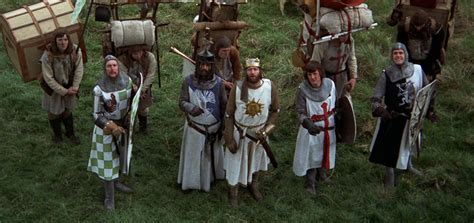
For some, the thought might be a simple private prayer, or for some a confessional booth.  For others, no specific images might come to mind, but just a feeling of someone “out to get you.”  I expect some of you thought of the Spanish Inquisition, or at least the Monty Python skit making fun of it[1].  Where do these ideas come from?

The blame belongs in many places: secular culture, bad experiences with church, an emphasis on external over internal religion, and even Monty Python comedy skits.  My fantasy baseball league even has a team named “Spanish Inquisition” because the manager of that team thinks no one expects him to win – not even himself.

The mocking of secular culture aside, confession is an uncomfortable topic even for sincere Christians.  In Humphrey Carpenter’s biography of J.R.R. Tolkien, he shares the tension over confession between Tolkien and his then-fiancée Edith.  Tolkien was a practicing Catholic, while Edith was a member of the Church of England.  They had agreed as a couple to be Catholic, but Edith “began to dislike making her confession.  It was therefore all too easy when she was worried about her health (which was often) to postpone going to mass. She reported to Ronald [Tolkien] that getting up to go to church early in the morning and fasting until she had made her communion did not agree with her.”  She insisted “my health won’t stand it.”[2]  In my own Protestant church, we have a weekly prayer of confession, which the pastor regularly defends the importance of.  Few of us probably look forward to confession, whatever form we practice it in.

Photo by Shalone Cason on Unsplash

This discomfort with confession seems to be a shared part of mankind’s fallen nature, but if we look at well-known Bible verses on confession, we find that it is really about restoration, a rebirth of man’s relationship with God and a renewal of man to his ideal nature.  It is as different from God being “out to get you” as it could be.  1 John 1:9 encourages confession, because: “If we confess our sins, he is faithful and just to forgive us our sins and to cleanse us from all unrighteousness.”  God wants to give us forgiveness and cleansing, not condemnation and guilt.  Isaiah 1:18 explains this cleansing more poetically:

Come now, let us reason together, says the LORD:
though your sins are like scarlet,
            they shall be as white as snow;
though they are red like crimson,
            they shall become like wool.

Confession doesn’t need to be a dirty word.  The word “confess” means loosely to say the same thing about something, so confession means we agree with God (say the same thing he does) about sin – that it is bad.  But confession also applies to the rest of 1 John 1:9, that God “is faithful and just to forgive us our sins and to cleanse us from all unrighteousness.”  Full confession includes agreeing about the steadfast and dependable character of God, His faithfulness and justice, as well as His desire to forgive and cleanse.  If we doubt this desire, consider what He voluntarily suffered on the cross to provide for this forgiveness, and to demonstrate His enduring love.

By adding confession about the good things of God to our confession of our sin, our confession does not make us miserable about our own condition but shows us how different we are from what God wants for us, how deeply our sin needs to be corrected, and how wonderfully God has provided for the removal of sin.

But this does not come easily.  Referencing Hebrews 4:16, which says, “Let us then with confidence draw near to the throne of grace, that we may receive mercy and find grace to help in time of need,” Puritan preacher Thomas Watson wrote that “Christ went more willingly to the cross than we do to the throne of grace.”

Why is this?  Could it be that we have trouble whole-heartedly confessing that “he is faithful and just to forgive us our sins and to cleanse us from all unrighteousness”?  Monty Python joke that “nobody expects the Spanish Inquisition,” but do we fully expect God’s throne to be one of grace when we come to confess?


[1] If you’re not familiar with the skit, here’s a 4-minute example: https://youtu.be/Cj8n4MfhjUc
[2] Carpenter, Humphrey. Tolkien: A Biography.  (1977).  P. 68-69.

What Was the ‘Scopes Monkey Trial’ Really About? – History for July 21

Some events in history bring a faint glimmer of memory to many people, but what they remember may not be the most relevant point. One such event was the “Scopes Monkey Trial,” decided on July 21 in 1925. What actually was this trial? Wikipedia’s summary[1] is that “a high school teacher, John T. Scopes, was accused of violating Tennessee’s Butler Act, which had made it unlawful to teach human evolution in any state-funded school. The trial was deliberately staged in order to attract publicity to the small town of Dayton, Tennessee, where it was held.” The trial descended into theatrics and was covered by national news organizations. Time magazine called the trial a “fantastic cross between a circus and a holy war.” Each side had a famous lawyer seeking publicity: the Presbyterian William Jennings Bryan, who ran for president three times, was the prosecuting attorney, and the agnostic Clarence Darrow defended Scopes.

The immediate result of the trial was that Scopes was found guilty and ordered to pay a small fine, but years later, that’s not what people remember.  For some, the lesson of the Scopes trial is simple: “science good; religious fundamentalism bad.”  Another group of people might think the lesson was: “religious fundamentalism good; science bad.”  But did the case conclude either of these things?  It didn’t, so what’s the real issue?

The Culture Behind the Scopes Trial
In the background issues were simmering which still linger today – whether religion should have a voice in how science is used and taught.  Tim Keller notes that “Few people remember…that the textbook Scopes used, Civic Biology by George Hunter, taught not only evolution but also argued that science dictated we should sterilize or even kill those classes of people who weakened the human gene pool by spreading ‘disease, immorality, and crime to all parts of this country.’ This was typical of scientific textbooks of the time.”[2]  Wikipedia notes that “Scopes was unsure whether he had ever actually taught evolution, but he incriminated himself deliberately so the case could have a defendant.”  So, the trial did not hinge on Scopes’ teaching, this textbook, or even eugenics, but the subject of eugenics sheds some light on how over-simplified the take-away of “science good; religious fundamentalism bad” really is.

Geneticist Francis Galton, a cousin of Charles Darwin, popularized the term “eugenics” from the Greek, meaning “good birth,” to describe ways humans could use evolutionary science to improve their condition.  He usually left unspoken that he meant not specific humans, but some abstract sense of humans in aggregate, and also that he meant to improve the condition of those humans in charge, or those humans with a voice among the humans in charge.   These beliefs were not rare, but quite mainstream.  Joseph Loconte, writing of the culture J.R.R. Tolkien and C.S. Lewis lived in[3], notes: “In Britain, the Eugenics Education Society was founded in 1907 to take up the cause.  By 1913, the American Genetic Association was established in the United States to promote the doctrines of racial purity.”  The United States was actually the first country where compulsory sterilization was legalized, and some practices implemented by Nazi Germany were lifted right out of laws used by U.S. States.  U.S. Supreme Court justice Oliver Wendell Holmes wrote “Three generations of imbeciles is enough” in defense of Virginia’s sterilization law.

The church was not entirely immune from the eugenics movement either.  According to Loconte, “Ministers in the Church of England held a Church Congress in 1910 in Cambridge, inviting several members of the Royal Commission on the Feeble-Minded to participate.”  Also, “By the 1920s, hundreds of American churches participated in a national eugenics sermon contest.  As the Rev. Kenneth McArthur, a winner from Sterling, Massachusetts, put it in his sermon: ‘If we take seriously the Christian purpose of realizing on earth the ideal divine society, we shall welcome every help which science affords.’”

This background to the Scopes Trial, often simplified to a “science” vs “fundamentalism” debate, makes us ask: which science and which fundamentalism?  Was eugenics, for a moment, part of “religious fundamentalism” for some of the church?  And is perfecting society on earth truly a fundamental Christian belief?  With a rule of thumb of “science good; religious fundamentalism bad,” or the opposite, what do you do if a scientific idea becomes also central to religious belief?

Also, if you take away science and religion from the equation altogether, which is better: “all humans have dignity and are worthy of care and love” or “some people deserve to be neutered like an ordinary animal”?  If science is the only source of our “fundamentalism,” where do we turn when it insists on destruction for the less favored?  Tim Keller argues that “Secular, scientific reason is a great good, but if taken as the sole basis for human life, it will be discovered that there are too many things we need that it is missing.”  What is missing is a meaningful reason to love your neighbor, regardless of their scientific knowledge, religious belief, disability, economic impact, level of intelligence, or any other characteristic.

It’s Not (Entirely) a Fantasy
Loconte says that although Tolkien and Lewis wrote of fantasy worlds populated not only by men, but also by elves, dwarves, orcs, and many other races, the topics of eugenics and other Progressive Era ideas served as background.  In Tolkien’s epic The Lord of The Rings, the solution to conflict between the races was not for one race to rule the others, or (even worse) to eliminate them.  Instead, the answer is to utterly destroy the Ring of Power, representing the desire of any tribe to use power to rule others “for their own good,” as some say.  While Tolkien insists his story is not a direct allegory, he may have been thinking of the centuries of tribal conflict between the English, Irish, Scots, and Welsh.  Or the conflict between any group of conquerors and the conquered.  By using fictional races, Tolkien was arguing that this lesson applies to everyone, in all places and at all times.

Therefore, when scientific fundamentalism says it’s OK not to love some people, Christians need to respond without exception that every person is a creation of God with innate dignity and should be loved as Christ loved us.  However, as shown on the cross, power is not the answer.  As Jesus told his disciples in Mark 10:42-45 – “You know that those who are considered rulers of the Gentiles lord it over them, and their great ones exercise authority over them.  But it shall not be so among you. But whoever would be great among you must be your servant, and whoever would be first among you must be slave of all.  For even the Son of Man came not to be served but to serve, and to give his life as a ransom for many.

God does not expect us to understand every issue of history, or even in our daily news feed, which is increasingly a “fantastic cross between a circus and a holy war,” but when we all meet our Lord in heaven, He will say “as you did it to one of the least of these my brothers, you did it to me.’” – Matthew 25:40


[1] https://en.wikipedia.org/wiki/Scopes_Trial
[2] Keller, Timothy.  Making Sense of God (2016).  This post draws from pages 12-13.
[3] Loconte, Joseph.  A Hobbit, A Wardrobe, and a Great War: How J.R.R. Tolkien and C.S. Lewis Rediscovered Faith, Friendship, and Heroism in the Cataclysm of 1914-1918 (2015).  This post draws on pages 15-19.