Religion That Prioritizes the Gospel

I am on vacation this week, so I’ve collected some old posts about James 1:27 for the week.  I’m reposting them as is, but they definitely need some editing!

The gospel is more than just the good news that Jesus took the punishment for our sin, dying for sinners like us so that we may be saved.  The gospel is also the good news of what the punishment has been replaced with – the kingdom of heaven.  If the gospel is about a kingdom, our lives should reflect the values of our King and we should seek for others what our King would offer.

This post, another in the series on James 1:27 (“Religion that is pure and undefiled before God the Father is this: to visit orphans and widows in their affliction, and to keep oneself unstained from the world,”) is about that verse as an ethic that prioritizes the gospel over all other issues by looking briefly at the issue of slavery.

The period of the American Civil War was similar to modern times in its obsession over issues.  While its naïve and vastly simplified to say the North was anti-slavery and the South was pro-slavery, it is not entirely false either.  Those views were typical of many in each area.  Both sides had a high conviction in their cause, using the Bible to justify why their side needed to win, and at what costs.

Paul’s Concern Was for Individuals
Part of the reason for this confusion comes from the apostle Paul’s comments on slavery, which seem ambivalent to many on the actual issue of slavery.  One relevant passage is Ephesians 6:5-9, in which Paul writes:

Bondservants, obey your earthly masters with fear and trembling, with a sincere heart, as you would Christ, not by the way of eye-service, as people-pleasers, but as bondservants of Christ, doing the will of God from the heart, rendering service with a good will as to the Lord and not to man, knowing that whatever good anyone does, this he will receive back from the Lord, whether he is a bondservant or is free.  Masters, do the same to them, and stop your threatening, knowing that he who is both their Master and yours is in heaven, and that there is no partiality with him.”

Verses like these were used to justify slavery during the American Civil War and at other times, by people claiming that Paul did not condemn it.  Since the War, others have said that Paul was cruel not to condemn slavery and a few even refuse to read Paul’s words in the Bible, claiming they have no authority because of this cruelty.  This topic goes way beyond what can be covered here, but the reason for Paul’s seeming ambivalence on the issue is that his focus was somewhere else: on the specific individuals involved in all aspects of slavery, including both masters and slaves.  He even addresses them directly and separately: “Bondservants” and “Masters.”  One group was to follow what was addressed to them, and the other group was to follow what was addressed to them.  Why did he take this approach?  Because people matter more than issues.

Photo by Anthony Garand on Unsplash

Having no power to end slavery, which still exists today, Paul did have influence and authority as an apostle to improve the lives of specific masters (who would have to justify their actions to God), and of specific slaves (who would have to do the same).  Paul knew the real question before him was: If slavery currently exists and I have no power to end it, should I do nothing to improve the condition of slaves until slavery is 100% abolished?  Should Paul have focused on ending slavery, or on improving the lives of people affected by it, and offering them a way to eternal life without slavery?  Paul knew God’s heart goes out to individual souls, and the issue of slavery would be eliminated in eternity.  However, many would condemn Paul for not going straight to an all-or-nothing, hyperbolic position we expect when talking about issues.  Also, it’s not necessarily an either/or, but a matter of priority and emphasis.

Some approach contentious issues like the Pharisees of Jesus’ day, “They tie up heavy burdens, hard to bear, and lay them on people’s shoulders, but they themselves are not willing to move them with their finger.[1]  These burdens take the form of ostracism, public humiliation, insistence on use of #hashtags and slogans, rude comments, and other means of hating others simply because those others don’t think the weight of all the issues in the entire world need to be on everyone’s shoulders.  But Paul presents a contrast to this.  He knew God called him to proclaim grace and peace to all people, in Jesus’ name.  Paul’s ministry saved many souls for an eternity where slavery is no longer an issue, and in the meantime, slavery still exists as an issue people mistreat each other over.  Yes, we should fight for peace and justice, but not at the expense of individuals, on either side.

D. A. Carson, a professor at Trinity Evangelical Divinity School, said, “The overthrowing of slavery, then, is through the transformation of men and women by the gospel rather than through merely changing an economic system…In the final analysis, if you want lasting change, you’ve got to transform the hearts of human beings. And that was Jesus’ mission.”[2]

During the Civil War, Abraham Lincoln said “My concern is not whether God is on our side; my greatest concern is to be on God’s side, for God is always right.”  This should be our main concern as well.

Religion that is pure and undefiled before God the Father is this: to visit orphans and widows in their affliction, and to keep oneself unstained from the world.


[1] Matthew 23:4
[2] Strobel, Lee.  The Case for Christ (1998).  P. 168

Religion That Puts People Before Issues

I am on vacation this week, so I’ve collected some old posts about James 1:27 for the week.  I’m reposting them as is, but they definitely need some editing!

It’s become cliché to say social media brings out the worst of people, since they can hide from consequences behind internet anonymity and distance.  Mike Tyson, one of the greatest heavyweight boxers of all time, said “Social media made y’all way too comfortable with disrespecting people and not getting punched in the face for it.”  But disrespect and wanting to punch people in the face who disagree with us is nothing new.  Just one generation after Adam and Eve were made in the image of God and living in perfect love, their son Cain killed his brother Abel for uncertain reasons.  Genesis also doesn’t tell us exactly how Cain killed Abel, but we can be sure social media wasn’t involved.  Hate doesn’t require an internet connection or working Wi-Fi, only one person deciding that another person is a thing to be defeated, not as a person made in God’s image.  Sometimes by focusing on what we are disagreeing about, we can lose sight of the fact that the person disagreeing with us is inherently valuable.

Today, after months away, we return to a series on James 1:27, which says: “Religion that is pure and undefiled before God the Father is this: to visit orphans and widows in their affliction, and to keep oneself unstained from the world.”  James gave careful thought to this phrase, not as hyperbole, but as an example of what perfect religion – worship of God the Father – looks like.  Eternal life is for people who love when there’s nothing more at stake than the person being loved, but putting issues above people is one way we get stained by the world and fail to represent Christ.  Note that I didn’t say ignore the issues – it’s a question of priority.

The Singular Person
Psalm 113 is a Psalm about praising God and making Him known throughout the world, and ends with a very specific praise:

He gives the barren woman a home,
            making her the joyous mother of children.
Praise the LORD!”

To me, what’s most striking here is that this is a singular barren woman, not barren women as a group.  It doesn’t say that God ends all barrenness (although He might).  The Psalmist chose as a climactic ending to this poem about the heart of God and how He wants to be known a praise to God for giving a home and family to one barren woman.  This means that the sovereign God of all the universe is concerned about individuals, their specific circumstances, and their specific need for salvation.  He does not respond to an “issue” of the barrenness of women but responds in a way that satisfies the needs of individual people.  People are not statistics to Him, to be counted and divided into opposing sides until one prevails over the other.  Each person’s needs and path to redemption are unique in God’s eyes, and only He can provide for all.  He is the only way to a perfect world.

Similar to the “barren woman”, James 1:27 is about visiting specific “orphans and widows,” not fighting for the end of all afflictions for all widows and orphans.  He is fighting for people, not total victory in an argument.  While this might seem obvious to some, it’s so easy to exalt issues over people that we don’t always notice when we do it.

The Issue of Family
A common issue today is “family,” which I put in quotes because as an issue it doesn’t mean the same thing to everyone.  A lot of time and energy is put into fighting for “family values,” defined many different ways, and James 1:27, “Religion that is pure and undefiled before God the Father is this: to visit orphans and widows in their affliction, and to keep oneself unstained from the world,” is relevant in multiple ways.

First, an earlier post of this series, said “whatever its source, civil law is a provision for a fallen world, not a pathway to a perfect world.”  In both the Old and New Testaments, God tells us there will always be poor in the land and that every civil law is inherently limited in a broken world.  Christians should “defend the family,” but in what way?  James 1:27 says to stand for individuals for whom the institution of family has already failed – widows and orphans.  “Pure and undefiled religion” succeeds where law fails, filling the gap with the heart of God, who cares for the specific “barren woman” of Psalm 113:9.  There is no perfect law that solves the issue of “family values,” therefore “visit orphans and widows in their affliction.”  Affliction comes in many forms and is too complex and diverse for any government to deal with entirely.

Second, when we fight for perfection in our laws, taking absolute stands on either side of an “issue,” we risk elevating law to a level it’s not possible of achieving, and we also may justify hurting people in the process, thinking the end result will be worth it somehow.  Once we see the world in fully black/white, either/or terms, it becomes easy to think that if only the right side came out ahead, the issue would be resolved, any collateral damage can be explained, and everyone would be happy.  However, consider the extreme example of violence around both abortion clinics and crisis pregnancy centers.  In that case and many smaller ones, when we cause harm to opponents, we prove that there are cracks in our own system, creating new victims on top of the existing ones.  Those left behind haven’t been helped, but new affliction has been added by those hoping it will be somehow worth it to win the “issue” battle.

Third, ministering to widows and orphans keeps us from the pollution of the world which insists that our salvation is political and based on power.  James 1:27 encourages us to reject a world that wants to put laws, culture, even hashtags above actual people.  The world too often believes the ends justify the means because belief in worldly utopia depends on a 100% solution, but also believes it’s ok to ignore concrete problems while fighting for a solution that will never arrive.  Salvation comes from only one source: the cross.

In the start of this post, I wrote that it’s become cliché to say social media brings out the worst of people, and its cliché because massive amounts of time and energy go into fighting over abstract issues and dividing into groups of “us” and “them”.  James 1:27 says that we are not defined by which side of an issue we support, and what we’re willing to do to achieve victory for our side, but by how we love those individuals for whom this world has failed.

It is better to minister to the ones who have been punched by this world than to add another punch to the damage.

Therefore, “Let us hold fast the confession of our hope without wavering, for he who promised is faithful.  And let us consider how to stir up one another to love and good works, not neglecting to meet together, as is the habit of some, but encouraging one another, and all the more as you see the Day drawing near.” – Hebrews 10:23-25

And what are “good works”?  “Religion that is pure and undefiled before God the Father is this: to visit orphans and widows in their affliction, and to keep oneself unstained from the world.

Religion That Shows No Law Can Provide Salvation

Photo by Brett Jordan on Unsplash

I am on vacation this week, so I’ve collected some old posts about James 1:27 for the week.  I’m reposting them as is, but they definitely need some editing!

It’s common to think that the point of religion is to have the right laws and to follow them.  However, James 1:27 says “Religion that is pure and undefiled before God the Father is this: to visit orphans and widows in their affliction, and to keep oneself unstained from the world.”  This is a different definition of religion than we often think of.  Today continues a series based on this verse, focusing on the insufficiency of laws as a way to salvation.  Only by Christ’s fulfillment of the laws of God through His life, death and resurrection can we achieve salvation, or a restoration of a right relationship with God and with each other.

Which laws do I mean?  In the Old Testament, there are three types, which include what many people think of as “religion”: moral laws of what is right and what is wrong, civil laws about what to do when those laws are broken, and ceremonial laws that explain requirements for restoring relationship with God.  But also in the Bible are signs that all civil and ceremonial laws are provisional, or temporary and incomplete, even if they are designed by God.  They exist because man cannot keep the moral laws, which is where this post begins…

The Poor Among You
Consider these verses from the same chapter in Deuteronomy:
“But there will be no poor among you; for the LORD will bless you in the land that the LORD your God is giving you for an inheritance to possess— if only you will strictly obey the voice of the LORD your God, being careful to do all this commandment that I command you today.” – Deuteronomy 15:4-5
“For there will never cease to be poor in the land. Therefore I command you, ‘You shall open wide your hand to your brother, to the needy and to the poor, in your land.’” – Deuteronomy 15:11

Just a few verses apart, it says that “there will be no poor among you”, but then that “there will never cease to be poor in the land.”  It seems like a contradiction, but the two thoughts can coexist because the first one is conditional on full obedience of the law – “if only you will strictly obey…”  God knows His moral law is perfect, but also that our obedience is imperfect, which will lead to poor in the land.  So, He further commands that His people take care of the poor.  This second command shows that He provides additional moral and civil laws to help those who are hurt by the failures of people to follow moral law.  Every failure of His people throughout time was known to Him when He gave the law, but He gave it anyway because it was not intended as an ultimate solution.

Jesus also recognized that poverty would not be solved until we reach Paradise, after He comes a second time.  In Mark 14:7, He said “For you always have the poor with you, and whenever you want, you can do good for them. But you will not always have me.”  He said this because His disciples were criticizing Mary of Bethany, who decided to use ointment worth a years’ wages to anoint Jesus rather than to sell it and help the poor.  The gospel of John singles out Judas as the accuser of Mary, but also says that Judas “said this, not because he cared about the poor, but because he was a thief, and having charge of the moneybag he used to help himself to what was put into it.”[1]  Elsewhere, Jesus quoted Isaiah, who said “this people draw near with their mouth and honor me with their lips, while their hearts are far from me.[2]  What we now call “virtue signaling” is not new.  Throughout history, people have been better at promoting virtue in concept than in practice, and in others rather than in themselves.  Therefore, even if the law we have is perfect, we will never achieve its ends.

Ruth and the Civil Law
Second, the Old Testament story of Ruth shows that even a perfect moral law, perfectly followed, cannot solve every problem – specifically the problem of “orphans and widows in their affliction.”  In addition, civil law can only limit the impact of some problems, not eliminate them.  The civil laws for gleaning and levirate marriage are key to Ruth’s story, while providing examples of faithfulness in a broken society, are also reminders that society is broken in ways laws can’t fix.

Gleaning, provided for in Leviticus 19:9, 23:22 and Deuteronomy 24:19, is necessary because “there will never cease to be poor in the land.”  God commanded His people to leave the edges of their fields unharvested, so the poor could eat what was there.  Levirate marriage, defined in Deuteronomy 25:5-10, is necessary because there are widows and orphans in the world. It gives provision for widows by obligating relatives of the deceased husbands to care for, or even marry, the widow to preserve the family line and inheritance.  However, these laws didn’t prevent Naomi and Ruth from becoming poor, or from losing their husbands.

One aspect of Ruth’s story is that people of faith can rely on God’s provision, both through His civil law and through others who follow it, to make a tangible difference in a world where many ignore God’s law.  Good civil law can improve the conditions of the poor, the orphan, and the widow, if people also follow the eternal moral law of love.

Civil law is a provision for
a fallen world, not a pathway
to a perfect world.

Another aspect of the story of Ruth is how it keeps us “unstained from the world.”  The world wants us to believe that with enough time, effort, resources, cultural revival, laws, coercion, or whatever, that we can produce a widow, orphan, and poverty-free utopia.  But whatever its source, civil law is a provision for a fallen world, not a pathway to a perfect world.  There will always be widows and orphans as long as there is death, and no law can overcome death.

Jesus, Our Religion
For me, the power of thinking about James 1:27 this way is not that I come away thinking, “now I know what to do!  Let’s go!” but that I come away knowing there is no way any of us could possibly measure up to the standard God requires.  Every time we see someone left behind it is a reminder of our collective failure, evidence that we really don’t have the answer even to our own individual problems, much less a path to perfection for the world.

Fortunately for us, the book of Ruth ends with hope, in the form of a genealogy showing her as an ancestor of King David, and therefore an ancestor of Jesus Himself.[3]  Through His life, death, and resurrection, He overcomes both death and the cause of death – our inability to generate religion that is acceptable to God the Father on our own.  Only Jesus, in a perfectly lived life, seeking out and loving “the lost sheep of the house of Israel,” fulfilled the requirements of “Religion that is pure and undefiled before God the Father.”  He offered His perfect record to the Father in our place, so we could be accepted based upon His religion, not ours.  He fulfilled the moral, civil, and ceremonial laws in our place, providing a way to a world with no poor, no orphans, and no widows.

For many in the world, civil law is their false gospel, their hope of salvation.  But the Bible lets us know that in this world, we will always have poverty.  There will always be widows and orphans here.  However, because we cannot follow moral law perfectly, we need temporary civil law as a provision for a fallen world.  To keep society from falling apart until Christ returns and molds us into new creations that follow the moral law of love naturally, with no need for civil or ceremonial law.

Until that day, Christ rejects both the tyranny of, and freedom from, law as the answer for His people.  Any civil law – even that of the Old Testament – can only mitigate the damage of sin, but in many cases, the wrong laws can make the damage worse.  However, absence of, or rejection of, all law is not the answer because the gospel of Jesus Christ is the good news of a Kingdom.  Jesus said in John 8:31-32: “If you abide in my word, you are truly my disciples, and you will know the truth, and the truth will set you free.”  This freedom is from the failed kingdoms of this world, but not license to reject His righteousness as our personal standard of behavior.

Jesus said “I am the way, and the truth, and the life. No one comes to the Father except through me.[4]  His righteousness brings us into a Kingdom like no other, where to “Visit orphans and widows in their affliction” is the freely offered sacrifice acceptable to our Lord, and an example of what James refers to later in his letter: “But someone will say, ‘You have faith and I have works.’ Show me your faith apart from your works, and I will show you my faith by my works.[5]


[1] John 12:6
[2] Isaiah 29:13, Matthew 15:8, Mark 7:6
[3] Ruth 4:17-22
[4] John 14:6
[5] James 2:18

Religion That Applies to Every Society, in Every Time and Place

Photo by Free Walking Tour Salzburg on Unsplash

I am on vacation this week, so I’ve collected some old posts about James 1:27 for the week.  I’m reposting them as is, but they definitely need some editing!

If Christianity is a message of salvation to all people, in all times and places, then the religious practices it recommends must be broad enough, and also flexible enough, to apply in every situation.  The political and cultural societies we each live in today have only existed for a blink of an eye in the grand scheme of history, and people reading this post may be living in societies entirely different from the one I’m writing this in.

What are these religious practices?  When the apostle James wrote in James 1:27 – “Religion that is pure and undefiled before God the Father is this: to visit orphans and widows in their affliction, and to keep oneself unstained from the world” he didn’t just mean “pure and undefiled” right here and right now, but that to an eternal God whose character doesn’t change, there is a religion that remains pure and undefiled in all circumstances.  There is no expiration date or limited jurisdiction on James 1:27.

To apply James’ words that way doesn’t mean he was using “orphans and widows” only as a metaphor for something other than actual orphans.  He does mean to take care of them.  But he was also using them as the best example of people unloved in his society and by the world – the ones who fell through the cracks of society, and that “to keep oneself unstained from the world” means that pure religion leaves nobody behind the way the world does.

The world has many people who believe perfect society is only a matter of time, effort, and ingenuity, and it also has many people whose very existence shows the folly of that belief.  This tension reflects human history all the way back to Adam and Eve, who had to decide whether the kingdom of God they already lived in was what they wanted, or whether they wanted to build a kingdom based on their own ideas.  This tension existed when Jesus ministered on earth in the Pax Romana, or “Roman Peace” of the society He lived in.  The Caesars declared in what they called “gospel,” or “good news,” messages that they should be revered as gods for producing the most peaceful and prosperous society the world had ever known.  But when Jesus came, all He had to do was walk down the street – any street – and find problems not being solved in Caesar’s great empire. [1]  Jesus didn’t shake his fist at the utopians in protest, He just loved those in need of love, exposing the immensity of the flaws that exist in any human system, and proving by example that His kingdom is better.

WWJD

So, when James says “visit orphans and widows in their affliction” he means to do as Jesus did – to seek out and care for those left behind by the utopian imaginings of the world, and its related denials that these abandoned people matter.  This does include literal windows and orphans, but it’s also whoever is left behind in your area of the world.  The people in your neighborhood, country, organization, or even your church that the system doesn’t notice because there is nothing worldly to be gained by noticing them.  In Jesus’ eyes, even Zacchaeus, a wealthy Jew in a Jewish society that valued wealth, was one of “the lost sheep of the house of Israel” because nobody saw him as a person with a personal and spiritual need.[2]  These “lost sheep” Jesus referred to in Matthew 10:6 and 15:24 need to know “the kingdom of heaven is at hand[3] because this world’s kingdoms have failed them.

Each and every world system leaves some behind, proof that Adam and Eve made the wrong decision to go their own way.  There are always those who it is unpopular or uncool to pay attention to, even in churches.  Therefore, James calls us to love the unloved and the genuinely oppressed, whoever they are, wherever you are.  By definition, there’s no program to reach these people, because they are the ones who were missed.  It takes the actions of individual, loving people to reach them and that’s kind of the point.  Christianity is about the restoring of people and relationships, not the building of theoretical systems.

But does this really apply in every time?  How is the ethic of James 1:27 eternal, while other ethics are not?

At the risk of oversimplifying (inevitable in a blog!), the difference is that worldly ethics depend entirely on “progress” toward a solution that is theoretical and in the future.  Those pursuing worldly utopia hope they will progress to a solution for the orphans and widows’ problem, but what about the widows and orphans of the past?   Or right now?  In a framework of Darwinian evolution, death is just part of the process and an inevitable circumstance we must accept until we find a solution.  Death itself is Darwin’s philosophical orphan and widow they don’t want us to notice.  A solution in the future has no real hope for people in the past or present.

In Christianity the solution already exists – it was available even to our first ancestors – and death is only the result of refusing to accept it. And in all times places and situations “love God and love neighbor” is the right ethic, epitomized by James 1:27 and to be consummated in Heaven.  All those who have ever turned to God and accepted His solution, in the past, present, and future, will see His salvation.  We don’t have to hope that someday our children, or their children, and so on, will be loved, and know love, perfectly.

Until mankind actually produces a utopia, it is unscientific to believe utopia is possible, but because Jesus exists and walked among us, it is scientific to say perfect love is possible, even in this world.  From this perspective, Christianity is only horrendous if false; other systems are horrendous if true.

Today you may live in the greatest empire the world has ever known, or the worst tyrannical state, or you may live in a country most people on the world couldn’t find on a map.  In every case, and all cases in between, there are orphans and widows among you because only the kingdom of God is a perfect solution, and it will only be fully realized in Heaven.  Find them in their affliction and visit them, “And proclaim as you go, saying, ‘The kingdom of heaven is at hand.’” – Matthew 10:7


[1] For more on this, see an earlier post, More Than Truth
[2] See an earlier post, A Man in Need of an Ally, for more on Jesus and Zacchaeus
[3] Matthew 10:7

The Fatherless Aren’t

There are a lot of different perspectives on truth.  Truth of the way the world is.  Truth of the way it should be.  Gospel Truth.  But this Father’s Day, I’ll focus on one particular truth:

“Religion that is pure and undefiled before God the Father is this: to visit orphans and widows in their affliction, and to keep oneself unstained from the world.” – James 1:27

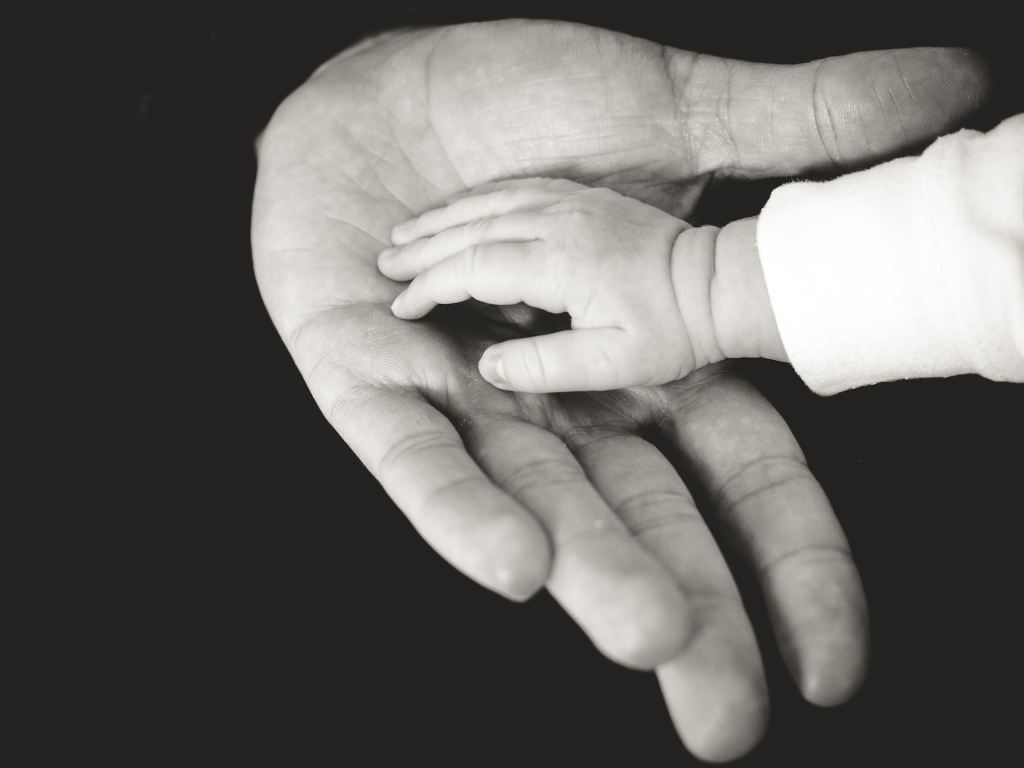
This verse tells us that God the Father has a special place for those who don’t have an earthly father.  He will be Father to them.  It tells us to be Jesus to the widows and orphans, showing them the Way to, and the love of, their Father.  There is a reason the Lord’s Prayer starts with “Our Father” – because ultimately all depends on Him.

Photo by Liane Metzler on Unsplash

Many in the world reject God as Father because of the failure of fathers in the world.  The Old Testament of the Bible is not full of great examples of parents, but rather shows people with all their flaws and warts, who by God’s grace became part of God’s plan to use sinners to reach sinners.  To become the Father of His eternal people, despite the failure of His people to be good fathers.  There are no Godly offspring without the sacrifice of Jesus.  There is no human Jesus without a genealogy of sinners.  There are none to inhabit heaven without the sacrifice of a human Jesus, God’s only Son, given for you.

This Father’s Day, take every opportunity to be grateful for fathers, for parents, for those who take on parenthood in other ways, but also think about those who have no earthly provision.  Because those who see Jesus see the Father, help people see Jesus.  God’s purpose for Godly offspring will be fulfilled and praise Him that you have the awesome responsibility and opportunity to be a part of that work.

Fathers matter.  You matter.  To God and to others.  Whoever you are.