What’s in Your Temple?

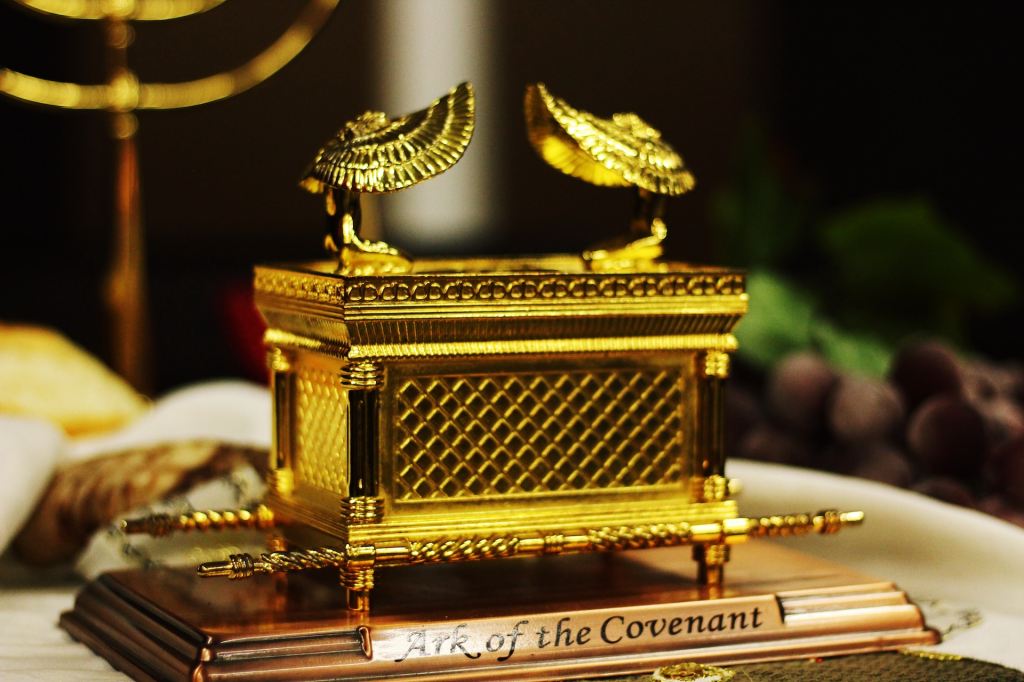
When describing His holiness, God provided pictures like the one in Isaiah 6:1 – “In the year that King Uzziah died I saw the Lord sitting upon a throne, high and lifted up; and the train of his robe filled the temple.”  Because “the train of his robe filled the temple,” there is no room in the temple for anything that isn’t holy.  Or in Revelation 15:8, which says: “and the sanctuary was filled with smoke from the glory of God and from his power, and no one could enter the sanctuary until the seven plagues of the seven angels were finished.”  Until God’s judgment was complete – both on the unrepentant and on the cross for His people – there would continue to be no room in the sanctuary for anyone but the Lord.

How do these pictures apply to us?  Paul asks in 1 Corinthians 3:16-17 – “Do you not know that you are God’s temple and that God’s Spirit dwells in you?  If anyone destroys God’s temple, God will destroy him. For God’s temple is holy, and you are that temple.”  Therefore, we ask ourselves: does the train of the Lord’s robe fill our temples?

Photo by Annie Spratt on Unsplash

A transformative moment came in my Christian life when I understood sin in contrast to holiness, rather than as a list of “don’ts.”  It’s possible (perhaps even easy) to convince ourselves we are not sinners in need of grace by defining sin as things we don’t do.  However, much of the time, the word “sin” in the New Testament is a translation of the Greek word hamartia, which means “to miss the mark.”[1]  The word has athletic connotations, such as if an archer couldn’t hit the bullseye, they wouldn’t win the competition and the prize.  As we all know, archers are supposed to be accurate, and if they aren’t, they’ve “missed the mark.”

Therefore, when Paul writes in Romans 3:23 “for all have sinned and fall short of the glory of God,” he is not saying everybody failed to follow a list of dos and don’ts, but that we have not fully lived the life God intended us to live.  Romans 3:23 declares that while we wouldn’t set up idols in our church building, all of us tolerate some idols in our soul, which is where the Holy Spirit of God chooses to dwell.  The train of His robe does not fill our inner temple, and we too often trod on it with dirty feet.  We’ve “missed the mark” any time there’s other stuff in our temple, directing our thoughts and actions.  However, by the sacrifice of Jesus Christ we have both a hope of living with God and a future where His metaphorical robe does fill us.

In Paradise, God’s people will – individually and collectively – “hit the mark” perfectly for eternity.  His perfect temple will be completed in Paradise, with the living stones of all His people.

Paul returns to holiness again in 2 Corinthians 6:16 to 7:1, quoting several Old Testament passages, since holiness of His people has been the plan from the beginning –

What agreement has the temple of God with idols? For we are the temple of the living God; as God said,
             ‘I will make my dwelling among them and walk among them,
                        and I will be their God,
                        and they shall be my people.
            Therefore go out from their midst,
                        and be separate from them, says the Lord,
            and touch no unclean thing;
                        then I will welcome you,
            and I will be a father to you,
                        and you shall be sons and daughters to me,
            says the Lord Almighty.’

Since we have these promises, beloved, let us cleanse ourselves from every defilement of body and spirit, bringing holiness to completion in the fear of God.

Amen


[1] Greek Strong’s Dictionary

The Depths of David’s Emotion

One of my favorite things about the Psalms is the honesty and outpouring of emotions from the authors.  Even King David is very transparent in the many Psalms he wrote as prayers to God, making him more relatable to us.  We can see he’s not perfect, we can empathize with his pain, and we can often see ourselves mirrored in David’s experiences.

Since David is known as a man after God’s own heart, we often see the depth of his concern for others.  One such passage is Psalm 35:13-14, where David cries out:

But I, when they were sick—
            I wore sackcloth;
            I afflicted myself with fasting;
I prayed with head bowed on my chest.
I went about as though I grieved for my friend or my brother;
             as one who laments his mother,
            I bowed down in mourning.”

How often do any of us put this much effort into crying out to God for someone else’s well-being?  But who are the “they” at the beginning of the verses?  Who is David so concerned about?  We can see that it is someone who was sick, but it wasn’t a brother or his mother, so probably not a family member.

David. Photo by Jack Hunter on Unsplash

The depth of David’s pleading to God for the “they” in Psalm 35 is even more striking because the “they”…are his enemies!  The Psalm begins with:

Contend, O LORD, with those who contend with me;
            fight against those who fight against me!

The rest of the Psalm suggests there are many people making false accusations about David, “malicious witnesses” out to destroy him.  David cries out to God in verse 8:

“Let destruction come upon him when he does not know it!
And let the net that he hid ensnare him;
            let him fall into it—to his destruction!”

David vents a lot of negative emotions before getting to verses 13 and 14, but he does get to the point of concern for these enemies.  He lets off a lot of steam begging God for justice, but never writes about taking justice into his own hands.  This is the honesty I love about the Psalms – if you’re angry, it’s ok to vent to God!  But it’s not ok to pray to God so you can take vengeance on your enemies yourself.

It’s only natural to be angry at our enemies, but in Christ we are more than natural, so we don’t have to do what comes naturally.  Here is what Christ expects of His people, as written in Matthew 5:43-46:

You have heard that it was said, ‘You shall love your neighbor and hate your enemy.’  But I say to you, Love your enemies and pray for those who persecute you, so that you may be sons of your Father who is in heaven. For he makes his sun rise on the evil and on the good, and sends rain on the just and on the unjust.  For if you love those who love you, what reward do you have? Do not even the tax collectors do the same?

David’s venting in Psalm 35 is the part that anyone can do, but what really stands out is the depth of David’s love for his enemies!  As I wrote earlier, how often do we put this much effort into crying out to God for someone else’s well-being?  Even if they are our friends?

Jesus enables us to be supernatural, which is sometimes what we need to love unconditionally and pray as David did.

But I, when they were sick—
            I wore sackcloth;
            I afflicted myself with fasting;
I prayed with head bowed on my chest.
I went about as though I grieved for my friend or my brother;
             as one who laments his mother,
            I bowed down in mourning.”

It’s Never Too Late

The New Testament book of Acts is also sometimes referred to as “Acts of the Apostles” because of the book’s focus on the apostles and God’s work through them.  The book has story after story of them preaching, but also healing and performing miracles.

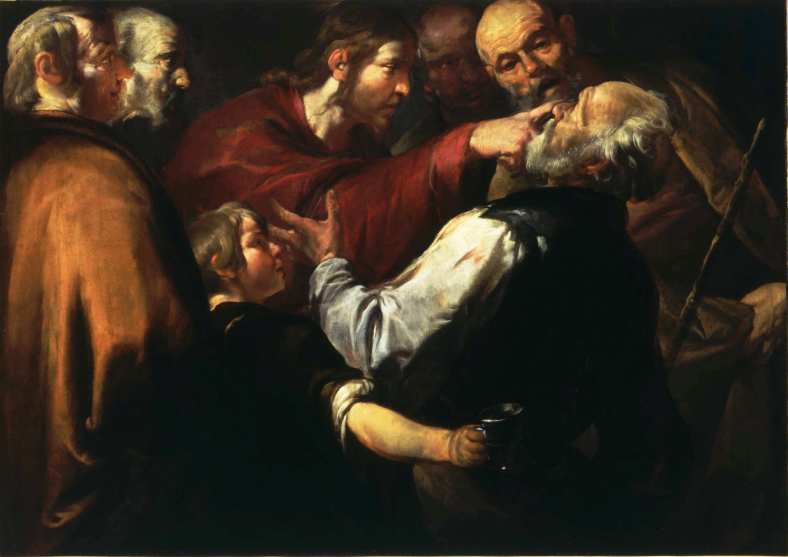
For example, Acts 3 has a story of a man healed by the power of Jesus through Peter and John.  They were walking to the temple for prayer, and came across a lame man begging for alms.  But instead of giving the man money, Peter says to him, “I have no silver and gold, but what I do have I give to you. In the name of Jesus Christ of Nazareth, rise up and walk!”  Then, “immediately his feet and ankles were made strong. And leaping up, he stood and began to walk, and entered the temple with them, walking and leaping and praising God.”[1]

This is already an impressive miracle, but Luke (author of Acts) adds some additional details to show us that God had sovereignly arranged this miracle for maximum effect.  First, Acts 3:2 tells us this man had been “lame from birth” and verse 10 says all the people recognized him, so there could be no denying it was the same man.  Later on, Luke adds another detail to the story, in Acts 4:22. “For the man on whom this sign of healing was performed was more than forty years old.”  If this were a hoax, one might imagine someone putting it on for a short period of time, but not for forty years!  And not from birth!  In addition, someone lame for any period of time should take months or years to gain strength enough to walk and leap, but this man was immediately healed!  This was undeniably a miracle.

However, I think the mention of the man’s age carries a couple of other lessons as well.

First, like the healed man, many people live for forty years or longer before coming to really know Christ, but Jesus found him.  Therefore, it’s never too late for someone to come to Christ.  Also, for those who already know Christ, it’s never too late to find purpose in Him.  God may reveal His purposes late in someone’s life.  Sometimes being a late bloomer only means that was God’s timing.  Many can discover gifts and ministries late in their life, meaning either their biological or Christian life.

Lastly, this miracle on a forty-year-old shows us that even great suffering can result in glory to God.  We don’t know why this man had to suffer with disability for so long, but we do know that the name of Jesus was glorified in the presence of many because he was healed.  We may never understand why there is so much suffering in this world, but God assures us with this miracle that it is inevitable that He will be glorified.  Suffering can have a purpose.

So, if you’re suffering in some way, or even struggling to overcome some specific sin, it’s never beyond Jesus’ ability to heal you.  If you’re frustrated with a lack of purpose or struggling to fit in, it’s never too late to find meaning in a walk with Christ.  If this has been going on for a long time – even forty years or longer – it’s never too late to hope in Jesus.  He will heal all our physical, emotional, and spiritual problems in His timing and in the way that will most glorify Him.  He guarantees it.

For those whom he foreknew he also predestined to be conformed to the image of his Son, in order that he might be the firstborn among many brothers.” – Romans 8:29

Soli Deo Gloria


[1] Acts 3:1-10

Don’t Kick Against the Goads

The Apostle Paul, author of much of the New Testament, was first called Saul and was a very different person before meeting Christ.  As Saul, he saw no contradiction between persecuting his religious enemies (the new Christian church) and being righteous under the law.  He also may have seen Christianity as a political threat, a new religion that would upset the balance of power between the Jews of the first century and the occupying Romans by demanding loyalty to a higher power above Rome.  From this perspective, he may have thought his religion required persecution of those who disagreed.

Luke, author of Acts, describes Saul’s pre-Christian life like this:

But Saul, still breathing threats and murder against the disciples of the Lord, went to the high priest and asked him for letters to the synagogues at Damascus, so that if he found any belonging to the Way, men or women, he might bring them bound to Jerusalem.” – Acts 9:1-2

Paul himself does not deny this past, writing to the church in Galatia:

“For you have heard of my former life in Judaism, how I persecuted the church of God violently and tried to destroy it” – Galatians 1:13

But when confronted by Jesus on the road to Damascus as referred to in Acts 9 above, the Lord asked him to his face: “Saul, Saul, why are you persecuting me? It is hard for you to kick against the goads.” (Acts 26:14).  This is a strange expression for us, but to “kick against the goads” meant that by fighting against God’s will (including His grace for His people in any nation or tribe), Saul was only hurting himself.  Goads were sticks that were pointed on one end and used to prod oxen to move where a farmer wanted them to go.  A stubborn ox who decided to resist would “kick against the goads,” only leading to more pain.  Persecuting the absolute Lord of the universe is not a good idea.

Saul learned his lesson and after that confrontation, changed his name to Paul, a man transformed in how he treated those he might consider enemies.  He went from “breathing threats and murder” against Christians, to wishing for the salvation of the Jews, and anyone who would listen:

Brothers, my heart’s desire and prayer to God for [the Jews] is that they may be saved.” – Romans 10:1

In Christ, His hate for the “other” became compassion.  Saul wanted to put his enemies to death; Paul wanted to put his own sin to death.  He never shied away from his brutal past, but he also began nearly all of his letters to the early churches with a greeting like this one at the beginning of Galatians:

“Grace to you and peace from God our Father and the Lord Jesus Christ” – Galatians 1:3

Dear fellow travelers let’s strive to bring grace and peace to every encounter we have as we travel through this world.  Even with those we might consider enemies.

Sola Gratia

Is Christianity Like Improv Comedy?

The TV show Whose Line is it Anyway? is probably the most-widely-known form of improvisational comedy, and one of my favorites.  Four performers act out short scenes based on a set of rules for each scene or game, spontaneously adding their own creativity and (if successful) humor.  For example, in the “Props” game, pictured, the performers were given two “P” shaped props to make jokes about.  The show wouldn’t be any good if they just showed us the props and explained the rules over and over again.  The show is pointless without spontaneous creativity.  But why am I writing about improv on a Christian blog?  But why am I writing about improv on a Christian blog?  Because today I’m writing about a Bible study that leaves us to ask: Whose Plan is it Anyway?

Whose Pun is it Anyway?

In Judges 6-7, God delivers Israel from the Midianites using Gideon, who thought God couldn’t use him because “my clan is the weakest in Manasseh, and I am the least in my father’s house.”  At times, Gideon doubts God is speaking to him and that He really means what He says, but God patiently answers Gideon’s questions and performs miracles, encouraging Gideon to move forward.

Eventually, Gideon and his 300-man army attacked the enemy army, which was “like locusts in abundance, and their camels were without number, as the sand that is on the seashore in abundance.[1]  After Gideon split his army into three groups, this was the plan of attack:

So Gideon and the hundred men who were with him came to the outskirts of the camp at the beginning of the middle watch, when they had just set the watch. And they blew the trumpets and smashed the jars that were in their hands.  Then the three companies blew the trumpets and broke the jars. They held in their left hands the torches, and in their right hands the trumpets to blow. And they cried out, ‘A sword for the LORD and for Gideon!’”[2]

Whose Plan is it Anyway?
This is where improv comes in: the text does not tell us who came up with this wacky attack plan.  Was it God’s idea or was it Gideons?  Why leave it ambiguous?  I think it is because, either way, it is not a decisive factor in the victory.  The attack plan works because of God’s involvement, no matter whose idea it was.  If it was Gideon’s idea, he was only using the abilities his Maker had given Him for the purpose of glorifying Him.  If it was God’s, Gideon was also only using the abilities God gave him and dedicating them to God’s glory.

What’s amazing is that Gideon went from testing God with fleece to carrying out this attack.  God had Gideon convinced it would work, and that it would work because God would make it work.  Victory didn’t come from any advantage Gideon had or created, and all along God was determined to get the glory.  The plan would have failed if God had not put fear into the camp, and had not let Gideon know about that fear by way of a dream a Midianite soldier had.

Like improv comedy, God’s rules only go so far before the performers need to take over.  God gives us patterns, which are like the rules of an improv skit, not step-by-step instructions in every aspect of our lives.  Adam and Eve were shown a pattern in the Garden of Eden, Moses was given a pattern for the tabernacle on the mountain, and Jesus lived a pattern of how to love the Father and our neighbor.  Beyond the patterns and rules there is so much to do and explore.  His will is for His people to make the world like Eden, to worship Him as He should be worshiped, and to love the world the way Jesus loved.

The Little Things
To hear and obey His voice, we must spend time with Him in prayer and study, diligently learning the patterns He has laid out for us, but He does not expect us to stop there. At some point, we must take the guidance we have and move forward with the wisdom and creativity He has endowed us each with.  When we do we will be like the servant who successfully invested his Master’s resources, and in return “His master said to him, ‘Well done, good and faithful servant. You have been faithful over a little; I will set you over much. Enter into the joy of your master.’”[3]

However, if we either do not diligently seek Him, or if we say He has not given us enough instructions, we may find ourselves cast out from the Master’s presence, hearing: “you ought to have invested my money with the bankers, and at my coming I should have received what was my own with interest.”[4]

In Gideon’s story, we see God’s compassionate understanding toward His people who struggle to hear and obey His voice but keep trying.  We, like Gideon, are not always faithful over the little things such as prayer, study, and regular worship.  But Only He fully knows the depth of our doubts and struggles, and He provides what we need to trust Him and move forward in faith, knowing our doubt is never fully overcome until eternity.

In the story, we also see that we must often act on trust, even when we think we have incomplete information.  Like Gideon, we should be imperfectly persistent, wrestling with God who knows our faith is imperfect.  He can bridge the gap to us in His unlimited grace.

So, where does God’s guiding voice stop, and our God-given creativity begin?  Like a good improv comedy scene, the parts can come together perfectly, glorify God, and encourage His people to come along in faith, as the men of Naphtali, Asher, Manasseh, and Ephraim joined the battle against the Midianites once it was clear God had delivered the victory[5].  When we seek Him and find Him, and in faith move forward to spread His character and creativity in the world, glorifying Him.

God is glorified when His people attempt things that sometimes don’t make sense, then succeed because He provided the way.  It’s always His plan anyway.

Soli Deo Gloria


[1] Judges 7:12
[2] Judges 7:19-20
[3] Matthew 25:21
[4] Matthew 25:27
[5] Judges 7:23-25