Compassion for the Harassed and Helpless

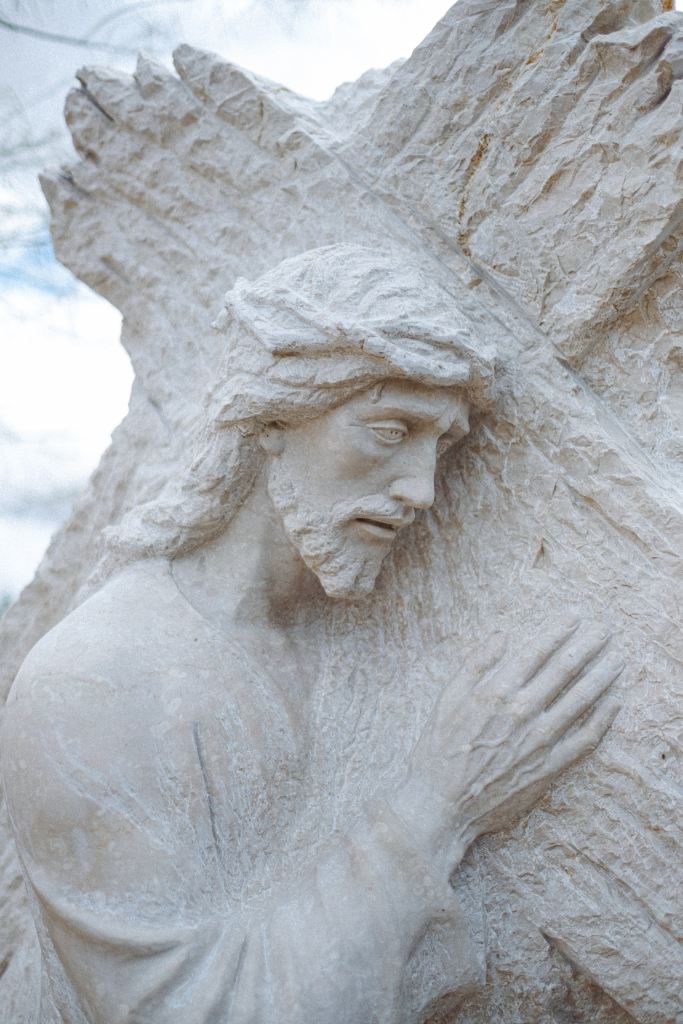
And Jesus went throughout all the cities and villages, teaching in their synagogues and proclaiming the gospel of the kingdom and healing every disease and every affliction. When he saw the crowds, he had compassion for them, because they were harassed and helpless, like sheep without a shepherd.” – Matthew 9:35-36

Jesus lived under the greatest empire the world had yet seen, and in a deeply religious Jewish culture developed over centuries.  The people had powerful leaders, both political and religious.  Why then were the people seemingly without a shepherd to lead them?

The Roman Empire touted widespread peace and prosperity due to the Caesars and their government.  But the people still had many unsolved problems and no hope.  “Throughout all the cities and villages” were diseased, afflicted and helpless people, and Jesus could help them all in ways the Romans could not or would not.

The Jewish Pharisees, jealous of Jesus’ ability to solve problems they could not, claimed “He casts out demons by the prince of demons.”  They rightly described His power as supernatural, but they called it evil.  Even as He was performing life-saving miracles, they could not tolerate Him as a rival, and so rejected the people’s only hope.

So, the people remained “harassed and helpless,” not knowing who to trust.

Is your culture also faithless?  Your workplace?  Your community or household?  Jesus encouraged His disciples to see rampant lack of faith as an opportunity to show the crowds the compassion of Jesus: “Then He said to his disciples, ‘The harvest is plentiful, but the laborers are few; therefore pray earnestly to the Lord of the harvest to send out laborers into his harvest.’” – Matthew 9:37-38

Today, pray for workers to bring in the harvest.  Also, know that God might make you and I those workers.  As in Jesus’ day, it is up to individual disciples to proclaim the gospel of the kingdom – through compassionate action and often in spite of what those in charge of other kingdoms might prefer.  Harassed and helpless sheep can be frustrated and difficult, but only humble disciples know the problems on the streets of their cities and villages best.

Pray for the compassion of our Great Shepherd who can work miracles. Is there a need He can meet through you today?

Photo by Erik-Jan Leusink on Unsplash

The Heavenly Holy of Holies

The temple King Solomon built in Jerusalem was not just as a place of worship and sacrifice, but also an image, or a model, of the cost of sin and of redemption.  The many courts, chambers, and walls were an object lesson in man’s separation from God because of his sin, and the required cost of restoring that relationship.  The most interior part of the temple, and hardest to get to, was the Holy of Holies, a room shaped like a perfect cube: 20 cubits by 20 cubits by 20 cubits.[1]  This cubed space was so sacred, and so holy, that only the high priest could enter it, and only once per year, and only after elaborate sacrifice.

However, by Christ’s sacrifice, we have hope: “We have this as a sure and steadfast anchor of the soul, a hope that enters into the inner place behind the curtain, where Jesus has gone as a forerunner on our behalf.” (Hebrews 6:19-20a).  In Mark’s gospel, we learn that when Christ died on the cross, “the curtain of the temple was torn in two, from top to bottom.”[2]  This curtain was the barrier covering the entrance to the Holy of Holies, and with Jesus’ death, entrance isn’t limited to just the high priest, but open to all who would believe in Him.  He entered “on our behalf” and anchors us to this most holy destination.

The Bible was not finished drawing this picture, though.  In Revelation 21, a new city – a new Jerusalem – is seen by the apostle John in a vision, coming down from heaven, and verse 16 says: “The city lies foursquare, its length the same as its width. And he measured the city with his rod, 12,000 stadia. Its length and width and height are equal.”  This vision was not meant to tell us that in Paradise we will all live inside a big cube.  As pastor Glenn Parkinson wrote: “Certainly all physical beings must exist somewhere, but this is not a vision of where God’s people will live, but how they will live when the former things have passed away.”[3]

Don’t put Earth in a box. Photo by The New York Public Library on Unsplash

Earlier, Revelation 21:1 referred to a whole new heaven and earth, so the new Jerusalem probably represents something about life everywhere in this new creation, and in this image, God would have used things familiar to John, the author of Revelation, otherwise the visions wouldn’t make sense.  The only other architectural cube John would probably recall from Scripture would be the Holy of Holies, but what does that mean?

I believe it means that all of the new heaven and earth will be inhabitable by both God and His people.  All of Paradise will be holier than even the Holy of Holies, but because the church will be fully sanctified, God’s people can enter His presence without the many temple courts and chambers and walls symbolizing man’s separation from God.  Relationship between Creator and created will be fully restored.  Everywhere will be holy, and everyone will be holy.

No, the New Jerusalem isn’t literally a cube, but it symbolizes that in the new world, the temple is not even needed, because all is as it should be between God and man:

And I saw no temple in the city, for its temple is the Lord God the Almighty and the Lamb.” – Revelation 21:22

Praise God Almighty and the Lamb!


[1] 1 Kings 6:20 (a cubit was roughly 18 inches)
[2] Mark 15:38
[3] Parkinson, Glenn.  Tapestry: The Book of Revelation (2015).

The Scale of Our Trials

The apostle Paul begins 2 Corinthians with the usual greeting, followed by a section on the comfort God provides us when we suffer or are afflicted for Christ’s sake.  2 Corinthians 1:5 makes this statement: “For as we share abundantly in Christ’s sufferings, so through Christ we share abundantly in comfort too.”

On that verse, Charles Spurgeon wrote this analogy: “The Ruler of Providence bears a pair of scales—in this side He puts His people’s trials, and in that He puts their consolations. When the scale of trial is nearly empty, you will always find the scale of consolation in nearly the same condition; and when the scale of trials is full, you will find the scale of consolation just as heavy.”[1]

Therefore, when living for Christ brings trouble and opposition, remember also that our Father is ruler of all and fully intends to share His comfort with us through Christ eternally.

For I consider that the sufferings of this present time are not worth comparing with the glory that is to be revealed to us.” – Romans 8:18


[1] From “February 12” of Spurgeon’s Morning by Morning commentary

The Last Enemy is Death

In life there are many difficult questions, and two of the hardest are also common objections to Christianity: 1) Why doesn’t God do anything about the evil in this world? and 2) Why do bad things happen to good people?

However, the Bible does not leave Christians without hope in the face of these questions.

First, part of what God is doing about the evil in this world is the fact that everyone dies.  The Bible teaches that every bad thing in this world is a result of sin – people deviating from God’s purposes – and that because of that sin the world is cursed[1].  Not only do people hurt each other, but the creation itself, including human nature, is not in its ideal state.

Death was not originally part of this world, but came in to the world as a result of sin and is a constant reminder of it.  In Genesis chapter 5, there is a genealogy from Adam to Noah.  The phrase “and he died” is repeated over and over again and is a reminder that this world is not perfect.  God created a consequence for the sin of mankind: death.  While the Bible doesn’t explain why there was a snake in the garden or why Adam and Eve sinned, it does describe what God is doing about it.  When we ask why bad things happen, we acknowledge that bad things exist, that they shouldn’t exist, and that they can happen to anyone.  God isn’t doing nothing about the evil in the world – we all die and that is part of the judgment.

So, the two objections to Christianity (Why doesn’t God do anything about the evil in this world? and why do bad things happen to good people?) end up being contradictory because part of what God does about the evil in this world is that bad things (death) happen to everyone.

However, the Bible teaches that there are two deaths: a physical death and a spiritual death.  In the first, our soul is separated from our body and our body dies.  In the second, our soul is separated from God eternally and our soul dies but exists forever away from God’s presence and blessings.  A second thing that God is doing about the evil in this world is that the first death is universal, but the second death is not.

Fortunately, judgement and death aren’t the only things God is doing about sin.  What does this mean?  Note the second half of God’s curse on the serpent from Genesis 3:15 –

I will put enmity between you and the woman,
            and between your offspring and her offspring;
he shall bruise your head,
            and you shall bruise his heel.

Who is being bruised here?  In the last phrase, Satan is injuring Christ through the crucifixion, but it’s described as a wound to the heel because it is not fatal.  Jesus was raised to life eternal.  On the other hand, Christ shall bruise the head of Satan – a fatal blow that he will never recover from.  This was determined from the beginning.

While judgement comes to all in physical death as a result of sin, through Christ there is a way out from spiritual, eternal death.  Jesus has paid the price for our sin and has conquered eternal, spiritual death as a result.

The last enemy to be destroyed is death.” – 1 Corinthians 15:26

Praise God!


[1] See Genesis 3:19 and 3:22

His Story Needs No Revision

Journalism, particularly newspaper journalism, is sometimes referred to as “the first rough draft of history.”  This phrase is usually attributed to Philip Graham, former publisher of the Washington Post.  It’s a useful phrase because it is flattering to journalists to know that their work is important and meaningful, but also a reminder that their work is inherently imperfect and in need of later revision.  Particularly under deadline pressure, it is impossible to know all the relevant facts and potential angles of any story.  Unavoidable and expedient choices and compromises must be made.  The saying came to mind when I recently read Psalm 33:10-11, which says:

The LORD brings the counsel of the nations to nothing;
            he frustrates the plans of the peoples.
The counsel of the LORD stands forever,
            the plans of his heart to all generations.

As I’ve written before, total objectivity is “theoretically impossible for anyone but God Himself.”  The best any news reporting can do is cover a tiny piece of what happens in the world, screening it using whatever judgment they decide to use, and applying imperfect ethical standards.  As I’ve also written, “The dots of the pointillistic narrative are never the full picture and sometimes aren’t the right color.”  Thus is the “counsel of the nations” – incomplete by necessity, biased by choice, and morally imperfect by nature.

In contrast, what God says is true is always true, unlike the 24/7 news cycle where truth is constantly under revision.  The “counsel of the LORD” contains everything we need to know about His plans, is designed by His choice to benefit those He loves, and morally perfect because His nature is holy.  If better counsel existed, He would know about it.  His counsel reliably informs us about how He wants us to view the events of the world, rather than the other way around.  His plans frustrate and overcome the “plans of the peoples”, rather than the other way around.

When Jesus said on the cross that “it is finished,”[1] His payment for our sins was complete.  He lived a perfect life in our place, so that He could be a perfect sacrifice and atone for all the sins of His people in all times and all places.  This was not a rough first draft, but the flawless consummation of God’s plan for salvation “to all generations.”  Jesus made no flawed choices for the sake of expedience, and His work can be trusted at all times.  Whatever you see in the news today, the Good News of the kingdom of heaven is more important, more trustworthy, and provides comfort for your soul.

His Story is the first draft, but it is also the only draft because none other is needed.  His Story needs no revision.

Therefore:
Our soul waits for the LORD;
            he is our help and our shield.
For our heart is glad in him,
            because we trust in his holy name.
Let your steadfast love, O LORD, be upon us,
            even as we hope in you.” – Psalm 33:20-22


[1] John 19:30