
Peter Learns to Report for Duty

In a small group study of the apostle Peter, we studied Mark 1:29-39, where Jesus heals Simon’s mother-in-law, then “That evening at sundown they brought to him all who were sick or oppressed by demons.  And the whole city was gathered together at the door.  And he healed many who were sick with various diseases, and cast out many demons.”  Jesus was certainly up most of the night ministering to the crowds that showed up.  But “rising very early in the morning, while it was still dark, he departed and went out to a desolate place, and there he prayed.”

Simon Peter had to look for Him, since he wasn’t up early enough to see Jesus go to pray.  Peter was exhausted.  This is one of the subtle ways Jesus discipled Peter – by His example of being in constant contact with God the Father, even when it was hard or inconvenient.  Even Jesus needed to report to the Father regularly.  He put the Father first.  Every day, even when He was up most of the night.  Peter didn’t just witness many miracles, but he witnessed the relationship of Son to Father, and the dependence of the Son on the Father.  Peter had to learn that we can’t minister to others solely on our own knowledge and strength.

Photo by Jakub Kapusnak on Unsplash

The study then moved on to Luke 5:1-11, which is a story of Peter and other fishermen hauling in a miraculous catch of fish.  Jesus finds these fishermen washing their nets, after a long, frustrating night of catching nothing.  Jesus tells Simon “Put out into the deep and let down your nets for a catch.”  Peter protests: “Master, we toiled all night and took nothing! But at your word I will let down the nets.”  Imagine how Peter (a professional fisherman) would feel about a rabbi (not a professional fisherman) giving fishing advice!  But soon their nets caught so many fish that “their nets were breaking.”

What made the difference?  Sometimes what determines whether nothing happens, or something amazing happens is our willingness to listen and to obey.  Our ability to keep in constant contact with the Father, through Jesus His Son.  Jesus made time for the Father even after a long night of ministry, and Peter saw Him do it.  Shortly after, Jesus showed Peter that even small changes in our routines and lives, done in obedience to Him, can make a big difference, but how can we know how to follow Jesus if we aren’t showing up to listen?

“Trust in the LORD with all your heart,
and do not lean on your own understanding.
In all your ways acknowledge him,
and he will make straight your paths.
Be not wise in your own eyes;
fear the LORD, and turn away from evil.
It will be healing to your flesh and refreshment to your bones.” – Proverbs 3:5-8

God Rules in His Sleep

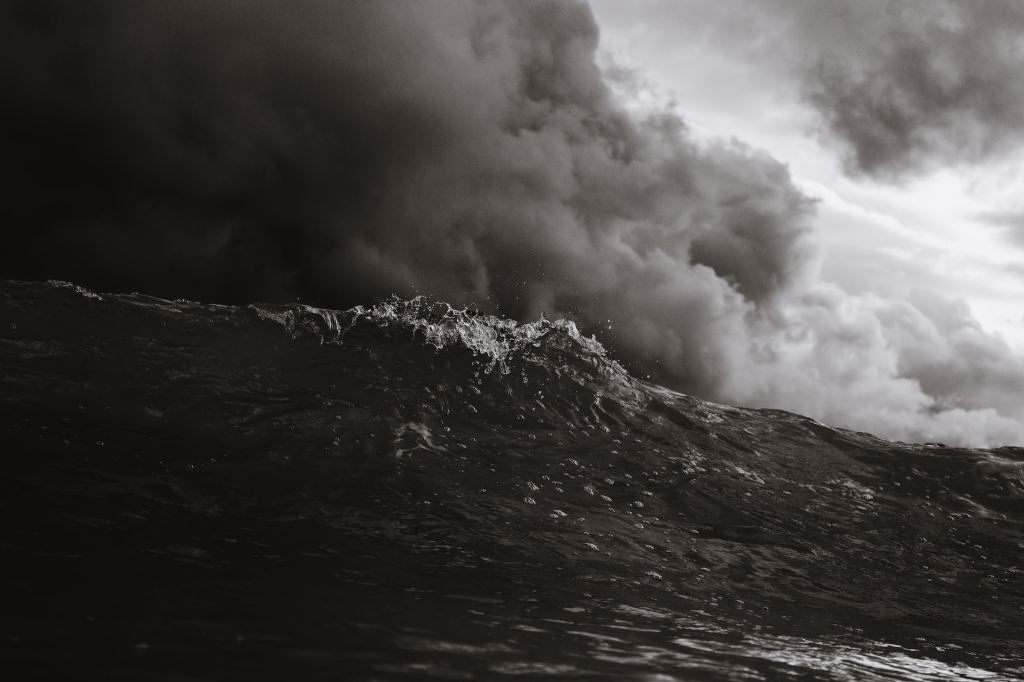
In Mark’s Gospel, he tells a story of Jesus taking a nap, causing His disciples to panic.  Does it ever seem like God is asleep, leaving you feeling adrift the world’s circumstances?  When Jesus walked the earth, there were times when God literally was asleep.

One story comes from Mark 4:35-41.

On that day, when evening had come, [Jesus] said to them, “Let us go across to the other side.”  And leaving the crowd, they took him with them in the boat, just as he was. And other boats were with him.  And a great windstorm arose, and the waves were breaking into the boat, so that the boat was already filling.  But he was in the stern, asleep on the cushion. And they woke him and said to him, “Teacher, do you not care that we are perishing?”  And he awoke and rebuked the wind and said to the sea, “Peace! Be still!” And the wind ceased, and there was a great calm.  He said to them, “Why are you so afraid? Have you still no faith?”  And they were filled with great fear and said to one another, “Who then is this, that even the wind and the sea obey him?”

At the beginning of the story, Jesus told His disciples they were going to cross the Sea of Galilee, then knowing what was coming, “He who keeps Israel”[1] took a nap.  Had the disciples understood Jesus, His napping should have reassured them that they were safe, since He was not concerned about the storm.  Instead, they thought He didn’t care, which showed that fear of the storm had overcome whatever faith they had.  Jesus said they were going across, but they doubted.

Which brings up a very important question.

When did the wind and the sea obey Jesus?  At the beginning of the story, at the end, or both?  Or at all times?  Before Jesus calmed the storm, was the sea being disobedient to God’s laws and will?

Photo by Matt Hardy on Unsplash

I believe Jesus calmed this storm so that next time He wouldn’t have to.  He was teaching them that He always cares, regardless of what the circumstances seem to say.  He was teaching them that even when it seems like He’s asleep, He is still in control of our circumstances no matter how chaotic they look and feel to us.  During the next storm, He wanted them not to panic, but to trust Him because He showed them no circumstance escapes His notice.  The storm does not control us; He controls the storm.

When Jesus calmed the storm, He did not create a hedge (See Job 1:10) around His disciples, He just demonstrated that it existed all along.  God was not going to let His Son drown before His mission was complete and neither will He let His other children drown before their work is done!

Sometimes when God seems distant and we feel we are sinking, in reality we are being given a divinely designed opportunity to learn to trust that:

The LORD will keep you from all evil;
            he will keep your life.
The LORD will keep
            your going out and your coming in
            from this time forth and forevermore[2]

He knows sometimes we have to learn the hard way, and He knows best.  Even when He is sleeping.“Let us go across to the other side.”


[1] Psalm 121:4
[2] Psalm 121:7-8