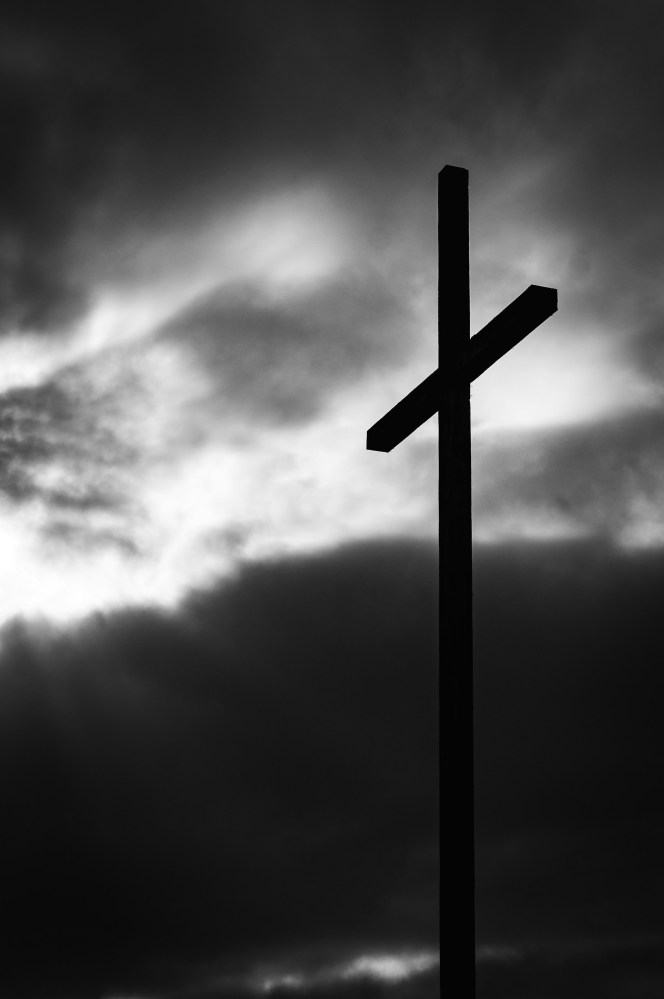
The Cross and the Fury of God

Shortly after the death of King David, the kingdom was split into two: 10 of the twelve tribes becoming Israel, and the remaining 2 (Judah and Benjamin) becoming Judah.  Much of the OT history and prophets tells the story of how these 2 kingdoms – first Israel and then Judah – fell away from worship of the true God into idolatry.  But the prophets also emphasize that idolatry resulted in social sins – God’s people not treating others the way He wanted them to treat them.  In both nations, religious observance became an exercise in trying to buy God’s favor so people could live however they wanted to, but God condemned this empty religion, saying instead that:

He has told you, O man, what is good;
            and what does the LORD require of you
but to do justice, and to love kindness,
            and to walk humbly with your God?” (Micah 6:8)

God wanted His people to love people the way He loved people.  But our God is also a God of justice, who cannot overlook any violation of His commands to love Him and others.  When Israel and Judah failed to live as they should, God’s wrath and anger was poured out on them, in sometimes shocking ways.  The book of Ezekiel is full of alarming images and revelations about the sins of God’s people and His vengeance on them, and in Ezekiel 5:10-12, the people are told what the consequences of their sin would be:

Therefore fathers shall eat their sons in your midst, and sons shall eat their fathers. And I will execute judgments on you, and any of you who survive I will scatter to all the winds.  Therefore, as I live, declares the Lord GOD, surely, because you have defiled my sanctuary with all your detestable things and with all your abominations, therefore I will withdraw. My eye will not spare, and I will have no pity.  A third part of you shall die of pestilence and be consumed with famine in your midst; a third part shall fall by the sword all around you; and a third part I will scatter to all the winds and will unsheathe the sword after them.”

God’s people would suffer siege conditions so severe under their enemies that cannibalism would be the only way to survive!  And most who survive the siege will be struck down: a third by pestilence and famine, a third by the sword, and the last third would be scattered, torn away from the Promised Land God had given to them.  God’s people would go into exile: Israel to Assyria and Judah to Babylon.  These nations would be instruments in God’s hands, executing His judgement on His people Israel and Judah.  As Hebrews 10:31 says: “It is a fearful thing to fall into the hands of the living God,” and the Old Testament does not shy away from how horrible this can be.

The next verse in Ezekiel (5:13) says: “Thus shall my anger spend itself, and I will vent my fury upon them and satisfy myself. And they shall know that I am the LORD—that I have spoken in my jealousy—when I spend my fury upon them.”  Through conquest and exile, the LORD was determined to show His people that His justice and His fury are real, and He is not to be trifled with.  When He commands His people to do something, He means it.
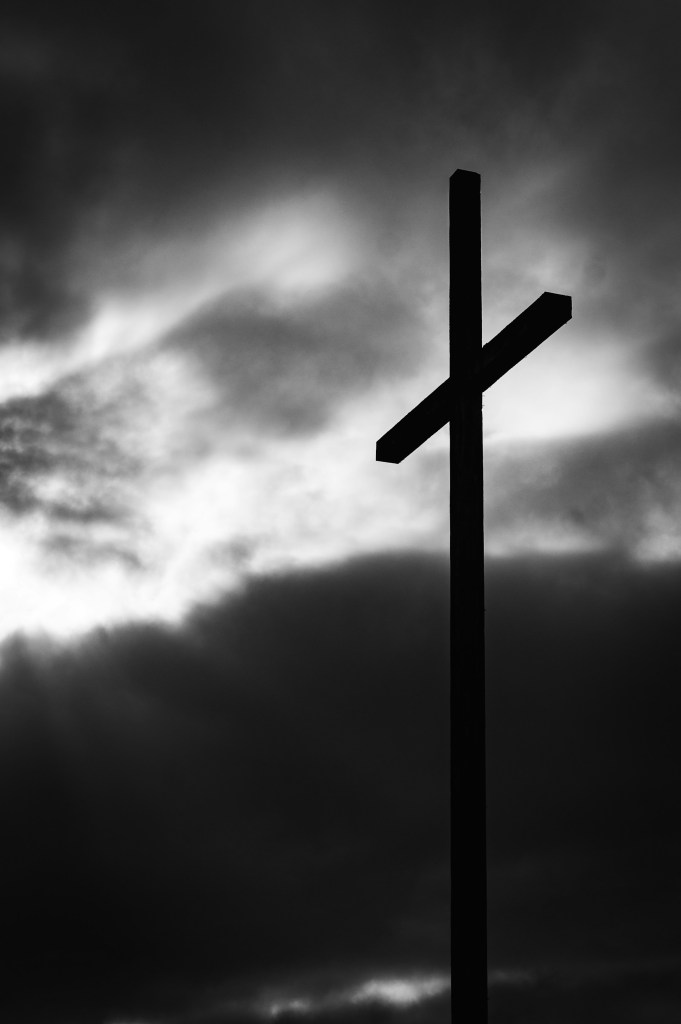
Photo by Anderson Rian on Unsplash

Which brings us to Jesus and the cross.  The New Testament tells us that the fury and wrath of God toward all of mankind – not just the ancient tribes of Israel and Judah – was spent upon Jesus on the cross.  God the Father poured out all of His fury on God the Son, on our behalf.  The anguish Jesus must have felt comes into a bit more focus when we consider the venting and satisfying of God’s anger in the Old Testament relative to what Jesus had to endure on the cross.  His suffering had to be enough to fulfill the justice necessary in God’s eternal, unchanging character.  Instead of our sin leading to our own suffering, He took our suffering upon Himself.

Jesus went to the cross and died that we may be forgiven and restored to a right relationship with God, but did God pour His wrath on Jesus so we could just continue living as we choose to live?  Certainly not!  God still wants from His church what He wanted from His people in ancient times:

He has told you, O man, what is good;
            and what does the LORD require of you
but to do justice, and to love kindness,
            and to walk humbly with your God?

Consider how much God hates sin and consider why.  It’s because sin is the opposite of people doing justice, being kind, and being humble toward the God who loves them and commands them to love others.  Sin harms us and harms other human beings.  Sin repeats Adam and Eve’s determination to live their own way, no matter what God has to say about it.  Sin tarnishes God’s reputation and glory.  Sin even damages our world and environment.  Sin deserves wrath for these reasons, but God has always preserved a remnant of people who would be sinless in eternity.  People who would live the way they were intended to live.  People who would not deserve wrath because they would be sinless.  People who would glorify Him.  These people are His church.

Are we willing to accept Jesus’ sacrifice for us so that we may live this life?

Pray that we will. Amen.

Letting God Be Your Vision

Photo by Jenna Day on Unsplash

“Guard your steps when you go to the house of God. To draw near to listen is better than to offer the sacrifice of fools, for they do not know that they are doing evil.” – Ecclesiastes 5:1

When recently reading Ecclesiastes I was initially put off by the seeming harshness of this verse. What sort of sacrifice to God is foolish, or even evil? What is this verse of the Bible I believe in telling me to do, or not to do, and how does it point to Christ?

Then I was reminded of Micah 6:6-8:
“With what shall I come before the LORD, and bow myself before God on high? Shall I come before him with burnt offerings, with calves a year old?
Will the LORD be pleased with thousands of rams, with ten thousands of rivers of oil? Shall I give my firstborn for my transgression, the fruit of my body for the sin of my soul?”
He has told you, O man, what is good; and what does the LORD require of you but to do justice, and to love kindness, and to walk humbly with your God?”

When Jesus said “it is finished” on the cross, He was saying His sacrifice is enough and it is all we need. We don’t go to church to negotiate with or bargain with God. We cannot impress God. We can offer nothing He does not already have and has not already provided. This is good news!

We only offer ourselves in worship. We “draw near to listen”, to know Him, and to follow Him. Take a listen to one of my favorite hymns today and just be available for whatever He has in store for you. He is enough for you, and for the world.

God is Not a Chemistry Experiment

There are some Old Testament stories that seem frightening, or even repulsive.  We might read these and ask, is that the same God that we worship today?  One of these is a brief story of Aaron’s sons, found in Leviticus 10:1-2.

Now Nadab and Abihu, the sons of Aaron, each took his censer and put fire in it and laid incense on it and offered unauthorized fire before the LORD, which he had not commanded them.  And fire came out from before the LORD and consumed them, and they died before the LORD.”

These sons of Aaron were priests, with detailed instructions for worshipping God, like those found in Leviticus 16:12 (“And he shall take a censer full of coals of fire from the altar before the LORD, and two handfuls of sweet incense beaten small, and he shall bring it inside the veil”) and Exodus 30:9 (“You shall not offer unauthorized incense on it, or a burnt offering, or a grain offering, and you shall not pour a drink offering on it.”).  There are many theories on what they did wrong, including that they took the coals from somewhere other than from the altar, but I think all the theories imply that they were treating worship like a chemistry experiment.

What do I mean by that?  Nadab and Abihu knew what God wanted but probably were curious to see what would happen if they offered something different.  As someone with a chemistry set knows what happens when they mix chemical A and chemical B, they might try to learn something new by mixing chemicals A, B, and C.  Like Adam and Eve in the beginning, and everyone else since then, they thought “what’s the worst that could happen if we try to do this our own way?”  Nadab and Abihu might have been trying to learn something, and they tragically did, because God is not a laboratory where we explore our curiosity.

Living Sacrifices
In the New Testament book of Romans, Paul wrote:

I appeal to you therefore, brothers, by the mercies of God, to present your bodies as a living sacrifice, holy and acceptable to God, which is your spiritual worship.  Do not be conformed to this world, but be transformed by the renewal of your mind, that by testing you may discern what is the will of God, what is good and acceptable and perfect.”[1]

Paul is teaching a similar lesson to that of Aaron’s sons, that God alone gets to determine what worship is acceptable to Him, and we should offer it.  According to Paul, the proper offering to God in worship is our own lives.  This is not just a New Testament idea.  The Old Testament prophet Micah said:

With what shall I come before the LORD,
         and bow myself before God on high?
Shall I come before him with burnt offerings,
         with calves a year old?
Will the LORD be pleased with thousands of rams,
         with ten thousands of rivers of oil?
Shall I give my firstborn for my transgression,
         the fruit of my body for the sin of my soul?”
He has told you, O man, what is good;
         and what does the LORD require of you
but to do justice, and to love kindness,
         and to walk humbly with your God?”[2]

God did provide laws for making sacrifices to Him, but the real purpose of those sacrifices was to point toward a future where Christ would be sacrificed so we could “do justice,” “love kindness,” and be humble before God.  Religious people in all places and times have tried to offer the right mix of ritual, the right recipe of doctrine, or the right form of rigid behaviors, but none of it can replace what God has offered for us – His own Son.  None of those other attempts at worship give us a future of being reconciled to our God and to each other.

Nadab and Abihu’s lesson is not just about the wrath of an Old Testament God, but a lesson for all times that there is only one God, and that He determines what is acceptable, in sacrifices and in actions.  He gives us rules and guidance because not every path is good for us, and He knows we only put ourselves in danger by not following Him.  The fate of Aaron’s sons proves it.

Because we cannot live a perfect life as an acceptable living offering, “God shows his love for us in that while we were still sinners, Christ died for us.”[3]  Jesus lived the perfect life to be the only acceptable sacrifice.  To benefit from that sacrifice, we must accept his righteousness as our own by calling him Lord, then He will be our Savior.  We must accept that His righteousness is the righteousness we want.  No other sacrifice will do. God is not a chemistry experiment.


[1] Romans 12:1-2
[2] Micah 6:6-8
[3] Romans 5:8

God is Not a Chemistry Experiment

There are some Old Testament stories that seem frightening, or even repulsive.  We might read these and ask, is that the same God that we worship today?  One of these is a brief story of Aaron’s sons, found in Leviticus 10:1-2.

Now Nadab and Abihu, the sons of Aaron, each took his censer and put fire in it and laid incense on it and offered unauthorized fire before the LORD, which he had not commanded them.  And fire came out from before the LORD and consumed them, and they died before the LORD.”

These sons of Aaron were priests, with detailed instructions for worshipping God, like those found in Leviticus 16:12 (“And he shall take a censer full of coals of fire from the altar before the LORD, and two handfuls of sweet incense beaten small, and he shall bring it inside the veil”) and Exodus 30:9 (“You shall not offer unauthorized incense on it, or a burnt offering, or a grain offering, and you shall not pour a drink offering on it.”).  There are many theories on what they did wrong, including that they took the coals from somewhere other than from the altar, but I think all the theories imply that they were treating worship like a chemistry experiment.

What do I mean by that?  Nadab and Abihu knew what God wanted but probably were curious to see what would happen if they offered something different.  As someone with a chemistry set knows what happens when they mix chemical A and chemical B, they might try to learn something new by mixing chemicals A, B, and C.  Like Adam and Eve in the beginning, and everyone else since then, they thought “what’s the worst that could happen if we try to do this our own way?”  Nadab and Abihu might have been trying to learn something, and they tragically did, because God is not a laboratory where we explore our curiosity.

Living Sacrifices
In the New Testament book of Romans, Paul wrote:

I appeal to you therefore, brothers, by the mercies of God, to present your bodies as a living sacrifice, holy and acceptable to God, which is your spiritual worship.  Do not be conformed to this world, but be transformed by the renewal of your mind, that by testing you may discern what is the will of God, what is good and acceptable and perfect.”[1]

Paul is teaching a similar lesson to that of Aaron’s sons, that God alone gets to determine what worship is acceptable to Him, and we should offer it.  According to Paul, the proper offering to God in worship is our own lives.  This is not just a New Testament idea.  The Old Testament prophet Micah said:

With what shall I come before the LORD,
         and bow myself before God on high?
Shall I come before him with burnt offerings,
         with calves a year old?
Will the LORD be pleased with thousands of rams,
         with ten thousands of rivers of oil?
Shall I give my firstborn for my transgression,
         the fruit of my body for the sin of my soul?”
He has told you, O man, what is good;
         and what does the LORD require of you
but to do justice, and to love kindness,
         and to walk humbly with your God?”[2]

God did provide laws for making sacrifices to Him, but the real purpose of those sacrifices was to point toward a future where Christ would be sacrificed so we could “do justice,” “love kindness,” and be humble before God.  Religious people in all places in times have tried to offer the right mix of ritual, the right recipe of doctrine, or the right form of rigid behaviors, but none of it can replace what God has offered for us – His own Son.  None of those other attempts at worship give us a future of being reconciled to our God and to each other.

Nadab and Abihu’s lesson is not just about the wrath of an Old Testament God, but a lesson for all times that there is only one God, and that He determines what is acceptable, in sacrifices and in actions.  He gives us rules and guidance because not every path is good for us, and He knows we only put ourselves in danger by not following Him.  The fate of Aaron’s sons proves it.

Because we cannot live a perfect life as an acceptable living offering, “God shows his love for us in that while we were still sinners, Christ died for us.”[3]  Jesus lived the perfect life to be the only acceptable sacrifice.  To benefit from that sacrifice, we must accept his righteousness as our own by calling him Lord, then He will be our Savior.  We must accept that His righteousness is the righteousness we want.  No other sacrifice will do. God is not a chemistry experiment.


[1] Romans 12:1-2
[2] Micah 6:6-8
[3] Romans 5:8

Letting God Be Your Vision

Photo by Jenna Day on Unsplash

“Guard your steps when you go to the house of God. To draw near to listen is better than to offer the sacrifice of fools, for they do not know that they are doing evil.” – Ecclesiastes 5:1

When recently reading Ecclesiastes I was initially put off by the seeming harshness of this verse. What sort of sacrifice to God is foolish, or even evil? What is this verse of the Bible I believe in telling me to do, or not to do, and how does it point to Christ?

Then I was reminded of Micah 6:6-8:
“With what shall I come before the LORD, and bow myself before God on high? Shall I come before him with burnt offerings, with calves a year old?
Will the LORD be pleased with thousands of rams, with ten thousands of rivers of oil? Shall I give my firstborn for my transgression, the fruit of my body for the sin of my soul?”
He has told you, O man, what is good; and what does the LORD require of you but to do justice, and to love kindness, and to walk humbly with your God?”

When Jesus said “it is finished” on the cross, He was saying His sacrifice is enough and it is all we need. We don’t go to church to negotiate with or bargain with God. We cannot impress God. We can offer nothing He does not already have and has not already provided. This is good news!

We only offer ourselves in worship. We “draw near to listen”, to know Him, and to follow Him. Take a listen to one of my favorite hymns today and just be available for whatever He has in store for you. He is enough for you, and for the world.