It’s Never Too Late

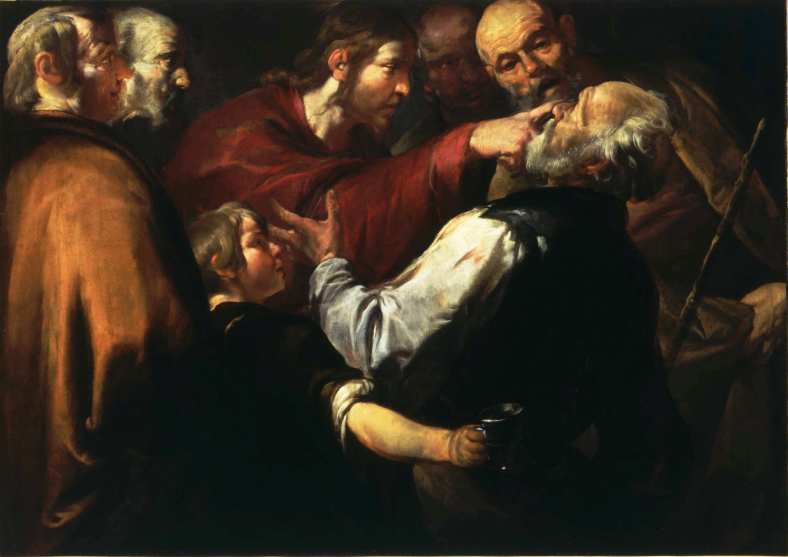
The New Testament book of Acts is also sometimes referred to as “Acts of the Apostles” because of the book’s focus on the apostles and God’s work through them.  The book has story after story of them preaching, but also healing and performing miracles.

For example, Acts 3 has a story of a man healed by the power of Jesus through Peter and John.  They were walking to the temple for prayer, and came across a lame man begging for alms.  But instead of giving the man money, Peter says to him, “I have no silver and gold, but what I do have I give to you. In the name of Jesus Christ of Nazareth, rise up and walk!”  Then, “immediately his feet and ankles were made strong. And leaping up, he stood and began to walk, and entered the temple with them, walking and leaping and praising God.”[1]

This is already an impressive miracle, but Luke (author of Acts) adds some additional details to show us that God had sovereignly arranged this miracle for maximum effect.  First, Acts 3:2 tells us this man had been “lame from birth” and verse 10 says all the people recognized him, so there could be no denying it was the same man.  Later on, Luke adds another detail to the story, in Acts 4:22. “For the man on whom this sign of healing was performed was more than forty years old.”  If this were a hoax, one might imagine someone putting it on for a short period of time, but not for forty years!  And not from birth!  In addition, someone lame for any period of time should take months or years to gain strength enough to walk and leap, but this man was immediately healed!  This was undeniably a miracle.

However, I think the mention of the man’s age carries a couple of other lessons as well.

First, like the healed man, many people live for forty years or longer before coming to really know Christ, but Jesus found him.  Therefore, it’s never too late for someone to come to Christ.  Also, for those who already know Christ, it’s never too late to find purpose in Him.  God may reveal His purposes late in someone’s life.  Sometimes being a late bloomer only means that was God’s timing.  Many can discover gifts and ministries late in their life, meaning either their biological or Christian life.

Lastly, this miracle on a forty-year-old shows us that even great suffering can result in glory to God.  We don’t know why this man had to suffer with disability for so long, but we do know that the name of Jesus was glorified in the presence of many because he was healed.  We may never understand why there is so much suffering in this world, but God assures us with this miracle that it is inevitable that He will be glorified.  Suffering can have a purpose.

So, if you’re suffering in some way, or even struggling to overcome some specific sin, it’s never beyond Jesus’ ability to heal you.  If you’re frustrated with a lack of purpose or struggling to fit in, it’s never too late to find meaning in a walk with Christ.  If this has been going on for a long time – even forty years or longer – it’s never too late to hope in Jesus.  He will heal all our physical, emotional, and spiritual problems in His timing and in the way that will most glorify Him.  He guarantees it.

For those whom he foreknew he also predestined to be conformed to the image of his Son, in order that he might be the firstborn among many brothers.” – Romans 8:29

Soli Deo Gloria


[1] Acts 3:1-10

The Miracle of the Toothpicks

In 1989, Rain Man, a movie starring Tom Cruise and Dustin Hoffman, won the Oscar for Best Picture and Hoffman won for Best Actor in a Leading Role, playing Raymond, an autistic-savant.  Long before autism was widely recognized, Raymond showed that those with autism have amazing talents, personalities, and human dignity just like anyone else.  In the movie, Raymond wins the affection of his selfish, arrogant brother Charlie, played by Cruise, who was initially only interested in Raymond because of his inheritance.

In one of the movie’s more well-known scenes, Raymond performs what in another context might be considered a miracle.  You can watch the 1 ½ minute clip here or read my summary below it.

In the clip, a waitress drops most of a box of toothpicks on the floor and in just a couple of seconds, Raymond counts that 246 of them scattered on the floor (he also counts three groups of 82).  At this point of the movie, Charlie still sees Raymond as someone he has to put up while he chases down his inheritance.  The waitress says the box had 250 toothpicks, so Charlie says Raymond guessed “pretty close” because he just wants to leave.  But when the waitress says, “there’s 4 left in the box”, Charlie realizes something amazing has just happened.  It wasn’t a guess.

It’s easy to be skeptical of miracles, or to choose to ignore them, but some of the Bible’s miracles aren’t much different than Raymond counting toothpicks at super-human speed.  We can’t explain why some people count faster than others, or run faster than others, or have photographic memories while others don’t, yet if we call something a “miracle,” many people will demand an explanation.  Other very abnormal things we just take for granted.

One miracle is recorded in Matthew 21:18-19, which says: “In the morning, as [Jesus] was returning to the city, he became hungry.  And seeing a fig tree by the wayside, he went to it and found nothing on it but only leaves. And he said to it, ‘May no fruit ever come from you again!’ And the fig tree withered at once.”  This tree was eventually going to wither anyway, so all Jesus did was change the speed of a natural process.  True, Raymond was special because of his own speed, and Jesus controlled the speed of something other than himself, but still part of what makes it a miracle is the speed.

If the speed of a natural process, like counting or the growth of plants, can be variable and manipulated, why not also the direction of the process?  In Mark’s gospel, the word “immediately” appears in at least 5 references to healing miracles[1].  The word “immediately” means the speed was part of the miracle.  Jesus not only healed a paralytic in Mark chapter 2, but the paralytic “immediately picked up his bed and went out before them all,”[2] without months or years of physical rehabilitation therapy.  From everyday experience, we know that different people recover from injury at different rates, yet why do we demand an explanation when its immediate?  If we don’t know what process took place to make this man a paralytic, why is it hard to believe that process could go backwards, and quickly?  It’s partly a miracle of degree, not of kind.

Of course, we shouldn’t believe every miracle: some are mere hoaxes, and some signs are done in opposition to God.  But also, we should not be too quick to dismiss the possibility of miracles we didn’t expect or can’t explain.  And while Rain Man does not claim to be based on a true story[3], the Bible does.  And Jesus, the one who could control the speed and direction of what we consider “natural” processes, claimed to be the God who put those processes to work in the first place.

“As you do not know the way the spirit comes to the bones in the womb of a woman with child, so you do not know the work of God who makes everything.” – Ecclesiastes 11:5


[1] See Mark 1:42, 2:12, 5:29, 5:42, and 10:52
[2] Mark 2:12
[3] The movie was based on a novel, but Raymond’s abilities were modeled on a real person named Kim Peek, who you can read more about at this link.  https://allthatsinteresting.com/kim-peek-real-rain-man

A Surprising Picture of Salvation

Yesterday’s post discussed the healing of a leper by Jesus in Mark 1:40-42, which says: “And a leper came to [Jesus], imploring him, and kneeling said to him, ‘If you will, you can make me clean.’  Moved with pity, he stretched out his hand and touched him and said to him, ‘I will; be clean.’  And immediately the leprosy left him, and he was made clean.

However, the story continues in Mark 1:43-44 – “And Jesus sternly charged him and sent him away at once, and said to him, ‘See that you say nothing to anyone, but go, show yourself to the priest and offer for your cleansing what Moses commanded, for a proof to them.’

Jesus, while unconcerned that this leper was not following Levitical law to remain quarantined, He was concerned that he testify to the priests.  What might the priests learn from performing the cleansing rites for a recovered leper?  The procedure is detailed in Leviticus 14:1-20, which I’ve pulled from below:

if the case of leprous disease is healed in the leprous person, the priest shall command them to take for him who is to be cleansed two live clean birds and cedarwood and scarlet yarn and hyssop.  And the priest shall command them to kill one of the birds in an earthenware vessel over fresh water.  He shall take the live bird with the cedarwood and the scarlet yarn and the hyssop, and dip them and the live bird in the blood of the bird that was killed over the fresh water.  And he shall sprinkle it seven times on him who is to be cleansed of the leprous disease. Then he shall pronounce him clean and shall let the living bird go into the open field…on the eighth day he shall take two male lambs without blemish…And he shall kill the lamb…The priest shall take some of the blood of the guilt offering, and…put it on the lobe of the right ear of him who is to be cleansed and on the thumb of his right hand and on the big toe of his right foot. Then the priest shall take some of the log of oil and…shall put [it] on the lobe of the right ear of him who is to be cleansed and on the thumb of his right hand and on the big toe of his right foot, on top of the blood of the guilt offering…Thus the priest shall make atonement for him, and he shall be clean.”

While this probably seems confusing, Warren Wiersbe says that “Leviticus 14 presents a beautiful picture in type of the work of redemption.”  How?

Photo by hiva sharifi on Unsplash

“The two birds represent two different aspects of our Lord’s ministry: His incarnation and death (the bird put into the jar and then killed), and His resurrection and ascension (the bird stained with the blood and then set free). The blood was applied to the man’s right ear (God’s Word), right thumb (God’s work), and right great toe (God’s walk). Then the oil was put on the blood, symbolizing the Holy Spirit of God. The Holy Spirit cannot come on human flesh until first the blood has been applied.”[1]

After Jesus was sacrificed on the cross, died, and then was raised from the dead, perhaps Leviticus 14 made more sense to the priests who cleansed the leper healed by Jesus.  Perhaps they saw a picture of their Savior.


[1] Wiersbe, Warren.  Be Diligent (Mark) (1987).  P. 28.

Compassion is More Than Skin Deep

Many miraculous healings are highlighted in the four gospel records of Jesus’ ministry, and many point to a greater miracle: that God, in His mercy and compassion, heals us of the sin that divides us from Him and each other.  Today’s post will focus on a miracle recorded in Mark 1:40-42, where Jesus heals a leper:

And a leper came to [Jesus], imploring him, and kneeling said to him, ‘If you will, you can make me clean.’  Moved with pity, he stretched out his hand and touched him and said to him, ‘I will; be clean.’  And immediately the leprosy left him, and he was made clean.

There is more to this story that Mark didn’t write.  What’s missing?  Jesus pointing out that this leper is breaking Old Testament law. 

In Leviticus 13:45-46, Moses wrote that: “The leprous person who has the disease shall wear torn clothes and let the hair of his head hang loose, and he shall cover his upper lip and cry out, ‘Unclean, unclean.’  He shall remain unclean as long as he has the disease. He is unclean. He shall live alone. His dwelling shall be outside the camp.

Because the kind of leprosy referred to in Leviticus and Mark was highly contagious and possibly deadly, this weird ritual was required to prevent accidental transmission of disease, but this particular leper couldn’t stay away from Jesus, and because Jesus was surrounded by crowds, the leper was potentially putting others in danger.  Mark doesn’t write that Jesus was concerned about this.

But the leper wasn’t entirely at ease, doubting whether Jesus would condemn him as an outcast and lawbreaker, or heal him.  What he did not doubt was that Jesus was capable of healing him, as he said to Jesus: “If you will, you can make me clean.”  To this leper, it was a question of whether this religious leader would be willing to help him.  He probably spent a lot of time being told to go away because of his disease; to follow the Levitical law.  Perhaps even now, in modern times, some might be curious about God’s power, but see religious people as uncaring and unwilling to help someone who is so obviously diseased and sinful.  Perhaps they are uncaring because other people are so obviously diseased and sinful.

In Leviticus chapter 13 there are also rules about how to identify a leper, and it’s usually when the symptoms are “deeper than the skin.” (See Leviticus 13:3, 20, 25, and 30). From this phrase, Warren Wiersbe notes in his commentary on Mark chapter 1 how leprosy is an apt metaphor for sin: “Like sin, leprosy is deeper than the skin (Lev. 13:3); it spreads (Lev. 13:5–8); it defiles and isolates (Lev. 13:44–46) …Anyone who has never trusted the Savior is spiritually in worse shape than this man was physically.”[1]

Not only can diseases be more than skin deep, but inner sin can be more dangerous and contagious.  As Jesus taught in the Sermon on the Mount, murder is an outward manifestation of inner anger[2], and adultery is an outward manifestation of inner lust[3].  Sins “deeper than the skin” may be the most important sins because they are the root of the visible external sins.

Fortunately, like inner sin and like leprosy, God’s compassion is also more than skin deep.  In Mark 1:41, the phrase “moved with pity” is a translation of a Greek word that suggests not just a passing feeling or sentiment, but something you literally feel in your guts.  The Greek word appears only 12 times in the New Testament, and always referring to Jesus or God the Father.  You might say that Jesus’ compassion for the leper was so powerful that He felt the leper’s pain in his own gut and was compelled to help him.

Unconcerned about whether His actions would condone the leper’s disregard for the law, the compassion of Jesus compelled Him to heal not just the leper’s bodily disease but also his spiritual disease of sin.  As written in Luke 15:10 – “Just so, I tell you, there is joy before the angels of God over one sinner who repents.” Jesus had His priorities right.

May we be likewise “moved with pity” for the sick and lost!


[1] Wiersbe, Warren.  Be Diligent (Mark) (1987).  P. 28.
[2] Matthew 5:21-22
[3] Matthew 5:27-30

Missionaries Saved By Mysterious Army: History for March 28

Even people who believe in angels and demons may not see how they are relevant.  The Bible contains a lot of hints about a spiritual world we can’t see, but not a lot of detail about what it all means to us.  One of these hints is in the Old Testament book of 2 Kings during a war between Israel and Syria.  Trying to kill the prophet Elisha, the Syrian army surrounded the city of Dothan where he was staying.  Elisha’s servant saw the army, was worried and asked Elisha what they should do.  Elisha (and the LORD) responded:

“He said, ‘Do not be afraid, for those who are with us are more than those who are with them.’ Then Elisha prayed and said, ‘O LORD, please open his eyes that he may see.’ So the LORD opened the eyes of the young man, and he saw, and behold, the mountain was full of horses and chariots of fire all around Elisha.” – 2 Kings 6:16-17

On today’s date, March 28th, in 1953 something happened in Kijabe, Kenya which may be eerily similar to the events of 2 Kings.  I know several solid, Christian, professional people not known for sensationalism who were at the site of this event a handful of years later, and who spoke to people who witnessed it.  For this post, my primary source is the book “School in the Clouds: The Rift Valley Academy Story” by Phil Dow[1], but I could have written it entirely from second-hand accounts from people I know.  So, what happened?

In the decade of the 1950’s, Kenya was a British colony, but was embroiled in what is known as the Mau Mau, an extremely violent uprising against British rule.  Colonialism had added a new facet to tribal animosity in Kenya that existed long before the “Scramble for Africa”[2], where some Africans embraced and defended British efforts, while others strongly resented it and endorsed any means to repel the British and restore the “pure” African culture that existed before.

As part of a broader pattern of atrocities designed to scare the British into leaving, the Mau Mau planned an attack on Rift Valley Academy (RVA), a boarding school for children of missionaries.  Not only was the school symbolic of unwelcome outside influence in the eyes of the Mau Mau, but the school had also opened its doors as a refuge for Africans fleeing Mau Mau threats elsewhere.  On March 26th, Mau Mau fighters attacked a Christian group of Kikuyu (one of the Kenyan tribes) a few miles from RVA, killing 97 villagers and wounding 32 others, largely with machetes.  The Kikiyu tribe, historically a lower socioeconomic group, was divided between those who joined the Mau Mau for independence and those who backed British involvement because they saw Christianity and other Western influences as a positive.

RVA was on high alert, knowing the campus of schoolchildren and their caregivers were the Mau Mau’s next target.  Phil Dow wrote in his book:

“The sun rose Saturday morning accompanied by a host of rumors that confirmed an impending Mau Mau raid on RVA. Convinced that they would be attacked, several high school girls took time in the afternoon to write letters they hoped would be read by their parents if they were to be killed. That night the students went to bed under a star-filled sky fully clothed and expecting to be awakened by the sounds of gunfire and angry voices.”

They were awakened in the middle of the night to the sound of an alarm, some distant gunfire, but soon followed by an “all clear” bell.


Weeks later, some Mau Mau were caught hiding near the school and questioned about what happened on the night of March 28th.  They confirmed that an attack on RVA was attempted with the intention of burning the school to the ground and killing anyone they found there, but the attack was repelled by lines of British soldiers encircling the campus.  Later, other witnesses claimed the same.  However, “in March of 1953 there were no British soldiers at Kijabe.”  Multiple sources on RVA’s campus and among British authorities attest that the campus was vulnerable and mostly undefended, but something happened that spared the community and the lives of everyone in it so that the missionary work could continue.  The attempted attack raised the awareness of the British and provided time for them to install “protection of the very worldly kind” for RVA, including limited troops stationed there, along with defensive walls, barbed wire, and guard posts with mounted machine guns.

Dow concludes: “Whatever did happen that night, the Christian community at RVA was convinced that they had been kept safe by supernatural intervention. Indeed, the night’s events continue to be remembered as an example of God’s provision for the devoutly Christian community.”

What Elisha said in the Old Testament as:
Do not be afraid, for those who are with us are more than those who are with them”

Paul echoes in the New as:
What then shall we say to these things? If God is for us, who can be against us?  He who did not spare his own Son but gave him up for us all, how will he not also with him graciously give us all things?” – Romans 8:31-32

Amen.


Interested in more History? Select “History Bits” from the “Blog” drop down menu at the top of the page.


[1] Dow, Phil. School in the Clouds: The Rift Valley Academy Story.  (2003).  P. 130-132
[2] See summary at https://en.wikipedia.org/wiki/Scramble_for_Africa