“The LORD will Provide”

Many times, in the Old Testament, places were named or re-named to remind people of something significant that happened there.  One of these times happened in Genesis 22:14, which says: “So Abraham called the name of that place, “The LORD will provide”; as it is said to this day, “On the mount of the LORD it shall be provided.””  Those who know their Bible well and who have walked along with the Lord know that God provides in many places and at many times, but only one place was given this name.  What did God provide to Abraham and why was it so meaningful that a place needed to be named for it?

Back in Genesis 22:1, we are told that “God tested Abraham” by telling him to go and sacrifice his only son Isaac on Mount Moriah.  This is startling is so many ways, not least because human sacrifice is involved.  Although some cultures in Old Testament times practiced human sacrifice, in modern times it’s probably universally condemned.[1]  To Abraham however, it would also be startling because Isaac was his only son, and God had promised Abraham that “I will multiply your offspring as the stars of heaven.[2]  If Abraham killed his only son, who was born in Abraham’s old age from the previously barren womb of his wife Sarah by the promise of God, how would Abraham have so many descendants that he couldn’t count them?

While this didn’t make much sense, Abraham trusted God anyway and decided to follow His command.  Hebrews 11:19 tells us that Abraham believed God could raise Isaac from the dead if He so chose.  However we got there, God was going to keep His promise.  Abraham was able to keep this faith even though the trip to Moriah took more than 3 days.[3]  His faith in following through on this seemingly barbaric command was tested by time, but Abraham kept walking in faith.

Which brings us back to the place name “The LORD will provide.”  After Abraham had bound his son Isaac, laid him on the wood and prepared to offer him as a burnt offering, God called out to him, saying “Do not lay your hand on the boy or do anything to him, for now I know that you fear God, seeing you have not withheld your son, your only son, from me.”[4]  Abraham then saw a ram caught in the bushes nearby, a perfect substitute for Isaac as a burnt offering!  Isaac was set free and the ram was sacrificed.  Dilemma resolved.  Then the place was named, but also, we read “as it is said to this day, “On the mount of the LORD it shall be provided.”

When the Bible says “as it is said to this day” it usually means until the day the passage was written down.  So, the saying “On the mount of the LORD it shall be provided” lasted until Moses wrote the book of Genesis.  But when and why did the phrase fall out of practice?  When reading this story, I thought this saying needs to be revived!  God still provides for us in amazing ways, but maybe not on Mount Moriah.

Does He provide for us whenever we want Him to?  Warren Wiersbe answers this question as; He provides for us “in the place of His assignment. Abraham was at the right place, so God could meet his needs. We have no right to expect the provision of God if we are not in the will of God.”

Abraham, in faith, knew that God would provide a solution to a seemingly offensive and impossible situation, and so He did.  But in our case, there are at least two ways we can fall short of obtaining God’s provision: one, we fail to follow His command because it doesn’t make sense to us, and two, we can expect Him to provide what we need for us even though we aren’t doing what He wants us to do.

What if God is asking us to do something that seems unwise financially, socially, or otherwise?  Maybe it doesn’t even make sense theologically, as it may not have to Abraham?  God wants to provide for us a way through that, a way to reward our faith and glorify Himself for our good.  But, if we aren’t willing to follow Him in that instance, we miss out on the blessing.

What if we feel like we’re missing out on some blessing and we don’t know why?  Maybe we don’t feel close to God, we don’t feel like He answers our prayers, we don’t feel like He loves us?[5]  It may be that He is asking us to do something and we aren’t following through.  We expect the blessings to flow at no cost to us.

If Abraham had not followed God’s command, he would have not been able to experience the amazing provision from God that led him to name the place “The LORD will provide.””  And sometimes if we aren’t walking with God in faith (or maybe not even spending enough time with God to know what He wants), we will never learn how He can provide.

What might God be asking you to do today?  Have you asked Him?  Follow Him and He will prove Himself faithful.  He will be glorified and it will be for your good.

Amen.


[1] I’m not aware of any place that still practices it, but I’m not an expert.
[2] Genesis 26:4
[3] Genesis 22:4
[4] Genesis 22:12
[5] I don’t mean to minimize the fact that some people just won’t feel good for medical reasons, such as clinical anxiety or depression.  Sometimes there are other factors at play that need to overcome in other ways.

Why We Pray

Why do Christians pray, and why should they pray?  We probably pay a lot more attention to what we are praying than why, and maybe sometimes we don’t pray because we don’t think its necessary.  This may happen when we don’t know the why.

There are many reasons (many “whys”) we could think of for why Christians should pray, and here are some:

Do we pray to tell God what we want or need?  No, because the Bible tells us[1] that God already knows what we need.  He already knows everything, including knowing what we need better than we do, as our Creator.

Do we pray to convince God we are worthy and deserve His audience?  No, because on our own we are unrighteous sinners and only deserve separation from God.  Jesus has already accomplished everything we need to be able to approach God.

Do we pray so that God will love us more?  No, God’s love is based on His own character, not our actions.  He can’t love us more, and won’t love us any less, than He does.  That He gave His Son to die on the cross for us proves this.

So, why?

Before teaching His disciples how to pray using what we now call the Lord’s Prayer, Jesus said to them: “Pray then like this.[2]  We often think of the Lord’s Prayer as instruction on how to pray, but maybe miss that Jesus told His disciples to pray.  It’s something He wants us to do, and regularly.

We pray because Jesus tells us to.  “Pray then like this” said Jesus because God desires a relationship with us and a big part of that relationship should be time spent in prayer.

Thomas Becon, an English cleric and Protestant reformer in the 1500’s, wrote this about prayer[3]: “For God neither for our worthiness nor for our unworthiness heareth us; but for his commandment and promise sake. He hath commanded us to pray; therefore ought we to pray. For if we should never pray till we were worthy of ourselves before God to pray, so should we never pray: but we therefore pray, because God hath commanded us so to do. Our worthiness is the humble confession of our unworthiness; and our obedience unto the commandment of God to pray maketh us most worthy.”

Therefore, pray, and often.

Pray without ceasing” – 1 Thessalonians 5:17


[1] Matthew 6:8, 6:32, Luke 12:30
[2] Matthew 6:9a
[3] McKim, Donald K.  Everyday Prayer with the Reformers (2020).  P. 65.

Attention to God’s Details

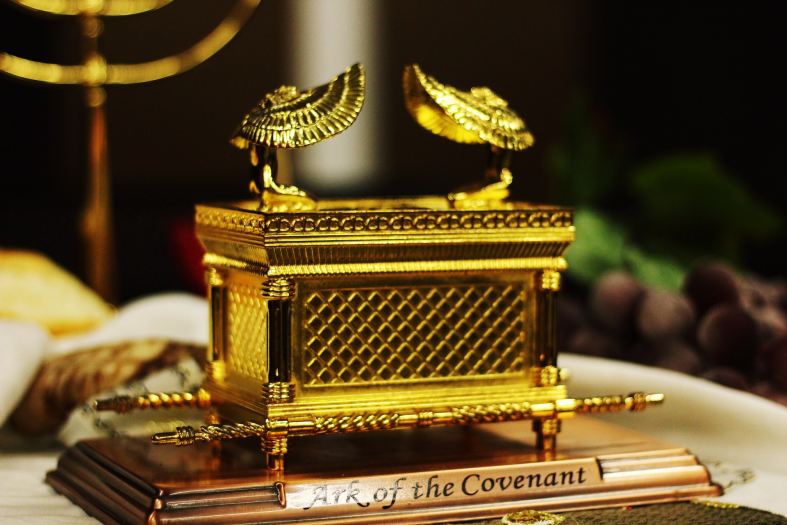
Bezalel made the ark of acacia wood. Two cubits and a half was its length, a cubit and a half its breadth, and a cubit and a half its height.” – Exodus 37:1

The ark in miniature. Photo by Igor Rodrigues on Unsplash

Most of Exodus chapters 36-40 cover the many, many details of the construction of the tabernacle and all of its utensils and other parts.  We may tire of reading chapters of details, but the point is that Bezalel and others put a massive amount of care (and obedience) into the implementation of God’s pattern for the tabernacle, as shown to Moses on the mountain.

What does it mean for us now?  That we should put as much care into learning what God wants of us and put it into action in our lives.

“For whatever was written in former days was written for our instruction, that through endurance and through the encouragement of the Scriptures we might have hope.  May the God of endurance and encouragement grant you to live in such harmony with one another, in accord with Christ Jesus, that together you may with one voice glorify the God and Father of our Lord Jesus Christ.”  – Romans 15:4-6

Why We Pray

Why do Christians pray, and why should they pray?  We probably pay a lot more attention to what we are praying than why, and maybe sometimes we don’t pray because we don’t think its necessary.  This may happen when we don’t know the why.

There are many reasons (many “whys”) we could think of for why Christians should pray, and here are some:

Do we pray to tell God what we want or need?  No, because the Bible tells us[1] that God already knows what we need.  He already knows everything, including knowing what we need better than we do, as our Creator.

Do we pray to convince God we are worthy and deserve His audience?  No, because on our own we are unrighteous sinners and only deserve separation from God.  Jesus has already accomplished everything we need to be able to approach God.

Do we pray so that God will love us more?  No, God’s love is based on His own character, not our actions.  He can’t love us more, and won’t love us any less, than He does.  That He gave His Son to die on the cross for us proves this.

So, why?

Before teaching His disciples how to pray using what we now call the Lord’s Prayer, Jesus said to them: “Pray then like this.[2]  We often think of the Lord’s Prayer as instruction on how to pray, but maybe miss that Jesus told His disciples to pray.  It’s something He wants us to do, and regularly.

We pray because Jesus tells us to.  “Pray then like this” said Jesus because God desires a relationship with us and a big part of that relationship should be time spent in prayer.

Thomas Becon, an English cleric and Protestant reformer in the 1500’s, wrote this about prayer[3]: “For God neither for our worthiness nor for our unworthiness heareth us; but for his commandment and promise sake. He hath commanded us to pray; therefore ought we to pray. For if we should never pray till we were worthy of ourselves before God to pray, so should we never pray: but we therefore pray, because God hath commanded us so to do. Our worthiness is the humble confession of our unworthiness; and our obedience unto the commandment of God to pray maketh us most worthy.”

Therefore, pray, and often.

Pray without ceasing” – 1 Thessalonians 5:17


[1] Matthew 6:8, 6:32, Luke 12:30
[2] Matthew 6:9a
[3] McKim, Donald K.  Everyday Prayer with the Reformers (2020).  P. 65.

Attention to God’s Details

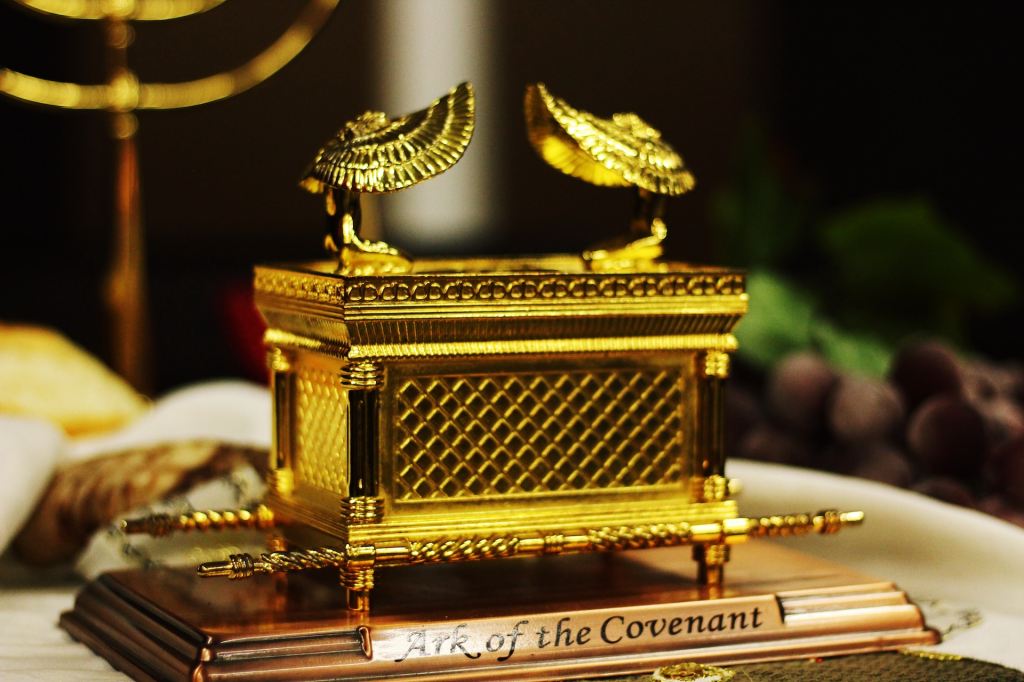
Bezalel made the ark of acacia wood. Two cubits and a half was its length, a cubit and a half its breadth, and a cubit and a half its height.” – Exodus 37:1

The ark in miniature. Photo by Igor Rodrigues on Unsplash

Most of Exodus chapters 36-40 cover the many, many details of the construction of the tabernacle and all of its utensils and other parts.  We may tire of reading chapters of details, but the point is that Bezalel and others put a massive amount of care (and obedience) into the implementation of God’s pattern for the tabernacle, as shown to Moses on the mountain.

What does it mean for us now?  That we should put as much care into learning what God wants of us and put it into action in our lives.

“For whatever was written in former days was written for our instruction, that through endurance and through the encouragement of the Scriptures we might have hope.  May the God of endurance and encouragement grant you to live in such harmony with one another, in accord with Christ Jesus, that together you may with one voice glorify the God and Father of our Lord Jesus Christ.”  – Romans 15:4-6