Sometimes, Victory Over Giants Takes Time

Do you have giant problems?  Problems that seem too big to overcome, and that just won’t go away?  There was a time when Israel had problems with literal giants and that story may encourage us with our own giant problems.

In Deuteronomy, Moses’ re-telling to Israel of their history as they prepared to finally enter the Promised Land, the second verse says, “It is eleven days’ journey from Horeb by the way of Mount Seir to Kadesh-barnea.”  This eleven-day journey took Israel 40 years after being delivered from slavery in Egypt because they had giant problems.

40 years earlier, Moses sent spies into the land promised by God, not to say whether or not they should conquer the land (God has already decided that they should), but only to document what they saw.  These spies reported back after 40 days in the land at Kadesh, the same place Moses was delivering his address in Deuteronomy.  Unfortunately, the spies did more than document what they saw, they also injected their own opinion: “We are not able to go up against the people, for they are stronger than we are.”[1]

Although the spies agreed the land was very desirable – “And they told him, “We came to the land to which you sent us. It flows with milk and honey, and this is its fruit.” – they added three objections to the report: “However, the people who dwell in the land are strong, and the cities are fortified and very large. And besides, we saw the descendants of Anak there.[2]  The people are strong, the cities are strong, and some of the people – the descendants of Anak – are actually literal giants.  The spies probably thought they were doing the right thing by presenting an “accurate” report of Israel’s military chances in Canaan, but in doing so they were opposing God and His promise.  Only two of the twelve spies – Joshua and Caleb – tried to encourage the people to take the land, but the report of the other ten made the people want to stone Joshua and Caleb to death[3] instead of entering Canaan.  So, God punished the people by making them wander in the wilderness until the entire rebellious generation died, for 40 years.

However, over that time God would also show His people in specific ways that they could overcome the spies’ objections so they could enter the land as He had promised.  It would take time, and more experience of God’s power.

Moses tells that during the wilderness wandering, Israel learned of others who had conquered giants.  In Deuteronomy 2:10-11 Moses recounted land taken by the Moabites: “The Emim formerly lived there, a people great and many, and tall as the Anakim.  Like the Anakim they are also counted as Rephaim, but the Moabites call them Emim.”  In 2:20, he recalled land taken by the Ammonites: “It is also counted as a land of Rephaim. Rephaim formerly lived there—but the Ammonites call them Zamzummim— a people great and many, and tall as the Anakim; but the LORD destroyed them before the Ammonites, and they dispossessed them and settled in their place”.  These “Emim” and “Zamzummim” were like the “descendants of Anak” the spies were afraid of, but those giants were conquered.

Also, in Deuteronomy 3, Moses reminds Israel of their own victories that happened before entering Canaan.  They had defeated Sihon, king of Heshbon, and Og, king of Bashan, object lessons of what God could do, and specifically related to the objections of the spies, who had reported of Canaan that “the cities are fortified and very large.”  Deuteronomy 3:5 reports of the conquered cities of Bashan: “All these were cities fortified with high walls, gates, and bars, besides very many unwalled villages.”

While the spies worried about the giant “descendants of Anak,” Moses reminds Israel that Og, Hesbon’s king, was like one of the giants reported by the spies.  Deuteronomy 3:11 describes him: “(For only Og the king of Bashan was left of the remnant of the Rephaim. Behold, his bed was a bed of iron. Is it not in Rabbah of the Ammonites? Nine cubits was its length, and four cubits its breadth, according to the common cubit.)”  Therefore, before crossing the Jordan into Canaan, Israel had overcome both fortified cities and giants.  Why should they worry about the discouraging report of the spies, instead of trusting Joshua and Caleb’s testimony about God?

Therefore, if you have giant problems, seek the testimony of others who have conquered giants, and the testimony of your own experience with God, and be encouraged by the words Moses used to close this section of his message: “You shall not fear them, for it is the LORD your God who fights for you.”[4] But overcoming giant problems might take time because He wants to show us His power in ways we can’t imagine.  Israel took 40 years to make this 11-day journey because that is what God required to prepare them.  Israel was not ready for the Promised Land when they first left Egypt.  Allow God the time to prepare you, and He may also show you His power over your giants.


[1] Numbers 13:31
[2] Numbers 13:27-28
[3] Numbers 14:10
[4] Deuteronomy 3:22

Letting God Pick Our Battles II

Photo by Andrey Grinkevich on Unsplash

The Apostle Paul wrote in Philippians 4:13 “I can do all things through him who strengthens me,” yet he also wrote in 2 Corinthians 12:7-9 that “to keep me from becoming conceited,” a “thorn was given me in the flesh.”  He writes: “Three times I pleaded with the Lord about this, that it should leave me.  But he said to me, ‘My grace is sufficient for you, for my power is made perfect in weakness.’  Therefore I will boast all the more gladly of my weaknesses, so that the power of Christ may rest upon me.”

The nature of Paul’s “thorn” has been disputed for centuries, but Galatians 4:13 suggests it was a physical problem, a “bodily ailment” rather than a moral shortcoming.  So, the lesson of the “thorn” is not that God prevented Paul from overcoming some specific sin to keep him humble – He wants Paul (and us) to be satisfied with nothing less than righteousness.

However, one lesson of the “thorn” is that Paul didn’t mean by “I can do all things” that he could do whatever he wanted and succeed.  Instead, the “thorn” is an example of a battle Paul would not win, because this “thorn” had a purpose in bringing Paul closer to God’s grace and power.  In God’s wisdom, Paul was better off with this ailment than without it.

Yesterday’s post said “Picking your battles, rather than trying to fight and win every fight that comes your way, is a good piece of advice.  However, who should pick which battles to fight?”  In the case of the “thorn”, God picked a battle for Paul not to fight, telling him instead to focus on growing in faith.  The thorn had a purpose in Paul’s striving toward righteousness, which was more important than any physical ailment.  Had Paul continued to insist to God that the thorn should be removed, he would still have the thorn, but he would also not grow in his relationship with his Lord.

Sometimes there are battles He wants us to fight in His strength for His glory, and sometimes there are battles He tells us not to fight so we can focus on His grace and power while in this life, in light of His promises to heal our physical ailments in Paradise.

Today’s post closes the same way as yesterdays: “Sometimes life is hard on purpose, so that God alone may be glorified in victory, and also so that we may grow in our faith in His strength.  When we let Him pick our battles, we learn that His righteousness is the only thing that will satisfy us.  Nothing less will do.”

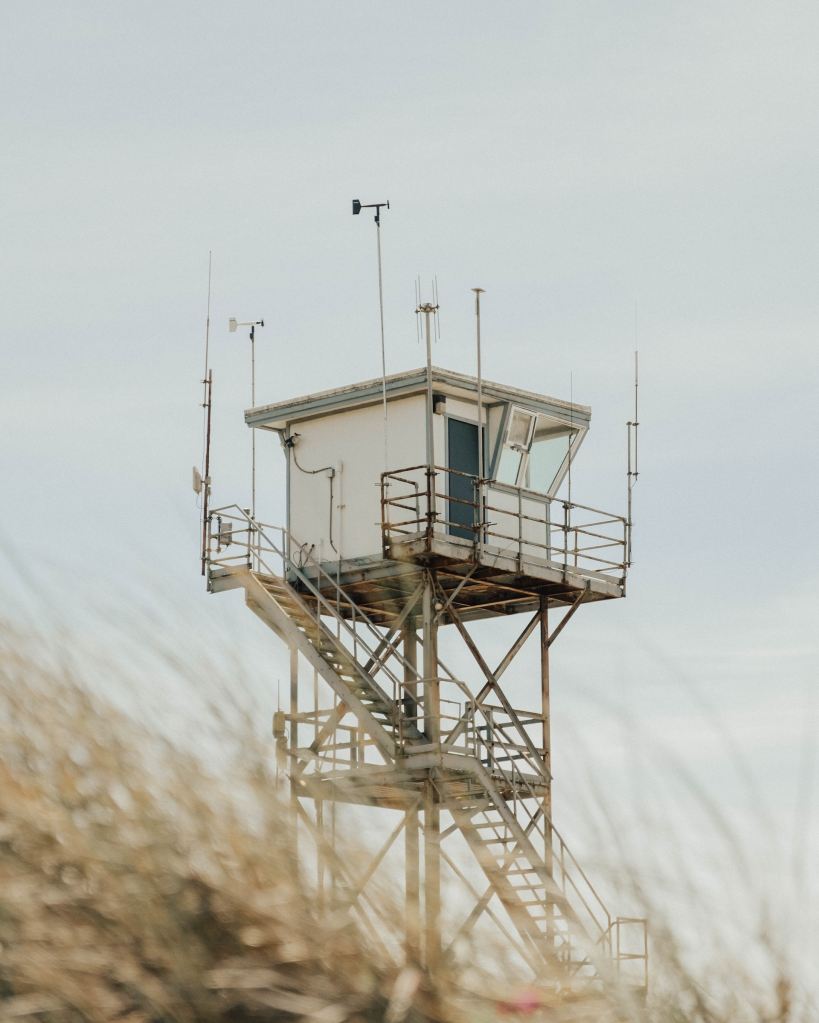
Manning the Watchtower

 “I will take my stand at my watchpost
            and station myself on the tower,
and look out to see what he will say to me,
            and what I will answer concerning my complaint.” – Habakkuk 2:1

Photo by Casey Olsen on Unsplash

People like to look for patterns and predictability in the world, and even in God’s behavior.  But in Habakkuk’s case, he saw a situation that didn’t make sense to him, that God would use Babylon to brutally punish His people in Judah.  God knew it wouldn’t make sense to Habakkuk, saying “I am doing a work in your days that you would not believe if told.[1]

Habakkuk would have gone into a private corner to sulk, but instead he brought it to God and was willing to be patient and wait to see how He would answer.

Is there something that doesn’t make sense right now in your life?  In my experience, there almost always is.  Therefore, be as vigilant and patient as Habakkuk.  Take your place in watchful hope on the watchtower and see what God will do.


[1] Habakkuk 1:5b

God’s Word Withstands the Fire. Always.

The Old Testament prophet Jeremiah faced immense opposition, and in Jeremiah 36:20-25 is recorded an interesting story of King Jehoiakim’s attempts to destroy the prophet’s words, and by extension, God’s words.  The king was unable to get his hands on Jeremiah, whose allies helped him to hide, so the king takes a different approach:

So they went into the court to the king, having put the scroll in the chamber of Elishama the secretary, and they reported all the words to the king.  Then the king sent Jehudi to get the scroll, and he took it from the chamber of Elishama the secretary. And Jehudi read it to the king and all the officials who stood beside the king.  It was the ninth month, and the king was sitting in the winter house, and there was a fire burning in the fire pot before him.  As Jehudi read three or four columns, the king would cut them off with a knife and throw them into the fire in the fire pot, until the entire scroll was consumed in the fire that was in the fire pot.  Yet neither the king nor any of his servants who heard all these words was afraid, nor did they tear their garments.  Even when Elnathan and Delaiah and Gemariah urged the king not to burn the scroll, he would not listen to them.”

This wasn’t an impulsive, knee-jerk reaction to God’s word, but a deliberate, sustained act of rebellion.  This took time, and there’s almost a ceremony to it, as if daring God to stop him.  Many Christians today would be outraged if they witnessed something like this.  People in positions of authority disrespect God regularly, but imagine if the head of your country burned the Bible publicly on TV, and nobody stopped them, or even objected?  Sure, in modern times, people might object on their blog, on social media, or even on smaller TV and radio outlets, but in Jehoiakim’s example, nobody was able to challenge him. He “got away with it.”

Photo by raquel raclette on Unsplash

This brings up the question of: why does God allow things like this to happen?  I’ll suggest a question in response: Would it be a stronger testimony of God’s sovereignty if He had struck King Jehoiakim dead on the spot, or is it a stronger testimony that Jeremiah’s words still exist today all around the world?  If the second option is better, the next question is why do we sometimes feel such outrage and lash out (perhaps on our own blog or Facebook page) at such acts?  Do we trust God to deal with it, or do we worry that Jehoiakim is right – maybe God doesn’t care?

Part of the scroll Jehoiakim burned may have included these words of Jeremiah about the king himself: “With the burial of a donkey he shall be buried, dragged and dumped beyond the gates of Jerusalem.”[1] And “He shall have none to sit on the throne of David, and his dead body shall be cast out to the heat by day and the frost by night.[2]  Therefore God knew both that justice would be done to Jehoiakim, and also that his burning of the scroll had only symbolic and temporary effect.  In contrast, God’s justice and God’s word are eternally immutable and effective.  As Isaiah said: “The grass withers, the flower fades, but the word of our God will stand forever.”[3]

There’s also another question for us: if God had chosen in His sovereignty to redeem Jehoiakim, would we be angry like Jonah at the repentance of Nineveh[4], or would we praise God for His profound and measureless grace?  The same grace that brought Jeremiah’s words back from the futile fire pot of King Jehoiakim.  The grace that was purchased by Christ on the cross.

This word of God will stand as well: “Beloved, never avenge yourselves, but leave it to the wrath of God, for it is written, ‘Vengeance is mine, I will repay, says the Lord.’  To the contrary, ‘if your enemy is hungry, feed him; if he is thirsty, give him something to drink; for by so doing you will heap burning coals on his head.’  Do not be overcome by evil, but overcome evil with good.” – Romans 12:19-21

Do we believe it?


[1] Jeremiah 22:19
[2] Jeremiah 36:30
[3] Isaiah 40:8
[4] See my earlier, short post on Jonah’s anger.

Sometimes, Victory Over Giants Takes Time

Do you have giant problems?  Problems that seem too big to overcome, and that just won’t go away?  There was a time when Israel had problems with literal giants and that story may encourage us with our own giant problems.

In Deuteronomy, Moses’ re-telling to Israel of their history as they prepared to finally enter the Promised Land, the second verse says, “It is eleven days’ journey from Horeb by the way of Mount Seir to Kadesh-barnea.”  This eleven-day journey took Israel 40 years after being delivered from slavery in Egypt because they had giant problems.

40 years earlier, Moses sent spies into the land promised by God, not to say whether or not they should conquer the land (God has already decided that they should), but only to document what they saw.  These spies reported back after 40 days in the land at Kadesh, the same place Moses was delivering his address in Deuteronomy.  Unfortunately, the spies did more than document what they saw, they also injected their own opinion: “We are not able to go up against the people, for they are stronger than we are.”[1]

Although the spies agreed the land was very desirable – “And they told him, “We came to the land to which you sent us. It flows with milk and honey, and this is its fruit.” – they added three objections to the report: “However, the people who dwell in the land are strong, and the cities are fortified and very large. And besides, we saw the descendants of Anak there.[2]  The people are strong, the cities are strong, and some of the people – the descendants of Anak – are actually literal giants.  The spies probably thought they were doing the right thing by presenting an “accurate” report of Israel’s military chances in Canaan, but in doing so they were opposing God and His promise.  Only two of the twelve spies – Joshua and Caleb – tried to encourage the people to take the land, but the report of the other ten made the people want to stone Joshua and Caleb to death[3] instead of entering Canaan.  So, God punished the people by making them wander in the wilderness until the entire rebellious generation died, for 40 years.

However, over that time God would also show His people in specific ways that they could overcome the spies’ objections so they could enter the land as He had promised.  It would take time, and more experience of God’s power.

Moses tells that during the wilderness wandering, Israel learned of others who had conquered giants.  In Deuteronomy 2:10-11 Moses recounted land taken by the Moabites: “The Emim formerly lived there, a people great and many, and tall as the Anakim.  Like the Anakim they are also counted as Rephaim, but the Moabites call them Emim.”  In 2:20, he recalled land taken by the Ammonites: “It is also counted as a land of Rephaim. Rephaim formerly lived there—but the Ammonites call them Zamzummim— a people great and many, and tall as the Anakim; but the LORD destroyed them before the Ammonites, and they dispossessed them and settled in their place”.  These “Emim” and “Zamzummim” were like the “descendants of Anak” the spies were afraid of, but those giants were conquered.

Also, in Deuteronomy 3, Moses reminds Israel of their own victories that happened before entering Canaan.  They had defeated Sihon, king of Heshbon, and Og, king of Bashan, object lessons of what God could do, and specifically related to the objections of the spies, who had reported of Canaan that “the cities are fortified and very large.”  Deuteronomy 3:5 reports of the conquered cities of Bashan: “All these were cities fortified with high walls, gates, and bars, besides very many unwalled villages.”

While the spies worried about the giant “descendants of Anak,” Moses reminds Israel that Og, Hesbon’s king, was like one of the giants reported by the spies.  Deuteronomy 3:11 describes him: “(For only Og the king of Bashan was left of the remnant of the Rephaim. Behold, his bed was a bed of iron. Is it not in Rabbah of the Ammonites? Nine cubits was its length, and four cubits its breadth, according to the common cubit.)”  Therefore, before crossing the Jordan into Canaan, Israel had overcome both fortified cities and giants.  Why should they worry about the discouraging report of the spies, instead of trusting Joshua and Caleb’s testimony about God?

Photo by Cristian Palmer on Unsplash

Therefore, if you have giant problems, seek the testimony of others who have conquered giants, and the testimony of your own experience with God, and be encouraged by the words Moses used to close this section of his message: “You shall not fear them, for it is the LORD your God who fights for you.”[4] But overcoming giant problems might take time because He wants to show us His power in ways we can’t imagine.  Israel took 40 years to make this 11-day journey because that is what God required to prepare them.  Israel was not ready for the Promised Land when they first left Egypt.  Allow God the time to prepare you, and He may also show you His power over your giants.


[1] Numbers 13:31
[2] Numbers 13:27-28
[3] Numbers 14:10
[4] Deuteronomy 3:22