Letting God Pick Our Battles II

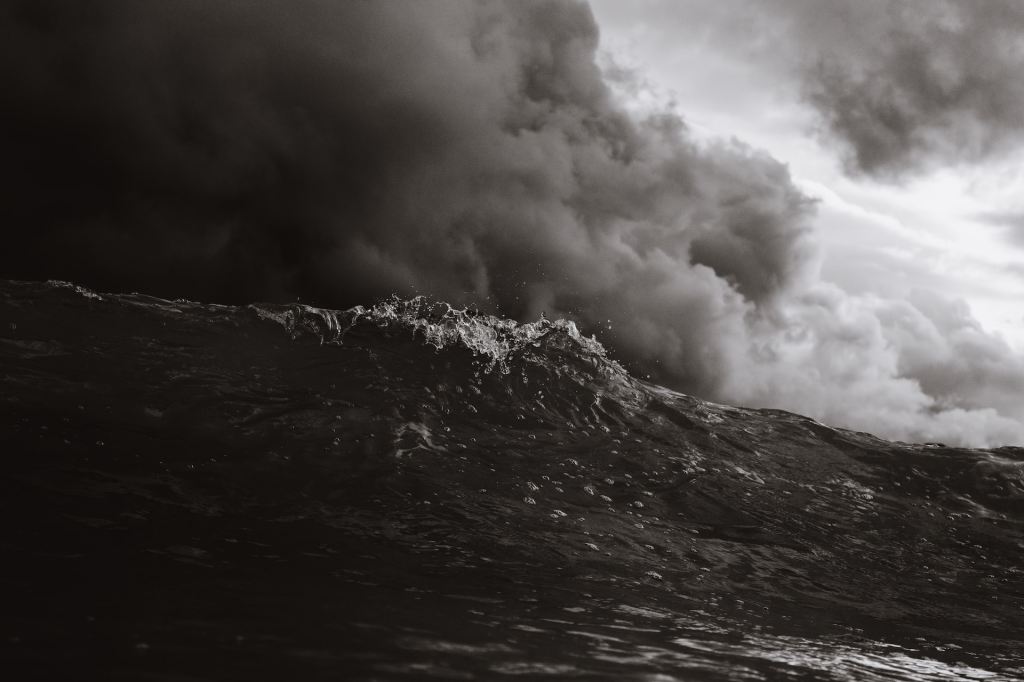
Photo by Andrey Grinkevich on Unsplash

The Apostle Paul wrote in Philippians 4:13 “I can do all things through him who strengthens me,” yet he also wrote in 2 Corinthians 12:7-9 that “to keep me from becoming conceited,” a “thorn was given me in the flesh.”  He writes: “Three times I pleaded with the Lord about this, that it should leave me.  But he said to me, ‘My grace is sufficient for you, for my power is made perfect in weakness.’  Therefore I will boast all the more gladly of my weaknesses, so that the power of Christ may rest upon me.”

The nature of Paul’s “thorn” has been disputed for centuries, but Galatians 4:13 suggests it was a physical problem, a “bodily ailment” rather than a moral shortcoming.  So, the lesson of the “thorn” is not that God prevented Paul from overcoming some specific sin to keep him humble – He wants Paul (and us) to be satisfied with nothing less than righteousness.

However, one lesson of the “thorn” is that Paul didn’t mean by “I can do all things” that he could do whatever he wanted and succeed.  Instead, the “thorn” is an example of a battle Paul would not win, because this “thorn” had a purpose in bringing Paul closer to God’s grace and power.  In God’s wisdom, Paul was better off with this ailment than without it.

Yesterday’s post said “Picking your battles, rather than trying to fight and win every fight that comes your way, is a good piece of advice.  However, who should pick which battles to fight?”  In the case of the “thorn”, God picked a battle for Paul not to fight, telling him instead to focus on growing in faith.  The thorn had a purpose in Paul’s striving toward righteousness, which was more important than any physical ailment.  Had Paul continued to insist to God that the thorn should be removed, he would still have the thorn, but he would also not grow in his relationship with his Lord.

Sometimes there are battles He wants us to fight in His strength for His glory, and sometimes there are battles He tells us not to fight so we can focus on His grace and power while in this life, in light of His promises to heal our physical ailments in Paradise.

Today’s post closes the same way as yesterdays: “Sometimes life is hard on purpose, so that God alone may be glorified in victory, and also so that we may grow in our faith in His strength.  When we let Him pick our battles, we learn that His righteousness is the only thing that will satisfy us.  Nothing less will do.”

Peter Walks on Water

After a frantic period where Jesus learned of John the Baptist’s death, then was crowded by over 5,000 hungry people in the wilderness who wanted to make Him king after He miraculously fed them, He sought some time alone.  Jesus told his disciples to get on a boat without Him and begin heading across the sea so He could spend time on the mountain that evening. Jesus always found time to be with His Father.  This is the background for a small group study of the apostle Peter I recently led focused on Matthew 14:22-36, the story of Jesus, and then Peter, walking on water.

At night, probably shortly before dawn, the disciples were still rowing against the wind, being “beaten by the waves.”  They should have been across by this time.  In an earlier storm, recorded in Matthew 8:23-27, Jesus had been with the disciples on a boat in a storm, and He woke from a nap to quiet the storm that was terrifying them.  This time, they were exactly where He had sent them: in the boat to cross ahead of Him.  Even though Jesus was not with them, He knew they would be fighting a storm again, and He had taught them He is the Lord of the storms.

Amid the rain and wind and waves, the disciples saw something on the water and cried out in fear: “It is a ghost!”  This was the only explanation they could come up with for something traveling over the water without sinking.  But Jesus said “Take heart; it is I. Do not be afraid,” and they knew it was Him, walking on the water.  He was still Lord of the storms.

In response, Peter (acting boldly as usual) exercised faith 3 times in this story.  First, he believed Jesus was who He said He was.  The initial shock and fear of what looked like a ghost passed when Peter heard His voice.  Second, he knew Jesus was capable of walking on water, so why couldn’t He enable Peter to do it too?  Third, when Peter “saw the wind, he was afraid, and beginning to sink,” he kept faith that Jesus could and would save him from drowning.

But why did Peter begin to sink?  The text says he was distracted when he “saw the wind.”  In that wind, he saw circumstances that he feared were more powerful than Jesus.  Peter could believe Jesus could make him walk on water when he was in a boat, but when wind and waves started hitting him it was harder to trust.  There’s a conflict here between faith and circumstances, doubt and trust.  Faith can raise us above our circumstances, but only when we focus on Jesus to overcome our doubt.  When we look away from Him, our circumstances can overwhelm us.

Peter learned that he could walk on water, but also that it was only possible by focusing his gaze on Jesus, not by relying on his own strength and ability.  Only by relying on Him can we thrive.  When walking by faith, hearing and obeying His Spirit, it can feel like walking on water, because “the fruit of the Spirit is love, joy, peace, patience, kindness, goodness, faithfulness, gentleness, self-control.” – Galatians 5:22-23a

Do you sometimes feel like you’re in a stormy sea, and getting across is taking longer than it should?  Is there a stormy situation in your life that requires stepping out in faith?  Are there circumstances you’re focusing on that make you feel you are sinking?

God sometimes knowingly sends us into storms to test our faith, just like Jesus sent the disciples into this storm to help them learn to trust Him.  If you’re in a storm, seek Him and go to Him.  Turn your eyes upon Jesus; He can make you walk above your circumstances.

Praying Through Road Rage

Simple errands can sometimes be aggravating if we let them.  Maybe you’ve had an experience like this: while driving through my community recently, I ended up behind a minivan that was driving well below the speed limit (or at least well below how fast I wanted to go) and seemed unsure of where they were going.  I ended up closer to their rear bumper than I should have been and thought that when I got home, I’d complain about drivers in the neighborhood to whoever would listen.  When the van finally turned right, apparently figuring out where they were going, I also remember thinking that the family in the van might end up talking about the annoying car that tailed them, having no concern that maybe they didn’t live there and had to drive slowly while they figured it out.  This is a lot of aggravation for what should be a non-event, but at the time…

Photo by Joshua Wordel on Unsplash

Somehow at that moment, Romans 12:18 popped into my head, which says: “If possible, so far as it depends on you, live peaceably with all.”  My first response was something like “God, what’s that got to do with this?”  But as I regained speed toward whatever errand I was in such a hurry to finish, I thought “God, which part of this problem depends on me?”  Hmm.  The tailgating was definitely unnecessary, and gosh, I might have really wanted to let the van know to get out of the way, but politely, without resorting to honking the horn.  Also, the idea of complaining about bad drivers when I got home depended on me…but what if the other family got frustrated about being tailed?  Is that my fault?  Well, if I had slowed down and been patient, that wouldn’t be a problem either.

When I got home, I didn’t share the story of the cautiously-driving minivan with anyone.  I hope the people in the van didn’t vent on Facebook about the rude tailgater.  Since then, I’ve been slightly better at being patient with slow drivers, because more depends on me than I often want to think.  Sometimes I’m too focused on what others are doing wrong.

If possible, so far as it depends on you, live peaceably with all.

Out of Exile into Exile

Many of us cannot wait for the Covid-19 pandemic to be over, so that we can return to normal and get back to doing the things we want to do.  Lessons learned, and let’s move on.  About a week ago, I posted about John the Baptist and what we can learn from his unexpected circumstances.  I also quoted Psalm 90:12 – “So teach us to number our days that we may get a heart of wisdom” – on another blog about learning from sickness.  As if on cue, I got Covid soon after.  Much of this week I’ve been too uncomfortable to sleep, but also without enough energy, physically or mentally, to do much of anything.  And it would appear I still have more to learn from the pandemic.

What do I mean?  Let’s take a look at the Old Testament life of David, and what he learned about trying to get back to normal.

King David’s Lost Decade
David had been anointed king at about age 16 but did not become king until about age 30.  Having already been anointed[1], David was forced into exile by the reigning king Saul, who tried to kill David multiple times.[2]  After this, David was kept by force from the throne he knew he would inherit for about 10 years!  When David says “wait for the LORD” he knows what he means from hard experience.  While David’s behavior in this time was not perfect, he provided some lessons for waiting on God’s deliverance from trials.

First, our timing to receive God’s promises is not God’s timing, and we must trust that His is better.  Warren Wiersbe notes that “It’s likely that David’s fugitive years are reflected in Psalms 7, 11–13, 16–17, 22, 25, 31, 34–35, 52–54, 56–59, 63–64, 142–143.”  These 22 Psalms are full of testimony of David’s faith that God would sustain him through all trials, that God was in still in control, and that God would always be proven faithful and true.  If God had anointed David king, He would get him there when He decided it was the right time.  Because David wrote these Psalms during his exile, Wiersbe says “God’s people today can find strength and courage in their own times of testing. Our Lord quoted Psalms 22:1 and 31:5 when on the cross.”[3]

Second, our power comes from God, and we must trust that He knows what it should and shouldn’t be used for.  On at least two occasions, David was given an opportunity to seize the kingdom from Saul by violent means.  To end his exile on his own terms and timing.  1 Samuel 24:1-7 and 1 Samuel 26:1-11 show Saul completely at David’s mercy, seemingly by God’s Providence, but David knew that if he struck and killed “the Lord’s anointed” he was betraying the Providence sustaining David during his years on the run.  Since David was also “the Lord’s anointed”, could he glorify God for preserving his own life, yet apply a different standard to Saul?  Would God bless David’s future kingdom if David trusted his own power, instead of relying on God’s power and timing?

David eventually rose to the throne and mourned the death of Saul, who took his own life on the battlefield rather than be captured by the opposing Philistine army.  David united the tribes of Israel under his rule, headquartered in Jerusalem, and led the way for the Temple to be built by his son Solomon.  While David’s grievous sins, including adultery and murder, had many consequences for himself, his family, and the nation, David always came back to his God and knew where his strength came from.

When forced back into exile by his son Absalom[4], David returned to the lessons of his earlier exile.  David always knew that salvation belongs to the Lord alone, but also seemed aware that salvation was not done yet.  He wrote in Psalm 17:15 – “As for me, I shall behold your face in righteousness; when I awake, I shall be satisfied with your likeness.”  While the idea of a future, eternal life was vague in the Old Testament, David knew someday he would meet God and know Him more fully.  David knew that as long as he was on earth he was still in exile, awaiting the full salvation of the Lord, which would come in His power and in His timing.

The Lost Pandemic Years
The pandemic seems like an exile from normal life – the life we think we should be living and the life we think we can return to living once the pandemic is over.  God has promised heaven, how can this continue?  I will eventually be over Covid, and the pandemic will end.  However, what we call our normal lives are also lives lived in exile, waiting for the salvation of the Lord.  Our normal lives remain interrupted not only by sickness, but also by our sin: our impatience, our frustrated longing for justice, our temptation to take salvation into our own hands, and our inability to love as we would like to be loved.  It would appear I still have more to learn from the pandemic.

When we leave the exile of the pandemic for the exile of our normal lives, let’s keep Driving Toward Morning: “Let us hold fast the confession of our hope without wavering, for he who promised is faithful. And let us consider how to stir up one another to love and good works, not neglecting to meet together, as is the habit of some, but encouraging one another, and ball the more as you see the Day drawing near.” – Hebrews 10:23-25

What is “the Day”?  It is not the day I get over Covid, or the day when the pandemic is no longer disrupting our everyday lives.  It is the Day where not only is every disease defeated, but also the Day we overcome all of our impatience and division and our longing for things to be set right.  It is the Day all of our desires are perfected, and in Him all of our perfect desires are fulfilled.  The Day we are no longer in exile and see the full salvation of the Lord.


[1] 1 Samuel 16:13
[2] 1 Samuel 19:10-12
[3] Wiersbe, Warren.  Be Successful (1 Samuel) (2001).  P. 135.
[4] See related post on Psalm 3, written by David at this time.