Who We Shall Be

The apostle Peter wasn’t always a follower of Jesus.  He also wasn’t always Peter; he was originally named Simon.  He got his new name when his brother Andrew took him to meet Jesus.  Andrew “brought him to Jesus. Jesus looked at him and said, ‘You are Simon the son of John? You shall be called Cephas” (which means Peter).’” (John 1:42).

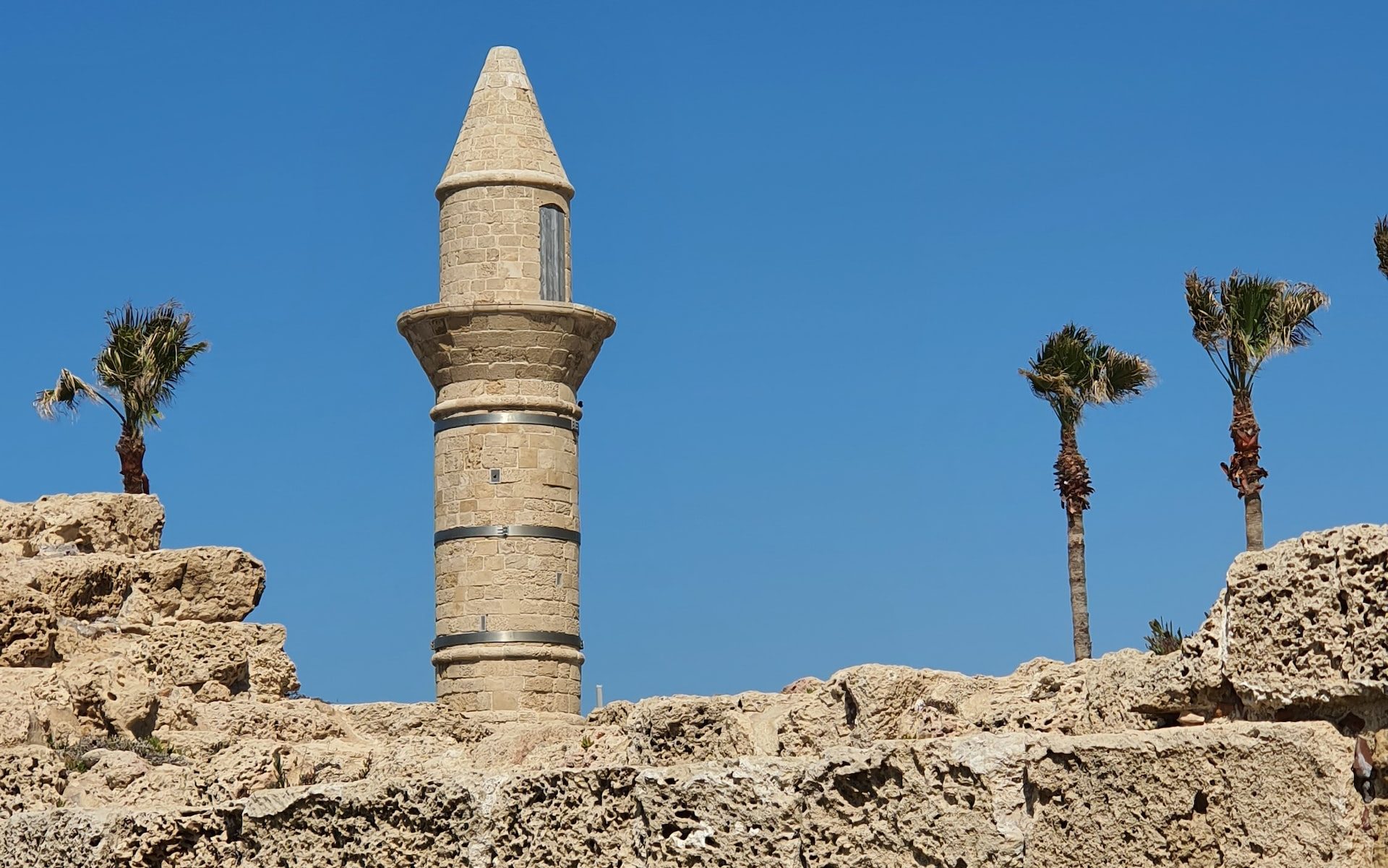
Photo by Lionel Gustave on Unsplash

Something that stands out in Jesus’ words are the phrases “You are,” and “You shall be.”  It’s as if Jesus saw 2 people: the one Simon was, and Peter that Simon would be.  The Simon of the present and the Peter of the future.  Jesus knew there was work to be done with this Simon who would become His disciple, but He also knew that the work would be completed.  It was inevitable that Simon would become Peter, the rock, which is what the name Peter means.  Cephas also means rock in Aramaic, but Peter is the Greek name we know him by.

But in the meantime, Peter was going to be a work in progress, like all of us.  Jesus sees everyone as they “are” and as they “shall be.”  He sees the raw material and He sees what it will take to finish each competed work of art.  Jesus takes us as we are, begins our transformation there, and will complete it in eternity.

Revelation 2:17 says of believers: “To the one who conquers I will give some of the hidden manna, and I will give him a white stone, with a new name written on the stone that no one knows except the one who receives it.”  This new name represents our future, eternal identity.  The person we will be when God is finished with His work of creation in us, the person Jesus sees in us, but that is beyond our wildest imagination. C.S. Lewis wrote that believers will “one day be a creature which, if you saw it now, you would be strongly tempted to worship.”  This is how completely we will be changed and conformed to the image and likeness of God that He intended for us from the beginning.[1]

So, if you ever feel disappointed in yourself, if you feel unworthy of God’s attention, if you wonder how God could love someone like you, remember: God sees who you “are” and who “you shall be.”  And who “you shall be” is beautiful beyond what we can imagine, but not beyond what He can see.

You are Simon the son of John? You shall be called Cephas” (which means Peter).


[1] Genesis 1:26-27

“Consider Well Her Ramparts”: Participating in the Psalms

Reading the Psalms is a great devotional habit, and every now and then a Psalm or a section of a Psalm gives instructions to its reader.  The author is inviting us to participate in something about God that they have experienced by taking specific actions.  Earlier posts on participating in the Psalms (here, here, and here) have covered Psalms 96 and 100, which asked us to sing a new song and to give thanks, respectively.  Today’s post is about Psalm 48, which is a little harder to see how to participate.  Most of the Psalm praises God by talking about His city, Jerusalem, and His mountain, Mount Zion.  If our God’s dwelling place is worthy of praise, then He must be as well.  The “participating” part comes at the end, with verses 12-14:

Walk about Zion, go around her,
            number her towers,
consider well her ramparts,
            go through her citadels,
that you may tell the next generation
            that this is God,
our God forever and ever.
            He will guide us forever.

The Psalmist wrote in ancient times that it was worth it to take the time to walk around Zion, to consider the things of God and not just gloss over them quickly, but how do we do that when Christians do not consider Jerusalem and Mount Zion to be the dwelling place of God?  How do we “consider well her ramparts”?

Photo by Boris Izmaylov on Unsplash

Currently, what was represented by the temple in Jerusalem on Mount Zion is represented by His body of believers, indwelt by His Holy Spirit.  Peter wrote that members of the church, “like living stones are being built up as a spiritual house, to be a holy priesthood, to offer spiritual sacrifices acceptable to God through Jesus Christ.”[1]  Therefore, do we participate in this Psalm by considering God’s strength through the church throughout history?  When we consider the “towers”, “ramparts”, and “citadels” of the church, do we consider the great “cloud of witnesses” listed in Hebrews 12, in addition to the faithful members of the church through the centuries since then?

Do we consider well not only the strength God has given His church through history, but also the strength that He protects it with even now?  Do we consider our own “ramparts” – the armor of God listed in Ephesians 6:13-17 –

Therefore take up the whole armor of God, that you may be able to withstand in the evil day, and having done all, to stand firm.  Stand therefore, having fastened on the belt of truth, and having put on the breastplate of righteousness, and, as shoes for your feet, having put on the readiness given by the gospel of peace.  In all circumstances take up the shield of faith, with which you can extinguish all the flaming darts of the evil one; and take the helmet of salvation, and the sword of the Spirit, which is the word of God.

Consideration takes time, so to participate in this Psalm take some time, if not today then soon, to consider God’s strength as shown through a person in the Bible, in church history, or even your own community or family.  Praise God for His strength and protection over His faithful!

As the “Sons of Korah” who wrote Psalm 48 believed, it’s worth the time and effort to:

Walk about Zion, go around her,
            number her towers,
consider well her ramparts,
            go through her citadels,
that you may tell the next generation
            that this is God,
our God forever and ever.
            He will guide us forever.

Many of this blog’s posts on History (click here) are a decent starting point.


[1] 1 Peter 2:5

Promises of Life, Godliness, and Excellence

Fellow travelers,

His divine power has granted to us all things that pertain to life and godliness, through the knowledge of him who called us to his own glory and excellence, by which he has granted to us his precious and very great promises, so that through them you may become partakers of the divine nature, having escaped from the corruption that is in the world because of sinful desire.” – 2 Peter 1:3-4

We do not, and cannot, depend on our own merit to convince God to love us, therefore:
“This consolation I would wish all Christians in their prayers: the testimony of a good conscience to assure them of God’s promises. But to obtain what they ask must only depend upon him, all opinion and thought of our own justice being laid aside.” – John Knox

Today in prayer, seek His power in His promises.  He wants us to have “all things that pertain to life and godliness” and He is faithful.


Post inspired by McKim, Donald K.  Everyday Prayer with the Reformers (2020).  P. 115.

The Likeness of Christ

As told in Genesis, Joseph served Pharaoh faithfully.  Even after being wrongly accused and imprisoned, he served while in prison and eventually rose again to prominence in Pharaoh’s kingdom.  When Pharaoh dreamed of famine, Joseph interpreted the dream, and under God’s direction, came up with a plan to survive it.  “And Pharaoh said to his servants, “Can we find a man like this, in whom is the Spirit of God?” – Genesis 41:38

In the gospels, Peter and John began as uneducated fishermen, yet they were personally discipled by Jesus for 3 years.  In Acts chapter 4, these former fishermen forcefully proclaim the gospel, and about five thousand people came to faith in Christ.  “Now when they saw the boldness of Peter and John, and perceived that they were uneducated, common men, they were astonished. And they recognized that they had been with Jesus.” – Acts 4:13

Pharoah recognized the Spirit in Joseph and people noticed Peter and John were different – do people notice the Spirit in you?  Can they tell you’ve been with Jesus?

“A Christian should be a striking likeness of Jesus Christ.” – Charles Spurgeon

Our Mighty God: What We Need for Christmas…Part 3

According to James Boice (see first post in the series), if you asked people to honestly describe their needs, they might describe one as: “We…have wills, and because we have wills, we want to achieve something. We want our lives to make a difference. To do that we need power.”[1]  This is a second need of us all, according to James Boice.  In Isaiah 9:6, Jesus, the Christ of Christmas, is described as our Mighty God, who Boice says “will empower us for life’s tasks” – those tasks He points us to in His wisdom.

The word Mighty probably calls to mind miraculous events, military victory, or superhero-like powers.  But ultimately, His greatest objectives for us – to love Him and to love our neighbor – are what He uses His might to accomplish.  When our Wonderful Counselor (see last post in series) gives wisdom to make a choice in life, He actually wants us to act on that choice because He knows how it will turn out – for our ultimate good – but what if we don’t agree with the choice, or don’t have the willpower to make it?

Photo by Hert Niks on Unsplash

God, unlike Lucy in the Peanuts comics, will not tell us to kick the football, then pull it away at the last second, leaving us on our back.  To those who trust Him, He will provide the ability to make a loving difference in the world.  As Mighty God, He puts His own resources and power behind His recommended wisdom to produce the desired effect of loving, godly living.

Put another way: “His divine power has granted to us all things that pertain to life and godliness, through the knowledge of him who called us to his own glory and excellence,” as written in 2 Peter 1:3.  He does not empower us to do just anything, or to do whatever we decide; He will empower us to “life and godliness.”  In wisdom, He knows this is what is ultimately worthwhile, and His power creates a new desire and a new influence in us, molding our wills that want to make a difference but may not know how.  His power also works in others to provide what we need, or works to put in our path someone who needs us.

The gift of Jesus as Mighty God meets one of our deepest needs:
“To achieve something worthwhile! Jesus is the Mighty God who enables us to do that. We accomplish worthwhile things through his power.” (Boice)

Do you want to achieve worthwhile things this Christmas and in 2025?  Our Mighty God wants to enable us to love Him and love others.  Seek the wisdom of Christ and become empowered by Him to love as you have never loved before.

This is the second gift of Christ in Christmas.


[1] From “May 10.” James Montgomery Boice and Marion Clark. Come to the Waters: Daily Bible Devotions for Spiritual Refreshment.  (2017).