God’s Word Withstands the Fire. Always.

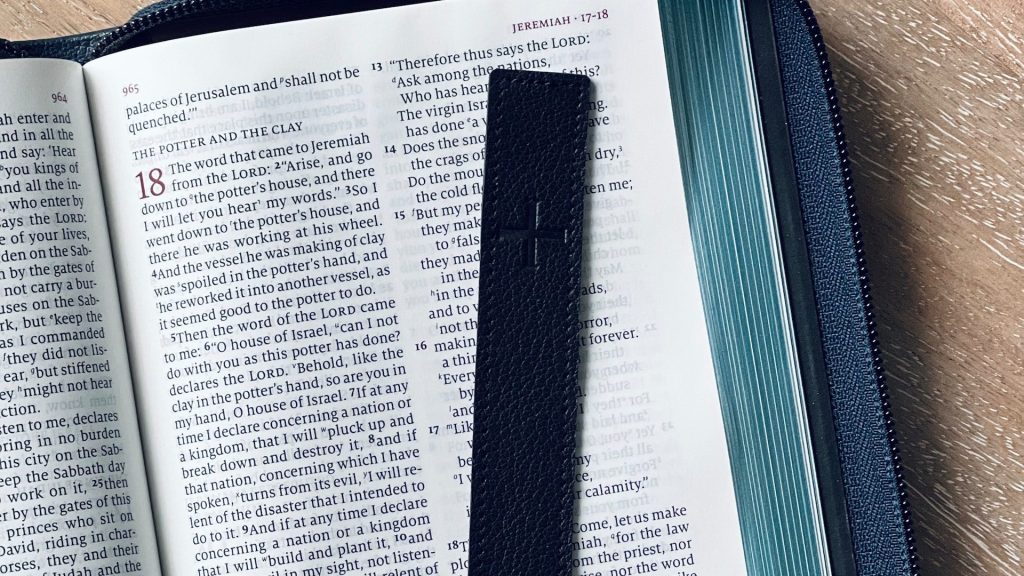
The Old Testament prophet Jeremiah faced immense opposition, and in Jeremiah 36:20-25 is recorded an interesting story of King Jehoiakim’s attempts to destroy the prophet’s words, and by extension, God’s words.  The king was unable to get his hands on Jeremiah, whose allies helped him to hide, so the king takes a different approach:

So they went into the court to the king, having put the scroll in the chamber of Elishama the secretary, and they reported all the words to the king.  Then the king sent Jehudi to get the scroll, and he took it from the chamber of Elishama the secretary. And Jehudi read it to the king and all the officials who stood beside the king.  It was the ninth month, and the king was sitting in the winter house, and there was a fire burning in the fire pot before him.  As Jehudi read three or four columns, the king would cut them off with a knife and throw them into the fire in the fire pot, until the entire scroll was consumed in the fire that was in the fire pot.  Yet neither the king nor any of his servants who heard all these words was afraid, nor did they tear their garments.  Even when Elnathan and Delaiah and Gemariah urged the king not to burn the scroll, he would not listen to them.”

This wasn’t an impulsive, knee-jerk reaction to God’s word, but a deliberate, sustained act of rebellion.  This took time, and there’s almost a ceremony to it, as if daring God to stop him.  Many Christians today would be outraged if they witnessed something like this.  People in positions of authority disrespect God regularly, but imagine if the head of your country burned the Bible publicly on TV, and nobody stopped them, or even objected?  Sure, in modern times, people might object on their blog, on social media, or even on smaller TV and radio outlets, but in Jehoiakim’s example, nobody was able to challenge him. He “got away with it.”

Photo by raquel raclette on Unsplash

This brings up the question of: why does God allow things like this to happen?  I’ll suggest a question in response: Would it be a stronger testimony of God’s sovereignty if He had struck King Jehoiakim dead on the spot, or is it a stronger testimony that Jeremiah’s words still exist today all around the world?  If the second option is better, the next question is why do we sometimes feel such outrage and lash out (perhaps on our own blog or Facebook page) at such acts?  Do we trust God to deal with it, or do we worry that Jehoiakim is right – maybe God doesn’t care?

Part of the scroll Jehoiakim burned may have included these words of Jeremiah about the king himself: “With the burial of a donkey he shall be buried, dragged and dumped beyond the gates of Jerusalem.”[1] And “He shall have none to sit on the throne of David, and his dead body shall be cast out to the heat by day and the frost by night.[2]  Therefore God knew both that justice would be done to Jehoiakim, and also that his burning of the scroll had only symbolic and temporary effect.  In contrast, God’s justice and God’s word are eternally immutable and effective.  As Isaiah said: “The grass withers, the flower fades, but the word of our God will stand forever.”[3]

There’s also another question for us: if God had chosen in His sovereignty to redeem Jehoiakim, would we be angry like Jonah at the repentance of Nineveh[4], or would we praise God for His profound and measureless grace?  The same grace that brought Jeremiah’s words back from the futile fire pot of King Jehoiakim.  The grace that was purchased by Christ on the cross.

This word of God will stand as well: “Beloved, never avenge yourselves, but leave it to the wrath of God, for it is written, ‘Vengeance is mine, I will repay, says the Lord.’  To the contrary, ‘if your enemy is hungry, feed him; if he is thirsty, give him something to drink; for by so doing you will heap burning coals on his head.’  Do not be overcome by evil, but overcome evil with good.” – Romans 12:19-21

Do we believe it?


[1] Jeremiah 22:19
[2] Jeremiah 36:30
[3] Isaiah 40:8
[4] See my earlier, short post on Jonah’s anger.

The God Over All Government

We’d all like to live under a better government, but the only perfect, Godly government we’ll ever see is a monarchy under Jesus in heaven.  Until then, like it or not, we all have to live under imperfect governments.  We hope and pray for our government to be more Godly, more like the perfect government, and we should, as Paul wrote:

First of all, then, I urge that supplications, prayers, intercessions, and thanksgivings be made for all people, for kings and all who are in high positions, that we may lead a peaceful and quiet life, godly and dignified in every way.” – 1 Tim 2:1-2

In addition to praying, there are many ways we try to influence our government.  In a democracy, we can seek to do this: by voting, by contributing money to political candidates, by working on a candidate’s campaign, by donating to lobbying organizations, by convincing others to vote differently, etc.  God may lead different people to participate politically in any of these ways, not at all, or in other ways.

However, none of these actions will be effective unless God is behind them, and the outcome we seek is what He also wants.  Only He can decide what are the right actions for us to take, and only He can decide which outcomes are best for His people, who He seeks to make perfectly Godly by His own definition of the word.  His purposes are to purify His people for eternity, not to bring about a perfect government in this broken world.  His purposes may not be our purposes, and where our influence is limited, His is unlimited.  Proverbs 21:1 tells us:

The king’s heart is a stream of water in the hand of the LORD;
            he turns it wherever he will.”

Therefore, regardless of whether we think our government is Godly, our government is actually Godly in one way: that He is in charge behind the scenes regardless of how it looks to us.

There are a couple of verses in the book of Ezra that acknowledge this, but first just a little background.  Ezra was a priest and scribe who likely wrote the Old Testament book bearing his name, in addition to Nehemiah, 1 and 2 Chronicles, and possibly Psalm 119.  It is also thought that he helped compile the Old Testament canon (the list of which books do and don’t belong).

Ezra lived at the end of the Babylonian captivity of the nation of Judah, an exile that ended not because of the vigorous efforts of Judah to break free, but because God used foreign kings to free them, and later to pay for the rebuilding of the Temple in Jerusalem.

After returning to their own land, the people of Judah were thankful for King Cyrus and King Darius, but ultimately, they knew God was behind it, and they determined to worship only Him, not Cyrus, Darius, or any other gods or men.  Ezra 6:22 says:

And they kept the Feast of Unleavened Bread seven days with joy, for the LORD had made them joyful and had turned the heart of the king of Assyria to them, so that he aided them in the work of the house of God, the God of Israel.”

Ezra repeats the point in Ezra 7:27, referencing the principle from Proverbs 21:1 –

Blessed be the LORD, the God of our fathers, who put such a thing as this into the heart of the king, to beautify the house of the LORD that is in Jerusalem

Our government is always in God’s hands, and He can do whatever He wills with it.  Pray that He will use it to bless God’s people, but also praise Him for all the benefits we may have, even under a hostile government.  Remember that God was behind Israel’s defeat by the Assyrians and Judah’s by Babylon, not just the return from exile.  It is by worshipping only God, not particular people or forms of government, that God’s people find their joy and peace.

The king’s heart is a stream of water in the hand of the LORD;           
he turns it wherever he will.”

The Cross and Power

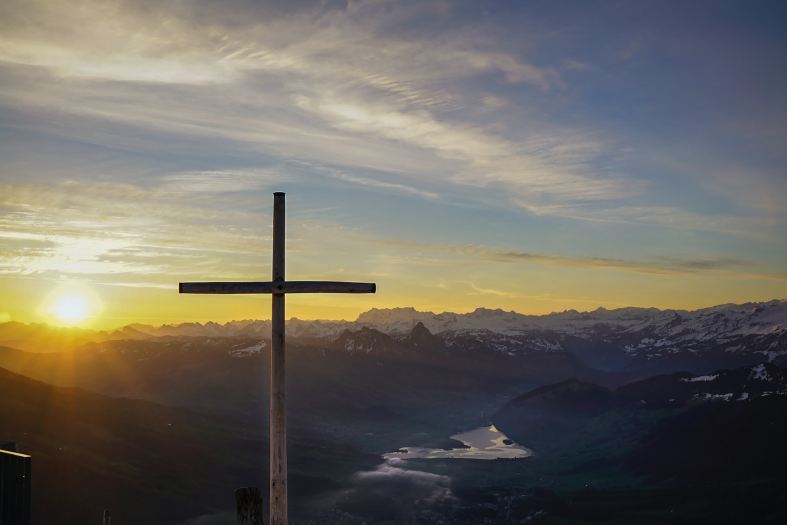
And being found in human form, He humbled himself by becoming obedient to the point of death, even death on a cross.” – Philippians 2:8

Here Jesus endured the powerlessness that many feel. At any moment, Jesus could have chosen to free Himself from the cross, but He actively maintained His powerlessness for hours through the torture for our benefit. Any time we think power is the answer, we must consider this.

Photo by Wim van ‘t Einde on Unsplash

The Priorities of the Good Samaritan

The parable of the Good Samaritan is well-known, even by those who aren’t Christian.  Briefly, it goes like this: a man is robbed, beaten, and left for dead on the side of a road.  First a priest, and then a Levite, passed him by, offering no help at all.  But a Samaritan, a member of a group despised by many Jews, stopped and helped the man, even bringing him to further help and paying the necessary expenses.

There is a lesson in the story about priorities – what this Good Samaritan put first, and what he didn’t.  But before covering his #1 priority, here are some things he did not prioritize, even though these aren’t necessarily bad things:

His first priority was not to fight for stricter laws against robbers.  What the robbers did was probably already illegal, and definitely not morally right.  We don’t know the fate of the robbers in the story, but they might have gotten away with this near murder.  In modern times, if criminals are getting away with bad behavior, a movement sometimes grows to make something that is already illegal “more illegal.”  If robbing is against the law, some might lobby to make the punishment harsher, or to focus laws on particular victims or perpetrators, but if they’re getting away with it now, how will these changes help?  The Good Samaritan couldn’t do much about this immediately, so it wasn’t his first priority.

His first priority also was not to raise public awareness of violence along the highways.  He didn’t create posters and social media hashtags (I write as if those things existed then).  Such a campaign can have benefits.  It could help people be more careful when traveling, it might encourage the government to allocate more of its limited resources toward highway safety, but it will never completely solve the problem. The Good Samaritan couldn’t do much about this immediately, so it wasn’t his first priority either.

Photo by youssef naddam on Unsplash

So, what was the Good Samaritan’s priority?  He focused on what he could control, and any other concerns came later.  He focused on the problem right in front of him – a man beat up and near death on the side of the road.  Sometimes we can focus so much on advocating, that we lose sight of doing.  (I worry about that for myself as someone who spends so much time blogging.)  But the Good Samaritan “proved to be a neighbor[1] by taking care of the neighbor right in front of him.

We can also be deluded into thinking that our government and other institutions should be able to solve all of our problems if only we fight hard enough for it.  However, they never will be enough, because any and all institutions are made up of people who too often deny their own responsibility for the problems of the world. Especially on social media, we often get the illusion that we can offload our responsibility for the world to others, and that what’s happening somewhere else is more important than what’s right in front of us.

While advocacy can be a good and necessary thing, God wants us to prioritize doing, which is what everyone in heaven will do!  In heaven, everyone will be like the Good Samaritan (and like Jesus), and therefore we won’t need better laws, awareness campaigns powered by advertising and hashtags, or stricter enforcement of laws.  The bloody victim by the roadside won’t exist.  And that is something to look forward to!

In the meantime:
“I think each village was meant to feel pity for its own sick and poor whom it can help and I doubt if it is the duty of any private person to fix his mind on ills which he cannot help. This may even become an escape from the works of charity we really can do to those we know. God may call any one of us to respond to some far away problem or support those who have been so called. But we are finite and he will not call us everywhere or to support every worthy cause. And real needs are not far from us.” – C.S. Lewis


[1] Luke 10:36

Is Democracy Good? A Quint of Quotes

Fellow travelers,

In the United States, today is “Super Tuesday,” when citizens in 15 of the 50 states vote in their state primaries, which decide who will be the nominee for President from each political party.  15 states in one day are far more than on any other day, and why the day gets a special name.  In observance of this day, here is another “Quint of Quotes” from my collection, on the theme of democracy:

“Democracy is the recurrent suspicion that more than half of the people are right more than half of the time.” – E.B. White

“Democracy is the theory that the common people know what they want, and deserve to get it good and hard.” – H.L. Mencken

“Mankind will in time discover that unbridled majorities are as tyrannical and cruel as unlimited despots.” – John Adams

“Your representative owes you, not his industry only, but his judgment; and he betrays instead of serving you if he sacrifices it to your opinion.” – Edmund Burke

“No one pretends that democracy is perfect or all-wise. Indeed it has been said that democracy is the worst form of Government except for all those other forms that have been tried from time to time.…” – Winston S. Churchill