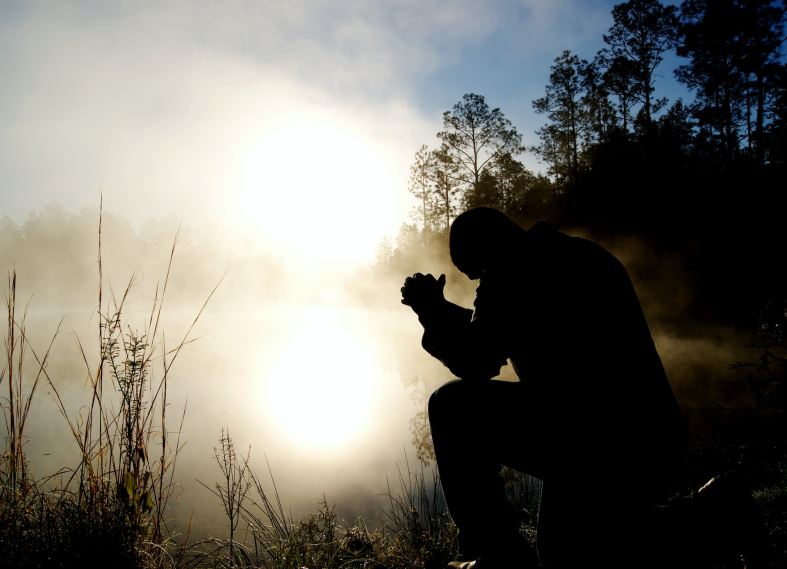
Thanksgiving is a Habit

“Continue steadfastly in prayer, being watchful in it with thanksgiving.” – Colossians 4:2

The purpose of celebrating Thanksgiving yesterday was to remind us to be thankful today and every day. What was worth being thankful for yesterday is still with you today!

If Christianity is true, this is not “being a Pollyanna” or seeing the world through rose-colored glasses. Live like it is true by making thanksgiving a habit, not a holiday.

Courage to Change: A Quint of Quotes

Fellow travelers,

Here is another “Quint of Quotes” from my collection, on the theme of personal responsibility and development.  Please don’t take the last one literally.

When a man’s folly brings his way to ruin, his heart rages against the LORD.” – Proverbs 19:3

“People could survive their natural trouble all right if it weren’t for the trouble they make for themselves.” – Ogden Nash

“God, grant me the serenity to accept the things I cannot change,
the courage to change the things I can,
and the wisdom to know the difference.” – Common prayer adapted from Reinhold Niebuhr

“Millions of people die every year of something they could cure themselves: lack of wisdom and lack of ability to control their impulses.” -Irving Kahn, investor who died at 109 of natural causes in 2015

And if your hand or your foot causes you to sin, cut it off and throw it away. It is better for you to enter life crippled or lame than with two hands or two feet to be thrown into the eternal fire.” – Matthew 18:8

Learning Godly Fear

Does being forgiven by God cause us to fear Him less, or to fear Him more?  Perhaps it’s both.

Psalm 130:4 tells us this about God: “But with you there is forgiveness, that you may be feared.”  To one way of thinking, this seems backwards: why does knowing that God has forgiven us make us fear Him more?  Shouldn’t we fear Him less when forgiven?  It depends on what we mean by fear.

For me, getting Psalm 130:4 to make sense with the order of forgiveness and fear required a re-thinking of repentance.  My conclusion was: the one who has not been forgiven has not repented, and the reason they did not repent was that they did not fear God.  They did not understand Him properly.  They might be afraid of God, but that’s not the kind of fear referred to in Psalm 130.

In contrast, the one who has been forgiven has repented, and they repented because they understood it was the best thing for them to do, out of a fearful respect for God.  A proper understanding of God’s character makes us turn to Him with our guilt, rather than run away from Him.  We should not be afraid of God, where we are motivated to be passive – avoiding mistakes that would anger the one we fear.  We should fear God in that we revere Him and respect His authority, and therefore actively seek to please Him.

A lot goes into repentance.  When we pray and ask for forgiveness, it’s often a simple prayer made with the proverbial faith of a child, but there are a lot of assumptions we make when we say that prayer.  Every prayer of repentance directly or indirectly acknowledges some or all of these things:

1) God as the source of the law, the ultimate arbiter of right and wrong
2) Him as the righteous judge who is personally offended by our sin
3) His omniscience, knowing we cannot hide our sin
4) His uniqueness, as there is no other God to turn to
5) His steadfast love for us, knowing He bore the cost of our sin, therefore enabling us to approach Him
6) His compassion for us, since He lived as a man
7) His power and willingness to heal us of sin
8) His consistency of character: that He is not arbitrary

If we don’t implicitly or explicitly believe these things, why would we repent and ask forgiveness from God?  Why would we expect to get it?  Exploring that set of statements could fill multiple volumes of theology books, but we don’t need that knowledge.  In His grace, He honors our simple, heartfelt confessions.  He paid the price for all our inadequacies – even when we don’t fully understand our own prayers or who we’re praying to.  The Spirit pleads with the Father on our behalf[1].  Mercifully, our forgiveness is based on His faithfulness to us, not on our detailed theological knowledge.  1 John 1:9 tells us: “If we confess our sins, he is faithful and just to forgive us our sins and to cleanse us from all unrighteousness.”

Even our faith is imperfect, but His faithfulness bridges the gap between our childlike faith and His omniscience.  He knows all our doubts and all their answers.  We come as we are, but with fearful respect, and are forgiven.

Only through acceptance of the cross, where Christ’s atoning blood was shed for us, can God in His Holiness commune with us.  Only through forgiveness will the Holy Spirit come and live in us.  Only by tasting of His goodness do we really know what He is like, not before.  And if we never repent, we don’t learn what it tastes like, we only know what you’ve been told about God, and we might not have been told the truth.

Psalm 130:4 shows us that genuine repentance leads to forgiveness and gives us a better appreciation of who God is.  As we experience Him more, we live Psalm 34:8 for ourselves:

“Oh, taste and see that the LORD is good!
                        Blessed is the man who takes refuge in him!”


[1] Romans 8:26-27

Praying for Our Leaders

King David was known as a man who sought God’s will in all things, even though he often failed.  The Psalms record many of his prayers for God to guide him and make him a good leader.  Psalm 26 is one of these prayers, and verses 8-10 include good objectives for any leader:

O LORD, I love the habitation of your house
            and the place where your glory dwells.
Do not sweep my soul away with sinners,
            nor my life with bloodthirsty men,
in whose hands are evil devices,
            and whose right hands are full of bribes.”

Sometimes we may not know how to pray “for kings and all who are in high positions,[1] as Paul suggests, but in this cry to God, David gives us at least 3 things to pray about.  He lists qualities he wanted to pursue, and some he wanted to avoid, but which are good for any leader.  Therefore, on the model of Psalm 26, we can pray for the leaders of our countries and communities today.

We can pray for political leaders who:

  • worship God (who “love the habitation of your house”)
  • do not seek violence and vengeance (who are not “bloodthirsty men”), and
  • are not corrupted by money (whose hands are not “full of bribes”)

All leaders can use our prayers today!


[1] 1 Timothy 2:2

Surprising Answers to Prayer

Jesus told many parables, often in response to situations or people He came across.  These parables are full of great lessons, but sometimes there’s also a lesson in the prelude to the parable.  One such example happens in Luke 12:13-15, which says:

Someone in the crowd said to him, “Teacher, tell my brother to divide the inheritance with me.”   But he said to him, “Man, who made me a judge or arbitrator over you?”  And he said to them, “Take care, and be on your guard against all covetousness, for one’s life does not consist in the abundance of his possessions.”

Jesus goes on to tell the “parable of the rich fool,” who loses his soul because he only cares about worldly goods.  The parable is a lesson about coveting, greed and priorities, but I believe there’s also a broader lesson about prayer in the 3 verses above before the parable even starts.

We can put ourselves in the place of the “someone in the crowd,” who wants something, and brings it to Jesus.  Unlike him, we don’t meet Jesus physically on the street, but we come to Him in prayer all the time.  We want something and we pray about it.  When we pray, we often we want to get a particular answer, hopefully giving us what we want.

In the case of “someone” in the Luke 12 story, he wanted part of the family inheritance.  In our case, we could want any number of things like financial gain, an end to a societal problem, better governance from our leaders, success for our children or others, a safe business trip or vacation, etc.  God wants us to pray to Him about all things, and we do.  “Humble yourselves, therefore, under the mighty hand of God so that at the proper time he may exalt you, casting all your anxieties on him, because he cares for you.”  (1 Peter 5:6-7)

However, we often aren’t ready to listen to a different answer than the one we want.  In the story, Jesus didn’t respond to “someone” with a direct answer, but with an answer that challenged the attitude behind the question.  “You shall not covet[1] is one of the Ten Commandments after all, and Jesus was letting “someone” know the condition of his heart was more important than the condition of his bank account.

God can respond to our prayers in the same way.  Instead of solving what we think is the problem, He may try to reveal to us a deeper problem we need to deal with.  But if we’re focused on the answer we want, we might miss the point He wants to make.  To God, our sanctification is more important than our gratification but often get that backwards.

When we pray for financial gain, God may respond by challenging our priorities, our diligence, our spending habits, etc.  In the Luke story, Jesus confronted the man’s covetousness.

When we pray for an end to societal problems, God may respond by telling us to care for a single mother[2], or support a homeless ministry, or volunteer at a food bank.

When we pray for better governance from our leaders, God may respond by telling us to control what we can control, by reminding us of His sovereignty, or by giving us practical means to work on the problems we want the politicians to solve, but on a smaller scale.

And so on.  Sometimes we do get what we ask for in prayer, but sometimes God will use prayer to do what He promises to do: make us more like Jesus.  Again, our sanctification is more important than our gratification, but sometimes we miss the point because we’re focused on our needs.

It’s ok to bring all of our needs and concerns to God in prayer, and sometimes we get what we want. However, don’t be surprised if He responds in surprising ways, but how?  He can speak to us any way He chooses, but in my experience, He usually points things out in His word, through our circumstances, and through other believers.

Listen and be open to His answers.  No matter what they might be.

“The majority of us begin with the bigger problems outside and forget the one inside.  A man has to learn ‘the plague of his own heart’ before his own problems can be solved” – Oswald Chambers

“The heart of every problem is the problem in the heart.” – Warren Wiersbe


[1] Exodus 20:17; Deuteronomy 5:21
[2] James 1:27