Elam’s Archers

Ideas for blog posts come from all sorts of sources.  Sermons, memories, books.  But most often they come from Bible study.  I nearly always use a study Bible and read all of its notes as I go, while also making my own notes.  This post’s inspiration comes from a study Bible note that just said “Elam is famous for its archers,”[1] in reference to Jeremiah 49:35, which says:

“Thus says the LORD of hosts: “Behold, I will break the bow of Elam, the mainstay of their might.””

The verse is a small part of a long section in Jeremiah where God speaks about His judgement on many nations, as a comfort to the Israelites who were about to go into exile.  The message is: in the long run, God’s people will be redeemed, but their enemies will be judged.

What do Elam’s archers have to do with this?  After reading the “Elam is famous for its archers” note I realized that nation by nation, God’s judgement focuses on the things that the nation took pride in.  His judgement fits the crime; it isn’t just arbitrary.  In Elam’s case, they believed their superior archers were the source of their strength.  They trusted in their archers, not God, and so God would “break the bow.”  Their archers would be helpless against judgement.

Consider also these other examples, from the same chapter of Jeremiah:

Jeremiah announced God’s judgement on Edom, descendants of Jacob’s brother Esau.  They had a longstanding grudge against God’s people, and they rejoiced when Jerusalem eventually fell to Babylon (see the book of Obadiah).  In Edom’s case, Jeremiah said:

“For behold, I will make you small among the nations,
despised among mankind.
The horror you inspire has deceived you,
and the pride of your heart,
you who live in the clefts of the rock,
who hold the height of the hill.
Though you make your nest as high as the eagle’s,
I will bring you down from there,
declares the LORD.”[2]
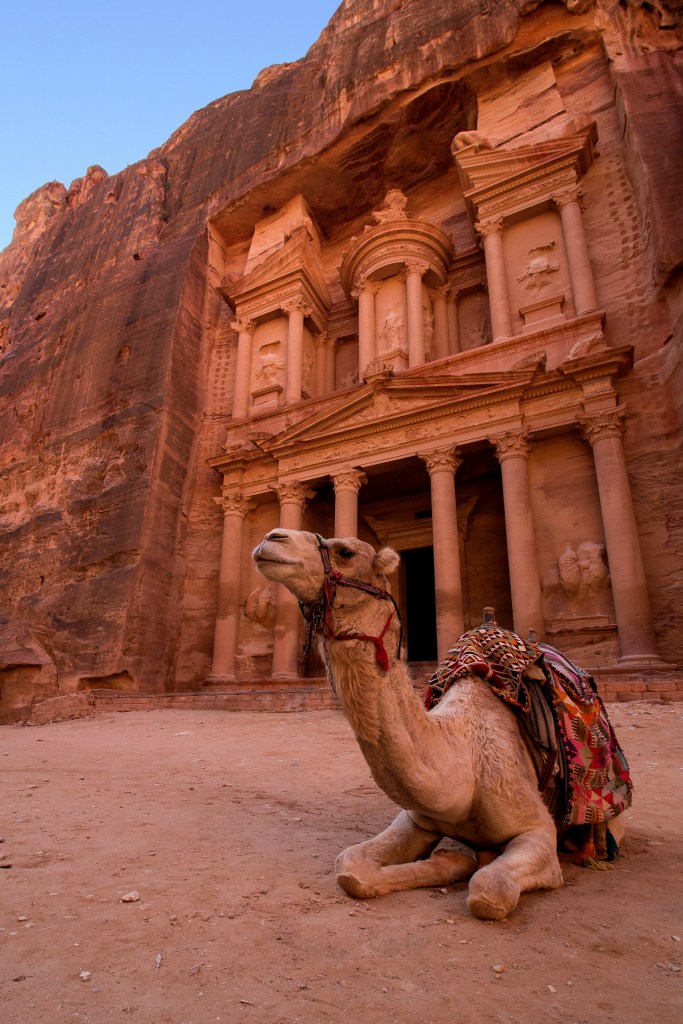
Petra. Photo by Juanma Clemente-Alloza on Unsplash

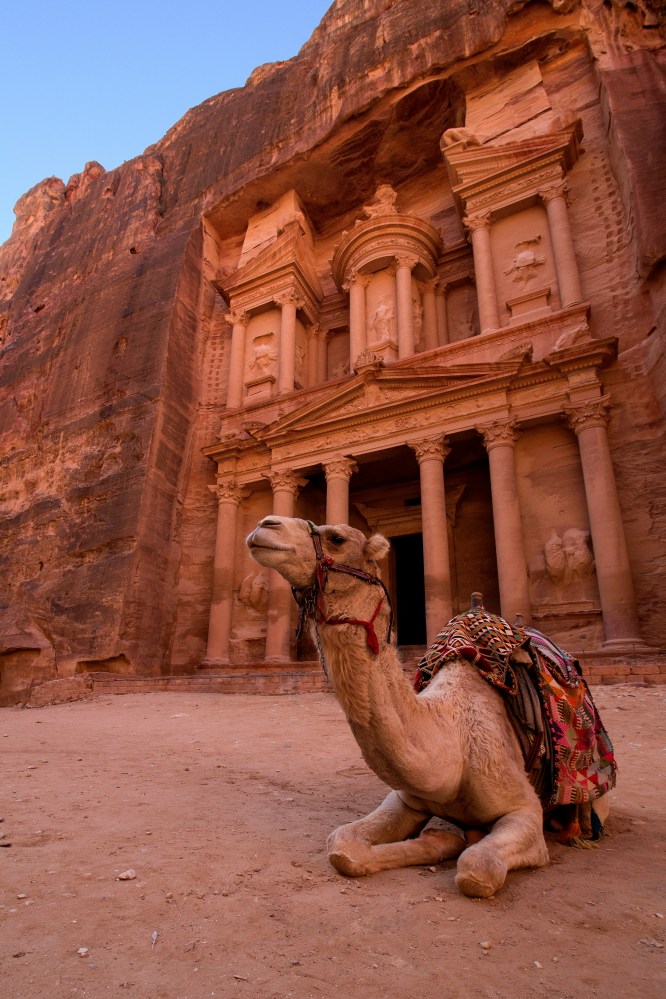
Elam took pride in their archers; Edom took pride in their natural defenses.  Edom thought physical protection was their strength and could save them from judgment.  They had fortresses built right into the rocks of the mountains, apparently including the one now known as Petra (pictured).  In addition, by being in the mountains, they had the military advantage of fighting from higher ground, with their “nest as high as the eagle’s.”  But these defenses were overcome by Babylon.

Jeremiah also had a message “Concerning Kedar and the kingdoms of Hazor that Nebuchadnezzar king of Babylon struck down.”[3]  Jeremiah doesn’t recount the sins of Kedar and Hazor, but only that Babylon was used as an instrument of judgement against them.  These two people groups were nomadic tribes, moving about rather than settling primarily in cities.  So, how does God judge them?  Jeremiah 49:29 tells us:

“Their tents and their flocks shall be taken,
their curtains and all their goods;
their camels shall be led away from them,
and men shall cry to them: ‘Terror on every side!’”

Without cities, the markers of wealth for these unsettled people were probably their tents and flocks and camels.  These are what the nations of Kedar and Hazor would take pride in, but God in His judgement would take them away.  Repeatedly in these prophecies, God strikes specifically the things those nations have pride in.

Judah was not immune.  They thought their alliance with Egypt would save them from conquest by Babylon.  However, Babylon over time defeated both Assyria, who had conquered Israel, and Egypt, who Judah was counting on to rescue them.  They had trusted in their political alliances instead of in God, putting their pride in the wrong place.

We also are not immune.  What do we and our nations take pride in?  Like Elam, is it the strength of our military?  Like Edom, does our sense of security from enemies lull us into a state of complacency and pride?  Like Kedar and Hazor, has our wealth become a source of pride?  We may not even be aware of these things, but God is aware and He will judge all of our sources of pride.  As He said in Isaiah 42:8 –

“I am the LORD; that is my name;
my glory I give to no other,
nor my praise to carved idols.”

God does not tolerate rivals, and we should be ready for God to judge the great Babylon’s of our time, our nation, and our hearts.  Until we are perfected in eternity, we and our nations will have things we put pride in inappropriately.  Our own strength, our own security, our own wealth.  We, and our nations, aren’t perfect, but have many idols.  Things that distract us from God and lead us to do things we shouldn’t.  Only God knows what all of these things are.

If “Elam is famous for its archers,” what do you and your nation put too much pride in?  Pray that God will reveal these to us and help us to overcome them, putting Him in their place.


[1] Reformation Study Bible, note on Jeremiah 49:35.
[2] Jeremiah 49:15-16
[3] Jeremiah 49:28

Blessed are the Poor in Spirit

This week I’m reposting a series on the first of the Beatitudes, the series of statements at the beginning of Jesus’ Sermon on the Mount that each begin with “Blessed are…”   The first Beatitude is Matthew 5:3 – “Blessed are the poor in spirit, for theirs is the kingdom of heaven.”    Today’s angle on it is how the statement addresses different people’s needs in such a simple way with only a few words.  This was the opening of a speech to great crowds that had followed him, crowds with all sorts of people.

The Greek word for “poor” in the Beatitude is a word suggesting one who has been reduced to begging.  They have nothing of their own and are entirely dependent on others.  Some in the crowd, who I’ll call “proud” would have felt rebuked, thinking their own works made them blessed, and might have been shocked to be compared with a beggar.  Others in the crowd I’ll call “ashamed” of their own works would have been comforted that they are blessed since they didn’t feel they measured up to the achievements of the proud.  They knew they were poor, but not blessed.  The proud think they’re ok because of what they’ve accomplished; the ashamed think they aren’t ok because their accomplishments seem smaller.  The “proud” and “ashamed” were both in need of good news.

Note that I did not contrast “proud” with “humble”, because I don’t think these are opposites.  Instead, humility is contentedness in our proper place before God and others.  The “proud” become humble when Christ rebukes them so that they can experience His blessing.  The “ashamed” become humble when Christ reassures them of His love and acceptance so that they can experience His blessing.

Photo by Aaron Burden on Unsplash

The first beatitude reminds everyone listening to Jesus that acknowledging our spiritual poverty is the first step in a process, but also that being poor is not incurable.  Knowing we are poor in spirit may actually be desirable, but only when paired with knowledge of His provision.  The more we realize our need and beg Him for the solution, the more He can, and will, bless us.  The crowds coming to hear Him needed to hear this Beatitude first of all because if anyone refuses to be humble before Christ, the rest of His speech won’t matter.  The kingdom is not for them (at least not yet).

In Christ, we are blessed because He is infinitely rich in spirit.  However, sometimes our pride or our shame prevent us from knowing that we are blessed!  Then when we lack hope in that blessing, we miss our King’s will for us in His kingdom.  We can’t be good enough, and don’t have to be good enough, and we don’t have be better or worse than anyone else.

Today the Great Physician waits to cure you if you will come and be humbled by Him.  Seek His blessing and His will.