Enter His Gates: Participating in the Psalms

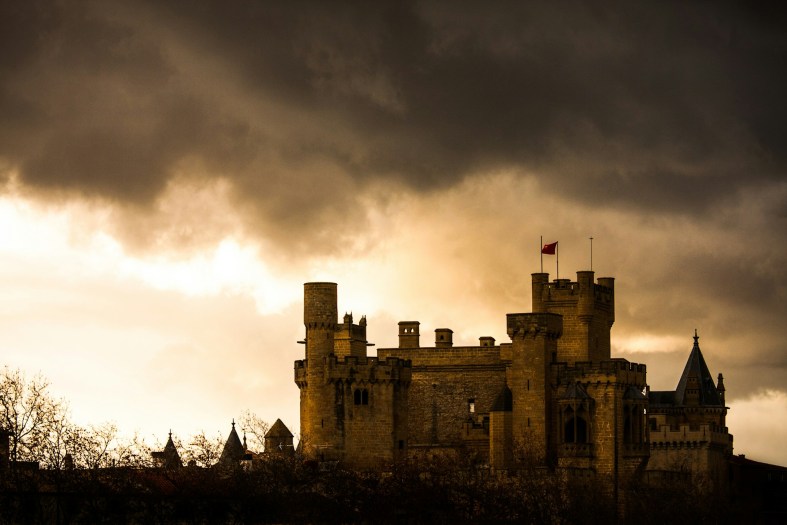
Photo by Steven Lasry on Unsplash

Psalm 100 is “A Psalm for giving thanks.”  Yesterday’s post focused on the first three verses, and today’s covers the last two, which continue the Psalmist’s encouragement to personally join them in thanksgiving.

Psalm 100:4 reads:

Enter his gates with thanksgiving,
            and his courts with praise!
            Give thanks to him; bless his name!”

Verse 3 ended describing us as God’s sheep, and as our Shepherd, He guides us into His presence.  At the time the Psalm was written, this would probably be in His temple, but for us it is whenever we worship in public or in private.  Does our worship involve willing and joyful giving of thanks, praise, and blessing to God?  Or do we sometimes worship reluctantly?  Do we feel we don’t measure up to what God expects?  In case we need encouragement, the Psalmist continues with verse 5:

“For the LORD is good;
            his steadfast love endures forever,
and his faithfulness to all generations.

Like verse 3 covered yesterday, this verse is a list of things to be thankful for.  A list of reasons we can enter His gates and courts with thanksgiving and praise:

“For the LORD is good” – We can approach God and worship Him because He is good
“his steadfast love endures forever” – We can approach Him because His love is steadfast
“and his faithfulness to all generations.” – We can approach Him because of His faithfulness

It is His characteristics that make Him love us, and His character endures forever.  If we have lacked goodness, love, or faithfulness since we last met with God, His love for us in Christ overcomes it all.  His nature is 100% reliable, and worthy of our thanksgiving!

Take a moment and ask Him how you might participate in the Psalms, being thankful for His character regardless of how your day is going, or how you feel.  He wants to walk through it with you.  Be thankful!

Make a Joyful Noise: Participating in the Psalms

Photo by Adam Winger on Unsplash

When reading the Psalms we should keep in mind that the writers aren’t just trying to teach us about God, but they are trying to share their experience of Him.  Some Psalms give us instructions like “sing to the LORD a new song” in Psalm 96.  Psalm 100 is “A Psalm for giving thanks,” and like Psalm 96, spells out ideas for doing it.  Today will focus on the first three verses, and tomorrow on the last 2.

Psalm 100 begins with:

A Psalm for giving thanks.

Make a joyful noise to the LORD, all the earth!
Serve the LORD with gladness!
            Come into his presence with singing!

Know that the LORD, he is God!
            It is he who made us, and we are his;
            we are his people, and the sheep of his pasture.

First, the Psalmist wants the whole earth to make a joyful noise, but notes that singing and making a joyful noise are not the only part of giving thanks.  We are encouraged to thank God by serving Him, not reluctantly, but to serve with the same gladness we have when we sing in worship.

The third verse reads like a list of things to be thankful for.  When we feel like there’s nothing to be thankful for, or no motivation to serve, consider:

“Know that the LORD, he is God!” – Our Lord is not powerless, He is God!
It is he who made us, and we are his” – We are not accidents of a mindless nature, we are His!
We are his people, and the sheep of his pasture” – We do not have to wander aimlessly through life, not knowing where we are going, we belong to a flock and our Shepherd provides us pasture! 

Take a moment and ask Him how you might participate in the Psalms, carrying these instructions into your daily circumstances.

Perfecting Faith Through Struggle

King David wrote many Psalms during the difficult times in his life.  Psalm 18, written “on the day when the LORD delivered him from the hand of all his enemies, and from the hand of Saul,[1] is a song David wrote to praise God for His deliverance from difficulties in the past.  David describes the depths of the troubles he faced in verses 4 and 5:

The cords of death encompassed me;
            the torrents of destruction assailed me;
the cords of Sheol entangled me;
            the snares of death confronted me.”

There were many moments where David faced enemies seeking to kill him, a situation we may never face.  But, like David we all face struggles and, while not literally life-threatening, some of them may feel like what David describes.  Our enemies may be external or internal, physical or spiritual, and Psalm 18 can be applied to them all.  David magnifies the powers that assailed him, which John Calvin wrote, “enhances and magnifies so much the more the glory of his deliverance. As David had been reduced to a condition so desperate that no hope of relief or deliverance from it was apparent, it is certain that he was delivered by the hand of God, and that it was not a thing effected by the power of man.”  David was truly in a desperate situation and sometimes we are too.

So, how can this Psalm help us in our struggles?  I’m going to focus on a only a few of the Psalm’s 50 verses, including verses 1 to 3:

I love you, O LORD, my strength.
The LORD is my rock and my fortress and my deliverer,
            my God, my rock, in whom I take refuge,
            my shield, and the horn of my salvation, my stronghold.
I call upon the LORD, who is worthy to be praised,
            and I am saved from my enemies.

Note that these verses come before the ones quoted earlier because before coming to God with his problems, David contemplated who God is and what he has learned about Him from experience.  When we’re struggling, we should also take the time to contemplate the nature of our God so we can get the right perspective.

David uses some military metaphors to tell us about God.  David says God is a rock, a fortress, a shield, a horn, and a stronghold.  These tell us that God:

  • is a rock, immovable by our enemies and our problems.
  • is a fortress and stronghold, a secure place to flee from our enemies, where they cannot get in.
  • is a shield that protects us from harm.  Our enemies weapons can’t pierce God’s protection.
  • is a horn, with all the power we need to defeat our enemies.  A horn was a symbol of might in the Bible.

God is all these things for us too!

In verse 7, David added that when God answered his call for help, “the earth reeled and rocked; the foundations also of the mountains trembled and quaked, because he was angry.”  God’s power, His “horn”, is so powerful that even the earth fears it, but we need to learn to trust in it, and it alone.

There is no sure way to learn to trust a fortress or shield, other than to test them in battle.  C.S. Lewis wrote that “God allows us to experience the low points of life in order to teach us lessons that we could learn in no other way.”  When we’re fighting an external battle against an enemy or against painful circumstances.  When we’re fighting an internal battle against temptation, a bad habit, an addiction, or maybe an unattractive character trait, God can teach us about who He is through the pain of those battles, and we can learn to trust Him more.

Although we will not defeat all of our enemies while we live in this world, and we may be frustrated knowing God is powerful enough to win, but we still fail anyway, we know that:

The steadfast love of the LORD never ceases;
            his mercies never come to an end;
they are new every morning;
            great is your faithfulness.”[2]

He is faithfully by our side in every struggle, and eager to restore us when we fall, even if it’s every day.  But most importantly, we know that He is working in all things -even our fiercest battles – to perfect us and that He will not fail.  Even if we are unfaithful at times, He remains faithful always, and it’s His faithfulness that makes the difference.

If you’re fighting something today, remember that God is your rock, fortress, shield, horn, and stronghold, and you can trust Him.

And I am sure of this, that he who began a good work in you will bring it to completion at the day of Jesus Christ.”  – Philippians 1:6


[1] Psalm 18:0 (title)
[2] Lamentations 3:22-23
God, Our Eternal River

When comparing Genesis and Revelation, we find similarities between the Paradise man lost and the Paradise to come.  Consider these verses about each:

Genesis 2:8-9: “And the LORD God planted a garden in Eden, in the east, and there he put the man whom he had formed.  And out of the ground the LORD God made to spring up every tree that is pleasant to the sight and good for food. The tree of life was in the midst of the garden, and the tree of the knowledge of good and evil.  A river flowed out of Eden to water the garden, and there it divided and became four rivers.
Revelation 22:1-2: “Then the angel showed me the river of the water of life, bright as crystal, flowing from the throne of God and of the Lamb through the middle of the street of the city; also, on either side of the river, the tree of life with its twelve kinds of fruit, yielding its fruit each month. The leaves of the tree were for the healing of the nations.

A stream in Llanberis, Wales.

In each description is the tree of life, and also a river. Rivers are greatly beneficial to the growth of cities and civilizations, providing benefits for agriculture, trade, travel, etc.  Even today, most large cities that don’t border a large body of water have a navigable river nearby or flowing through it.  A big city without one is rare: in the United States, Dallas, Texas, and Charlotte, North Carolina, may be the only major cities not located near a significant river.

Rivers are mentioned a lot in the Bible, including in this Psalm about God being our refuge and fortress.  An unnamed river in the “city of God” is mentioned:

There is a river whose streams make glad the city of God,
            the holy habitation of the Most High.” (Psalm 46:4)

However, Jerusalem, the place Jews in the Old Testament period would have considered the “city of God” does not have a river.  The Psalmist certainly knew this, so their point is about something else, that the “city of God” has, well, it has God, as described in the next verses:

“God is in the midst of her; she shall not be moved;
            God will help her when morning dawns.
The nations rage, the kingdoms totter;
            he utters his voice, the earth melts.
The LORD of hosts is with us;
            the God of Jacob is our fortress.  Selah” (Psalm 46:5-7)

Jerusalem may not have a river, but it has God who provides all it needs and more.  No river required.  Even though the literal, ancient Jerusalem was eventually destroyed by the Babylonians, and later by the Romans, the eternal City of God will never be moved.  All other nations “rage” and “totter,” but God’s kingdom is forever secured by the One whose voice melts the earth.  Hebrews 1:10-12 (quoting from Psalm 102:25-27):

You, Lord, laid the foundation of the earth in the beginning,
            and the heavens are the work of your hands;
they will perish, but you remain;
            they will all wear out like a garment,
like a robe you will roll them up,
            like a garment they will be changed.
But you are the same,
            and your years will have no end.”

Do you worry that you lack things others have?  Things that would provide benefits for your business, spare time, or other pursuits?  With God as our fortress and refuge, we don’t need a river, but in Paradise He will provide one anyway.

Fret not, for you have God, our eternal river.

The Destiny of the Wealth of Nations

Here in the United States, the year 1776 is celebrated as the political beginning of the nation, because the Declaration of Independence was approved on July 4 of that year.  Also in 1776, The Wealth of Nations by economist and philosopher Adam Smith was published and is foundational to our nation’s economy.  Its full title of An Inquiry into the Nature and Causes of the Wealth of Nations shows its purpose was to explore what makes some nations more well-off than others, with Smith concluding that capitalism, especially the elements of free trade and competition, was the best system.  I won’t argue here for capitalism or about where wealth comes from, but about where wealth is destined to end up.

Interestingly, the phrase “wealth of the nations” appears in the Bible 3 times, all in Isaiah 60 and 61, and the phrase “wealth of all the surrounding nations” appears once, in Zechariah 14.[1]  All of these references describe the future reign of the Messiah when all nations and peoples will acknowledge Him as Lord and dedicate their wealth in tribute to Him.

Isaiah 60:4-5 is the first mention of the phrase, and it says:

Lift up your eyes all around, and see;
            they all gather together, they come to you;
your sons shall come from afar,
            and your daughters shall be carried on the hip.
Then you shall see and be radiant;
            your heart shall thrill and exult,
because the abundance of the sea shall be turned to you,
            the wealth of the nations shall come to you.”

The next few verses read like an inventory of goods (camels, gold, flocks, ships, lumber) and places (Midian, Sheba, Kedar, Tarshish, Lebanon), showing that no thing and no place is excluded from the tribute to God.  Wealth from every source belongs to Him.

In the same chapter, verse 11 declares about the eternal city of God:

Your gates shall be open continually;
            day and night they shall not be shut,
that people may bring to you the wealth of the nations,
            with their kings led in procession.”

When we inquire into future of wealth, rather than its past and its sources, we find that the wealth of the nations is all His.  We own nothing.  We are only stewards and caretakers, regardless of what economic system we live in or believe in.

The earth is the LORD’S and the fullness thereof,
                        the world and those who dwell therein” – Psalm 24:1

Soli Deo Gloria


[1] It may be where Smith got his title idea, or it may just be coincidence.