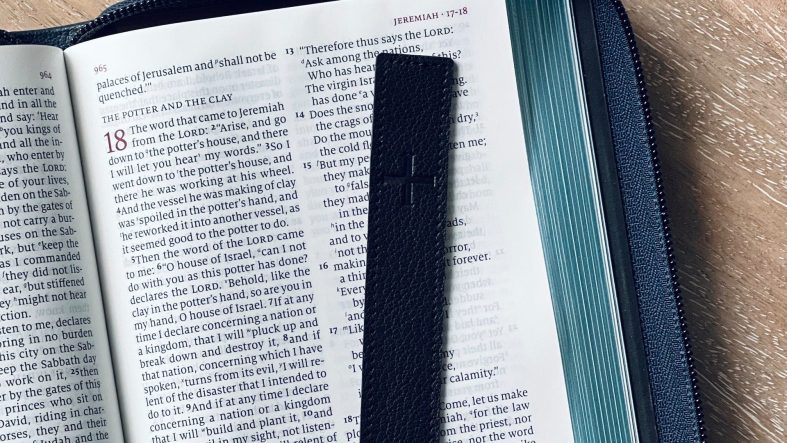
Bible in a Year: Week of March 4 – 10

Fellow travelers:

Below are the chapters to read this week if you’re following along in my Bible in a year schedule, divided into morning and evening readings.  Follow along any way you want: just do the evening reading, flip the morning and evening, read it all.  Whatever works for you and your schedule!

Monday, March 4
Morning: Psalm 64, 2 Kings 5
Evening: Exodus 14

Tuesday, March 5
Morning: Psalm 65, 2 Kings 6
Evening: Exodus 15

Wednesday, March 6
Morning: Psalm 66, 2 Kings 7
Evening: Exodus 16

Thursday, March 7
Morning: Psalm 67, 2 Kings 8
Evening: Exodus 17

Friday, March 8
Morning: Psalm 68, 2 Kings 9
Evening: Exodus 18

Saturday, March 9
Morning: Psalm 69, 2 Kings 10 – 11
Evening: Exodus 19

Sunday, March 10
Morning: Psalm 70, 2 Kings 12-13
Evening: Exodus 20

God’s Justice is Good

Many of the Bible’s Psalms are beautiful songs of praise, but some are harder to read, including what are called “imprecatory” Psalms.  To “imprecate” is to curse, and in the case of these Psalms, the writers curse the enemies of the writer and of God.  Psalm 58, written by David, uses some very harsh language, such as “O God, break the teeth in their mouths” (in vs. 6) or “Let them be like the snail that dissolves into slime, like the stillborn child who never sees the sun.” (vs. 8).  These harsh phrases may be hard to read, they’re part of the Bible and worth taking some time to understand.

These curses have a context, and for the imprecations in Psalm 58, the context is injustice due to bad worldly judges.  Verses 1 and 2 say:

“Do you indeed decree what is right, you gods?
            Do you judge the children of man uprightly?
No, in your hearts you devise wrongs;
            your hands deal out violence on earth.”

Every day in the news we can easily find injustices to complain about, just as David did, and in many of our hearts, we feel some of the emotions David must have felt.  Much of what passes as news today might be categorized as imprecatory.  David’s curses continue in verses 3 through 8, including the phrases quoted above, but in verse 9, after writing of how wicked and dangerous his enemies are, David notes how quickly God (not David) can sweep them away if He chooses:

“Sooner than your pots can feel the heat of thorns,
            whether green or ablaze, may he sweep them away!”

This image is not chosen at random, but to make a specific point.  Dry thorns catch fire very quickly, and so when God judges, the unjust judges will be swept away “Sooner than your pots can feel the heat”. Not sooner than the food in your pot cooks, or sooner than the water in your pot boils, but much sooner than that.  A watched pot never boils, they say, but here the result is immediate.

The Psalm closes in vs. 11 with relief that ultimately, there will be true and complete justice, and:

“Mankind will say, ‘Surely there is a reward for the righteous;
            surely there is a God who judges on earth.’”

God’s justice is good because when God judges, He judges rightly, unlike the imperfect, or corrupt, judges of the world from the beginning of the Psalm.  If the things on the news we complain about are truly unjust, God will take care of them “Sooner than your pots can feel the heat.”  Also, when people pursue right actions instead of injustice, God will reward them “Sooner than your pots can feel the heat.”  Judgment by God is good news because He is fully just.  Without such a perfect judge, we only have imperfect judges to judge the imperfections and evils of the world.

Another part of the context is that when David prays in vs. 7 – “Let them vanish like water that runs away; when he aims his arrows, let them be blunted” – he is not vowing to take vengeance himself, but being honest about his frustration and trusting that God will take care of everything when the time comes.  On verse 7 John Calvin commented: “Let us not cease to pray, even after the arrows of our enemies have been fitted to the string, and destruction might seem inevitable.”

Therefore, trust God to take vengeance on evil, even when it seems powerful and triumphant.  Each and every sin will be borne by either the sinner or on the cross.  None will be ignored, and in God’s time, all will be resolved “Sooner than your pots can feel the heat.”  Until then, justice is delayed while God calls His people back to Himself with an offer of patient grace and mercy.

Listen to His call, not only to return to Him, but to patiently trust Him to deal out perfect justice.


God Deserves a Standing Ovation

Do you ever clap for God?  Maybe we’ve clapped during a worship song or after a speech or sermon, but do we just clap for God because He’s God and we’re joyful about it?  Psalm 47:1 tells us to:

“Clap your hands, all peoples!
            Shout to God with loud songs of joy!”

Ok, but should we, really?  After verse 1 above, verse 2 begins with “For…”, a transition which usually means the writer is about to give us reasons for the thing previously mentioned, which is that we should praise God with clapping and shouts of joy.  So, seeing the “For…” we should ask “Why should we praise God?” and expect an answer in the next verses, which say:

“For the LORD, the Most High, is to be feared,
            a great king over all the earth.

He subdued peoples under us,
            and nations under our feet.

He chose our heritage for us,
            the pride of Jacob whom he loves. Selah”

Each of the 3 verses gives us reasons to clap our hands and shout in praise.  First, these verses remind us He is “king over all the earth.”  There are many authorities in the world, and many authorities we follow.  We have governments that rule us, cultures that influence us, and even spiritual forces that strive to pull us away from God.  But, however high and mighty these other authorities may be, only the Lord is “Most High”, as King of Kings and Lord of Lords.  While every other authority is flawed and can lead us astray, He is not and does not.  This is a cause for a clap of praise!

The next verse reminds us that He has overcome many opposing people and nations in the past:

“He subdued peoples under us,
            and nations under our feet.”

To its original audience, this probably referred to God’s victory over Egypt at the Red Sea, or the conquest of Canaan, however it can be read more broadly as God’s victory over any nation that seeks to rival Him.  Consider the Roman Empire, which to many at that time seemed like it ruled the entire world.  Roman emperors such as Nero and Diocletian tried to stamp out Christianity forcefully and violently, but in 410 AD, Germanic tribes would sack the city of Rome and eventually overthrow the empire.  No nation will outlast or overrule the reign of God.  This also is a cause for praise!

Lastly, verse 4 reminds us that however our circumstances might look to us, He loves us, provides for us, and will give us eternal refuge:

“He chose our heritage for us,
            the pride of Jacob whom he loves. Selah”

Being chosen by God is infinitely better than winning the lottery or anything else we might hope for in this world.  We might say we’ve won the spiritual lottery, only it was not won by chance, but by the favor of the Lord.  Our inheritance, our heritage, is guaranteed by Him.  Another reason to praise Him!  So…

“Clap your hands, all peoples!
            Shout to God with loud songs of joy!”

Photo by Guillermo Latorre on Unsplash

Bible in a Year: Week of February 12 – February 18

Fellow travelers:

Below are the chapters to read this week if you’re following along in my Bible in a year schedule, divided into morning and evening readings.  Follow along any way you want: just do the evening reading, flip the morning and evening, read it all.  Whatever works for you and your schedule!

By the end of this week, we’ll be almost 1/3 of the way through Psalms and almost done with Genesis.  Also, readings from OT history continue until we’re through Kings and Chronicles, then we start the Gospels.

Monday, February 12
Morning: Psalm 43, 2 Samuel 24
Evening: Genesis 43

Tuesday, February 13
Morning: Psalm 44, 1 Kings 1
Evening: Genesis 44

Wednesday, February 14
Morning: Psalm 45, 1 Kings 2
Evening: Genesis 45

Thursday, February 15
Morning: Psalm 46, 1 Kings 3
Evening: Genesis 46

Friday, February 16
Morning: Psalm 47, 1 Kings 4
Evening: Genesis 47

Saturday, February 17
Morning: Psalm 48, 1 Kings 5-6
Evening: Genesis 48

Sunday, February 18
Morning: Psalm 49, 1 Kings 7-8
Evening: Genesis 49

An Eternal Perspective on Life: A Quint of Quotes

Dear fellow travelers,

Here is another “Quint of Quotes” from my collection, five quotes on the theme of living for eternity:

“O LORD, make me know my end
            and what is the measure of my days;
            let me know how fleeting I am!” – Psalm 39:4

“He is no fool who gives what he cannot keep to gain that which he cannot lose.”  – Jim Elliot

“Some day you will read in the papers that D.L. Moody, of East Northfield, is dead. Don’t you believe a word of it. At that moment I will be more alive than I am now.” – Dwight L. Moody

“Time is short. Eternity is long. It is only reasonable that this short life be lived in the light of eternity.”- Charles Spurgeon

“Rejoice, that the immortal God is born, so that men may live in eternity.” – Jan Hus