Here in the United States, the year 1776 is celebrated as the political beginning of the nation, because the Declaration of Independence was approved on July 4 of that year. Also in 1776, The Wealth of Nations by economist and philosopher Adam Smith was published and is foundational to our nation’s economy. Its full title of An Inquiry into the Nature and Causes of the Wealth of Nations shows its purpose was to explore what makes some nations more well-off than others, with Smith concluding that capitalism, especially the elements of free trade and competition, was the best system. I won’t argue here for capitalism or about where wealth comes from, but about where wealth is destined to end up.
Interestingly, the phrase “wealth of the nations” appears in the Bible 3 times, all in Isaiah 60 and 61, and the phrase “wealth of all the surrounding nations” appears once, in Zechariah 14.[1] All of these references describe the future reign of the Messiah when all nations and peoples will acknowledge Him as Lord and dedicate their wealth in tribute to Him.
Isaiah 60:4-5 is the first mention of the phrase, and it says:
“Lift up your eyes all around, and see; they all gather together, they come to you; your sons shall come from afar, and your daughters shall be carried on the hip. Then you shall see and be radiant; your heart shall thrill and exult, because the abundance of the sea shall be turned to you, the wealth of the nations shall come to you.”
The next few verses read like an inventory of goods (camels, gold, flocks, ships, lumber) and places (Midian, Sheba, Kedar, Tarshish, Lebanon), showing that no thing and no place is excluded from the tribute to God. Wealth from every source belongs to Him.
In the same chapter, verse 11 declares about the eternal city of God:
“Your gates shall be open continually; day and night they shall not be shut, that people may bring to you the wealth of the nations, with their kings led in procession.”
When we inquire into future of wealth, rather than its past and its sources, we find that the wealth of the nations is all His. We own nothing. We are only stewards and caretakers, regardless of what economic system we live in or believe in.
“The earth is the LORD’S and the fullness thereof, the world and those who dwell therein” – Psalm 24:1
Soli Deo Gloria
[1] It may be where Smith got his title idea, or it may just be coincidence.
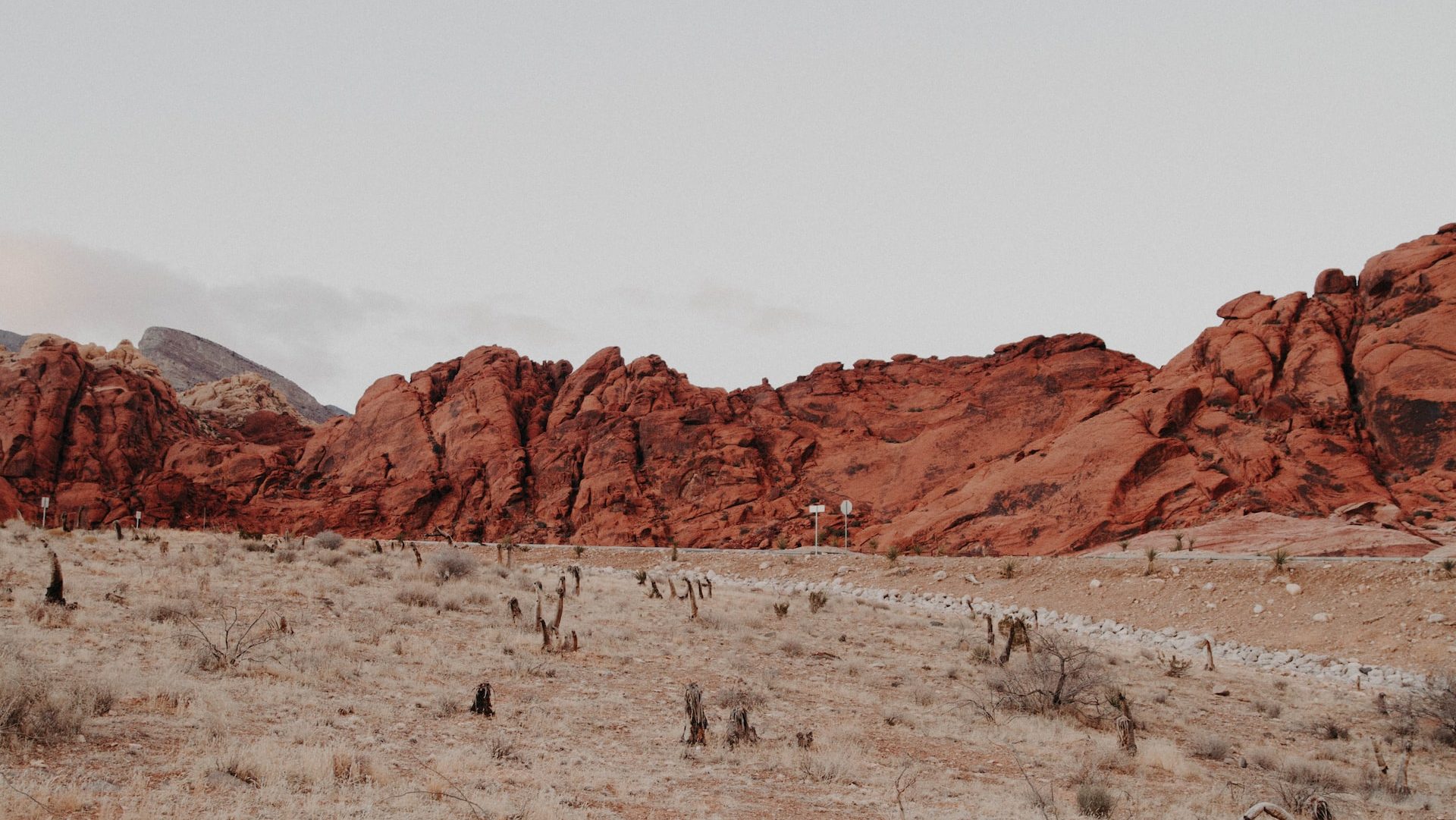
Life is often a battle with inconsistency. We go from feeling good about our situations and God’s favor, to feeling like we are in a spiritual desert, and back again like a pendulum. Knowing this, God provides verses like Psalm 126:4-6, which says:
“Restore our fortunes, O LORD, like streams in the Negeb! Those who sow in tears shall reap with shouts of joy! He who goes out weeping, bearing the seed for sowing, shall come home with shouts of joy, bringing his sheaves with him.”
The metaphor is a comparison to the south of Israel, which has a very dry climate, yet experiences flooding in a rainstorm. The Negeb also is mentioned in the story of Caleb and his daughter Achsah. Her inherited land was in the infertile Negeb, and she asks him also for springs of water, which he gives her.[1]
Like Achsah’s father Caleb, our Father God also provides for us in our seasons of trouble. Here, the Psalmist compares tears to seeds, reminding us that in the dry times as well as the times of overflowing blessing, God is with us, using those circumstances. Our current loss is future gain, and our current time of suffering is bound and measured by God’s will, like the Babylonian exile was measured at 70 years[2] and the year of Jubilee came after every 49 years[3]. After our time, we will enter His rest and rejoice eternally.
In this life we may experience spiritual and emotional extremes, like drought and flood in the desert. Don’t overreact to the pendulum swing but count your tears as seeds. Pray that He will restore your fortunes and thank Him that our seasons are in His hands.
“Blessed are those who mourn, for they shall be comforted.” – Matthew 5:4
[1] Joshua 15:18-19 [2] Daniel 9:2, 9:24 [3] Leviticus 25:8
Reading the Psalms is a great devotional habit. Most years, I read one a day starting January 1 until they’re done and then start again the next year. However, too often I read through one without it having any effect on me. Too often I miss that the writers aren’t just trying to teach about God, but they are trying to share their experience of Him with me. They don’t just want me to know what they know about Him – They want me to feel what they felt about Him, and act as they acted toward Him. For example, Psalm 96:1-5 reads like instructions:
“Oh sing to the LORD a new song; sing to the LORD, all the earth! Sing to the LORD, bless his name; tell of his salvation from day to day. Declare his glory among the nations, his marvelous works among all the peoples! For great is the LORD, and greatly to be praised; he is to be feared above all gods. For all the gods of the peoples are worthless idols, but the LORD made the heavens.”
Verse 1 isn’t “listen to me sing a new song” but instead it asks everyone (and everything) to sing a new song to God. The Psalmist wants us to participate with them in their joy, and even spells out how and why to do this:
“from day to day” – make it a daily habit
“among the nations” – don’t pick and choose your audience. Share publicly and indiscriminately
“For great is the LORD” – because He deserves it
“For all the gods of the peoples are worthless idols” – because no other is worthy
Not only the Psalms, but all worship, requires participation.
“A new song” suggests something that’s creative, offered in praise…Perhaps you are not a ‘creative’ person. You might be a tax collector or a soldier[1]. You might be a clerk, accountant, lawyer, politician, engineer, housewife or anything else. It doesn’t matter. It’s about knowing who you are and dedicating that to the Lord and to others.”
Your situation is not mine. Few people have blogs, and God doesn’t always deliver answers to prayer in the same way, but in whatever way we can, He wants us to participate in the praise of the Psalms, sharing Him every day, to all people, because He deserves it.
This day and every day, what can you do to “Ascribe to the LORD the glory due his name”? Take a moment and ask Him how you might participate in the Psalms.
When comparing Genesis and Revelation, we find similarities between the Paradise man lost and the Paradise to come. Consider these verses about each:
Genesis 2:8-9: “And the LORD God planted a garden in Eden, in the east, and there he put the man whom he had formed. And out of the ground the LORD God made to spring up every tree that is pleasant to the sight and good for food. The tree of life was in the midst of the garden, and the tree of the knowledge of good and evil. A river flowed out of Eden to water the garden, and there it divided and became four rivers.” Revelation 22:1-2: “Then the angel showed me the river of the water of life, bright as crystal, flowing from the throne of God and of the Lamb through the middle of the street of the city; also, on either side of the river, the tree of life with its twelve kinds of fruit, yielding its fruit each month. The leaves of the tree were for the healing of the nations.”
A stream in Llanberis, Wales.
In each description is the tree of life, and also a river. Rivers are greatly beneficial to the growth of cities and civilizations, providing benefits for agriculture, trade, travel, etc. Even today, most large cities that don’t border a large body of water have a navigable river nearby or flowing through it. A big city without one is rare: in the United States, Dallas, Texas, and Charlotte, North Carolina, may be the only major cities not located near a significant river.
Rivers are mentioned a lot in the Bible, including in this Psalm about God being our refuge and fortress. An unnamed river in the “city of God” is mentioned:
“There is a river whose streams make glad the city of God, the holy habitation of the Most High.” (Psalm 46:4)
However, Jerusalem, the place Jews in the Old Testament period would have considered the “city of God” does not have a river. The Psalmist certainly knew this, so their point is about something else, that the “city of God” has, well, it has God, as described in the next verses:
“God is in the midst of her; she shall not be moved; God will help her when morning dawns. The nations rage, the kingdoms totter; he utters his voice, the earth melts. The LORD of hosts is with us; the God of Jacob is our fortress. Selah” (Psalm 46:5-7)
Jerusalem may not have a river, but it has God who provides all it needs and more. No river required. Even though the literal, ancient Jerusalem was eventually destroyed by the Babylonians, and later by the Romans, the eternal City of God will never be moved. All other nations “rage” and “totter,” but God’s kingdom is forever secured by the One whose voice melts the earth. Hebrews 1:10-12 (quoting from Psalm 102:25-27):
“You, Lord, laid the foundation of the earth in the beginning, and the heavens are the work of your hands; they will perish, but you remain; they will all wear out like a garment, like a robe you will roll them up, like a garment they will be changed. But you are the same, and your years will have no end.”
Do you worry that you lack things others have? Things that would provide benefits for your business, spare time, or other pursuits? With God as our fortress and refuge, we don’t need a river, but in Paradise He will provide one anyway.
It’s become cliché to say social media brings out the worst of people, since they can hide from consequences behind internet anonymity and distance. Mike Tyson, one of the greatest heavyweight boxers of all time, said “Social media made y’all way too comfortable with disrespecting people and not getting punched in the face for it.” But disrespect and wanting to punch people in the face who disagree with us is nothing new. Just one generation after Adam and Eve were made in the image of God and living in perfect love, their son Cain killed his brother Abel for uncertain reasons. Genesis also doesn’t tell us exactly how Cain killed Abel, but we can be sure social media wasn’t involved. Hate doesn’t require an internet connection or working Wi-Fi, only one person deciding that another person is a thing to be defeated, not as a person made in God’s image. Sometimes by focusing on what we are disagreeing about, we can lose sight of the fact that the person disagreeing with us is inherently valuable.
Today, after months away, we return to a series on James 1:27, which says: “Religion that is pure and undefiled before God the Father is this: to visit orphans and widows in their affliction, and to keep oneself unstained from the world.” James gave careful thought to this phrase, not as hyperbole, but as an example of what perfect religion – worship of God the Father – looks like. Eternal life is for people who love when there’s nothing more at stake than the person being loved, but putting issues above people is one way we get stained by the world and fail to represent Christ. Note that I didn’t say ignore the issues – it’s a question of priority.
The Singular Person Psalm 113 is a Psalm about praising God and making Him known throughout the world, and ends with a very specific praise:
“He gives the barren woman a home, making her the joyous mother of children. Praise the LORD!”
To me, what’s most striking here is that this is a singular barren woman, not barren women as a group. It doesn’t say that God ends all barrenness (although He might). The Psalmist chose as a climactic ending to this poem about the heart of God and how He wants to be known a praise to God for giving a home and family to one barren woman. This means that the sovereign God of all the universe is concerned about individuals, their specific circumstances, and their specific need for salvation. He does not respond to an “issue” of the barrenness of women but responds in a way that satisfies the needs of individual people. People are not statistics to Him, to be counted and divided into opposing sides until one prevails over the other. Each person’s needs and path to redemption are unique in God’s eyes, and only He can provide for all. He is the only way to a perfect world.
Similar to the “barren woman”, James 1:27 is about visiting specific “orphans and widows,” not fighting for the end of all afflictions for all widows and orphans. He is fighting for people, not total victory in an argument. While this might seem obvious to some, it’s so easy to exalt issues over people that we don’t always notice when we do it.
The Issue of Family A common issue today is “family,” which I put in quotes because as an issue it doesn’t mean the same thing to everyone. A lot of time and energy is put into fighting for “family values,” defined many different ways, and James 1:27, “Religion that is pure and undefiled before God the Father is this: to visit orphans and widows in their affliction, and to keep oneself unstained from the world,” is relevant in multiple ways.
First, an earlier post of this series, said “whatever its source, civil law is a provision for a fallen world, not a pathway to a perfect world.” In both the Old and New Testaments, God tells us there will always be poor in the land and that every civil law is inherently limited in a broken world. Christians should “defend the family,” but in what way? James 1:27 says to stand for individuals for whom the institution of family has already failed – widows and orphans. “Pure and undefiled religion” succeeds where law fails, filling the gap with the heart of God, who cares for the specific “barren woman” of Psalm 113:9. There is no perfect law that solves the issue of “family values,” therefore “visit orphans and widows in their affliction.” Affliction comes in many forms and is too complex and diverse for any government to deal with entirely.
Second, when we fight for perfection in our laws, taking absolute stands on either side of an “issue,” we risk elevating law to a level it’s not possible of achieving, and we also may justify hurting people in the process, thinking the end result will be worth it somehow. Once we see the world in fully black/white, either/or terms, it becomes easy to think that if only the right side came out ahead, the issue would be resolved, any collateral damage can be explained, and everyone would be happy. However, consider the extreme example of violence around both abortion clinics and crisis pregnancy centers. In that case and many smaller ones, when we cause harm to opponents, we prove that there are cracks in our own system, creating new victims on top of the existing ones. Those left behind haven’t been helped, but new affliction has been added by those hoping it will be somehow worth it to win the “issue” battle.
Third, ministering to widows and orphans keeps us from the pollution of the world which insists that our salvation is political and based on power. James 1:27 encourages us to reject a world that wants to put laws, culture, even hashtags above actual people. The world too often believes the ends justify the means because belief in worldly utopia depends on a 100% solution, but also believes it’s ok to ignore concrete problems while fighting for a solution that will never arrive. Salvation comes from only one source: the cross.
In the start of this post, I wrote that it’s become cliché to say social media brings out the worst of people, and its cliché because massive amounts of time and energy go into fighting over abstract issues and dividing into groups of “us” and “them”. James 1:27 says that we are not defined by which side of an issue we support, and what we’re willing to do to achieve victory for our side, but by how we love those individuals for whom this world has failed.
It is better to minister to the ones who have been punched by this world than to add another punch to the damage.
Therefore, “Let us hold fast the confession of our hope without wavering, for he who promised is faithful. And let us consider how to stir up one another to love and good works, not neglecting to meet together, as is the habit of some, but encouraging one another, and all the more as you see the Day drawing near.” – Hebrews 10:23-25
And what are “good works”? “Religion that is pure and undefiled before God the Father is this: to visit orphans and widows in their affliction, and to keep oneself unstained from the world.”





 Driving Toward the Morning Sun