Godly Habits for Leaders and Others

All the people benefit from leaders and rulers who fear God.  In Deuteronomy, when God reluctantly says Israel may set a king over them in the future[1], He also required the king to have specific habits to cultivate a fear of God in them:

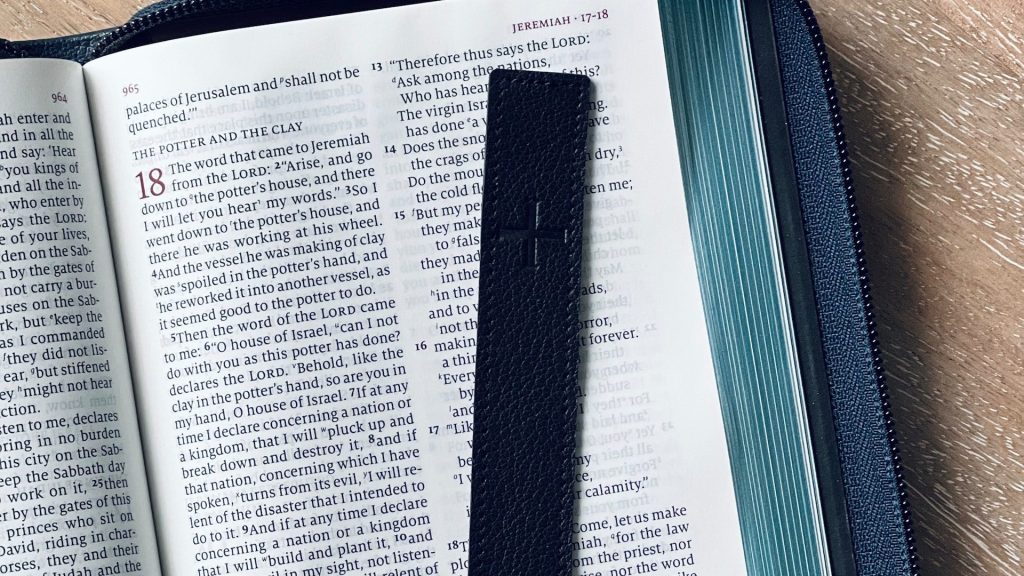
And when he sits on the throne of his kingdom, he shall write for himself in a book a copy of this law, approved by the Levitical priests.  And it shall be with him, and he shall read in it all the days of his life, that he may learn to fear the LORD his God by keeping all the words of this law and these statutes, and doing them, that his heart may not be lifted up above his brothers, and that he may not turn aside from the commandment, either to the right hand or to the left, so that he may continue long in his kingdom, he and his children, in Israel.”  (Deuteronomy 17:18-20, emphasis mine)

These requirements have several parts.  First, the king was to “write for himself in a book a copy of this law.”  “This law” refers to what we now think of as the first five books of the Bible – all 187 chapters of it.  Imagine the time that would take, but this tedious exercise was designed to help the king internalize the message.  Quickly skimming over the Bible would not do.

Second, the king had to get this copy “approved by the Levitical priests,” to make sure nothing was added or left out, but also to remind the king that His authority is subject to God’s authority, as intermediated by the priests at that time.  Regardless of what laws the king might pass, God’s laws would always reign supreme and eternal.

Third, the king was to “read in it all the days of his life,” because it takes time and effort to dig the treasures of wisdom out of the Bible.  However, it is worth the effort because Psalm 19:10 tells us these truths are:

More to be desired are they than gold,
                        even much fine gold;
sweeter also than honey
                        and drippings of the honeycomb.

Also, the king would be surrounded by reminders of his worldly greatness every day, so constant meditation on the law would show him his reliance on God.  The king needs a constant reminder that he is under God, whose law applies to everyone.

These habits exist “that he may learn to fear the LORD,” which leads to “doing” the law.  Even the king is expected to do what God commands, not just tell others to.  With “doing” as the objective, the king will remain humble and learn the fear of God, because we may be able to know God’s word, but doing it is the real challenge and we can only succeed by His grace.
These habits also exist to make sure the king does not err “either to the right hand or to the left.”  This encouragement is later echoed in Moses’ words in Joshua 1:7-8, but what does it mean?  I think it means that without constant saturation in God’s word, we can fall into a trap of not following God’s positive will, but instead defining ourselves by what we’re against.  In trying to avoid one sin, we drift too far in the opposite direction and into another, equally destructive, sin.  Instead, positive obedience coming from the fear of God should be better than fine gold and “sweeter also than honey.”  Truth is often subtle and not as black-and-white as we’d like it to be.

Most of us aren’t kings, but we can apply the passage from Deuteronomy in our prayers.  1 Timothy 2:1-2 “First of all, then, I urge that supplications, prayers, intercessions, and thanksgivings be made for all people, for kings and all who are in high positions, that we may lead a peaceful and quiet life, godly and dignified in every way.”  But what shall we pray for them?  As Deuteronomy suggests, we should pray that they know God, fear God, and obey God, that they may be humble, and we may prosper.

Also, are you a leader?  Do you serve in a position of authority at your church, workplace, or other organization?  These habits will benefit you and those you serve anywhere.  (In societies where we can easily get a Bible, we don’t need to create our own copies of it, but we should seek to internalize as much of the Bible as possible, through memorization and other means.)  As Solomon wrote in Psalm 127:1 –

Unless the LORD builds the house,
            those who build it labor in vain.
Unless the LORD watches over the city,
            the watchman stays awake in vain.

If you’re not a leader, these habits are beneficial for you as well, as Psalm 128:1 says:

Blessed is everyone who fears the LORD,
                        who walks in his ways!

Amen.


[1] Deuteronomy 17:14-15

God Rules in His Sleep

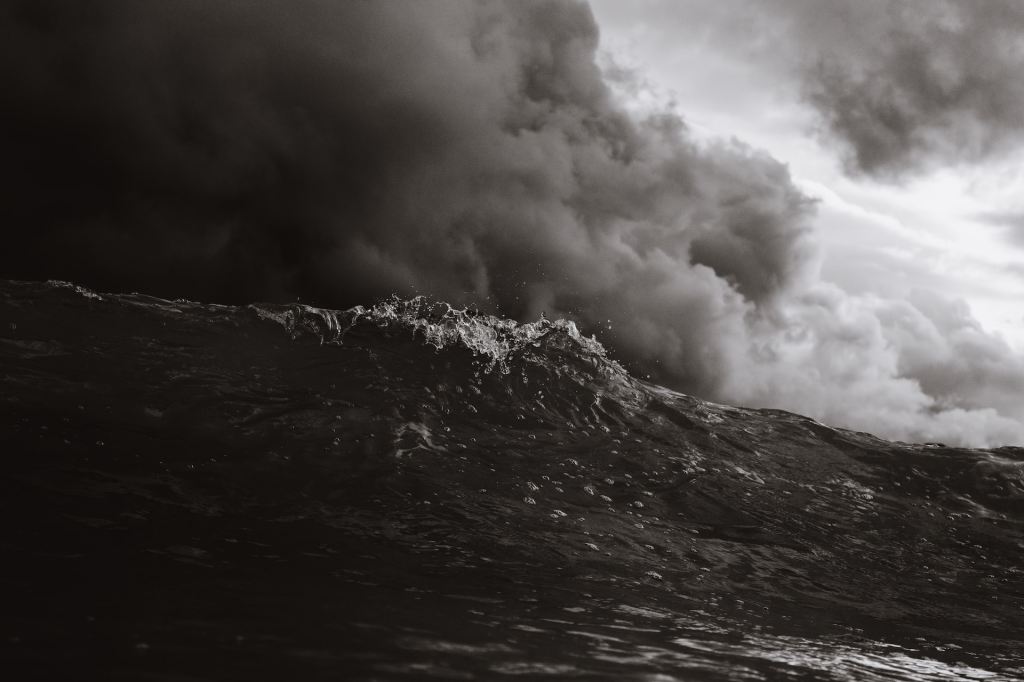
In Mark’s Gospel, he tells a story of Jesus taking a nap, causing His disciples to panic.  Does it ever seem like God is asleep, leaving you feeling adrift the world’s circumstances?  When Jesus walked the earth, there were times when God literally was asleep.

One story comes from Mark 4:35-41.

On that day, when evening had come, [Jesus] said to them, “Let us go across to the other side.”  And leaving the crowd, they took him with them in the boat, just as he was. And other boats were with him.  And a great windstorm arose, and the waves were breaking into the boat, so that the boat was already filling.  But he was in the stern, asleep on the cushion. And they woke him and said to him, “Teacher, do you not care that we are perishing?”  And he awoke and rebuked the wind and said to the sea, “Peace! Be still!” And the wind ceased, and there was a great calm.  He said to them, “Why are you so afraid? Have you still no faith?”  And they were filled with great fear and said to one another, “Who then is this, that even the wind and the sea obey him?

At the beginning of the story, Jesus told His disciples they were going to cross the Sea of Galilee, then knowing what was coming, “He who keeps Israel[1] took a nap.  Had the disciples understood Jesus, His napping should have reassured them that they were safe, since He was not concerned about the storm.  Instead, they thought He didn’t care, which showed that fear of the storm had overcome whatever faith they had.  Jesus said they were going across, but they doubted.

Which brings up a very important question.

When did the wind and the sea obey Jesus?  At the beginning of the story, at the end, or both?  Or at all times?  Before Jesus calmed the storm, was the sea being disobedient to God’s laws and will?

Photo by Matt Hardy on Unsplash

I believe Jesus calmed this storm so that next time He wouldn’t have to.  He was teaching them that He always cares, regardless of what the circumstances seem to say.  He was teaching them that even when it seems like He’s asleep, He is still in control of our circumstances no matter how chaotic they look and feel to us.  During the next storm, He wanted them not to panic, but to trust Him because He showed them no circumstance escapes His notice.  The storm does not control us; He controls the storm.

When Jesus calmed the storm, He did not create a hedge (See Job 1:10) around His disciples, He just demonstrated that it existed all along.  God was not going to let His Son drown before His mission was complete and neither will He let His other children drown before their work is done!

Sometimes when God seems distant and we feel we are sinking, in reality we are being given a divinely designed opportunity to learn to trust that:

The LORD will keep you from all evil;
            he will keep your life.
The LORD will keep
            your going out and your coming in
            from this time forth and forevermore[2]

He knows sometimes we have to learn the hard way, and He knows best.  Even when He is sleeping.“Let us go across to the other side.”


[1] Psalm 121:4
[2] Psalm 121:7-8

God Offers More Than Bread and Circuses

Fans of the dystopian Hunger Games novels and movies know that the story takes place in a country called Panem.  There, the extravagantly wealthy Capitol district holds an annual, televised battle royale, The Hunger Games, where children from each of the 12 desperately poor districts fight to the death until there is only one remaining.  The purpose of these demented Games is to remind the people of the power of the Capitol, but also to provide entertainment.  But why is the country called Panem?

Panem is likely a reference to the Latin phrase “panem et circenses,” or “bread and circuses,” which “means to generate public approval, not by excellence in public service or public policy, but by diversion, distraction, or by satisfying the most immediate or base requirements of a populace, by offering a palliative: for example food (bread) or entertainment (circuses).”[1]  Under this way of thinking, for a government to remain in power it needs to provide the basic needs of its people.  For an especially cynical government, it would mean they need only provide just enough bread and just enough circuses to keep the population from overthrowing them.

The Colosseum in Rome – a site of ancient “circuses.” Photo by Federico Di Dio photography on Unsplash

In the case of The Hunger Games, the Capitol reminded the other districts that they could have no bread (panem) without the Capitol’s “benevolence,” and that the only entertainment (circuses) they get is to watch their children kill each other.  Talk about a government providing the very bare minimum!

The Hunger Games is obviously an extreme example, but fortunately, Christianity offers a better answer than just the bare minimum of “panem et circenses.”   What benefits does it offer?  Psalm 103 in the Bible begins in the first 2 verses with a call to:

Bless the LORD, O my soul,
            and all that is within me,
            bless his holy name!
Bless the LORD, O my soul,
            and forget not all his benefits

And what are these benefits?  Is it just more “bread and circuses”?  It is, as verses 3-5 tell us that the Lord is the one:

who forgives all your iniquity,
            who heals all your diseases,
who redeems your life from the pit,
            who crowns you with steadfast love and mercy,
who satisfies you with good
            so that your youth is renewed like the eagle’s.”

This Psalm says He can take care of both our spiritual and physical maladies.  Jesus performed many miracles, so we “may know that the Son of Man has authority on earth to forgive sins,”[2] solving our spiritual alienation from God and each other.  Likewise, the body’s diseases do not heal magically or by chance; they heal because God created us with that ability.  He is the Great Physician.[3]

Also, He is the One who can save us “from the pit” – from ourselves and the punishment that our sin deserves, replacing our banishment from God’s presence with “love and mercy.”  He is the One who has the perspective needed to define what is good, and as our Maker, knows what we need to thrive and be renewed.  He offers many benefits we cannot find anywhere else.

Not just the fictional Panem, but all the nations of the real world, have nothing to offer but varying degrees of bread and circuses, various diversions and distractions and palliatives.  No government in the world can provide the benefits God provides – those listed in Psalm 103 – and therefore only God offers what can truly satisfy.  Therefore,

“Bless the LORD, O my soul,
            and forget not all his benefits


[1] https://en.wikipedia.org/wiki/Bread_and_circuses
[2] Matthew 9:6, Mark 2:20, Luke 5:24
[3] Matthew 9:12, Mark 2:17, Luke 5:31

“Consider Well Her Ramparts”: Participating in the Psalms

Reading the Psalms is a great devotional habit, and every now and then a Psalm or a section of a Psalm gives instructions to its reader.  The author is inviting us to participate in something about God that they have experienced by taking specific actions.  Earlier posts on participating in the Psalms (here, here, and here) have covered Psalms 96 and 100, which asked us to sing a new song and to give thanks, respectively.  Today’s post is about Psalm 48, which is a little harder to see how to participate.  Most of the Psalm praises God by talking about His city, Jerusalem, and His mountain, Mount Zion.  If our God’s dwelling place is worthy of praise, then He must be as well.  The “participating” part comes at the end, with verses 12-14:

Walk about Zion, go around her,
            number her towers,
consider well her ramparts,
            go through her citadels,
that you may tell the next generation
            that this is God,
our God forever and ever.
            He will guide us forever.

The Psalmist wrote in ancient times that it was worth it to take the time to walk around Zion, to consider the things of God and not just gloss over them quickly, but how do we do that when Christians do not consider Jerusalem and Mount Zion to be the dwelling place of God?  How do we “consider well her ramparts”?

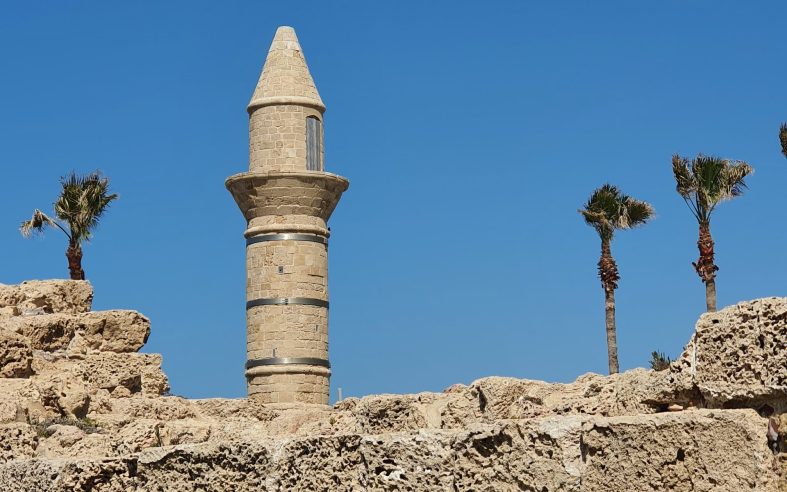
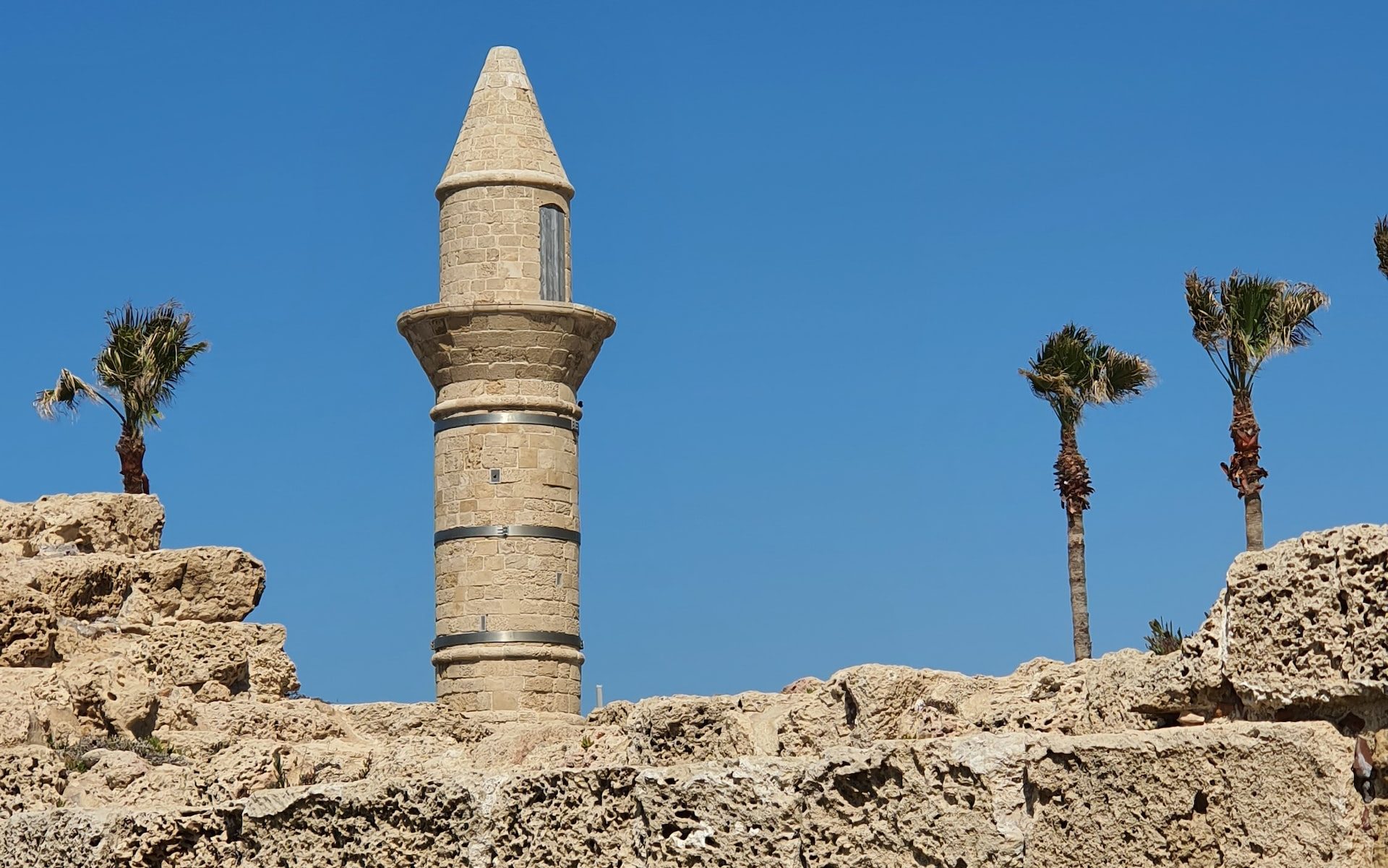
Photo by Boris Izmaylov on Unsplash

Currently, what was represented by the temple in Jerusalem on Mount Zion is represented by His body of believers, indwelt by His Holy Spirit.  Peter wrote that members of the church, “like living stones are being built up as a spiritual house, to be a holy priesthood, to offer spiritual sacrifices acceptable to God through Jesus Christ.”[1]  Therefore, do we participate in this Psalm by considering God’s strength through the church throughout history?  When we consider the “towers”, “ramparts”, and “citadels” of the church, do we consider the great “cloud of witnesses” listed in Hebrews 12, in addition to the faithful members of the church through the centuries since then?

Do we consider well not only the strength God has given His church through history, but also the strength that He protects it with even now?  Do we consider our own “ramparts” – the armor of God listed in Ephesians 6:13-17 –

Therefore take up the whole armor of God, that you may be able to withstand in the evil day, and having done all, to stand firm.  Stand therefore, having fastened on the belt of truth, and having put on the breastplate of righteousness, and, as shoes for your feet, having put on the readiness given by the gospel of peace.  In all circumstances take up the shield of faith, with which you can extinguish all the flaming darts of the evil one; and take the helmet of salvation, and the sword of the Spirit, which is the word of God.

Consideration takes time, so to participate in this Psalm take some time, if not today then soon, to consider God’s strength as shown through a person in the Bible, in church history, or even your own community or family.  Praise God for His strength and protection over His faithful!

As the “Sons of Korah” who wrote Psalm 48 believed, it’s worth the time and effort to:

Walk about Zion, go around her,
            number her towers,
consider well her ramparts,
            go through her citadels,
that you may tell the next generation
            that this is God,
our God forever and ever.
            He will guide us forever.

Many of this blog’s posts on History (click here) are a decent starting point.


[1] 1 Peter 2:5

In Pursuit of Fruit

What fruitful habits do you have for spending time with God?  Are there personal patterns in your relationship with Him through prayer, Bible study or other means?  Note that I write “fruitful” instead of “enjoyable” because although we’d like to enjoy every moment with God, as our Father He sometimes has to tell us things we won’t like immediately.  As Jesus said in John 15:2 – “Every branch in me that does not bear fruit he takes away, and every branch that does bear fruit he prunes, that it may bear more fruit.”

One example of a fruitful habit for me has been to study more than one book of the Bible at a time.  What do I mean by this?  For example, I currently have a goal to read 1-2 chapters each of the Psalms and the Pentateuch[1] daily, along with study Bible notes.  The idea came from a recent sermon, where the 5 books of Psalms were described as similar in theme to the 5 books of the Pentateuch.  Shortly after, I read that: “Just as Genesis tells how mankind was created, fell into sin, and was then promised redemption, many of these psalms [book 1, or Psalms 1-41] discuss humans as blessed, fallen, and redeemed by God.”[2]  With a little work, I was able to map out a schedule lining up the Psalm readings with the other readings and I’m trying to follow it.  Reading different parts together can help make connections I wouldn’t otherwise.  One connection recently led me to post about frustration with my cat and how it relates to Noah and the ark.

At other times, I’ve been reading a Gospel along with the Psalms, or one of the prophets because changing the pattern over time helps reveal unexpected context or connections.  I wouldn’t talk to a friend the same way over and over again, so why do it with God?  Years ago, when reading Psalm 46:10 and Matthew 21:15-16 on the same day led to a stark reminder that God is worthy of, and will receive, all praise.  These are those verses that nailed the point home:

Be still, and know that I am God.
            I will be exalted among the nations,
            I will be exalted in the earth!”

But when the chief priests and the scribes saw the wonderful things that he did, and the children crying out in the temple, “Hosanna to the Son of David!” they were indignant, and they said to him, “Do you hear what these are saying?” And Jesus said to them, “Yes; have you never read,
             “‘Out of the mouth of infants and nursing babies
                        you have prepared praise’?”

I know I can’t require God to speak to me in a certain way, but these occasional “accidents” from different parts of Scripture have reinforced each other in ways I might have never seen or might even have resisted.  Sometimes, we might prefer to keep certain truths away from certain parts of our lives, but when we make time to be quiet, listen and allow different parts of God’s word to collide in ways we didn’t expect, we may uncover an encouragement or a challenge that bears fruit.

What creative and fruitful habits do you have for spending time with God?


[1] The first five books of the Bible, sometimes called the books of Moses (Genesis, Exodus, Leviticus, Numbers, and Deuteronomy)
[2] Life Application Study Bible, introduction to the Psalms.