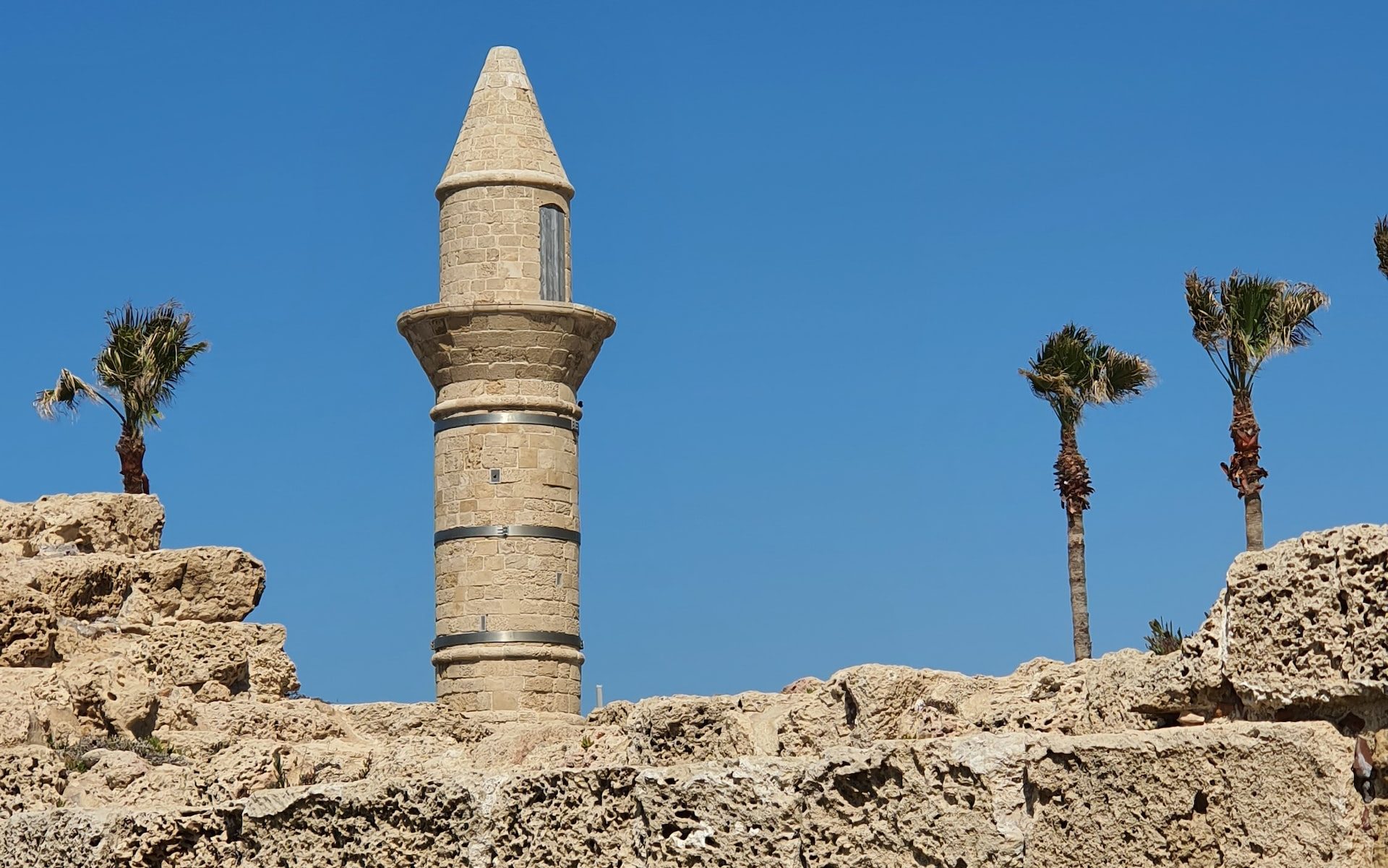
Mountain Bullies

It’s universal to human experience that big and strong people bully smaller and weaker people.  Those with position, influence and power use what they have to take advantage of those who don’t have what they have.  Centuries ago, David imagined in Psalm 68:15-16 that even the mountains do the same:

O mountain of God, mountain of Bashan;
            O many-peaked mountain, mountain of Bashan!
Why do you look with hatred, O many-peaked mountain,
            at the mount that God desired for his abode,
            yes, where the LORD will dwell forever?
” – Psalm 68:15-16

The mountains of Bashan, of which Mount Hermon is the tallest, are northeast of Israel and are much taller than Mount Zion, where God had chosen to be most fully present with His people.  In David’s picture, size is what matters: the bigger mountains hate the smaller mountains, even knowing that God is there.  The big bully the small, and perhaps they do so because they know God is there.

Photo by Kalen Emsley on Unsplash

Likewise, people who are well-off in this world often look down on Christians, God’s chosen people.  It is rare for the rich, famous, or powerful to publicly testify about Christ, and so we often get excited when athletes, celebrities, or politicians make their faith public.  We say to each other, “did you hear so-and-so is a Christian?”  It can make us feel like it’s more reasonable and accepted to follow Christ when this happens.  It feels good to identify with the rich and powerful.

But what if this rarity of seeing faith in the rich and powerful is intentional on God’s part?

Throughout Scripture God doesn’t identify with the rich and powerful; He identifies with the widow and orphan, with the lonely and outcast.  He favors the weak and the exploited.

In 1 Corinthians 1:26, Paul wrote to the church in Corinth: “For consider your calling, brothers: not many of you were wise according to worldly standards, not many were powerful, not many were of noble birth.”  The first century isn’t much different than to today: the “wise”, powerful and noble rarely testified about Christ.  Next Paul wrote: “But God chose what is foolish in the world to shame the wise; God chose what is weak in the world to shame the strong; God chose what is low and despised in the world, even things that are not, to bring to nothing things that are…”

Why?  “…so that no human being might boast in the presence of God.

Back to Psalm 68, where we found the mountains of Bashan ridiculing God’s mountain of Zion, David ends with these verses:

Ascribe power to God,
            whose majesty is over Israel,
            and whose power is in the skies.
Awesome is God from his sanctuary;
            the God of Israel—he is the one who gives power and strength to his people.
Blessed be God!

I’ll rejoice over a public Christian testimony wherever it comes from, but I remember that God doesn’t need the help of the movers and shakers of this world.  His power is “in the skies” – way above the mountains that bully His Mount Zion.  He is glorified more when His power enables the weak to love Him and love their neighbor.

We might sometimes feel alone and ignored, like we’re not part of the “in crowd” or successful, but that might mean we’re God’s type of person!  No celebrity endorsement required.

“Ascribe power to God”
Rules Aren’t Enough (No Matter What You Call Them) – Psalms of Ascent #2

Fellow travelers,

Last week I introduced a weekly series on the “Psalms of Ascent”, grouped together from 120-134 and used as a liturgy for pilgrims going to Jerusalem for annual festivals.  Before jumping into Psalm 120 next week, today we consider what it might mean that Psalm 119 precedes it.  Was this order intentional (as the grouping of Psalms 120-134 was) and for what reason?

Laws, Precepts, Statutes, Rules, and More
Psalm 119 is the longest chapter in the Bible, with 22 sections, or stanzas, one for each letter of the Hebrew alphabet.  In it, the Psalmist poetically praises God’s moral law, using 8 different words to describe it, and including at least 6 of these in every stanza.[1]  It seems repetitive, but by approaching it from so many angles, the Psalmist is saying “no matter how you look at it, everyone is better off if they know and follow this law.”  For example, verse 105 – “Your word is a lamp to my feet and a light to my path” – says that not knowing the law is like walking in darkness, but that following the law keeps you on the right path.  Verse 98 – “Your commandment makes me wiser than my enemies, for it is ever with me” says the law is a reliable source of wisdom, and better than the rules of God’s enemies.  There are many such examples in the 176 verses.

But, while declaring that following the right moral law is good for us, Psalm 119 also declares that none keep it regularly.  The Psalmist says “My eyes shed streams of tears, because people do not keep your law” in verse 136, and also that “I have gone astray like a lost sheep” in verse 176.  God’s word may be a lamp to our feet, but our feet go elsewhere anyway.  Therefore, we mourn sin – that of us and that of others – because we are all guilty and we all suffer the consequences[2].  We take no joy in other’s misfortune because we are not immune.  Any moral law – including a perfect one from God – always shows us how far short we fall.  Rules cannot make us perfect; they can only define perfection.

Christ Crucified
Therefore, there is another part of God’s law – the ceremonial law – which is never mentioned in Psalm 119 unless you want to include the “freewill offerings of praise” mentioned in verse 108.  The Psalms of Ascent follow a Psalm praising God’s moral law because, although His law is good, it is not enough.  Only by going to the temple regularly could God’s people see what sacrifices God prescribed to compensate for their failures and satisfy His justice.  While these ceremonial sacrifices were insufficient, they always pointed forward to the ultimate, perfect sacrifice of Christ which would fully cover our sin, empower us to grow in obedience to His good moral law over time, but also make the temple sacrifices irrelevant and unnecessary from that time forward.

To today’s Christian, the Psalms of Ascent remind us not only of our need for salvation apart from law, but they prepare us to regularly contemplate His provision to accomplish that salvation.  As these Psalms provided instruction on what Israelites should have been thinking about along the way to the temple in Jerusalem, we can benefit from them also as we travel to congregate with other sinners seeking our only hope together.  God’s people didn’t just arrive in Jerusalem and become magically transformed by ceremonies.  The Psalms of Ascent encouraged them to prepare and participate.


[1] As noted in the Reformation Study Bible.
[2] See this blog’s series on “Blessed are those who mourn,” which starts here.

“Consider Well Her Ramparts”: Participating in the Psalms

Reading the Psalms is a great devotional habit, and every now and then a Psalm or a section of a Psalm gives instructions to its reader.  The author is inviting us to participate in something about God that they have experienced by taking specific actions.  Earlier posts on participating in the Psalms (here, here, and here) have covered Psalms 96 and 100, which asked us to sing a new song and to give thanks, respectively.  Today’s post is about Psalm 48, which is a little harder to see how to participate.  Most of the Psalm praises God by talking about His city, Jerusalem, and His mountain, Mount Zion.  If our God’s dwelling place is worthy of praise, then He must be as well.  The “participating” part comes at the end, with verses 12-14:

Walk about Zion, go around her,
            number her towers,
consider well her ramparts,
            go through her citadels,
that you may tell the next generation
            that this is God,
our God forever and ever.
            He will guide us forever.

The Psalmist wrote in ancient times that it was worth it to take the time to walk around Zion, to consider the things of God and not just gloss over them quickly, but how do we do that when Christians do not consider Jerusalem and Mount Zion to be the dwelling place of God?  How do we “consider well her ramparts”?

Photo by Boris Izmaylov on Unsplash

Currently, what was represented by the temple in Jerusalem on Mount Zion is represented by His body of believers, indwelt by His Holy Spirit.  Peter wrote that members of the church, “like living stones are being built up as a spiritual house, to be a holy priesthood, to offer spiritual sacrifices acceptable to God through Jesus Christ.”[1]  Therefore, do we participate in this Psalm by considering God’s strength through the church throughout history?  When we consider the “towers”, “ramparts”, and “citadels” of the church, do we consider the great “cloud of witnesses” listed in Hebrews 12, in addition to the faithful members of the church through the centuries since then?

Do we consider well not only the strength God has given His church through history, but also the strength that He protects it with even now?  Do we consider our own “ramparts” – the armor of God listed in Ephesians 6:13-17 –

Therefore take up the whole armor of God, that you may be able to withstand in the evil day, and having done all, to stand firm.  Stand therefore, having fastened on the belt of truth, and having put on the breastplate of righteousness, and, as shoes for your feet, having put on the readiness given by the gospel of peace.  In all circumstances take up the shield of faith, with which you can extinguish all the flaming darts of the evil one; and take the helmet of salvation, and the sword of the Spirit, which is the word of God.

Consideration takes time, so to participate in this Psalm take some time, if not today then soon, to consider God’s strength as shown through a person in the Bible, in church history, or even your own community or family.  Praise God for His strength and protection over His faithful!

As the “Sons of Korah” who wrote Psalm 48 believed, it’s worth the time and effort to:

Walk about Zion, go around her,
            number her towers,
consider well her ramparts,
            go through her citadels,
that you may tell the next generation
            that this is God,
our God forever and ever.
            He will guide us forever.

Many of this blog’s posts on History (click here) are a decent starting point.


[1] 1 Peter 2:5

The Traps of the Wicked

The world is, unfortunately, full of people who seek to get other people in trouble, and this has been true for millennia.  Far back in Old Testament history, King David wrote in Psalm 140:4-5:

Guard me, O LORD, from the hands of the wicked;
            preserve me from violent men,
            who have planned to trip up my feet.
The arrogant have hidden a trap for me,
            and with cords they have spread a net;
            beside the way they have set snares for me. Selah

When David wrote this, he was probably describing immediate, physical threats against him, but when I read verse 5 it sounds like many obstacles Christians currently face.  Every day, we encounter traps put in front of us, and David’s Psalm has many applications.

What about irresponsible news coverage, which too often includes inappropriate opinions and suggestions about how we should think or act?  We could pray, “Guard me, O LORD, against putting my faith in falsehoods.”  Or “Guard me, O LORD, against temptation to hate my enemy.”  Or “Guard me, O LORD, from putting aside the work you have for me to do to fight battles that aren’t mine.”

Also, the internet is a dangerous place.  Many websites use sexual images to get our attention, and in some cases if we even stop for a second to stop scrolling and look, those websites take that as interest and show us more of the same.  We could pray “Guard me, O LORD, when websites ‘have hidden a trap for me, and with cords they have spread a net’”. Other websites use misleading and provocative headlines to pull us away from what we intended to look at.  “Guard me, O LORD, against click bait that leads me where I should not go, and that makes me spend my time unwisely.”

Back to the Psalm, note that in verse 5 David describes threats as being “beside the way,” meaning they are off the main path we should travel.  The traps may be hidden off the side of the road with bait trying to lure us aside to an ambush.  Therefore, the key is to stay on the road.  Proverbs 1:17 says “For in vain is a net spread in the sight of any bird.”  Even birds, if they see a trap, will know to avoid it.  Yet people don’t seem to be as wise, or else they wouldn’t fall for click bait and other temptations.

One of the best ways to stay away from those who “have planned to trip up my feet” is to stay busy doing good things.  Samuel Johnson wrote: “If you are idle, be not solitary; if you are solitary, be not idle.”  He knew temptation is most powerful when we are alone with nothing to do, which applies to much of our time online.  I try to use writing as a way to stay busy when solitary, but that doesn’t always work for me and might not work at all for others.

Staying on the right path, we avoid snares and traps, which are near, but not on, the true way.  Once we allow temptation to move us a little, we often find it has moved us a lot, and into a trap.

What can we all do to avoid the traps of the wicked?

Guard me, O LORD, from the hands of the wicked;
            preserve me from violent men,
            who have planned to trip up my feet.

The Work of Our Hands

Psalm 90 is the only one out of 150 that was written by Moses.  Psalm 90 is also the first in book 4 of the Psalms, which some say carries many of the themes and ideas from the 4th book of the Pentateuch, the book of Numbers.  That book tells of the consequences of Israel’s disobedience and grumbling on their journey to the Promised Land.  The nation of Israel spent 40 years wandering, seemingly aimlessly, in the wilderness and only Joshua and Caleb from the prior generation actually entered the Promised Land.

As noted in a recent post, the Psalm begins by saying we are only home when we are with God, but the Psalm ends with this petition to God for us:

Let your work be shown to your servants,
            and your glorious power to their children.
Let the favor of the Lord our God be upon us,
            and establish the work of our hands upon us;
            yes, establish the work of our hands!

Photo by Jamie Street on Unsplash

It may seem easy, or even natural, to just go with the flow of our surrounding cultures while in this world, but that would really be like wandering in the wilderness instead of getting God’s promised blessing.  Instead, do we seek that God’s “work be shown to your servants,” and that He “establish the work of our hands upon us”?  Do we seek “the favor of the Lord,” and experience His “glorious power”?  This is what Moses asks for in this prayer, that we find our purpose in Him by doing His work.  We all have “worldly” responsibilities we need to take care of in this world, but none of them are the ultimate goal.

In other words, the best way to spend our short lives here is to do work that matters in eternity, which God has laid out for us to do:

For we are his workmanship, created in Christ Jesus for good works, which God prepared beforehand, that we should walk in them.” – Ephesians 2:10
So teach us to number our days
            that we may get a heart of wisdom.” – Moses, in Psalm 90:12