Sing a New Song!

God’s people – His church – is the living temple in which He chooses to dwell by His grace and mercy.  While nobody but Jesus will consistently “hit the mark” of holy perfection until eternity, Paul urges us to “cleanse ourselves from every defilement of body and spirit, bringing holiness to completion in the fear of God.”[1]  But this fear should not be a dissatisfied, joyless obedience.  Instead, look at Psalm 149:1-4 for an example of how to build life in Christ:

“Praise the LORD!  Sing to the LORD a new song,
his praise in the assembly of the godly!
2 Let Israel be glad in his Maker;
            let the children of Zion rejoice in their King!
3 Let them praise his name with dancing,
            making melody to him with tambourine and lyre!
4 For the LORD takes pleasure in his people;
            he adorns the humble with salvation.

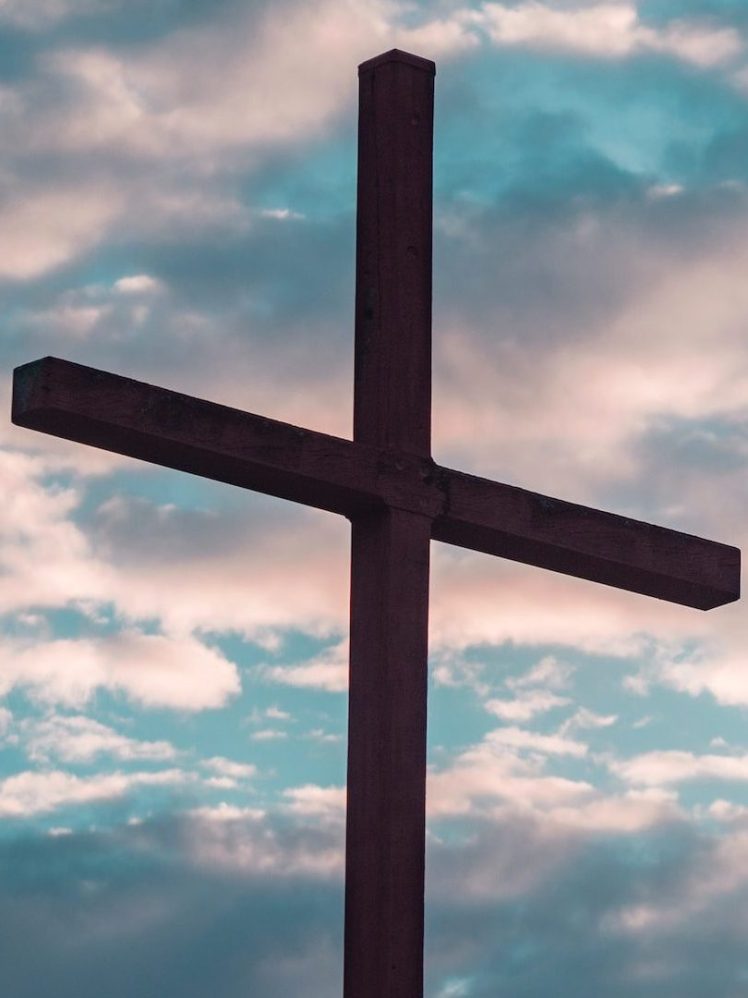
Photo by Mic Narra on Unsplash

The 2nd verse says to be glad!  But why should we be glad?  Because we have a loving Maker and King who died that we might live as His children.  None of us are random accidents with no creator and no purpose.  In response (3rd verse), we offer our creativity and energy to God as worship, in all forms available to us (including but not limited to dancing and music!) and within our area of influence.  Accepting us in Christ as we humbly are (4th verse), the Lord takes pleasure as we offer what we have to His service and rewards us with His blessings.  This verse reminds us that God likes us; He wants to be with His people and see them succeed.  He takes pleasure in our praise and enjoyment of Him.

When we acknowledge our Maker and King as the protagonist of our life story, we know that we have an origin, a purpose, and a destiny, and that our lives can have eternal value, beyond all “random acts of kindness”.  Whether our community and culture are crumbling or thriving, the call of God to live in the Spirit can bring “love, joy, peace, patience, kindness, goodness, faithfulness, gentleness, [and] self-control.[2]

However, if we insist on being the protagonist and following the idols we create, our worldly altruism and good intentions will never be enough, and our works will always fall short of the mark.  God has better in store for us.

A New Song
Now we return to the 1st verse of Psalm 149: “Praise the LORD!  Sing to the LORD a new song, his praise in the assembly of the godly!”

The Psalmist asks us to publicly sing “a new song”: something that’s creative and offered in praise.  It’s an invitation from God to think expansively under the Spirit’s guidance, not restrictively under laws and regulations.  It doesn’t mean we all need to be extroverts, or become what people consider a “creative” person.  You might be a tax collector or a soldier[3].  You might be a clerk, accountant, lawyer, politician, engineer, housewife, mechanic, or anything else.  It doesn’t matter.  It’s about knowing who you are and dedicating that to the Lord and to others.

Therefore, “Whatever you do, work heartily, as for the Lord and not for men, knowing that from the Lord you will receive the inheritance as your reward. You are serving the Lord Christ.” – Colossians 3:23-24

Soli Deo Gloria


[1] 2 Corinthians 7:1
[2] Galatians 5:22b-23a
[3] See Luke 3:12-14
Verses to Live and Blog By

Daily writing prompt
What gives you direction in life?

Today’s post is another response to a writing prompt: “What gives you direction in life?”  The short answer to the question is a who, not a what: God.  Without a meaningful origin and destiny that comes from having a loving Creator and Lord, I’m not sure where I would find direction.

The longer answer is that God’s communication to us through the Bible provides direction for both life and for this blog.  Here, I write what I need to hear.  I write about things I learn about the direction my life should go, and I share it with my readers.  So, my longer answer to this writing prompt are some key verses and themes that guide both my life and my writing.  Although I routinely fail to live up to them, they provide a good and meaningful direction.

The first verse is Hebrews 10:24, which says: “And let us consider how to stir up one another to love and good works”. Christianity should be lived, not just known or believed.  So, how do I stir up myself and others to loving action? We can’t do it without knowing that’s the goal and by consistent meditation on it.  We should ask ourselves what tools, gifts and resources we have to help others grow in “love and good works.”  For me, this blog is one of those tools.  For others, they could approach this very differently.  We all have our own directions, but similar goals.

The second verse is Ephesians 2:10. “For we are his workmanship, created in Christ Jesus for good works, which God prepared beforehand, that we should walk in them.” We are not created and saved just to do whatever we want, but God has plans for each of us.  He puts work to do in front of us, for the good of us and those around us, and for His glory.  Nothing is an accident.  He made us each for a reason.

Next comes Philippians 1:6. “And I am sure of this, that he who began a good work in you will bring it to completion at the day of Jesus Christ.”  We all fail so often; therefore, we need reminders that God isn’t done with us, and will never give up on us.  He didn’t die for us just to leave us hanging and alone.  His purpose is to make us perfectly loving people, like Jesus was, and His work will certainly be completed in eternity.  Thank Him for this!

Jeremiah 29:7 is another important guiding verse. “But seek the welfare of the city where I have sent you into exile, and pray to the LORD on its behalf, for in its welfare you will find your welfare.”  Which world was Jesus referring to in John 3:16 when He said, “God so loved the world”?  There’s only one world, the one we all live in, and He wants us to work for the good of that world.  Imagine if Jesus had taken the attitude that this world is hopelessly lost in its sin.  He would have never came to die for it, and we would all be lost forever.  Likewise, we can’t give up on the world around us, especially our nearest neighbors.

And finally, Matthew 22:37-40. “And he said to him, ‘You shall love the Lord your God with all your heart and with all your soul and with all your mind.  This is the great and first commandment.  And a second is like it: You shall love your neighbor as yourself.  On these two commandments depend all the Law and the Prophets.’”  In my opinion, Christians don’t talk enough about love, and we don’t put enough thought and effort into how to do it.  Many Christians even have trouble defining what love is.  For more on that, read this article I wrote a while back.  Without Christ, we are all God’s enemies, so if He didn’t love His enemies we could never be His neighbors.  Only by living a life entirely guided by love for God and our neighbor, even if they are our enemy, can we live the life God intended us to live.

So, what gives me direction in life?  Trying to understand and live by what God wants of me.  These verses are only the beginning, but they’re verses that mean a lot to me.

What gives you direction in life?

“No reserve, No retreat, No regrets” – History for April 9

At the young age of 25, American millionaire and philanthropist William Borden died in Egypt on April 9, 1913.  Despite never making it to the mission field in China, Christianity Today once called him “the most influential missionary of the early 20th century.”  Borden’s story has inspired Christians and missionaries ever since.

As an heir to his family’s fortune from silver mining, William Borden had many opportunities in life, yet shortly after high school he became interested in missionary work.  Some said he was “throwing himself away,” but while a student at Yale, he quickly gained a reputation for his sense of purpose and dedication to Jesus.  He established a Bible study and prayer group that eventually included about 1,000 of Yale’s 1,300 students.  Off campus, he funded the Yale Hope Mission in New Haven with his own money and was often seen with widows, orphans, homeless people, and drunks, providing for their needs, and telling them about Jesus.  It looked like God was preparing him for a fruitful future as a missionary.

After graduating Yale, Borden turned down attractive job offers, choosing instead to study at Princeton Seminary, intending to minister to Uighur Muslims in China.  He finalized his plans and set sail, stopping in Egypt to study Islam and Arabic in preparation.  However, he contracted cerebral meningitis in March 1913 and died a few weeks later on April 9.  Did God take him too soon, before his work was done?  Borden didn’t seem to think so.

After his death, family reported that in his Bible were written the words “no reserve”, referring to his willingness to put everything aside for Christ, then later “no retreat”, after turning down job offers upon graduating Yale, and finally “no regrets”, apparently written shortly before his death.

Skeptics deny this note exists, citing “no evidence.”  However, friends and family claim to have found the note, and testimony is evidence.  Even if the note doesn’t exist, he still made the choices he made, living a life which declared that the salvation given through Jesus Christ was worth more than all the earthly benefits a young millionaire could have.

Skeptics may also say Borden, and God, failed because Borden’s life didn’t go according to his plans.  What was the point?  But as they say, the LORD works in mysterious ways and His plans are not always our plans.  Borden impacted many during his days at Yale before leaving for Egypt, and by events he couldn’t control, he may have become a better witness for Christ by death than from living as a missionary.  In his will, he left his fortune to several Christian agencies, including China Inland Mission, which named Borden Memorial Hospital in Lanzhou, China, in his memory.  Seized by the government in 1951, the hospital is now the Lanzhou Second People’s Hospital, but locals know its history.

During his short life, William Borden lived with a dedication to Christ that continues to inspire believers over a century later.  Even though he never made it to China, his testimony made it there and provides hope for persecuted groups and those who Christ calls to serve them.

Having all this world could offer, he chose to live for the next world.  Engraved on his gravestone in Egypt are the words “Apart from Christ, there is no explanation for such a life.”   Even if the note is just a legend, “No reserve, no retreat, and no regrets” summarizes the life of William Borden well. 

Interested in more History? Select “History Bits” from the “Blog” drop down menu at the top of the page.


Sources:
https://en.wikipedia.org/wiki/William_Whiting_Borden
https://www.christianitytoday.com/history/2017/february/forgotten-final-resting-place-of-william-borden.html
http://home.snu.edu/~HCULBERT/regret.htm

Doctrine in Action

Photo by Ameen Fahmy on Unsplash

In C.S. Lewis’ book The Screwtape Letters, senior demon Screwtape writes fictional letters to Wormwood, a junior demon, on how to defeat his “patient.”  In one of these letters, Screwtape advises: “As long as [man] does not convert it into action, it does not matter how much he thinks about this new repentance… Wallow in it… Write a book about it; that is often an excellent way of sterilising the seeds which [Heavenly Father] plants in a human soul… Do anything but act. No amount of piety in his imagination and affections will harm [the cause of evil] if [it is kept] out of his will… The more often he feels without acting, the less he will ever be able to act, and, in the long run, the less he will be able to feel.”

Christianity is not a soul-less doctrine, but a restoration of the right relationships between souls and their Creator, which should lead to action.  Teaching should lead to love.  In 1 Timothy 1:3-4 Paul writes to Timothy: “As I urged you when I was going to Macedonia, remain at Ephesus so that you may charge certain persons not to teach any different doctrine, nor to devote themselves to myths and endless genealogies, which promote speculations rather than the stewardship from God that is by faith.”  In his commentary on the verse, John Calvin says that Paul “judges of doctrine by the fruit; for every tiling that does not edify ought to be rejected, although it has no other fault; and everything that is of no avail but for raising contentions, ought to be doubly condemned.”

Calvin’s note and Screwtape’s fictional letter remind me of the linked Monty Python video of philosophers philosophizing about soccer while simultaneously “playing” soccer.

Every doctrine and institution of the church should empower His people to live for Him.  Are we playing the right game, and are we playing to win?

The Work of Our Hands

Psalm 90 is the only one out of 150 that was written by Moses.  Psalm 90 is also the first in book 4 of the Psalms, which some say carries many of the themes and ideas from the 4th book of the Pentateuch, the book of Numbers.  That book tells of the consequences of Israel’s disobedience and grumbling on their journey to the Promised Land.  The nation of Israel spent 40 years wandering, seemingly aimlessly, in the wilderness and only Joshua and Caleb from the prior generation actually entered the Promised Land.

As noted in a recent post, the Psalm begins by saying we are only home when we are with God, but the Psalm ends with this petition to God for us:

Let your work be shown to your servants,
            and your glorious power to their children.
Let the favor of the Lord our God be upon us,
            and establish the work of our hands upon us;
            yes, establish the work of our hands!

Photo by Jamie Street on Unsplash

It may seem easy, or even natural, to just go with the flow of our surrounding cultures while in this world, but that would really be like wandering in the wilderness instead of getting God’s promised blessing.  Instead, do we seek that God’s “work be shown to your servants,” and that He “establish the work of our hands upon us”?  Do we seek “the favor of the Lord,” and experience His “glorious power”?  This is what Moses asks for in this prayer, that we find our purpose in Him by doing His work.  We all have “worldly” responsibilities we need to take care of in this world, but none of them are the ultimate goal.

In other words, the best way to spend our short lives here is to do work that matters in eternity, which God has laid out for us to do:

For we are his workmanship, created in Christ Jesus for good works, which God prepared beforehand, that we should walk in them.” – Ephesians 2:10
So teach us to number our days
            that we may get a heart of wisdom.” – Moses, in Psalm 90:12