God Equips Those He Calls

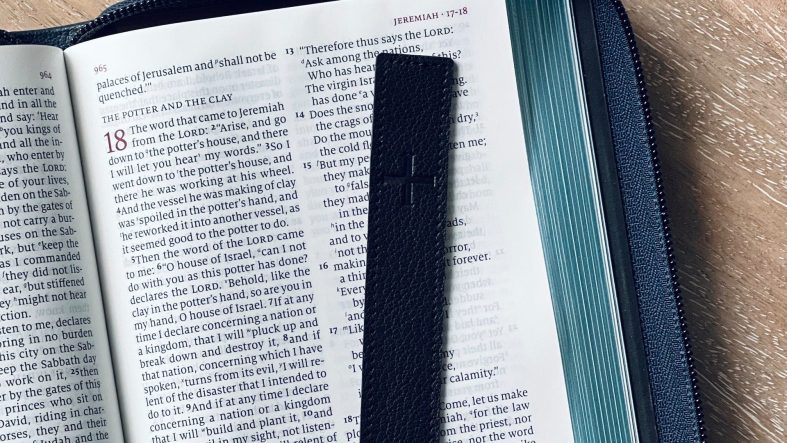
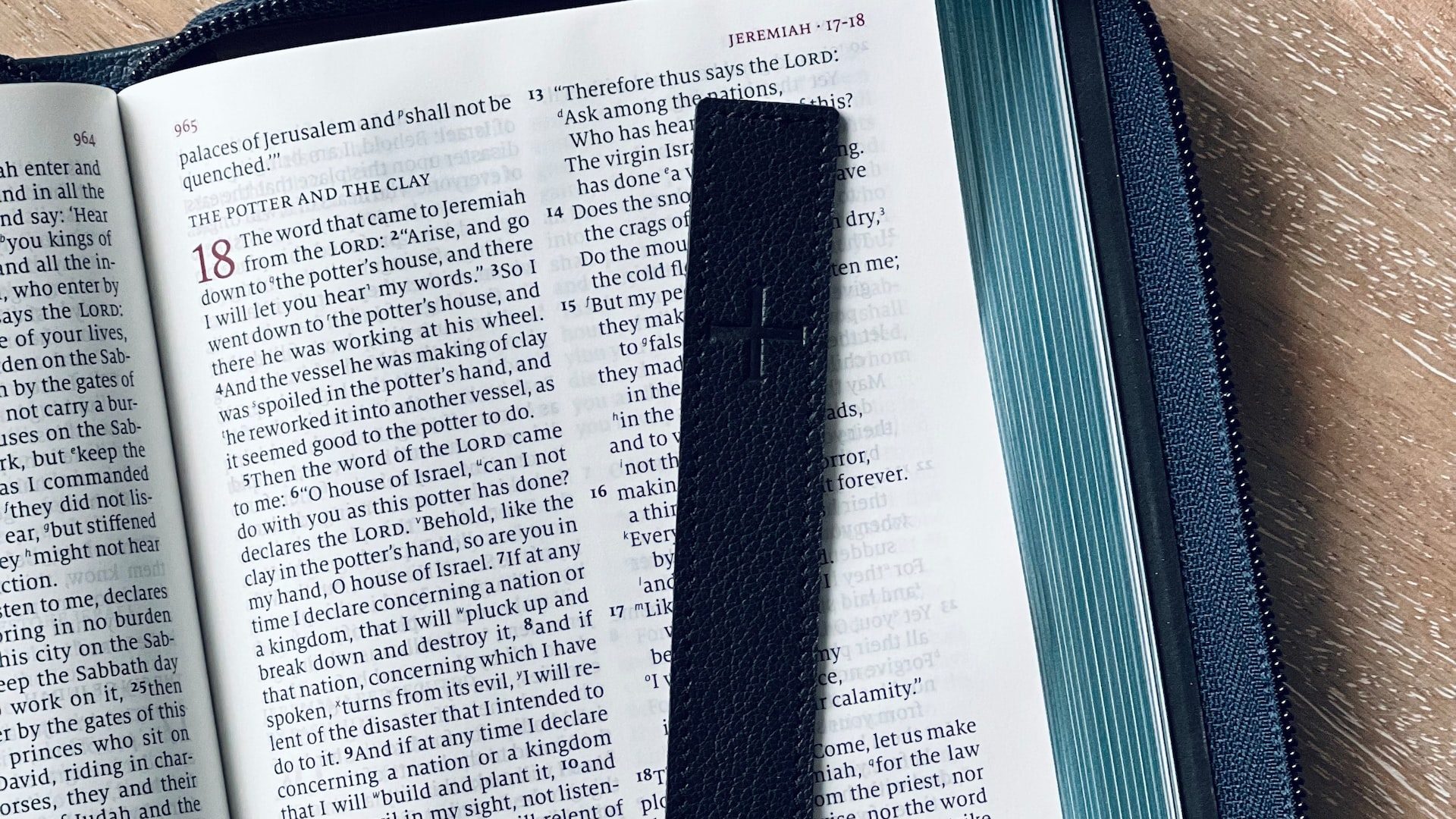
When Jeremiah was called to serve as a prophet in the Old Testament, God told him he was literally made for it in Jeremiah 1:5 –

‘Before I formed you in the womb I knew you,
            and before you were born I consecrated you;
            I appointed you a prophet to the nations.’”

However, Jeremiah’s response was not an enthusiastic one.  Jeremiah 1:6-8 records this exchange:

“Then I said, ‘Ah, Lord GOD! Behold, I do not know how to speak, for I am only a youth.’  But the LORD said to me,
            ‘Do not say, ‘I am only a youth’;
            for to all to whom I send you, you shall go,
            and whatever I command you, you shall speak.’”

Photo by Tim Wildsmith on Unsplash

Even though God had just said “Before I formed you in the womb I knew you,” Jeremiah objects that he was too young and did not have the natural ability required for the job.  Maybe he doubted anyone would listen to him, so God must have the wrong guy.  God doesn’t disagree that Jeremiah was young (he already knew that), but knows that God’s ability is what matters, not Jeremiah’s.  God knew that someday you and I would be reading Jeremiah’s words regardless of his own youth or ability.  God never picks the wrong person for the job.

But if “All Scripture is breathed out by God and profitable for teaching, for reproof, for correction, and for training in righteousness,”[1] why does the Scripture tell us that one of its own authors doubted and questioned God Himself?

The answer of course, is “for teaching, for reproof, for correction, and for training in righteousness.”  We should learn not only from Jeremiah’s prophecies to the people of his time, but also from His experience with God.  In hindsight, we think that because Jeremiah is a book of the Bible, of course he was able to do the work God gave him, but in the moment of his call, Jeremiah had no idea.  So, when we think our ability is not enough the job at hand, we should remember Jeremiah’s youth and remember that “God does not call the equipped; He equips the called,” as the saying goes.  Jeremiah learned this from his own experience, and we may learn from it as well because the Bible records it.

Also, God shows us Jeremiah’s flaws to comfort us when we feel inadequate, not only in ability but also in faith.  Even if we know that “God does not call the equipped; He equips the called,” we don’t always act on that knowledge.  Jeremiah doubts not only his call, but there are other examples, including when he questions why he should buy a field the Babylonians were about to seize.[2]  Doubt is not something that only some Christians feel – we are not alone in our weakness.  Even the Bible’s own authors had doubt because they could not see as God sees.

God is patient when we are honest with Him about our doubts, but He is also honest with us when He says we were literally made to serve Him.  No Christian is inadequate for the work God gives them, for in His power He accomplishes what He wants. He has no doubts and is faithful in providing everything we need.

Sometimes God sends us before we think we are ready, so we can learn to put our confidence in the right place like Paul, who wrote: “I can do all things through Him who strengthens me.” – Philippians 4:13


[1] 2 Timothy 3:16
[2] The story is in Jeremiah 32, which I covered in an earlier post, here.

Called to Be Our Consecrated Selves

Photo by Greg Rakozy on Unsplash

People have moments where they wish they had a greater role in the world around them.  We see other people around us, or in stories from the Bible or in the news, and think we’d like to be more like them.  More influential, more effective, more powerful.  For example, what if I could be a prophet or an apostle?  Or in our modern world, maybe a “social media influencer”?  “Be yourself” is often the advice for finding contentment when we feel like this, but the Bible says we are “to be conformed to the image of his Son.”[1]  So, should we be ourselves, or should we be like Jesus?  What will give us contentment?  While not a full answer, the call of Jeremiah the prophet offers some help.

Jeremiah was not a prophet by accident, because Jeremiah 1:4-5 says:

“Now the word of the LORD came to me, saying,
‘Before I formed you in the womb I knew you,
            and before you were born I consecrated you;
            I appointed you a prophet to the nations.’”

Here, God calls Jeremiah both to conform his ways to God’s, and also to his own specific task.  Like Jeremiah, every Christian is known by God and called to do His will.  Only God knows why we were each made the way we were made, and in a way God calling us to serve Him is like Him saying “stop living like you’re an accident of a random, purposeless world.”  It is because we were made, not just evolved, that we have purpose, and God has “consecrated” us to that purpose.

Stop living like you’re an
accident of a random,
purposeless world.

But each of us was made differently, also on purpose.  Unlike Jeremiah, my fellow travelers on this blog probably aren’t prophets, and that is part of why Jeremiah needed to be a prophet.  His job wasn’t to call everyone else to be a prophet, but to serve everyone else by calling them to find their own purpose in God.  Jeremiah wanted all of God’s people to take whatever He has endowed them with and dedicate it to Him.  Likewise, being “conformed to the image of” Jesus does not mean we should all be carpenters, but that we should apply His righteousness to every task He puts before us.

Therefore, God’s people should never live like they are an accident.  We are all a valuable work of creation, made to find our good and His glory in His amazing design.  We will find our true selves in the One who made us, and God’s people will have unity in Christ’s character, combined with diversity in the infinite creativity of the people He created.

Be yourself, and also be like Jesus.

For we are his workmanship, created in Christ Jesus for good works, which God prepared beforehand, that we should walk in them.” – Ephesians 2:10


[1] Romans 8:29

Disappointed by God?

Do you ever feel disappointed by God?  Does your experience of Him sometimes not match your expectations?  We might wonder where God is in our everyday lives.  We may wonder whether we can really trust Him, and we’re probably more likely to feel this way when bad things happen.  The Bible tells us in Romans 8:28 –

And we know that for those who love God all things work together for good, for those who are called according to his purpose.”

Paul (author of Romans) says he knows this, but do we always?  Do we trust that good comes from “all things”?  And when we don’t see good come, how do we react?

We might think good things are not happening to us because we don’t “love God” enough, so we might blame ourselves.  Maybe we think that some things “just happen” and have no purpose.  Maybe over time we learn to think most things are like that?  We might think Paul didn’t really mean what he wrote about God.

It’s natural to want “good” things.  We may want more money, a better job, better relationships, more possessions, and think that when bad things happen, it’s just a matter of time before some corresponding blessing comes along, because God is supposed to work through “all things” for our good. But when it seems like He doesn’t we might feel disappointed.  What are we missing?

Could it be that the problem is with our expectations of God, not with God Himself?  For example, do we misunderstand what “good” “things work together for”?  Is our definition of “good” the same as His?

Think about what Paul wrote in 1 Corinthians 1:26 “For consider your calling, brothers: not many of you were wise according to worldly standards, not many were powerful, not many were of noble birth.”

It is not necessarily God’s intention to make us “good” by “worldly standards.”  His standards are different, and He doesn’t want us to value the worldly wisdom, which tells us it is “good” to be “powerful” or to be “noble” or even “wise” in the world’s eyes.  God has more important things in mind.

So, what is the “good” that everything works towards?  Paul wrote in Romans 8:29, which comes right after the earlier verse about how “all things work together for good”:

For those whom he foreknew he also predestined to be conformed to the image of his Son, in order that he might be the firstborn among many brothers.” – Romans 8:29

The “good” that God works for is our conformity to the image of Christ.  Not our pre-conceived definition of “good” based on our values, or the world’s.    He won’t use “all things” to give us more of what the world thinks is important.

What does it mean to be conformed to the image of Jesus?  In Jesus we see the perfect image of the love of God, described in 1 Corinthians 13:4-5 like this:

Love is patient and kind; love does not envy or boast; it is not arrogant or rude. It does not insist on its own way; it is not irritable or resentful

So, God, through “all things,” works to make us more patient and kinder.  Less envious, boastful, arrogant and rude.  He makes us less insistent on our own way, and therefore less irritable and resentful.

Therefore, we might have to change what we value.  We must modify our priorities.  Anything that happens to us, whether we consider it “good” or not, God can use to make us more like Christ.  More like the person we will be in heaven.  More like the person we should want to be.  Then God will not disappoint us.

And we know that for those who love God all things work together for good, for those who are called according to his purpose.”

Sing a New Song!

God’s people – His church – is the living temple in which He chooses to dwell by His grace and mercy.  While nobody but Jesus will consistently “hit the mark” of holy perfection until eternity, Paul urges us to “cleanse ourselves from every defilement of body and spirit, bringing holiness to completion in the fear of God.”[1]  But this fear should not be a dissatisfied, joyless obedience.  Instead, look at Psalm 149:1-4 for an example of how to build life in Christ:

“Praise the LORD!  Sing to the LORD a new song,
his praise in the assembly of the godly!
2 Let Israel be glad in his Maker;
            let the children of Zion rejoice in their King!
3 Let them praise his name with dancing,
            making melody to him with tambourine and lyre!
4 For the LORD takes pleasure in his people;
            he adorns the humble with salvation.

Photo by Mic Narra on Unsplash

The 2nd verse says to be glad!  But why should we be glad?  Because we have a loving Maker and King who died that we might live as His children.  None of us are random accidents with no creator and no purpose.  In response (3rd verse), we offer our creativity and energy to God as worship, in all forms available to us (including but not limited to dancing and music!) and within our area of influence.  Accepting us in Christ as we humbly are (4th verse), the Lord takes pleasure as we offer what we have to His service and rewards us with His blessings.  This verse reminds us that God likes us; He wants to be with His people and see them succeed.  He takes pleasure in our praise and enjoyment of Him.

When we acknowledge our Maker and King as the protagonist of our life story, we know that we have an origin, a purpose, and a destiny, and that our lives can have eternal value, beyond all “random acts of kindness”.  Whether our community and culture are crumbling or thriving, the call of God to live in the Spirit can bring “love, joy, peace, patience, kindness, goodness, faithfulness, gentleness, [and] self-control.[2]

However, if we insist on being the protagonist and following the idols we create, our worldly altruism and good intentions will never be enough, and our works will always fall short of the mark.  God has better in store for us.

A New Song
Now we return to the 1st verse of Psalm 149: “Praise the LORD!  Sing to the LORD a new song, his praise in the assembly of the godly!”

The Psalmist asks us to publicly sing “a new song”: something that’s creative and offered in praise.  It’s an invitation from God to think expansively under the Spirit’s guidance, not restrictively under laws and regulations.  It doesn’t mean we all need to be extroverts, or become what people consider a “creative” person.  You might be a tax collector or a soldier[3].  You might be a clerk, accountant, lawyer, politician, engineer, housewife, mechanic, or anything else.  It doesn’t matter.  It’s about knowing who you are and dedicating that to the Lord and to others.

Therefore, “Whatever you do, work heartily, as for the Lord and not for men, knowing that from the Lord you will receive the inheritance as your reward. You are serving the Lord Christ.” – Colossians 3:23-24

Soli Deo Gloria


[1] 2 Corinthians 7:1
[2] Galatians 5:22b-23a
[3] See Luke 3:12-14

Verses to Live and Blog By

Daily writing prompt
What gives you direction in life?

Today’s post is another response to a writing prompt: “What gives you direction in life?”  The short answer to the question is a who, not a what: God.  Without a meaningful origin and destiny that comes from having a loving Creator and Lord, I’m not sure where I would find direction.

The longer answer is that God’s communication to us through the Bible provides direction for both life and for this blog.  Here, I write what I need to hear.  I write about things I learn about the direction my life should go, and I share it with my readers.  So, my longer answer to this writing prompt are some key verses and themes that guide both my life and my writing.  Although I routinely fail to live up to them, they provide a good and meaningful direction.

The first verse is Hebrews 10:24, which says: “And let us consider how to stir up one another to love and good works”. Christianity should be lived, not just known or believed.  So, how do I stir up myself and others to loving action? We can’t do it without knowing that’s the goal and by consistent meditation on it.  We should ask ourselves what tools, gifts and resources we have to help others grow in “love and good works.”  For me, this blog is one of those tools.  For others, they could approach this very differently.  We all have our own directions, but similar goals.

The second verse is Ephesians 2:10. “For we are his workmanship, created in Christ Jesus for good works, which God prepared beforehand, that we should walk in them.” We are not created and saved just to do whatever we want, but God has plans for each of us.  He puts work to do in front of us, for the good of us and those around us, and for His glory.  Nothing is an accident.  He made us each for a reason.

Next comes Philippians 1:6. “And I am sure of this, that he who began a good work in you will bring it to completion at the day of Jesus Christ.”  We all fail so often; therefore, we need reminders that God isn’t done with us, and will never give up on us.  He didn’t die for us just to leave us hanging and alone.  His purpose is to make us perfectly loving people, like Jesus was, and His work will certainly be completed in eternity.  Thank Him for this!

Jeremiah 29:7 is another important guiding verse. “But seek the welfare of the city where I have sent you into exile, and pray to the LORD on its behalf, for in its welfare you will find your welfare.”  Which world was Jesus referring to in John 3:16 when He said, “God so loved the world”?  There’s only one world, the one we all live in, and He wants us to work for the good of that world.  Imagine if Jesus had taken the attitude that this world is hopelessly lost in its sin.  He would have never came to die for it, and we would all be lost forever.  Likewise, we can’t give up on the world around us, especially our nearest neighbors.

And finally, Matthew 22:37-40. “And he said to him, ‘You shall love the Lord your God with all your heart and with all your soul and with all your mind.  This is the great and first commandment.  And a second is like it: You shall love your neighbor as yourself.  On these two commandments depend all the Law and the Prophets.’”  In my opinion, Christians don’t talk enough about love, and we don’t put enough thought and effort into how to do it.  Many Christians even have trouble defining what love is.  For more on that, read this article I wrote a while back.  Without Christ, we are all God’s enemies, so if He didn’t love His enemies we could never be His neighbors.  Only by living a life entirely guided by love for God and our neighbor, even if they are our enemy, can we live the life God intended us to live.

So, what gives me direction in life?  Trying to understand and live by what God wants of me.  These verses are only the beginning, but they’re verses that mean a lot to me.

What gives you direction in life?