Happy 2nd Blogiversary to Driving Toward Morning!

Fellow travelers,

It’s amazing to think it’s been two years since Driving Toward Morning’s first post!  Thank you to everyone who has read, liked, and commented on the blog.  A special thank you to anyone who has shared it with their friends or used what they found here to encourage others.

Looking back on my 1-year anniversary post, here are some thoughts on how I’ve done with my year 2 goals:

  • Re-blogging old posts to get closer to posting something every day: I posted almost twice as often, and almost a third of the posts were repeats.  Still not every day but moving in the right direction.
  • More predictable post length: Most posts are now in the 3-to-4-minute read range, with less variation.  Again, progress!
  • More posts on history, holidays, groups of quotes, and other topics: I think this has been the same in year 2 as in year 1, and I want to work on these more in year 3, especially moments from history.

Also, I’m learning that a blog is not good for: Writing serial posts.  There’s no way to know what order people are reading things in, and whether they remember what was in an old post (especially if it takes me a while to continue a series!).  So, I’m working harder on making each one stand on its own.

The Big Picture
Although each year seems to have its own goals, I don’t want to lose sight of why I started this in the first place.  Right after I launched the blog, I decided each post should meet 3 criteria: every post should be Compelling, Clear, and Charitable, meaning:

Is it about something that matters eternally, and is written in a way that connects emotionally and is worth reading? (Compelling)
Is it logical and makes sense, or is it likely to be misunderstood? (Clear)
Is it written in love, to build up whoever reads it? (Charitable)

In a way, these are just a modified version of Ephesians 4:15-16, which says:

Rather, speaking the truth in love, we are to grow up in every way into him who is the head, into Christ, from whom the whole body, joined and held together by every joint with which it is equipped, when each part is working properly, makes the body grow so that it builds itself up in love.”

The compelling and clear parts are the “speaking the truth,” and the charitable part is the “in love” part.  However, the three criteria are not equal.  If I am compelling and clear, I might come across as clever, smart or a good writer, but without charity, “I am a noisy gong or a clanging cymbal” (1 Corinthians 13:1).  Without love, I’ve done it wrong, and therefore being compelling and clear should be tools used in service of being charitable.

I am still thrilled to be writing and am encouraged by the impact it’s had on my life, from challenging me when I am complacent, from encouraging me in my faith, and from growing deeper connections with friends and family, plus new connections with other bloggers.

Working on this blog has encouraged me, and I hope it has encouraged you as well.  Every one of us has something important to offer for God’s glory and for the benefit of the world around us.

Please leave a comment on what you’ve liked and what you’d want to see more of!

Broken Cisterns Can Hold No Water

Sometimes word pictures in the Bible weren’t written for people like me.  In my life I haven’t thought much of cisterns, but the Old Testament prophets Isaiah and Jeremiah refer to them a few times in their prophecies, and Jeremiah ends up thrown into one.  To Jeremiah’s original audience, and others living now, the meaning behind these pictures might be obvious.  But for me, it took a little research.

A cistern-centered comparison in Jeremiah 3:12-13 particularly drew my attention, where broken cisterns are used as a picture of false religion and idolatry:

Be appalled, O heavens, at this;
            be shocked, be utterly desolate,
            declares the LORD,
for my people have committed two evils:
they have forsaken me,
            the fountain of living waters,
and hewed out cisterns for themselves,
            broken cisterns that can hold no water.”

God is the “fountain of living waters,” but how is false religion like “broken cisterns”?

Looking up “cistern” in the American Heritage Dictionary I find it is: “A receptacle for holding water or other liquid, especially a tank for catching and storing rainwater.”  So, a cistern is not a fountain, a source of water, but instead is dependent on another source (usually rain) for its water.  So, Jeremiah’s accusation is that false religion can’t create its own water, which brings us to the second point…

The false religions of Judah in Jeremiah’s day weren’t even good cisterns – they were broken.  While a cistern is a vessel for storing water in reserve when there is no rain, when broken it’s not even that.  Even with another source of water, putting it into a broken cistern was no better than pouring it out into the sand.  Jeremiah’s second accusation is that false religion can’t even store good things from other sources.  The picture here is that if they took parts of true worship and mixed them with other religions, not only were the other religions wasted, but whatever they would have gained from God is also wasted.

Without God, many things are like broken cisterns.  Things that make us happy in this world are temporary and require our Creator God to provide us with more.  A food you like might satisfy you for a while, but eventually you need to find more food.  Rain may satisfy your garden plants, but eventually they will need more water.  Money may seem alluring for its own sake, but it only buys things that are temporary like everything else.

In Jeremiah 2:18, he tells the people not to look anywhere other than the true God of Israel for the source of living water and eternal satisfaction:

And now what do you gain by going to Egypt
            to drink the waters of the Nile?
Or what do you gain by going to Assyria
            to drink the waters of the Euphrates?”

Like a cistern, even the Nile and Euphrates only get their water from some other source.  They can’t make their own, and God can even determine if the rivers are empty or full.  Later, in Jeremiah 14:2-3, he says that because Judah had forsaken God, He had caused a drought, and therefore:

Judah mourns,
            and her gates languish;
her people lament on the ground,
            and the cry of Jerusalem goes up.
Her nobles send their servants for water;
            they come to the cisterns;
they find no water;
            they return with their vessels empty;
they are ashamed and confounded
            and cover their heads.”

The people mourned their earthly problem but did not care about their spiritual problem which is infinitely more important.  No provision – any science, philosophy, or religion – can defend against a drought caused by forsaking God, because false gods – anything we put in His place – cannot deliver rain.  They are but broken cisterns.

Consider that if there is no Creator behind the workings of nature, or if that Creator doesn’t care about us, why should we expect the world to act in ways that predictably bless us, instead of just being completely unpredictable and random?  Why do things seem to work most of the time?  Rain, friction, food, gravity, math, and on and on.  Fortunately, our God “sends rain on the just and on the unjust,”[1] and to His own He gives “a spring of water welling up to eternal life”[2]

He calls all people to know Him as “the fountain of living waters.”  No cistern needed.

Soli Deo Gloria


[1] Matthew 5:45
[2] John 4:14

To Gain What We Cannot Lose: History for January 8

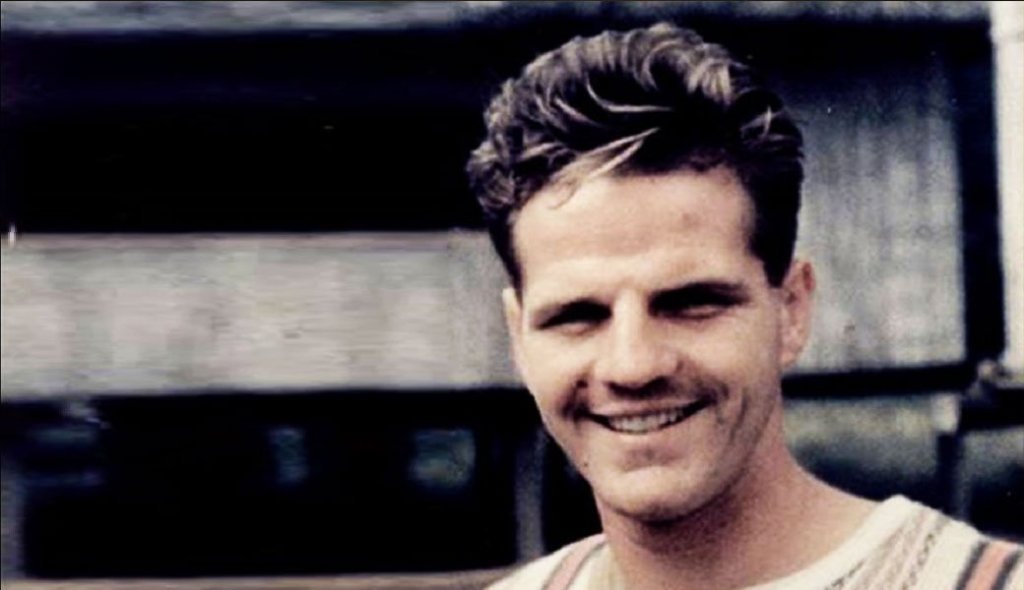
On January 6, 1956, a group of American missionaries made first contact with a local tribe in Ecuador, trying to reach them with the gospel.  Two days later, on this date, January 8, 1956, five of those missionaries – Jim Elliot, Pete Fleming, Ed McCully, Nate Saint and Roger Youderian – were speared to death by the very Auca tribe they spent years preparing to minister to. But their story was not over.

Jim Elliot and others had been ministering to the Quichua people in Ecuador since 1952, with many coming to faith in Jesus.  However, the nearby Aucas (now called Waodoni) were known to kill any outsiders that entered their area, including Quichua and also oil workers at a site nearby.  Jim “knew the only way to stop the Aucas from killing was to tell them about Jesus”[1] and came up with a plan to reach them.  Working with Nate Saint, a missionary supply pilot, they spent months trying to safely build goodwill with the Waodoni by lowering supplies to them from a plane and speaking friendly Waodoni phrases from a loudspeaker.

On January 6th, they talked to a Waodoni called George, thinking they had gained some trust and they set up a later meeting.  George, however, lied to them about his intentions, and ten members of the tribe were ready in ambush with spears on January 8th.  The unarmed missionaries had no chance.

Jim Elliot

Seeking vengeance or giving up might have been a reasonable response for the other missionaries, but in a miraculous example of forgiveness, persistent faith, and a heart for the lost, Elisabeth and Valerie Elliot (Jim’s wife and young daughter), and Rachel Saint (Nate’s sister) learned the local language and moved into the jungle to live with the Waodoni in 1958.  Elisabeth wrote about serving those who killed her husband: “The deepest things that I have learned in my own life have come from the deepest suffering. And out of the deepest waters and the hottest fires have come the deepest things I know about God.”  Today, the Waodoni are a friendly tribe and many are professing Christians.  Missionaries, including members of the Saint family, still live among them today.  Elisabeth died in 2015 at the age of 88, after a long career as missionary, author, speaker, and radio host.

Jim’s Apparent Failure is God’s Victory
In life, Jim Elliot was sometimes frustrated by his effort, once writing: “No fruit yet. Why is it that I’m so unproductive? I cannot recall leading more than one or two into the kingdom. Surely this is not the manifestation of the power of the Resurrection. I feel as Rachel, ‘Give me children, or else I die.’”[2]  While attending Wheaton College in Illinois in the 1940’s, Jim developed a desire to preach the gospel, including taking the train to Chicago and talking about Jesus with people at the train station, but with little response.

“He is no fool who gives what
he cannot keep to gain
that which he cannot lose.”

– Jim Elliot

But in death, Jim was used by God to inspire many other missionaries, including his own family, through whom God’s love for the lost went out and bore more eternal fruit than Jim may have ever imagined.  His story is a reminder that faithfulness is the Christian’s objective, and God provides the fruit.

Jim wrote what has become a familiar quote to many: “He is no fool who gives what he cannot keep to gain that which he cannot lose.”  In Paradise, Jim, those affected by his ministry, and all other believers, will forever praise God for His steadfast love through the centuries.  Nothing we do for God now can look foolish from that perspective.  We have so much to gain that we cannot lose.

Soli Deo Gloria

Learn More:
This story was dramatized in the 2005 film End of the Spear and in the 2002 documentary Beyond the Gates of Splendor.  A website dedicated to Elisabeth Elliot’s life (https://elisabethelliot.org/) has more on this amazing history of God’s work.


[1] https://www.christianity.com/church/church-history/timeline/1901-2000/jim-elliot-no-fool-11634862.html
[2] https://www.inspirationalchristians.org/evangelists/jim-elliot-biography/

The Savior Among Us

Behold, the virgin shall conceive and bear a son, and they shall call his name Immanuel” – Isaiah 7:14, Matthew 1:23

In the Gospel of Matthew, this verse from Isaiah is applied to our Lord Jesus.  The name Immanuel means “God with us” and the name Jesus means “the Lord saves.”  In these two names is a beautiful picture of salvation, which means a restoration to a life lived with God beginning imperfectly here on earth, but eventually perfectly in His paradise.  Salvation and togetherness go together.  What we are saved from is our inability to live with God because our sin and His justice were unreconciled until the cross.

Among Jesus’ last words on earth were His command to “make disciples of all nations” (Matthew 28:19).  Included in this is bringing the hope to the world that He brought to us by being present.  God did not leave us alone but bore the cost of our reconciliation on Himself.

Today, be among those who need the hope God provides through the salvation He bought.  His desire is to live among the world through us, calling His current and future people to live with Him.

Photo by Gareth Harper on Unsplash

Finding Time for God During “RTO”

Photo by Michelen Studios on Unsplash

During the pandemic, most of us found we had extra time on our hands.  In my case, I did not have to commute to work, and many other activities I’d normally do were shut down, so it was easier (not easy) to make time for private time with God in Bible study and prayer.  However, as I’m now in “Return to Office” mode, working 2-3 days a week in the office, I’ve been reminded of Mark 1:35, which says: “And rising very early in the morning, while it was still dark, [Jesus] departed and went out to a desolate place, and there he prayed.”

Jesus got up early after a very busy night, which Mark describes in verses 33 and 34: “That evening at sundown they brought to him all who were sick or oppressed by demons.  And the whole city was gathered together at the door.  And he healed many who were sick with various diseases, and cast out many demons. And he would not permit the demons to speak, because they knew him.”

I am not naturally a morning person, and finding time has been harder, but as I’ve written: “whether you’re working at a job, at home, retired, a student, a parent, or in any role in this world, as God’s creativity was to be reproduced by Adam and Eve, the character of Jesus is being developed in His people in this world.”  “For we are his workmanship, created in Christ Jesus for good works, which God prepared beforehand, that we should walk in them.[1]  If even Jesus needed daily prayer and time to listen to the Father to get His work done, how much more do we all need that time?

My post-pandemic routine is different than my pre-pandemic routine, and daily time with God is not about the means, but the end.  He has work for each of us to do, and whatever your means of having relationship with the Father, making time to spend with Him is vital for approaching each day as an act of worship and service.

If my people who are called by my name humble themselves, and pray and seek my face and turn from their wicked ways, then I will hear from heaven and will forgive their sin and heal their land.” – 2 Chronicles 7:14


[1] Ephesians 2:10