The Eternal Work of Eden, Heaven, and Earth

Do you love your job?  Is your work meaningful?  After the Covid-19 pandemic, many found that the work they did before the pandemic doesn’t seem as important or meaningful to them now.  People were quitting their jobs or retiring early so often, a new catchphrase was created: “Great Resignation.”  Frustration over work coincided with demand by many workers to find meaning in their job beyond the actual job, for example looking for a workplace that shares their political or social goals.  The work itself had become less meaningful.

As a partial response to this frustration, today’s post will make three points about work before the Fall, in the Garden of Eden, and what that means for our future in heaven and the place of work in our lives now.  We start with an idea from Genesis that is sometimes missed:

#1 – “Not all the world was Eden”
As noted by Michael Heiser in his book The Unseen Realm[2], Eden’s geography is limited and defined in Genesis 2:8-14.  Also, when God expels Adam and Eve from the garden in Genesis 3:23-24 we know that they are still on earth, but no longer in the garden.  God didn’t create a new place for them to go but removed them from the part of the earth that was Eden.  While Eden was a paradise, it was not the entire world.  Which leads to the second point:

#2 – The original task of humanity was to make the entire Earth like Eden
In Genesis 1:28 we read: “And God blessed them. And God said to them, ‘Be fruitful and multiply and fill the earth and subdue it, and have dominion over the fish of the sea and over the birds of the heavens and over every living thing that moves on the earth.’”  Heiser notes on this verse that “the earth needed filling” and that “it makes no sense to subdue the garden of God.”

Eden was a perfect pattern which mankind was to learn from and apply to the rest of the world.  God’s creativity in Eden was a model for human creativity everywhere else.  The pre-Fall world was not a world where there was no work left to be done, which suggests that:

#3 – Work is Eternal
A popular view of heaven is that it is a leisurely place where we don’t have to work.  Images of angels playing harps and finally being able to kick back and relax come to mind.  Some hope in heaven partly for this reason – that they’re tired of working and can’t wait for it to be over.  However, in Genesis 2:15 “The LORD God took the man and put him in the garden of Eden to work it and keep it.”  Adam had a job to do in Eden, and God’s people will have jobs to do in heaven.  Work is not only part of our current fallen world, but a part of our eternal destiny as well.  This may seem like bad news to some of my readers, but does the idea of doing nothing for eternity really appealing when you think about it?

We can be encouraged because the actual hope of heaven is always greater than we can imagine.  As Paul wrote in Romans 8:18, “For I consider that the sufferings of this present time are not worth comparing with the glory that is to be revealed to us.”  While in heaven we will work, it will be thoroughly meaningful and fulfilling.  Every person will be perfectly suited for their tasks and doing exactly what they were designed to do.  No longer will work be cursed by “thorns and thistles,”[3] where labor means pain and you only benefit “by the sweat of your face.”[4]  Work will not be gone, but redeemed and perfected.  Heaven will not be what we expect, but God promises it will always be better than our expectations.

Work is Now
For now, this means that whether you’re working at a job, at home, retired, a student, a parent, or in any role in this world, as God’s creativity was to be reproduced by Adam and Eve, the character of Jesus is being developed in His people in this world, and will be fully reproduced in heaven.  In the Lord’s Prayer, part of the meaning of “Your kingdom come, your will be done, on earth as it is in heaven” (Matthew 6:10) is that we should live as much as possible in this world in the same way we would in heaven.

Christians are God’s agents in this world to glorify Him and make Him known, in our jobs or in any other roles we find ourselves in.  Heiser cites many examples from the Bible which show that “God works through figures like Moses, Joshua, David, Solomon, the prophets, and the apostles. But the pattern extends to us, to all believers. There is nothing we do that God could not accomplish himself. But he has not chosen that method. Rather, he tells us what his will is and commands his loyal children to get the job done.”

In heaven your job will not be what it is now, but for each of us, whatever role we have, whatever our circumstances, our job is to take the gifts of creativity and character God endowed us with and make this world a bit more like Eden.

Jesus was a perfect pattern which we are to learn from and apply to everything we do in this world.


[2] Heiser, Michael S. The Unseen Realm: Recovering the Supernatural Worldview of the Bible.  (2015).  This post draws from pages 49-52.  I’m not unaware that this book (and many others I read) might be controversial to some, but I learned a lot from it and saw several passages of Scripture in a different and sometimes better light.
[3] Genesis 3:18
[4] Genesis 3:19
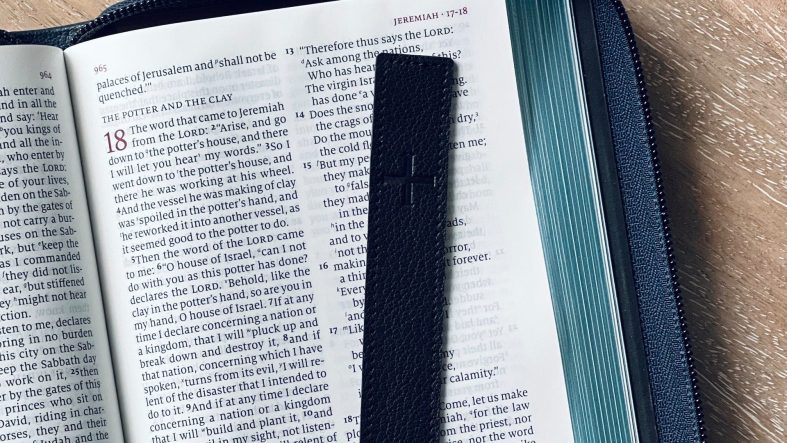
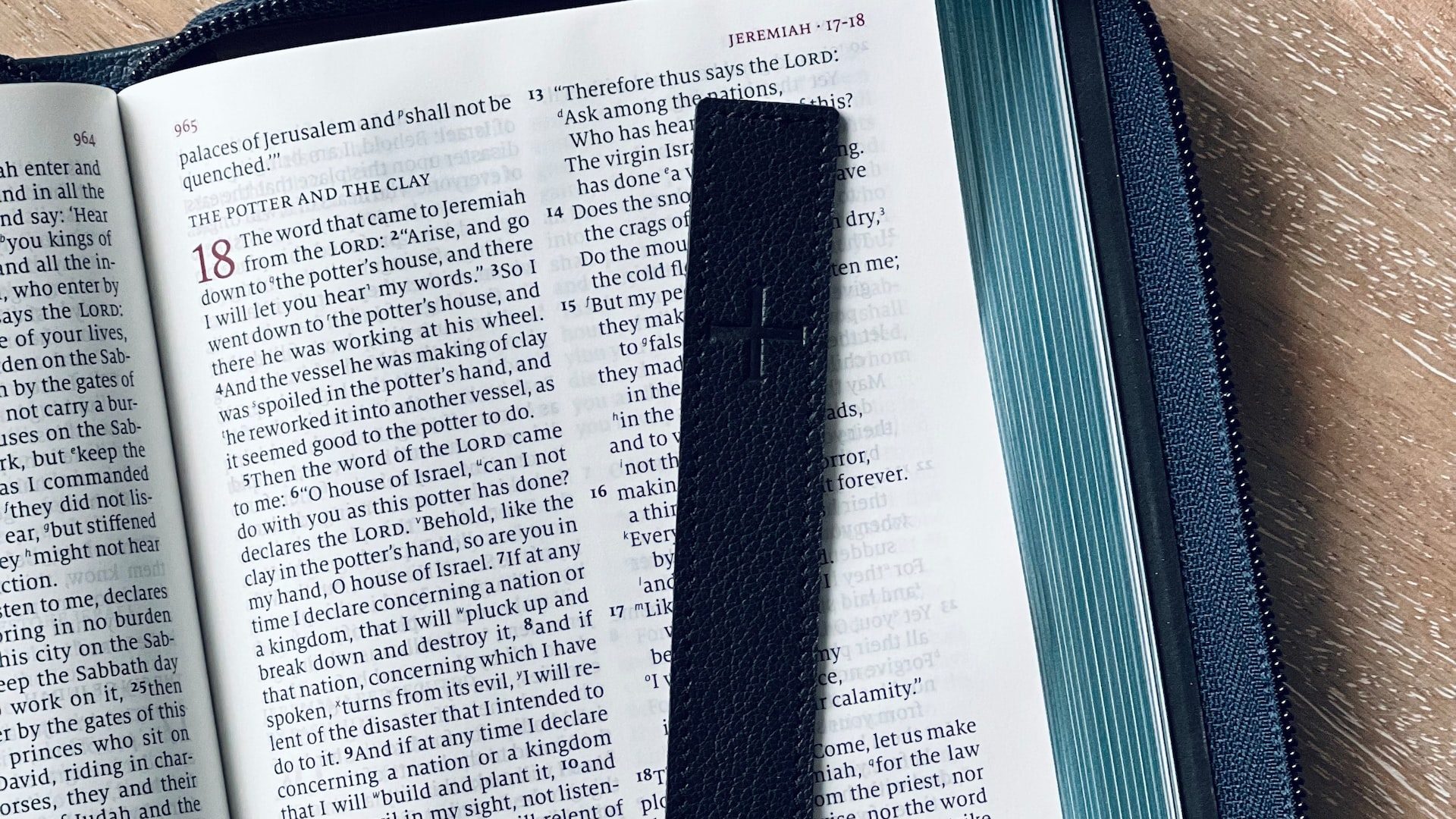
God Equips Those He Calls

When Jeremiah was called to serve as a prophet in the Old Testament, God told him he was literally made for it in Jeremiah 1:5 –

‘Before I formed you in the womb I knew you,
            and before you were born I consecrated you;
            I appointed you a prophet to the nations.’”

However, Jeremiah’s response was not an enthusiastic one.  Jeremiah 1:6-8 records this exchange:

“Then I said, ‘Ah, Lord GOD! Behold, I do not know how to speak, for I am only a youth.’  But the LORD said to me,
            ‘Do not say, ‘I am only a youth’;
            for to all to whom I send you, you shall go,
            and whatever I command you, you shall speak.’”

Photo by Tim Wildsmith on Unsplash

Even though God had just said “Before I formed you in the womb I knew you,” Jeremiah objects that he was too young and did not have the natural ability required for the job.  Maybe he doubted anyone would listen to him, so God must have the wrong guy.  God doesn’t disagree that Jeremiah was young (he already knew that), but knows that God’s ability is what matters, not Jeremiah’s.  God knew that someday you and I would be reading Jeremiah’s words regardless of his own youth or ability.  God never picks the wrong person for the job.

But if “All Scripture is breathed out by God and profitable for teaching, for reproof, for correction, and for training in righteousness,”[1] why does the Scripture tell us that one of its own authors doubted and questioned God Himself?

The answer of course, is “for teaching, for reproof, for correction, and for training in righteousness.”  We should learn not only from Jeremiah’s prophecies to the people of his time, but also from His experience with God.  In hindsight, we think that because Jeremiah is a book of the Bible, of course he was able to do the work God gave him, but in the moment of his call, Jeremiah had no idea.  So, when we think our ability is not enough the job at hand, we should remember Jeremiah’s youth and remember that “God does not call the equipped; He equips the called,” as the saying goes.  Jeremiah learned this from his own experience, and we may learn from it as well because the Bible records it.

Also, God shows us Jeremiah’s flaws to comfort us when we feel inadequate, not only in ability but also in faith.  Even if we know that “God does not call the equipped; He equips the called,” we don’t always act on that knowledge.  Jeremiah doubts not only his call, but there are other examples, including when he questions why he should buy a field the Babylonians were about to seize.[2]  Doubt is not something that only some Christians feel – we are not alone in our weakness.  Even the Bible’s own authors had doubt because they could not see as God sees.

God is patient when we are honest with Him about our doubts, but He is also honest with us when He says we were literally made to serve Him.  No Christian is inadequate for the work God gives them, for in His power He accomplishes what He wants. He has no doubts and is faithful in providing everything we need.

Sometimes God sends us before we think we are ready, so we can learn to put our confidence in the right place like Paul, who wrote: “I can do all things through Him who strengthens me.” – Philippians 4:13


[1] 2 Timothy 3:16
[2] The story is in Jeremiah 32, which I covered in an earlier post, here.

Called to Be Our Consecrated Selves

Photo by Greg Rakozy on Unsplash

People have moments where they wish they had a greater role in the world around them.  We see other people around us, or in stories from the Bible or in the news, and think we’d like to be more like them.  More influential, more effective, more powerful.  For example, what if I could be a prophet or an apostle?  Or in our modern world, maybe a “social media influencer”?  “Be yourself” is often the advice for finding contentment when we feel like this, but the Bible says we are “to be conformed to the image of his Son.”[1]  So, should we be ourselves, or should we be like Jesus?  What will give us contentment?  While not a full answer, the call of Jeremiah the prophet offers some help.

Jeremiah was not a prophet by accident, because Jeremiah 1:4-5 says:

“Now the word of the LORD came to me, saying,
‘Before I formed you in the womb I knew you,
            and before you were born I consecrated you;
            I appointed you a prophet to the nations.’”

Here, God calls Jeremiah both to conform his ways to God’s, and also to his own specific task.  Like Jeremiah, every Christian is known by God and called to do His will.  Only God knows why we were each made the way we were made, and in a way God calling us to serve Him is like Him saying “stop living like you’re an accident of a random, purposeless world.”  It is because we were made, not just evolved, that we have purpose, and God has “consecrated” us to that purpose.

Stop living like you’re an
accident of a random,
purposeless world.

But each of us was made differently, also on purpose.  Unlike Jeremiah, my fellow travelers on this blog probably aren’t prophets, and that is part of why Jeremiah needed to be a prophet.  His job wasn’t to call everyone else to be a prophet, but to serve everyone else by calling them to find their own purpose in God.  Jeremiah wanted all of God’s people to take whatever He has endowed them with and dedicate it to Him.  Likewise, being “conformed to the image of” Jesus does not mean we should all be carpenters, but that we should apply His righteousness to every task He puts before us.

Therefore, God’s people should never live like they are an accident.  We are all a valuable work of creation, made to find our good and His glory in His amazing design.  We will find our true selves in the One who made us, and God’s people will have unity in Christ’s character, combined with diversity in the infinite creativity of the people He created.

Be yourself, and also be like Jesus.

For we are his workmanship, created in Christ Jesus for good works, which God prepared beforehand, that we should walk in them.” – Ephesians 2:10


[1] Romans 8:29

Happy 2nd Blogiversary to Driving Toward Morning!

Fellow travelers,

It’s amazing to think it’s been two years since Driving Toward Morning’s first post!  Thank you to everyone who has read, liked, and commented on the blog.  A special thank you to anyone who has shared it with their friends or used what they found here to encourage others.

Looking back on my 1-year anniversary post, here are some thoughts on how I’ve done with my year 2 goals:

  • Re-blogging old posts to get closer to posting something every day: I posted almost twice as often, and almost a third of the posts were repeats.  Still not every day but moving in the right direction.
  • More predictable post length: Most posts are now in the 3-to-4-minute read range, with less variation.  Again, progress!
  • More posts on history, holidays, groups of quotes, and other topics: I think this has been the same in year 2 as in year 1, and I want to work on these more in year 3, especially moments from history.

Also, I’m learning that a blog is not good for: Writing serial posts.  There’s no way to know what order people are reading things in, and whether they remember what was in an old post (especially if it takes me a while to continue a series!).  So, I’m working harder on making each one stand on its own.

The Big Picture
Although each year seems to have its own goals, I don’t want to lose sight of why I started this in the first place.  Right after I launched the blog, I decided each post should meet 3 criteria: every post should be Compelling, Clear, and Charitable, meaning:

Is it about something that matters eternally, and is written in a way that connects emotionally and is worth reading? (Compelling)
Is it logical and makes sense, or is it likely to be misunderstood? (Clear)
Is it written in love, to build up whoever reads it? (Charitable)

In a way, these are just a modified version of Ephesians 4:15-16, which says:

Rather, speaking the truth in love, we are to grow up in every way into him who is the head, into Christ, from whom the whole body, joined and held together by every joint with which it is equipped, when each part is working properly, makes the body grow so that it builds itself up in love.”

The compelling and clear parts are the “speaking the truth,” and the charitable part is the “in love” part.  However, the three criteria are not equal.  If I am compelling and clear, I might come across as clever, smart or a good writer, but without charity, “I am a noisy gong or a clanging cymbal” (1 Corinthians 13:1).  Without love, I’ve done it wrong, and therefore being compelling and clear should be tools used in service of being charitable.

I am still thrilled to be writing and am encouraged by the impact it’s had on my life, from challenging me when I am complacent, from encouraging me in my faith, and from growing deeper connections with friends and family, plus new connections with other bloggers.

Working on this blog has encouraged me, and I hope it has encouraged you as well.  Every one of us has something important to offer for God’s glory and for the benefit of the world around us.

Please leave a comment on what you’ve liked and what you’d want to see more of!

Broken Cisterns Can Hold No Water

Sometimes word pictures in the Bible weren’t written for people like me.  In my life I haven’t thought much of cisterns, but the Old Testament prophets Isaiah and Jeremiah refer to them a few times in their prophecies, and Jeremiah ends up thrown into one.  To Jeremiah’s original audience, and others living now, the meaning behind these pictures might be obvious.  But for me, it took a little research.

A cistern-centered comparison in Jeremiah 3:12-13 particularly drew my attention, where broken cisterns are used as a picture of false religion and idolatry:

Be appalled, O heavens, at this;
            be shocked, be utterly desolate,
            declares the LORD,
for my people have committed two evils:
they have forsaken me,
            the fountain of living waters,
and hewed out cisterns for themselves,
            broken cisterns that can hold no water.”

God is the “fountain of living waters,” but how is false religion like “broken cisterns”?

Looking up “cistern” in the American Heritage Dictionary I find it is: “A receptacle for holding water or other liquid, especially a tank for catching and storing rainwater.”  So, a cistern is not a fountain, a source of water, but instead is dependent on another source (usually rain) for its water.  So, Jeremiah’s accusation is that false religion can’t create its own water, which brings us to the second point…

The false religions of Judah in Jeremiah’s day weren’t even good cisterns – they were broken.  While a cistern is a vessel for storing water in reserve when there is no rain, when broken it’s not even that.  Even with another source of water, putting it into a broken cistern was no better than pouring it out into the sand.  Jeremiah’s second accusation is that false religion can’t even store good things from other sources.  The picture here is that if they took parts of true worship and mixed them with other religions, not only were the other religions wasted, but whatever they would have gained from God is also wasted.

Without God, many things are like broken cisterns.  Things that make us happy in this world are temporary and require our Creator God to provide us with more.  A food you like might satisfy you for a while, but eventually you need to find more food.  Rain may satisfy your garden plants, but eventually they will need more water.  Money may seem alluring for its own sake, but it only buys things that are temporary like everything else.

In Jeremiah 2:18, he tells the people not to look anywhere other than the true God of Israel for the source of living water and eternal satisfaction:

And now what do you gain by going to Egypt
            to drink the waters of the Nile?
Or what do you gain by going to Assyria
            to drink the waters of the Euphrates?”

Like a cistern, even the Nile and Euphrates only get their water from some other source.  They can’t make their own, and God can even determine if the rivers are empty or full.  Later, in Jeremiah 14:2-3, he says that because Judah had forsaken God, He had caused a drought, and therefore:

Judah mourns,
            and her gates languish;
her people lament on the ground,
            and the cry of Jerusalem goes up.
Her nobles send their servants for water;
            they come to the cisterns;
they find no water;
            they return with their vessels empty;
they are ashamed and confounded
            and cover their heads.”

The people mourned their earthly problem but did not care about their spiritual problem which is infinitely more important.  No provision – any science, philosophy, or religion – can defend against a drought caused by forsaking God, because false gods – anything we put in His place – cannot deliver rain.  They are but broken cisterns.

Consider that if there is no Creator behind the workings of nature, or if that Creator doesn’t care about us, why should we expect the world to act in ways that predictably bless us, instead of just being completely unpredictable and random?  Why do things seem to work most of the time?  Rain, friction, food, gravity, math, and on and on.  Fortunately, our God “sends rain on the just and on the unjust,”[1] and to His own He gives “a spring of water welling up to eternal life”[2]

He calls all people to know Him as “the fountain of living waters.”  No cistern needed.

Soli Deo Gloria


[1] Matthew 5:45
[2] John 4:14