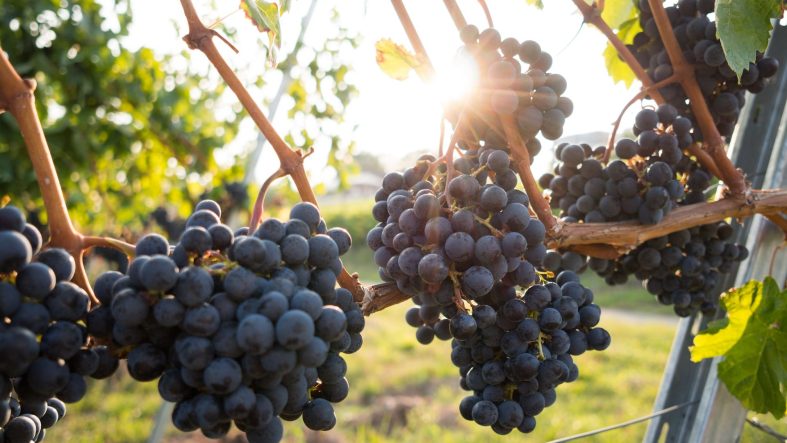
Fruitful Religion

Before Jesus began His public ministry, John the Baptist announced Jesus’ coming and prepared people for His message.  This, of course, generated opposition, and when the Pharisees and Sadducees came out to confront John, he told them to “bear fruit in keeping with repentance…Even now the axe is laid to the root of the trees.  Every tree therefore that does not bear good fruit is cut down and thrown into the fire.[1]

Since Pharisees and Sadducees were often hypocrites, this is usually interpreted as John telling them to practice good works that flow from an inner righteousness, instead of keeping up a merely external appearance of following God.  I agree this is a correct interpretation, but I also think there is more than that to the fruit that John spoke of.

Paul wrote in Galatians 5:22-23: “But the fruit of the Spirit is love, joy, peace, patience, kindness, goodness, faithfulness, gentleness, self-control; against such things there is no law.”

Could this also be part of the fruit John wanted his opposition to produce?

Perhaps John was telling the Pharisees and Sadducees that their religion didn’t produce “love, joy, peace”, and the other characteristics listed by Paul.  Jesus pointed out the lack of love in the parable of the Good Samaritan, that the religious leaders of His time would rather leave a man dying on the side of the road than break what they saw as legal obligations.  But did the Pharisees and others also lack joy and peace?  Since they strived to obey God’s law perfectly (but only on the outside) they likely felt constant pressure to live up to God’s perfect standards, instead of peace with their Maker.  Their relationships with others, who they saw as inferior to them, were distant and cold at best.  “Against these things there is no law,” yet the Pharisees and Sadducees failed to practice them.  They not only felt no joy or peace, but they also robbed others of their joy and peace by making them feel unworthy of God’s love.  They showed no kindness or patience to others.  They were not faithful to God by being gentle with people who were not like them.  They did not “bear fruit in keeping with repentance,” as John the Baptist said.

It’s easy to judge the religious leaders of Jesus’ day, since Jesus clearly exposed their inadequacies.  However, it’s a difficult challenge to ask ourselves: does our religion bear this fruit for us?  Does our practice of Christianity result in not only loving actions toward our neighbors, but also “joy, peace, patience, kindness, goodness, faithfulness, gentleness, self-control” for ourselves?

Do we experience joy and peace in our relationship with God, or do we feel grief that we can’t live up to His expectations and do we still feel like God is disappointed in us?  Do we practice kindness and patience with others?  Are we gentle with those enslaved by the brokenness that rules this world?  Do we submit ourselves to the control of our God, who tells us to love Him and love our neighbor no matter what?

Fortunately for us, our salvation does not depend on our faithfulness, but on His faithfulness.  As 1 John 1:9 says: “If we confess our sins, he is faithful and just to forgive us our sins and to cleanse us from all unrighteousness.”  We can never come to God too late or too often to ask for forgiveness and restoration.  His love for His people is steadfast and His faithfulness is without end or limit.  He is always willing to bring us back to the path that yields fruit for the Kingdom.  Jesus on the cross purchased for us a way to bear fruit!

Therefore, pray that we can all “bear fruit in keeping with repentance.”  Fruit that brings us joy and peace, and that brings Him glory.

But the fruit of the Spirit is love, joy, peace, patience, kindness, goodness, faithfulness, gentleness, self-control; against such things there is no law.”


[1] Matthew 5:8, 10

Oh, Taste and See!

In response to a reader suggestion, I’ve figured out what Bible verses quoted the most here and will write a series about those verses.  Today’s post is #1 of a top 10 countdown, starting with the verse quoted the least out of the 10 most quoted, Psalm 34:8.

 “Oh, taste and see that the LORD is good!
            Blessed is the man who takes refuge in him!

In my Accordance[1] Bible notes for this verse, I wrote: “God does not shower us with blessing upon blessing until we are convinced He is good and then we turn to Him.  We must learn that He is good by trusting Him and learning to walk with Him.  We learn that repentance is a good thing.”  To me, there’s a lot in this verse.

One thing is that we must be active in our relationship with God, rather than waiting around for Him to solve our problems.  We must each “taste and see,” not “wait and see.”  The Psalmist (David) is comparing knowledge of God to food spread out before us.  Unless we act and decide to eat the food, we will never truly know how good that food is.  This requires us to turn from what we would do otherwise, which may be sin, and turn to God for our refuge.  Repentance is often a requirement for learning of God’s goodness; we don’t learn about it by going our own way.  We must take steps in response to our trust in Him.

Second, we don’t learn that He is good through the experiences of other people, but through our own experience, which we can only get through acting.  Often when we ask people what something tastes like, the answer is “it tastes like chicken.”  This isn’t literally true, but it does tell us that taste is hard to accurately share with and communicate to another person.  We only really know what something tastes like through personal experience, and we can only know how good God is through personal experience.

It’s also implied that if we don’t taste of God’s goodness for ourselves, we might misunderstand it.  We might believe incorrect things about God that we pick up from other sources than Him.   Sometimes these messages come from the secular world, but sometimes they even come from within the church, because nobody and no church (and no blog!) is perfect.  We can only get perfect and pure information about God from God Himself and as you might guess, that means consistent private Bible study, prayer, and meditation.

“Tasting and seeing” is similar in the verse to “taking refuge.”  This verse means a lot to me because it can be a reminder when life isn’t going well, or if I just feel like it’s not going well, that I might need to take a different approach or get a different perspective from God.  The verse suggests that the man who does not take refuge in him is not blessed, therefore we should make sure we are taking refuge in Him.  Only by seeking out His answers to our problems can we know Him and experience His blessing, which we should value over all other kinds of blessing.

So, dear readers:

Oh, taste and see that the LORD is good!
            Blessed is the man who takes refuge in him!


[1] Bible software I use and highly recommend.  Many of my blog posts start from notes I took in Accordance.

Learning Godly Fear

Does being forgiven by God cause us to fear Him less, or to fear Him more?  Perhaps it’s both.

Psalm 130:4 tells us this about God: “But with you there is forgiveness, that you may be feared.”  To one way of thinking, this seems backwards: why does knowing that God has forgiven us make us fear Him more?  Shouldn’t we fear Him less when forgiven?  It depends on what we mean by fear.

For me, getting Psalm 130:4 to make sense with the order of forgiveness and fear required a re-thinking of repentance.  My conclusion was: the one who has not been forgiven has not repented, and the reason they did not repent was that they did not fear God.  They did not understand Him properly.  They might be afraid of God, but that’s not the kind of fear referred to in Psalm 130.

In contrast, the one who has been forgiven has repented, and they repented because they understood it was the best thing for them to do, out of a fearful respect for God.  A proper understanding of God’s character makes us turn to Him with our guilt, rather than run away from Him.  We should not be afraid of God, where we are motivated to be passive – avoiding mistakes that would anger the one we fear.  We should fear God in that we revere Him and respect His authority, and therefore actively seek to please Him.

A lot goes into repentance.  When we pray and ask for forgiveness, it’s often a simple prayer made with the proverbial faith of a child, but there are a lot of assumptions we make when we say that prayer.  Every prayer of repentance directly or indirectly acknowledges some or all of these things:

1) God as the source of the law, the ultimate arbiter of right and wrong
2) Him as the righteous judge who is personally offended by our sin
3) His omniscience, knowing we cannot hide our sin
4) His uniqueness, as there is no other God to turn to
5) His steadfast love for us, knowing He bore the cost of our sin, therefore enabling us to approach Him
6) His compassion for us, since He lived as a man
7) His power and willingness to heal us of sin
8) His consistency of character: that He is not arbitrary

If we don’t implicitly or explicitly believe these things, why would we repent and ask forgiveness from God?  Why would we expect to get it?  Exploring that set of statements could fill multiple volumes of theology books, but we don’t need that knowledge.  In His grace, He honors our simple, heartfelt confessions.  He paid the price for all our inadequacies – even when we don’t fully understand our own prayers or who we’re praying to.  The Spirit pleads with the Father on our behalf[1].  Mercifully, our forgiveness is based on His faithfulness to us, not on our detailed theological knowledge.  1 John 1:9 tells us: “If we confess our sins, he is faithful and just to forgive us our sins and to cleanse us from all unrighteousness.”

Even our faith is imperfect, but His faithfulness bridges the gap between our childlike faith and His omniscience.  He knows all our doubts and all their answers.  We come as we are, but with fearful respect, and are forgiven.

Only through acceptance of the cross, where Christ’s atoning blood was shed for us, can God in His Holiness commune with us.  Only through forgiveness will the Holy Spirit come and live in us.  Only by tasting of His goodness do we really know what He is like, not before.  And if we never repent, we don’t learn what it tastes like, we only know what you’ve been told about God, and we might not have been told the truth.

Psalm 130:4 shows us that genuine repentance leads to forgiveness and gives us a better appreciation of who God is.  As we experience Him more, we live Psalm 34:8 for ourselves:

“Oh, taste and see that the LORD is good!
                        Blessed is the man who takes refuge in him!”


[1] Romans 8:26-27

Fruitful Religion

Before Jesus began His public ministry, John the Baptist announced Jesus’ coming and prepared people for His message.  This, of course, generated opposition, and when the Pharisees and Sadducees came out to confront John, he told them to “bear fruit in keeping with repentance…Even now the axe is laid to the root of the trees.  Every tree therefore that does not bear good fruit is cut down and thrown into the fire.[1]

Since Pharisees and Sadducees were often hypocrites, this is usually interpreted as John telling them to practice good works that flow from an inner righteousness, instead of keeping up a merely external appearance of following God.  I agree this is a correct interpretation, but I also think there is more than that to the fruit that John spoke of.

Paul wrote in Galatians 5:22-23: “But the fruit of the Spirit is love, joy, peace, patience, kindness, goodness, faithfulness, gentleness, self-control; against such things there is no law.”

Could this also be part of the fruit John wanted his opposition to produce?

Perhaps John was telling the Pharisees and Sadducees that their religion didn’t produce “love, joy, peace”, and the other characteristics listed by Paul.  Jesus pointed out the lack of love in the parable of the Good Samaritan, that the religious leaders of His time would rather leave a man dying on the side of the road than break what they saw as legal obligations.  But did the Pharisees and others also lack joy and peace?  Since they strived to obey God’s law perfectly (but only on the outside) they likely felt constant pressure to live up to God’s perfect standards, instead of peace with their Maker.  Their relationships with others, who they saw as inferior to them, were distant and cold at best.  “Against these things there is no law,” yet the Pharisees and Sadducees failed to practice them.  They not only felt no joy or peace, but they also robbed others of their joy and peace by making them feel unworthy of God’s love.  They showed no kindness or patience to others.  They were not faithful to God by being gentle with people who were not like them.  They did not “bear fruit in keeping with repentance,” as John the Baptist said.

It’s easy to judge the religious leaders of Jesus’ day, since Jesus clearly exposed their inadequacies.  However, it’s a difficult challenge to ask ourselves: does our religion bear this fruit for us?  Does our practice of Christianity result in not only loving actions toward our neighbors, but also “joy, peace, patience, kindness, goodness, faithfulness, gentleness, self-control” for ourselves?

Do we experience joy and peace in our relationship with God, or do we feel grief that we can’t live up to His expectations and do we still feel like God is disappointed in us?  Do we practice kindness and patience with others?  Are we gentle with those enslaved by the brokenness that rules this world?  Do we submit ourselves to the control of our God, who tells us to love Him and love our neighbor no matter what?

Fortunately for us, our salvation does not depend on our faithfulness, but on His faithfulness.  As 1 John 1:9 says: “If we confess our sins, he is faithful and just to forgive us our sins and to cleanse us from all unrighteousness.”  We can never come to God too late or too often to ask for forgiveness and restoration.  His love for His people is steadfast and His faithfulness is without end or limit.  He is always willing to bring us back to the path that yields fruit for the Kingdom.  Jesus on the cross purchased for us a way to bear fruit!

Therefore, pray that we can all “bear fruit in keeping with repentance.”  Fruit that brings us joy and peace, and that brings Him glory.

But the fruit of the Spirit is love, joy, peace, patience, kindness, goodness, faithfulness, gentleness, self-control; against such things there is no law.”


[1] Matthew 5:8, 10

Learning Godly Fear

Does being forgiven by God cause us to fear Him less, or to fear Him more?  Perhaps it’s both.

Psalm 130:4 tells us this about God: “But with you there is forgiveness, that you may be feared.”  To one way of thinking, this seems backwards: why does knowing that God has forgiven us make us fear Him more?  Shouldn’t we fear Him less when forgiven?  It depends on what we mean by fear.

For me, getting Psalm 130:4 to make sense with the order of forgiveness and fear required a re-thinking of repentance.  My conclusion was: the one who has not been forgiven has not repented, and the reason they did not repent was that they did not fear God.  They did not understand Him properly.  They might be afraid of God, but that’s not the kind of fear referred to in Psalm 130.

In contrast, the one who has been forgiven has repented, and they repented because they understood it was the best thing for them to do, out of a fearful respect for God.  A proper understanding of God’s character makes us turn to Him with our guilt, rather than run away from Him.  We should not be afraid of God, where we are motivated to be passive – avoiding mistakes that would anger the one we fear.  We should fear God in that we revere Him and respect His authority, and therefore actively seek to please Him.

A lot goes into repentance.  When we pray and ask for forgiveness, it’s often a simple prayer made with the proverbial faith of a child, but there are a lot of assumptions we make when we say that prayer.  Every prayer of repentance directly or indirectly acknowledges some or all of these things:

1) God as the source of the law, the ultimate arbiter of right and wrong
2) Him as the righteous judge who is personally offended by our sin
3) His omniscience, knowing we cannot hide our sin
4) His uniqueness, as there is no other God to turn to
5) His steadfast love for us, knowing He bore the cost of our sin, therefore enabling us to approach Him
6) His compassion for us, since He lived as a man
7) His power and willingness to heal us of sin
8) His consistency of character: that He is not arbitrary

If we don’t implicitly or explicitly believe these things, why would we repent and ask forgiveness from God?  Why would we expect to get it?  Exploring that set of statements could fill multiple volumes of theology books, but we don’t need that knowledge.  In His grace, He honors our simple, heartfelt confessions.  He paid the price for all our inadequacies – even when we don’t fully understand our own prayers or who we’re praying to.  The Spirit pleads with the Father on our behalf[1].  Mercifully, our forgiveness is based on His faithfulness to us, not on our detailed theological knowledge.  1 John 1:9 tells us: “If we confess our sins, he is faithful and just to forgive us our sins and to cleanse us from all unrighteousness.”

Even our faith is imperfect, but His faithfulness bridges the gap between our childlike faith and His omniscience.  He knows all our doubts and all their answers.  We come as we are, but with fearful respect, and are forgiven.

Only through acceptance of the cross, where Christ’s atoning blood was shed for us, can God in His Holiness commune with us.  Only through forgiveness will the Holy Spirit come and live in us.  Only by tasting of His goodness do we really know what He is like, not before.  And if we never repent, we don’t learn what it tastes like, we only know what you’ve been told about God, and we might not have been told the truth.

Psalm 130:4 shows us that genuine repentance leads to forgiveness and gives us a better appreciation of who God is.  As we experience Him more, we live Psalm 34:8 for ourselves:

“Oh, taste and see that the LORD is good!
                        Blessed is the man who takes refuge in him!”


[1] Romans 8:26-27