Who We Shall Be

The apostle Peter wasn’t always a follower of Jesus.  He also wasn’t always Peter; he was originally named Simon.  He got his new name when his brother Andrew took him to meet Jesus.  Andrew “brought him to Jesus. Jesus looked at him and said, ‘You are Simon the son of John? You shall be called Cephas” (which means Peter).’” (John 1:42).

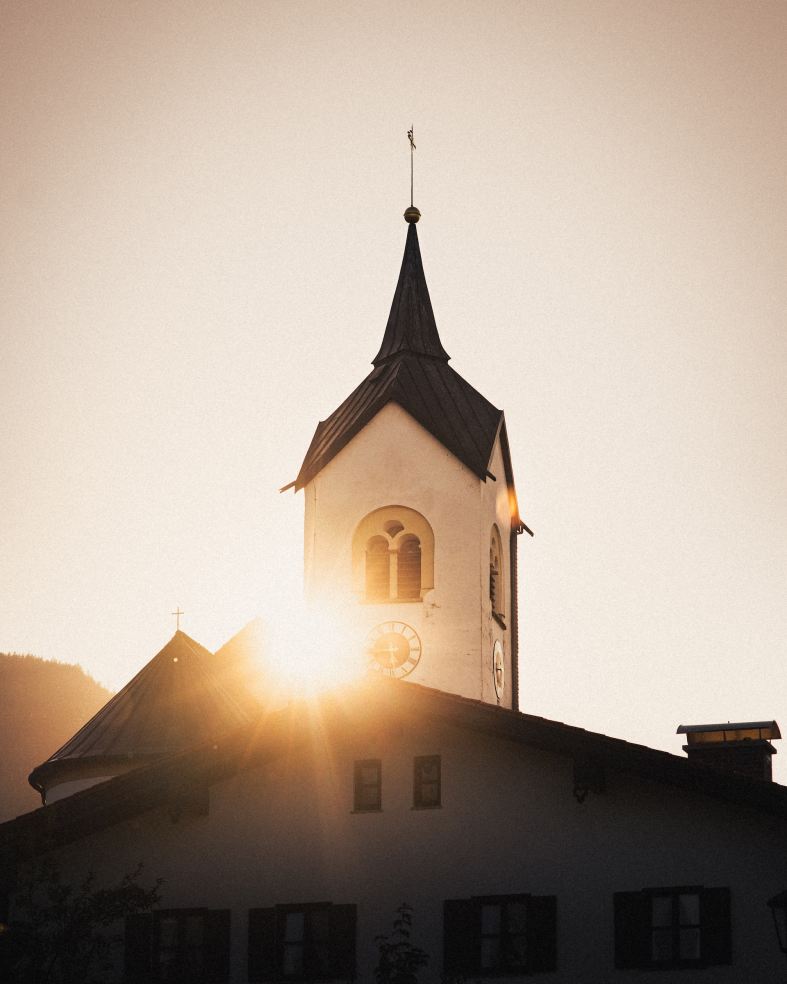
Photo by Lionel Gustave on Unsplash

Something that stands out in Jesus’ words are the phrases “You are,” and “You shall be.”  It’s as if Jesus saw 2 people: the one Simon was, and Peter that Simon would be.  The Simon of the present and the Peter of the future.  Jesus knew there was work to be done with this Simon who would become His disciple, but He also knew that the work would be completed.  It was inevitable that Simon would become Peter, the rock, which is what the name Peter means.  Cephas also means rock in Aramaic, but Peter is the Greek name we know him by.

But in the meantime, Peter was going to be a work in progress, like all of us.  Jesus sees everyone as they “are” and as they “shall be.”  He sees the raw material and He sees what it will take to finish each competed work of art.  Jesus takes us as we are, begins our transformation there, and will complete it in eternity.

Revelation 2:17 says of believers: “To the one who conquers I will give some of the hidden manna, and I will give him a white stone, with a new name written on the stone that no one knows except the one who receives it.”  This new name represents our future, eternal identity.  The person we will be when God is finished with His work of creation in us, the person Jesus sees in us, but that is beyond our wildest imagination. C.S. Lewis wrote that believers will “one day be a creature which, if you saw it now, you would be strongly tempted to worship.”  This is how completely we will be changed and conformed to the image and likeness of God that He intended for us from the beginning.[1]

So, if you ever feel disappointed in yourself, if you feel unworthy of God’s attention, if you wonder how God could love someone like you, remember: God sees who you “are” and who “you shall be.”  And who “you shall be” is beautiful beyond what we can imagine, but not beyond what He can see.

You are Simon the son of John? You shall be called Cephas” (which means Peter).


[1] Genesis 1:26-27

Strengthen What Remains

Does your church seem alive and vigorous in its faith?  Be thankful if it does because there are many churches that are struggling.  There are many churches that appear to be faithful, but their faith might only be skin-deep.

In Revelation chapters 2 and 3, John is given messages from Jesus to bring to seven churches in different cities: Ephesus, Smyrna, Pergamum, Thyatira, Sardis, Philadelphia, and Laodicea.  One of these – Sardis – fit the description above of a church where faith was only an appearance.  Jesus’ words to Sardis begins in Revelation 3:1-2:

And to the angel of the church in Sardis write: ‘The words of him who has the seven spirits of God and the seven stars.  ‘I know your works. You have the reputation of being alive, but you are dead. 2 Wake up, and strengthen what remains and is about to die, for I have not found your works complete in the sight of my God.

The church in Sardis looked good – it had “the reputation of being alive,” but in the sight of God who sees the internal and true reality, the church was “dead.”  Many churches today are like Sardis: they appear Christian but haven’t really embraced Christ.

However, there is still hope, because in verse 2 it says the work is not complete, and verse 4 says there remain some truly faithful in Sardis: “Yet you have still a few names in Sardis, people who have not soiled their garments, and they will walk with me in white, for they are worthy.”  Many people are in situations like this today: spiritually alive but in “dead” churches.

What message is given to those faithful few?  “Wake up, and strengthen what remains.” 

There are two parts to this instruction, the first being don’t give up.  Stay alert!  Some might be tempted to give up; to either to stop trying, or to leave and find another church.  Finding another church might be a good option in some cases, but for those who choose to stay, giving up on the church is not an option according to this message.  “Wake up.

The second part is to “strengthen what remains.”  There is work to be done in any church, even where little genuine faith remains.  Hebrews 10:24-25 advises us: “And let us consider how to stir up one another to love and good works, not neglecting to meet together, as is the habit of some, but encouraging one another, and all the more as you see the Day drawing near.”

Therefore, if you feel your church is dead, remain faithful and “strengthen what remains.”  Don’t give up but encourage others to “love and good works.”  By word and by example.  But if your church is spiritually alive, also remain faithful and strengthen what you have.

He who has an ear, let him hear what the Spirit says to the churches.” – Revelation 3:6

God, Our Eternal River

When comparing Genesis and Revelation, we find similarities between the Paradise man lost and the Paradise to come.  Consider these verses about each:

Genesis 2:8-9: “And the LORD God planted a garden in Eden, in the east, and there he put the man whom he had formed.  And out of the ground the LORD God made to spring up every tree that is pleasant to the sight and good for food. The tree of life was in the midst of the garden, and the tree of the knowledge of good and evil.  A river flowed out of Eden to water the garden, and there it divided and became four rivers.
Revelation 22:1-2: “Then the angel showed me the river of the water of life, bright as crystal, flowing from the throne of God and of the Lamb through the middle of the street of the city; also, on either side of the river, the tree of life with its twelve kinds of fruit, yielding its fruit each month. The leaves of the tree were for the healing of the nations.

A stream in Llanberis, Wales.

In each description is the tree of life, and also a river. Rivers are greatly beneficial to the growth of cities and civilizations, providing benefits for agriculture, trade, travel, etc.  Even today, most large cities that don’t border a large body of water have a navigable river nearby or flowing through it.  A big city without one is rare: in the United States, Dallas, Texas, and Charlotte, North Carolina, may be the only major cities not located near a significant river.

Rivers are mentioned a lot in the Bible, including in this Psalm about God being our refuge and fortress.  An unnamed river in the “city of God” is mentioned:

There is a river whose streams make glad the city of God,
            the holy habitation of the Most High.” (Psalm 46:4)

However, Jerusalem, the place Jews in the Old Testament period would have considered the “city of God” does not have a river.  The Psalmist certainly knew this, so their point is about something else, that the “city of God” has, well, it has God, as described in the next verses:

“God is in the midst of her; she shall not be moved;
            God will help her when morning dawns.
The nations rage, the kingdoms totter;
            he utters his voice, the earth melts.
The LORD of hosts is with us;
            the God of Jacob is our fortress.  Selah” (Psalm 46:5-7)

Jerusalem may not have a river, but it has God who provides all it needs and more.  No river required.  Even though the literal, ancient Jerusalem was eventually destroyed by the Babylonians, and later by the Romans, the eternal City of God will never be moved.  All other nations “rage” and “totter,” but God’s kingdom is forever secured by the One whose voice melts the earth.  Hebrews 1:10-12 (quoting from Psalm 102:25-27):

You, Lord, laid the foundation of the earth in the beginning,
            and the heavens are the work of your hands;
they will perish, but you remain;
            they will all wear out like a garment,
like a robe you will roll them up,
            like a garment they will be changed.
But you are the same,
            and your years will have no end.”

Do you worry that you lack things others have?  Things that would provide benefits for your business, spare time, or other pursuits?  With God as our fortress and refuge, we don’t need a river, but in Paradise He will provide one anyway.

Fret not, for you have God, our eternal river.

The Many Names of Jesus

Often in the Bible, a person’s name tells us more than just what they are called – it tells us something about their character or history.  Also, a name describes the authority and honor due to someone, like when we do something in someone’s name, we claim their authority to do it.  There are many names for our Lord Jesus, describing His character and authority, and a great summary of these is the worship song, “Jesus, Name Above All Names.”  It has two main verses, listing many of Christ’s names, as follows:

Verse 1
Jesus, name above all names
Beautiful Savior glorious Lord
Emmanuel God is with us
Blessed Redeemer living Word

Verse 2
Jesus, loving Shepherd
Vine of the branches Son of God
Prince of Peace Wonderful Counselor
Lord of the universe Light of the world

There are many truths about Jesus we can know, and much meaning is contained in the names from this song, but as infinite God, we cannot understand every truth about Him.  A verse that reminds us of this is Revelation 19:12 – “His eyes are like a flame of fire, and on his head are many diadems, and he has a name written that no one knows but himself.

We know Jesus by many names, but He has at least one that only He knows.  We know many of His names, but none of them can fully describe Him.  Likewise, He has many crowns (“diadems”), but none of them can fully describe His power, authority, and honor.

But it was because of our Lord’s humility, taking on the form of man and voluntarily suffering death on the cross for His people, that Philippians 2:9-11 declares: “God has highly exalted him and bestowed on him the name that is above every name, so that at the name of Jesus every knee should bow, in heaven and on earth and under the earth, and every tongue confess that Jesus Christ is Lord, to the glory of God the Father.”

He alone has the name that deserves all of our devotion and respect.  While we cannot fully understand Him, we can seek to fully trust Him.

Soli Deo Gloria

What’s in Your Temple?

When describing His holiness, God provided pictures like the one in Isaiah 6:1 – “In the year that King Uzziah died I saw the Lord sitting upon a throne, high and lifted up; and the train of his robe filled the temple.”  Because “the train of his robe filled the temple,” there is no room in the temple for anything that isn’t holy.  Or in Revelation 15:8, which says: “and the sanctuary was filled with smoke from the glory of God and from his power, and no one could enter the sanctuary until the seven plagues of the seven angels were finished.”  Until God’s judgment was complete – both on the unrepentant and on the cross for His people – there would continue to be no room in the sanctuary for anyone but the Lord.

How do these pictures apply to us?  Paul asks in 1 Corinthians 3:16-17 – “Do you not know that you are God’s temple and that God’s Spirit dwells in you?  If anyone destroys God’s temple, God will destroy him. For God’s temple is holy, and you are that temple.”  Therefore, we ask ourselves: does the train of the Lord’s robe fill our temples?

Photo by Annie Spratt on Unsplash

A transformative moment came in my Christian life when I understood sin in contrast to holiness, rather than as a list of “don’ts.”  It’s possible (perhaps even easy) to convince ourselves we are not sinners in need of grace by defining sin as things we don’t do.  However, much of the time, the word “sin” in the New Testament is a translation of the Greek word hamartia, which means “to miss the mark.”[1]  The word has athletic connotations, such as if an archer couldn’t hit the bullseye, they wouldn’t win the competition and the prize.  As we all know, archers are supposed to be accurate, and if they aren’t, they’ve “missed the mark.”

Therefore, when Paul writes in Romans 3:23 “for all have sinned and fall short of the glory of God,” he is not saying everybody failed to follow a list of dos and don’ts, but that we have not fully lived the life God intended us to live.  Romans 3:23 declares that while we wouldn’t set up idols in our church building, all of us tolerate some idols in our soul, which is where the Holy Spirit of God chooses to dwell.  The train of His robe does not fill our inner temple, and we too often trod on it with dirty feet.  We’ve “missed the mark” any time there’s other stuff in our temple, directing our thoughts and actions.  However, by the sacrifice of Jesus Christ we have both a hope of living with God and a future where His metaphorical robe does fill us.

In Paradise, God’s people will – individually and collectively – “hit the mark” perfectly for eternity.  His perfect temple will be completed in Paradise, with the living stones of all His people.

Paul returns to holiness again in 2 Corinthians 6:16 to 7:1, quoting several Old Testament passages, since holiness of His people has been the plan from the beginning –

What agreement has the temple of God with idols? For we are the temple of the living God; as God said,
             ‘I will make my dwelling among them and walk among them,
                        and I will be their God,
                        and they shall be my people.
            Therefore go out from their midst,
                        and be separate from them, says the Lord,
            and touch no unclean thing;
                        then I will welcome you,
            and I will be a father to you,
                        and you shall be sons and daughters to me,
            says the Lord Almighty.’

Since we have these promises, beloved, let us cleanse ourselves from every defilement of body and spirit, bringing holiness to completion in the fear of God.

Amen


[1] Greek Strong’s Dictionary