The apostle Paul begins 2 Corinthians with the usual greeting, followed by a section on the comfort God provides us when we suffer or are afflicted for Christ’s sake. 2 Corinthians 1:5 makes this statement: “For as we share abundantly in Christ’s sufferings, so through Christ we share abundantly in comfort too.”
On that verse, Charles Spurgeon wrote this analogy: “The Ruler of Providence bears a pair of scales—in this side He puts His people’s trials, and in that He puts their consolations. When the scale of trial is nearly empty, you will always find the scale of consolation in nearly the same condition; and when the scale of trials is full, you will find the scale of consolation just as heavy.”[1]
Therefore, when living for Christ brings trouble and opposition, remember also that our Father is ruler of all and fully intends to share His comfort with us through Christ eternally.
“For I consider that the sufferings of this present time are not worth comparing with the glory that is to be revealed to us.” – Romans 8:18
[1] From “February 12” of Spurgeon’s Morning by Morning commentary
In the ESV Bible, the phrase “but God” appears 43 times, changing the direction of the story. An Ebenezer is a “stone of help,” or reminder of God’s benefit to His people in the past, providing strength for the present and future. Ebenezer the squirrel, this blog’s mascot, represents these “but God” memorials the Bible records of God’s intervention in the world and in our lives. As a squirrel can unexpectedly draw our attention, I write about these moments to draw our attention to God as a reminder that adding God to our circumstances can change everything. One of these instances comes at a key point in David’s life.
Prior to becoming Israel’s second king, David may have spent a decade in exile, running from Saul, Israel’s first king. Saul was extremely insecure and jealous of David and sought to kill him for years. In 1 Samuel 23 there is a story about Keilah, a border town in Judah that was near the Philistine city of Gath. Bands of Philistines were stealing grain from Keilah and David heard of it. This small border town may not have interested Saul, but David prayed to God about whether to rescue it. After getting affirmation from God, David and his men rescued the town.
Saul, with spies everywhere, heard that David was staying in Keilah and planned to besiege the town, probably to starve the people until they gave David up. In other words, Saul hated David so much and wanted him dead that he would attack a town in his own territory. Saul was persistent and not interested in seeking (or following) God’s guidance.
David, informed by God that the people of Keilah would give him up to Saul, fled into the wilderness again, then we get to verse 14 of the chapter:
“And David remained in the strongholds in the wilderness, in the hill country of the wilderness of Ziph. And Saul sought him every day, but God did not give him into his hand.” (emphasis added)
Saul sought David “every day,but God” was on David’s side, and “did not give him into his hand.” It wouldn’t matter how hard Saul tried – hunting David while he should have been minding his kingdom – David would not be caught unless God allowed it.
As the story continues, Saul is informed that David is hiding in the wilderness of Maon (verse 25). Then, “As Saul and his men were closing in on David and his men to capture them, a messenger came to Saul, saying, ‘Hurry and come, for the Philistines have made a raid against the land.’ So Saul returned from pursuing after David and went against the Philistines. Therefore that place was called the Rock of Escape.” (verses 26b-28)
While the news of this Philistine raid may seem like mere coincidence, I don’t believe it was. First, the timing worked out just right, as David seemed cornered by Saul and his men. Second, Saul was not concerned about raids on Keilah – why is he concerned this time? “The king’s heart is a stream of water in the hand of the LORD; he turns it wherever he will,” says Proverbs 21:1. Perhaps this was one of God’s ways to “not give him into his hand.” While Ebenezer means “stone of help,” David found a “Rock of Escape,” and God can be our escape as well. When we feel threatened by enemies – physical or spiritual – remember that God watches over His people. Those enemies may seem overwhelming, “but God” will not give us into their hand unless He knows it will benefit us and our faith, for “we know that for those who love God all things work together for good, for those who are called according to his purpose” (Romans 8:28). God changes every story for the betterment of His people.
In the holiday classic It’s a Wonderful Life, Jimmy Stewart’s character George Bailey gets an opportunity to see what the world would be like if he never existed, and it’s not good. George had a big impact on his community and the people around him, but the broader point of the movie is that if any of us were missing, there would be a gaping hole where we should be.
At the beginning of the book of Romans, Paul introduces himself as: “Paul, a servant of Christ Jesus, called to be an apostle, set apart for the gospel of God”[1] Most of his letters start this way.
Imagine if Paul had not been called to be an apostle, or written Romans. There would be a hole where Romans should be, and the same is true of work for God that anyone leaves undone. We may not be George Bailey or Paul, but everyone has a role in the church and the world by the will of God. We are not called to be apostles as Paul was, but we are all called to something.
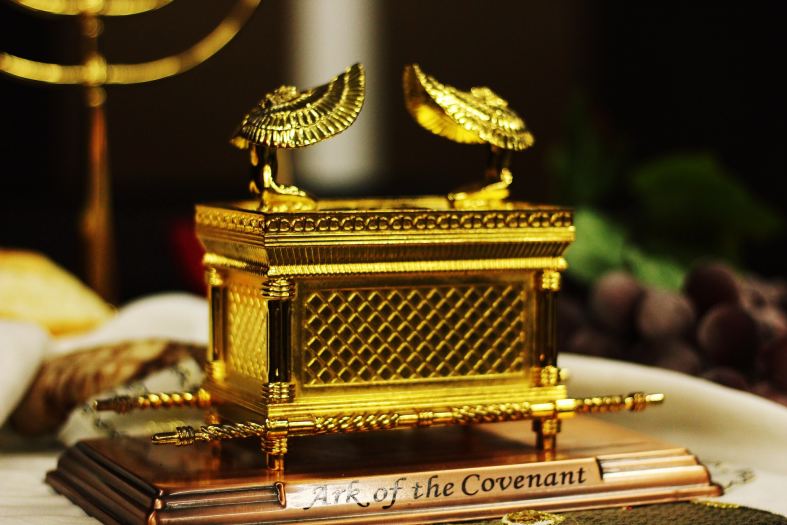
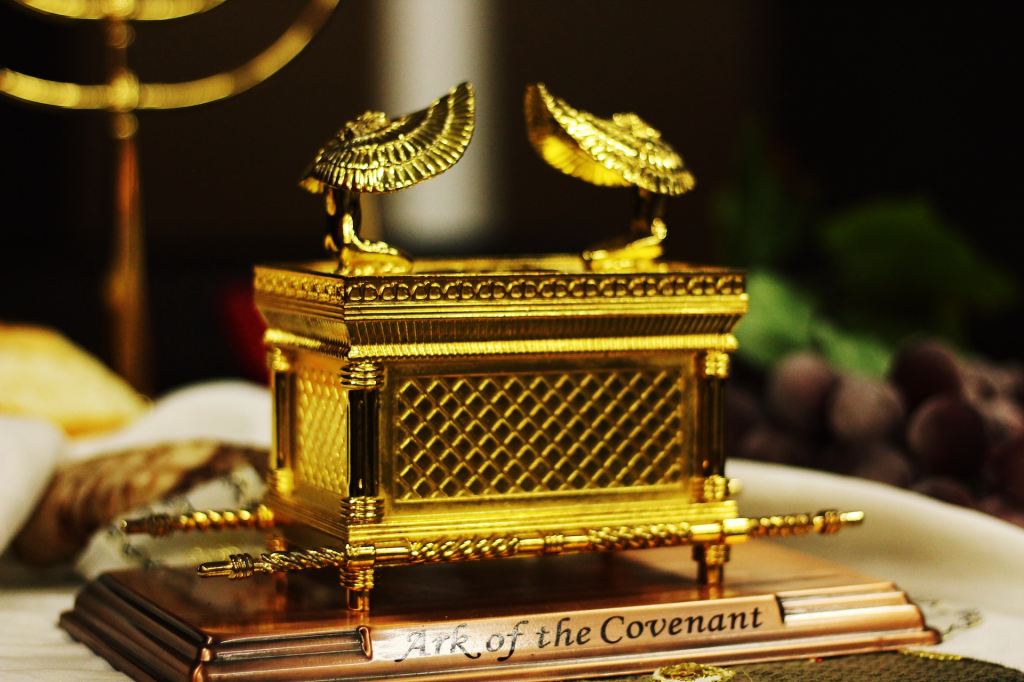
“Bezalel made the ark of acacia wood. Two cubits and a half was its length, a cubit and a half its breadth, and a cubit and a half its height.” – Exodus 37:1
Most of Exodus chapters 36-40 cover the many, many details of the construction of the tabernacle and all of its utensils and other parts. We may tire of reading chapters of details, but the point is that Bezalel and others put a massive amount of care (and obedience) into the implementation of God’s pattern for the tabernacle, as shown to Moses on the mountain.
What does it mean for us now? That we should put as much care into learning what God wants of us and put it into action in our lives.
“For whatever was written in former days was written for our instruction, that through endurance and through the encouragement of the Scriptures we might have hope. May the God of endurance and encouragement grant you to live in such harmony with one another, in accord with Christ Jesus, that together you may with one voice glorify the God and Father of our Lord Jesus Christ.” – Romans 15:4-6
Today’s (early) Sunday Share comes from Marshall Segal, writing at desiring God.org on Romans 5:3-4, which says: “We rejoice in our sufferings, knowing that suffering produces endurance, and endurance produces character, and character produces hope.”
Segal asks “how we can rejoice even while still in the midst of our sufferings,” and notes that “suffering in itself does not produce hope from scratch. Suffering will not create hope where there is none. But it can serve to strengthen and refine an already living hope.”