God Knows Where the Grass is Greenest

The Old Testament book of Numbers has a story about Balak, the king of Moab.  Scared of Israel after seeing their military success, he was desperate to find a way to avoid defeat himself.  Balak sought out Balaam, known as a prophet who spoke oracles, to curse Israel for him. After repeatedly paying Balaam and making many sacrifices, Balaam refused to curse Israel because God told him to bless Israel, not curse them.  Balak would not give up, and before a third try, “Balak said to Balaam, ‘Come now, I will take you to another place. Perhaps it will please God that you may curse them for me from there.’” (Numbers 23:27)

Where did Balak get the idea that changing location would get God on his side?  That changing location would change God’s mind or bring God’s blessing to Balak (in the form of a curse on Israel)?  Doesn’t it seem naïve?  God’s character doesn’t change with location, or any other circumstances.

However, how often do we think a change in circumstances will bring God’s blessing?  How often do we pray that God change our situation because we think the grass is greener somewhere else?  Maybe if I lived in a different place, God would bless me.  Maybe if I got a better job, would it be a blessing?  Maybe if I went to a different church?  Maybe if I was in a different relationship?   Maybe if God would put us where we want to be, that He will bless us then?  Are we saying “come with us God to another place, and perhaps it will please You to bless us there” in another way?

Warren Wiersbe wrote that “We are prone to think that a change in circumstances is always the answer to a problem. But the problem is usually within us and not around us. The heart of every problem is the problem in the heart.”[1]

God calls each of us for specific reasons, and the circumstances may be part of the reason.  Referencing whether it is better to be married or single, circumcised or uncircumcised, slave or free, the apostle Paul wrote in 1 Corinthians 7:24, “So, brothers, in whatever condition each was called, there let him remain with God.”  In other words, God wants to bless you in, or even through, your present circumstances.  He may change them, but He may not.

In God’s plan, the grass is usually greenest right where we already are. If we can faithfully be the blessing needed in our circumstances, God will be faithful in His time and place.  He will bless His people, only sometimes with better circumstances, but always with spiritual fruit.

God always says: “Come now, I will be with you where you are. It pleases me to bless you in all situations and circumstances.”

The grass is greenest where He is.


[1] Wiersbe, Warren.  Be Wise (1 Corinthians) (1982).
Surprising Answers to Prayer

Jesus told many parables, often in response to situations or people He came across.  These parables are full of great lessons, but sometimes there’s also a lesson in the prelude to the parable.  One such example happens in Luke 12:13-15, which says:

Someone in the crowd said to him, “Teacher, tell my brother to divide the inheritance with me.”   But he said to him, “Man, who made me a judge or arbitrator over you?”  And he said to them, “Take care, and be on your guard against all covetousness, for one’s life does not consist in the abundance of his possessions.”

Jesus goes on to tell the “parable of the rich fool,” who loses his soul because he only cares about worldly goods.  The parable is a lesson about coveting, greed and priorities, but I believe there’s also a broader lesson about prayer in the 3 verses above before the parable even starts.

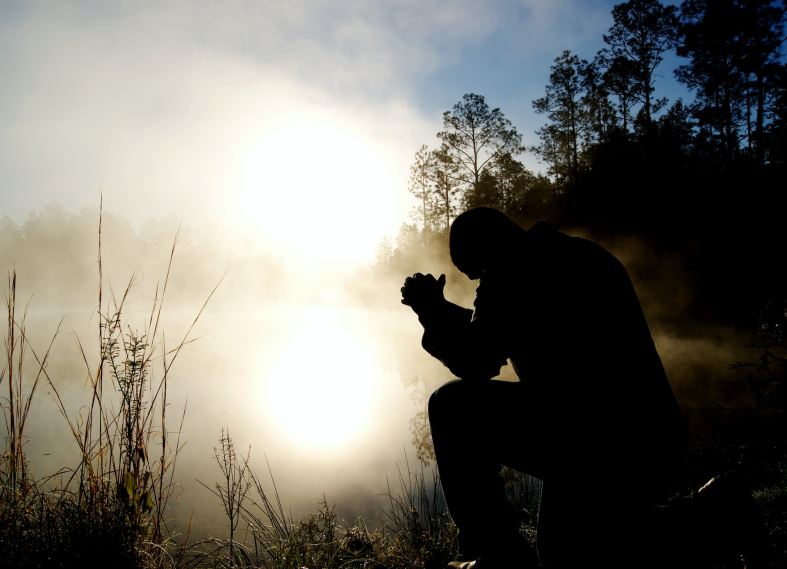
We can put ourselves in the place of the “someone in the crowd,” who wants something, and brings it to Jesus.  Unlike him, we don’t meet Jesus physically on the street, but we come to Him in prayer all the time.  We want something and we pray about it.  When we pray, we often we want to get a particular answer, hopefully giving us what we want.

In the case of “someone” in the Luke 12 story, he wanted part of the family inheritance.  In our case, we could want any number of things like financial gain, an end to a societal problem, better governance from our leaders, success for our children or others, a safe business trip or vacation, etc.  God wants us to pray to Him about all things, and we do.  “Humble yourselves, therefore, under the mighty hand of God so that at the proper time he may exalt you, casting all your anxieties on him, because he cares for you.”  (1 Peter 5:6-7)

However, we often aren’t ready to listen to a different answer than the one we want.  In the story, Jesus didn’t respond to “someone” with a direct answer, but with an answer that challenged the attitude behind the question.  “You shall not covet[1] is one of the Ten Commandments after all, and Jesus was letting “someone” know the condition of his heart was more important than the condition of his bank account.

God can respond to our prayers in the same way.  Instead of solving what we think is the problem, He may try to reveal to us a deeper problem we need to deal with.  But if we’re focused on the answer we want, we might miss the point He wants to make.  To God, our sanctification is more important than our gratification but often get that backwards.

When we pray for financial gain, God may respond by challenging our priorities, our diligence, our spending habits, etc.  In the Luke story, Jesus confronted the man’s covetousness.

When we pray for an end to societal problems, God may respond by telling us to care for a single mother[2], or support a homeless ministry, or volunteer at a food bank.

When we pray for better governance from our leaders, God may respond by telling us to control what we can control, by reminding us of His sovereignty, or by giving us practical means to work on the problems we want the politicians to solve, but on a smaller scale.

And so on.  Sometimes we do get what we ask for in prayer, but sometimes God will use prayer to do what He promises to do: make us more like Jesus.  Again, our sanctification is more important than our gratification, but sometimes we miss the point because we’re focused on our needs.

It’s ok to bring all of our needs and concerns to God in prayer, and sometimes we get what we want. However, don’t be surprised if He responds in surprising ways, but how?  He can speak to us any way He chooses, but in my experience, He usually points things out in His word, through our circumstances, and through other believers.

Listen and be open to His answers.  No matter what they might be.

“The majority of us begin with the bigger problems outside and forget the one inside.  A man has to learn ‘the plague of his own heart’ before his own problems can be solved” – Oswald Chambers

“The heart of every problem is the problem in the heart.” – Warren Wiersbe


[1] Exodus 20:17; Deuteronomy 5:21
[2] James 1:27

Going On to Maturity

The New Testament book of Hebrews is one of my favorite books of the Bible, laying out many truths about Jesus and their connections to Old Testament practices and images.  But the author doesn’t tell us about these things to satisfy our curiosity, but to help us grow closer to God.  To grow more mature in our faith.  Near the middle of the book, in Hebrews 6:1, the author wrote:

Therefore let us leave the elementary doctrine of Christ and go on to maturity, not laying again a foundation of repentance from dead works and of faith toward God

The writer is saying here that there is more to Christian maturity than “repentance from dead works and of faith toward God,” but that these things are the foundation of maturity.  As this verse begins with a “therefore,” we should ask what that word is there for.  At the end of Hebrews 5, the author had written about his audience needing to be taught “basic principles,” which he referred to as “milk.[1]  These believers need to move on to the “solid food” of mature believers, “those who have their powers of discernment trained by constant practice to distinguish good from evil.”[2]

But this does not mean we can abandon the “basic principles” of the Christian faith and leave them behind.  John Calvin wrote that, “in building a house we must never leave the foundation; and yet to be always engaged in laying it, would be ridiculous. For as the foundation is laid for the sake of what is built on it, he who is occupied in laying it and proceeds not to the superstruction, wearies himself with foolish and useless labor.”

It does mean that maturity takes “constant practice,” which takes time and commitment.  Time we could spend rebuilding the foundation again but instead should be spending training ourselves to “distinguish good from evil.” Sometimes we put too much effort into knowing about God, rather than into getting to know Him personally, in the relationship He intended.  Knowing God includes loving what He loves and hating what He hates, which doesn’t happen overnight, and doesn’t happen at all if we don’t focus on it appropriately.

I haven’t nearly fully developed my relationship with God.  I have a long way to go, and always will, but Christian sanctification works itself out in lifelong growth and it requires us to train our discernment over time.  A long time.

Therefore let us leave the elementary doctrine of Christ and go on to maturity

We’ll get there someday.  He guarantees that someday we will be fully mature!


[1] Hebrews 5:12
[2] Hebrews 5:14

God Knows Where the Grass is Greenest

The Old Testament book of Numbers has a story about Balak, the king of Moab.  Scared of Israel after seeing their military success, he was desperate to find a way to avoid defeat himself.  Balak sought out Balaam, known as a prophet who spoke oracles, to curse Israel for him. After repeatedly paying Balaam and making many sacrifices, Balaam refused to curse Israel because God told him to bless Israel, not curse them.  Balak would not give up, and before a third try, “Balak said to Balaam, ‘Come now, I will take you to another place. Perhaps it will please God that you may curse them for me from there.’” (Numbers 23:27)

Where did Balak get the idea that changing location would get God on his side?  That changing location would change God’s mind or bring God’s blessing to Balak (in the form of a curse on Israel)?  Doesn’t it seem naïve?  God’s character doesn’t change with location, or any other circumstances.

However, how often do we think a change in circumstances will bring God’s blessing?  How often do we pray that God change our situation because we think the grass is greener somewhere else?  Maybe if I lived in a different place, God would bless me.  Maybe if I got a better job, would it be a blessing?  Maybe if I went to a different church?  Maybe if I was in a different relationship?   Maybe if God would put us where we want to be, that He will bless us then?  Are we saying “come with us God to another place, and perhaps it will please You to bless us there” in another way?

Warren Wiersbe wrote that “We are prone to think that a change in circumstances is always the answer to a problem. But the problem is usually within us and not around us. The heart of every problem is the problem in the heart.”[1]

God calls each of us for specific reasons, and the circumstances may be part of the reason.  Referencing whether it is better to be married or single, circumcised or uncircumcised, slave or free, the apostle Paul wrote in 1 Corinthians 7:24, “So, brothers, in whatever condition each was called, there let him remain with God.”  In other words, God wants to bless you in, or even through, your present circumstances.  He may change them, but He may not.

In God’s plan, the grass is usually greenest right where we already are. If we can faithfully be the blessing needed in our circumstances, God will be faithful in His time and place.  He will bless His people, only sometimes with better circumstances, but always with spiritual fruit.

God always says: “Come now, I will be with you where you are. It pleases me to bless you in all situations and circumstances.”

The grass is greenest where He is.


[1] Wiersbe, Warren.  Be Wise (1 Corinthians) (1982).

God Knows Where the Grass is Greenest

The Old Testament book of Numbers has a story about Balak, the king of Moab.  Scared of Israel after seeing their military success, he was desperate to find a way to avoid defeat himself.  Balak sought out Balaam, known as a prophet who spoke oracles, to curse Israel for him. After repeatedly paying Balaam and making many sacrifices, Balaam refused to curse Israel because God told him to bless Israel, not curse them.  Balak would not give up, and before a third try, “Balak said to Balaam, ‘Come now, I will take you to another place. Perhaps it will please God that you may curse them for me from there.’” (Numbers 23:27)

Where did Balak get the idea that changing location would get God on his side?  That changing location would change God’s mind or bring God’s blessing to Balak (in the form of a curse on Israel)?  Doesn’t it seem naïve?  God’s character doesn’t change with location, or any other circumstances.

However, how often do we think a change in circumstances will bring God’s blessing?  How often do we pray that God change our situation because we think the grass is greener somewhere else?  Maybe if I lived in a different place, God would bless me.  Maybe if I got a better job, would it be a blessing?  Maybe if I went to a different church?  Maybe if I was in a different relationship?   Maybe if God would put us where we want to be, that He will bless us then?  Are we saying “come with us God to another place, and perhaps it will please You to bless us there” in another way?

Warren Wiersbe wrote that “We are prone to think that a change in circumstances is always the answer to a problem. But the problem is usually within us and not around us. The heart of every problem is the problem in the heart.”[1]

God calls each of us for specific reasons, and the circumstances may be part of the reason.  Referencing whether it is better to be married or single, circumcised or uncircumcised, slave or free, the apostle Paul wrote in 1 Corinthians 7:24, “So, brothers, in whatever condition each was called, there let him remain with God.”  In other words, God wants to bless you in, or even through, your present circumstances.  He may change them, but He may not.

In God’s plan, the grass is usually greenest right where we already are. If we can faithfully be the blessing needed in our circumstances, God will be faithful in His time and place.  He will bless His people, only sometimes with better circumstances, but always with spiritual fruit.

God always says: “Come now, I will be with you where you are. It pleases me to bless you in all situations and circumstances.”

The grass is greenest where He is.


[1] Wiersbe, Warren.  Be Wise (1 Corinthians) (1982).