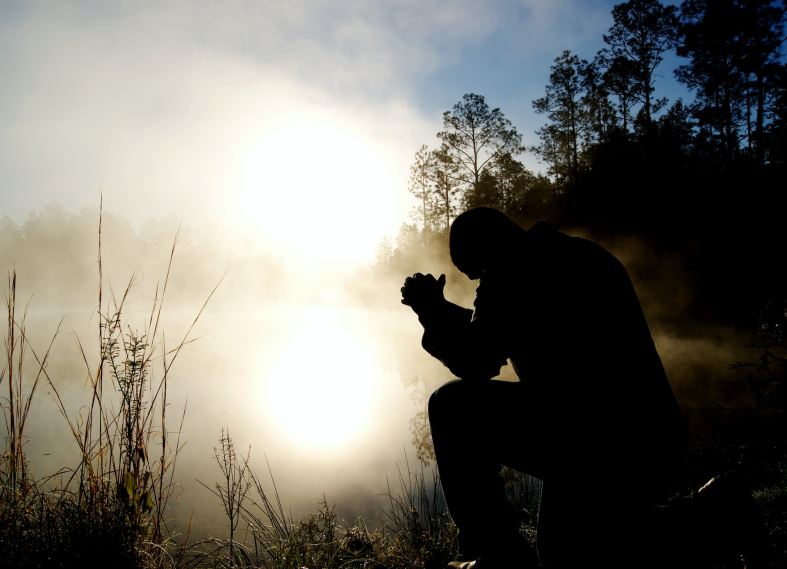
The Way of Escape

Reliable knowledge of good and evil is hard to come by, and the wisdom to follow it even harder.  A well-known and oft-quoted Proverb is 1:7, which says:

The fear of the LORD is the beginning of knowledge;
            fools despise wisdom and instruction.

This Proverb tells us that we only gain useful knowledge, wisdom and instruction when we have an attitude of reverent respect for God, and that we are fools if we do otherwise.  Fear of the Lord should be the rudder that guides us through the waves and storms that buffet us in this world.  Every decision we make should have as its foundation: does this honor God?  No other foundation is good enough for our lives to rest upon.

What’s left unsaid here in Proverbs is that we can’t expect this to come easy.  We are constantly tempted to not fear the Lord in our minute-by-minute, hour-by-hour, and day-by-day decisions.  It’s hard, and not just because we aren’t perfect.

Photo by Nathan Dumlao on Unsplash

In the account of the serpent’s confrontation with Eve in the garden in Genesis 3, the serpent’s whole objective was to get Eve to make one decision that wasn’t based on fear of the Lord.  “He said to the woman, “Did God actually say, ‘You shall not eat of any tree in the garden’?”[1]  “The serpent said to the woman, ‘You will not surely die.’[2]  Eventually he wore her down and she ate from the tree God told her not to eat from, all because her reverence for God had been worn down by constant criticism of God by the serpent.  He wanted her to decide for any reason other than the fear of the Lord, to become a fool, and thus bring down humanity.

When we make decisions, are we always being guided by the fear of the Lord, or do we sometimes think “He didn’t really mean that”?  If you’re like me, you find yourself constantly confronted by influences that oppose God.  Are we foolish when we follow these influences?  Yes.  Do we do it anyway?  Yes.  Could there be a hostile spiritual influence pulling us in that direction?  Sure, but it could also just be our own broken wills, prone to go our own way.

However, in 1 Corinthians 10:13, Paul assures us that “No temptation has overtaken you that is not common to man. God is faithful, and he will not let you be tempted beyond your ability, but with the temptation he will also provide the way of escape, that you may be able to endure it.”  And if we fear the Lord, we will believe it.

If we fear the Lord, when we’re tempted, we will know that “he will also provide the way of escape.”  We need to look for it and pray for it until we find it.  When we do, God will remain in the driving seat of our decisions and knowledge and wisdom will be ours.  He can overcome any of our temptations if we let Him and we fear Him.

Let the fear of the Lord be your guide.  There is always a “way of escape.


[1] Genesis 3:1b
[2] Genesis 3:4

Is Money the Root of All Evil?

Everyone has probably heard the phrase “money is the root of all evil” or some variation of it.  The phrase is usually directed at someone who has a lot of money by someone who doesn’t, with the implication being that the rich person is evil in some way, or many ways.  It’s a phrase that might make the ones with less money feel better about themselves.  At least they’re not “evil.”

However, while the phrase actually comes from the Bible (sort of), it isn’t biblical at all.  The source of the phrase is 1 Timothy 6:10 but notice some important differences in the wording in the ESV translation (the NIV, NKJV, NASB, and other translations are very similar):

For the love of money is a root of all kinds of evils. It is through this craving that some have wandered away from the faith and pierced themselves with many pangs.”

The first thing to note is that in 1 Timothy, it’s “love of money” that is the problem, not just “money.”  This means that it’s possible to have a lot of money and for that not to be a moral problem.  As Voddie Baucham said, “Let me clear up something…God is not against you having things.  He’s against things having you.”  There are a lot of very generous rich people and there are a lot of good things that wouldn’t get done, in the church or otherwise, without the monetary contributions of these people.  Those who have money, but don’t love it (money doesn’t have them) often put large amounts of what they have to work for God’s kingdom in many different ways.  Having money doesn’t make them evil.  The root of all evil is therefore something else other than money.

Also notice 1 Timothy says, “a root,” not “the root.”  One means evil has one root, and the other means that there is more than one root.  The wording from 1 Timothy tells us that “all kinds of evil” can grow from things other than the “love of money.”  Money and the love of it are not required to make someone evil.  Many things can be the “root” or source of evil in people, including in some cases the lack of money, ironically.

Lastly, 1 Timothy says, “all kinds of evils” not “all evil.”  So, the “love of money” isn’t the source of all evil, but it can cause many different types of evil.  Greed, covetousness, and haughtiness are some that come to mind.  But also consider that the dislike of people who have money, whether they love it or not, can be the source of jealousy, envy, covetousness (which can come from having or not having money) and other “kinds of evils.”

So, what’s wrong with the saying that “money is the root of all evil”?  It can have the effect of elevating greed and related sins to a higher (worse) level of sin than other sins.  It can become a weapon in the hands of economic and political activists.  But the 1 Timothy version doesn’t do either of these things.  Instead of creating an “us vs. them” situation, with the poor on one side and the rich on the other, the Biblical text shows us that sin comes in many forms, has many causes, and that nobody is immune from sin.

Sin itself is the ultimate problem of humanity, not “love of money,” although that is one kind of sin.  If “money is the root of all evil” then those who don’t love money wouldn’t need Jesus.  But those who hate money are sinners too.  Poor people are sinners too.  They just have different faults.  In the eyes of a holy God, no fault can be tolerated, because His purpose is to have a perfect humanity.  The solution to our economic and political problems is not to eliminate money or the rich, but the solution is that we need a way to remove all sin so we can be reconciled to God and have a path to a sinless life.  “Money is the root of all evil” may cry out for revolution, but “For the love of money is a root of all kinds of evils” cries out that Jesus is the only solution.

Jesus’ sacrifice for our sins is the only thing that will satisfy the requirements of our holy God, bringing us into His family and providing a way that “love of money” and all other sins can be destroyed forever.

For the love of money is a root of all kinds of evils,” but “God so loved the world, that he gave his only Son, that whoever believes in him should not perish but have eternal life.”

What’s in Your Temple?

When describing His holiness, God provided pictures like the one in Isaiah 6:1 – “In the year that King Uzziah died I saw the Lord sitting upon a throne, high and lifted up; and the train of his robe filled the temple.”  Because “the train of his robe filled the temple,” there is no room in the temple for anything that isn’t holy.  Or in Revelation 15:8, which says: “and the sanctuary was filled with smoke from the glory of God and from his power, and no one could enter the sanctuary until the seven plagues of the seven angels were finished.”  Until God’s judgment was complete – both on the unrepentant and on the cross for His people – there would continue to be no room in the sanctuary for anyone but the Lord.

How do these pictures apply to us?  Paul asks in 1 Corinthians 3:16-17 – “Do you not know that you are God’s temple and that God’s Spirit dwells in you?  If anyone destroys God’s temple, God will destroy him. For God’s temple is holy, and you are that temple.”  Therefore, we ask ourselves: does the train of the Lord’s robe fill our temples?

Photo by Annie Spratt on Unsplash

A transformative moment came in my Christian life when I understood sin in contrast to holiness, rather than as a list of “don’ts.”  It’s possible (perhaps even easy) to convince ourselves we are not sinners in need of grace by defining sin as things we don’t do.  However, much of the time, the word “sin” in the New Testament is a translation of the Greek word hamartia, which means “to miss the mark.”[1]  The word has athletic connotations, such as if an archer couldn’t hit the bullseye, they wouldn’t win the competition and the prize.  As we all know, archers are supposed to be accurate, and if they aren’t, they’ve “missed the mark.”

Therefore, when Paul writes in Romans 3:23 “for all have sinned and fall short of the glory of God,” he is not saying everybody failed to follow a list of dos and don’ts, but that we have not fully lived the life God intended us to live.  Romans 3:23 declares that while we wouldn’t set up idols in our church building, all of us tolerate some idols in our soul, which is where the Holy Spirit of God chooses to dwell.  The train of His robe does not fill our inner temple, and we too often trod on it with dirty feet.  We’ve “missed the mark” any time there’s other stuff in our temple, directing our thoughts and actions.  However, by the sacrifice of Jesus Christ we have both a hope of living with God and a future where His metaphorical robe does fill us.

In Paradise, God’s people will – individually and collectively – “hit the mark” perfectly for eternity.  His perfect temple will be completed in Paradise, with the living stones of all His people.

Paul returns to holiness again in 2 Corinthians 6:16 to 7:1, quoting several Old Testament passages, since holiness of His people has been the plan from the beginning –

What agreement has the temple of God with idols? For we are the temple of the living God; as God said,
             ‘I will make my dwelling among them and walk among them,
                        and I will be their God,
                        and they shall be my people.
            Therefore go out from their midst,
                        and be separate from them, says the Lord,
            and touch no unclean thing;
                        then I will welcome you,
            and I will be a father to you,
                        and you shall be sons and daughters to me,
            says the Lord Almighty.’

Since we have these promises, beloved, let us cleanse ourselves from every defilement of body and spirit, bringing holiness to completion in the fear of God.

Amen


[1] Greek Strong’s Dictionary

Learning Godly Fear

Does being forgiven by God cause us to fear Him less, or to fear Him more?  Perhaps it’s both.

Psalm 130:4 tells us this about God: “But with you there is forgiveness, that you may be feared.”  To one way of thinking, this seems backwards: why does knowing that God has forgiven us make us fear Him more?  Shouldn’t we fear Him less when forgiven?  It depends on what we mean by fear.

For me, getting Psalm 130:4 to make sense with the order of forgiveness and fear required a re-thinking of repentance.  My conclusion was: the one who has not been forgiven has not repented, and the reason they did not repent was that they did not fear God.  They did not understand Him properly.  They might be afraid of God, but that’s not the kind of fear referred to in Psalm 130.

In contrast, the one who has been forgiven has repented, and they repented because they understood it was the best thing for them to do, out of a fearful respect for God.  A proper understanding of God’s character makes us turn to Him with our guilt, rather than run away from Him.  We should not be afraid of God, where we are motivated to be passive – avoiding mistakes that would anger the one we fear.  We should fear God in that we revere Him and respect His authority, and therefore actively seek to please Him.

A lot goes into repentance.  When we pray and ask for forgiveness, it’s often a simple prayer made with the proverbial faith of a child, but there are a lot of assumptions we make when we say that prayer.  Every prayer of repentance directly or indirectly acknowledges some or all of these things:

1) God as the source of the law, the ultimate arbiter of right and wrong
2) Him as the righteous judge who is personally offended by our sin
3) His omniscience, knowing we cannot hide our sin
4) His uniqueness, as there is no other God to turn to
5) His steadfast love for us, knowing He bore the cost of our sin, therefore enabling us to approach Him
6) His compassion for us, since He lived as a man
7) His power and willingness to heal us of sin
8) His consistency of character: that He is not arbitrary

If we don’t implicitly or explicitly believe these things, why would we repent and ask forgiveness from God?  Why would we expect to get it?  Exploring that set of statements could fill multiple volumes of theology books, but we don’t need that knowledge.  In His grace, He honors our simple, heartfelt confessions.  He paid the price for all our inadequacies – even when we don’t fully understand our own prayers or who we’re praying to.  The Spirit pleads with the Father on our behalf[1].  Mercifully, our forgiveness is based on His faithfulness to us, not on our detailed theological knowledge.  1 John 1:9 tells us: “If we confess our sins, he is faithful and just to forgive us our sins and to cleanse us from all unrighteousness.”

Even our faith is imperfect, but His faithfulness bridges the gap between our childlike faith and His omniscience.  He knows all our doubts and all their answers.  We come as we are, but with fearful respect, and are forgiven.

Only through acceptance of the cross, where Christ’s atoning blood was shed for us, can God in His Holiness commune with us.  Only through forgiveness will the Holy Spirit come and live in us.  Only by tasting of His goodness do we really know what He is like, not before.  And if we never repent, we don’t learn what it tastes like, we only know what you’ve been told about God, and we might not have been told the truth.

Psalm 130:4 shows us that genuine repentance leads to forgiveness and gives us a better appreciation of who God is.  As we experience Him more, we live Psalm 34:8 for ourselves:

“Oh, taste and see that the LORD is good!
                        Blessed is the man who takes refuge in him!”


[1] Romans 8:26-27

When Memory Fades

As I get older, I realize more and more the value of memory even as it gets harder to remember things.  Over time, we have more stored in our memory from our past, including many treasured moments, but also thoughts of troubled times.  But it can also be harder to remember at all.  It’s like there’s no more room!  In my teens, I could often read a Bible verse only once and recite it accurately from memory citing chapter and verse.  Now, I too often feel like the author of Hebrews, who wrote in Hebrews 4:4-5:

For he has somewhere spoken of the seventh day in this way: ‘And God rested on the seventh day from all his works.’  And again in this passage he said, ‘They shall not enter my rest.’

These verses have to do with the rest God provides His people, but did you also notice that the writer didn’t remember where his own Old Testament quotations came from?  They came from “somewhere” and “in this passage.”  This means that we can all benefit from Scripture even with an imperfect memory, not remembering chapter and verse.  We shouldn’t be discouraged by our memory but should instead work to apply what we know as the writer of Hebrews did.

Also, I’ve heard people (even younger people) say things like this: “when I study the Bible, I don’t remember what I read, so why bother reading it?”  I once heard an illustration about this.  Imagine pouring water into a wicker basket.  The water passes through it, right?  So what’s gained by pouring water into something that doesn’t hold it?  However, think about what the water does to the basket.  It’s cleaner after it’s been drenched with water!  Likewise, even if we don’t retain all, or even most, of what we learn in our Bible study, at least our souls are cleaner as a result.  God doesn’t need us to remember everything in order to do His work in us.

So, even if we only know God’s word from “somewhere,” at least we know it and at least it can help us follow Him more faithfully. Don’t be discouraged if your memory isn’t what your memory tells you that it once was.  And don’t be discouraged if you can’t recall everything you study, because God says “So shall my word be that goes out from my mouth; it shall not return to me empty, but it shall accomplish that which I purpose, and shall succeed in the thing for which I sent it.” (Isaiah 55:11)

God doesn’t expect us to be perfect.  He’s already accomplished that for us!