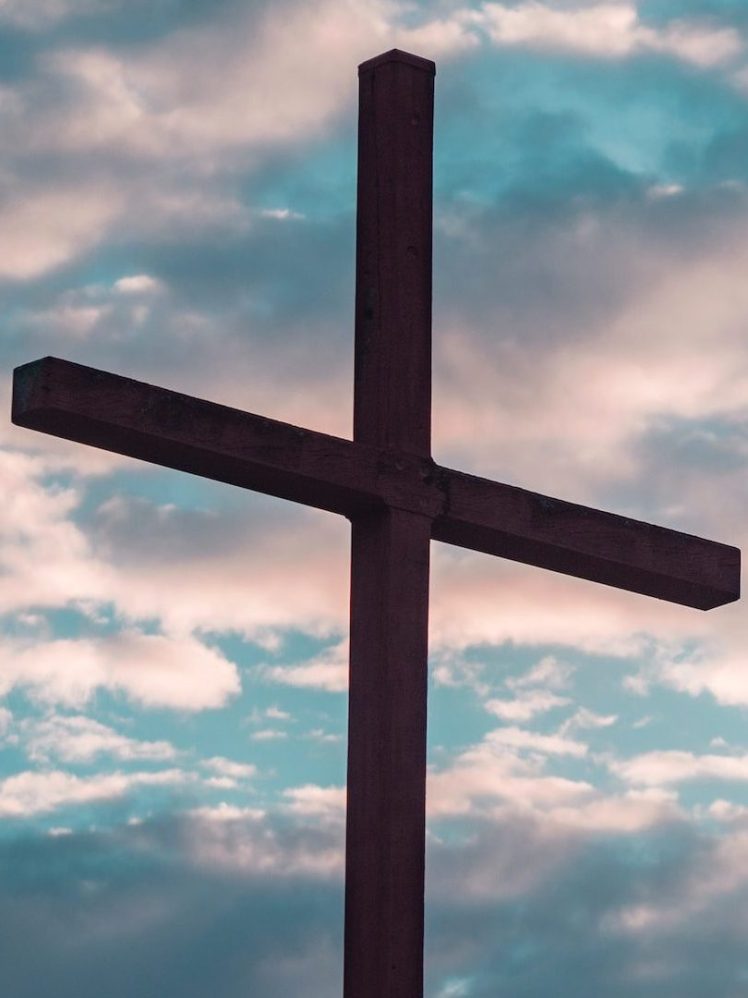
The Last Enemy is Death

In life there are many difficult questions, and two of the hardest are also common objections to Christianity: 1) Why doesn’t God do anything about the evil in this world? and 2) Why do bad things happen to good people?

However, the Bible does not leave Christians without hope in the face of these questions.

First, part of what God is doing about the evil in this world is the fact that everyone dies.  The Bible teaches that every bad thing in this world is a result of sin – people deviating from God’s purposes – and that because of that sin the world is cursed[1].  Not only do people hurt each other, but the creation itself, including human nature, is not in its ideal state.

Death was not originally part of this world, but came in to the world as a result of sin and is a constant reminder of it.  In Genesis chapter 5, there is a genealogy from Adam to Noah.  The phrase “and he died” is repeated over and over again and is a reminder that this world is not perfect.  God created a consequence for the sin of mankind: death.  While the Bible doesn’t explain why there was a snake in the garden or why Adam and Eve sinned, it does describe what God is doing about it.  When we ask why bad things happen, we acknowledge that bad things exist, that they shouldn’t exist, and that they can happen to anyone.  God isn’t doing nothing about the evil in the world – we all die and that is part of the judgment.

So, the two objections to Christianity (Why doesn’t God do anything about the evil in this world? and why do bad things happen to good people?) end up being contradictory because part of what God does about the evil in this world is that bad things (death) happen to everyone.

However, the Bible teaches that there are two deaths: a physical death and a spiritual death.  In the first, our soul is separated from our body and our body dies.  In the second, our soul is separated from God eternally and our soul dies but exists forever away from God’s presence and blessings.  A second thing that God is doing about the evil in this world is that the first death is universal, but the second death is not.

Fortunately, judgement and death aren’t the only things God is doing about sin.  What does this mean?  Note the second half of God’s curse on the serpent from Genesis 3:15 –

I will put enmity between you and the woman,
            and between your offspring and her offspring;
he shall bruise your head,
            and you shall bruise his heel.

Who is being bruised here?  In the last phrase, Satan is injuring Christ through the crucifixion, but it’s described as a wound to the heel because it is not fatal.  Jesus was raised to life eternal.  On the other hand, Christ shall bruise the head of Satan – a fatal blow that he will never recover from.  This was determined from the beginning.

While judgement comes to all in physical death as a result of sin, through Christ there is a way out from spiritual, eternal death.  Jesus has paid the price for our sin and has conquered eternal, spiritual death as a result.

The last enemy to be destroyed is death.” – 1 Corinthians 15:26

Praise God!


[1] See Genesis 3:19 and 3:22

The King of Glory Shall Come In

Tradition suggests that Psalm 24 was used at the start of temple services in ancient Jerusalem, possibly commemorating the Ark of the Covenant moving from Obed-edom’s house to Jerusalem, an event recorded in 2 Samuel 6:10-12:

So David was not willing to take the ark of the LORD into the city of David. But David took it aside to the house of Obed-edom the Gittite.  And the ark of the LORD remained in the house of Obed-edom the Gittite three months, and the LORD blessed Obed-edom and all his household.  And it was told King David, “The LORD has blessed the household of Obed-edom and all that belongs to him, because of the ark of God.” So David went and brought up the ark of God from the house of Obed-edom to the city of David with rejoicing.

This was the second attempt to move the ark, the first attempt having ended in disaster, in 1 Samuel 6:6-8:

And when they came to the threshing floor of Nacon, Uzzah put out his hand to the ark of God and took hold of it, for the oxen stumbled.  And the anger of the LORD was kindled against Uzzah, and God struck him down there because of his error, and he died there beside the ark of God.  And David was angry because the LORD had broken out against Uzzah. And that place is called Perez-uzzah, to this day.”

God gave detailed instructions for moving the ark in the book of Numbers 4:9-20.  It was supposed to be carried on the shoulders of Levites descended from Kohath.  Instead, they moved the ark as the Philistines did (1 Sam 6).  The judgment of Uzzah reminded Israel that God is not to be taken lightly or for granted.

Today’s post is a flashback to the 1989 song by Christian rock band Petra, “The King of Glory Shall Come In,” which is based on Psalm 24.  When Psalm 24:3, referenced in the song’s verse, says “Who shall ascend the hill of the LORD? And who shall stand in his holy place?”  David, the author, is asking who is worthy to be in God’s presence.  However, the chorus of the song is my favorite part.  Some believe verses 7 to 10 of Psalm 24 were a call-and-response between the priests and the people, who cried out for God to be among them.  Knowing they are unworthy; they still need and desire His presence among them.  The song imagines what that call-and-response might have been like, but in 80’s praise-rock style!

Call for the King of Glory to come into you today!  By the sacrifice of Jesus you can “stand in his holy place” with “clean hands and a pure heart.”

For just the lyrics, go here, but for the audio of the full song, click below:

A Psalm of God’s Strength and Power

The Bible software I use (Accordance) has the ability to highlight text, but so far I’ve only used it once, for Psalm 21.  In just 13 verses, David wrote “you” or “your” 25 times, referring to God as the source of his success and blessings, past, present, and future.  The short 13 verses of Psalm 21 provide a plethora of praises we can offer to confess that God is powerful, faithful and just.  Here is the entire Psalm, and I’ve bolded all the “you”s and “your”s, which I highlighted in Accordance:

“To the choirmaster. A Psalm of David.

O LORD, in your strength the king rejoices,
            and in your salvation how greatly he exults!
You have given him his heart’s desire
            and have not withheld the request of his lips. Selah
For you meet him with rich blessings;
            you set a crown of fine gold upon his head.
He asked life of you; you gave it to him,
            length of days forever and ever.
His glory is great through your salvation;
            splendor and majesty you bestow on him.
For you make him most blessed forever;
            you make him glad with the joy of your presence.
For the king trusts in the LORD,
            and through the steadfast love of the Most High he shall not be moved.

Your hand will find out all your enemies;
            your right hand will find out those who hate you.
You will make them as a blazing oven
            when you appear.
The LORD will swallow them up in his wrath,
            and fire will consume them.
You will destroy their descendants from the earth,
            and their offspring from among the children of man.
Though they plan evil against you,
            though they devise mischief, they will not succeed.
For you will put them to flight;
            you will aim at their faces with your bows.

Be exalted, O LORD, in your strength!
            We will sing and praise your power.”

What statements did you focus on while reading this?  Did you take the time to think about all 25 “you” statements (and the rest of the Psalm)?  Read it again.

The first section in this Psalm describes how our God is “faithful” in some ways, and the second describes “just.”  The first may come easier, with David giving God credit for all of his strength and success, but the middle section on justice may come across as harsh and harder to swallow.  However, it reminds us that only He knows for sure who His (and our) enemies are.  “Your hand will find out all your enemies.”  Only He determines the fates of others, including some who look like enemies now, but will come to faith in Him later.  With any enemy we can “wait upon the Lord”, as David often urges us, knowing God will either save them, or their plans will come to ruin by His design.

Yet, for those in Christ, “he is faithful and just to forgive us our sins and to cleanse us from all unrighteousness.”  Therefore, we echo David:

“Be exalted, O LORD, in your strength!
            We will sing and praise your power.”

Only God Has Tamed the Tongue

In many Psalms, the authors complain about the evils in the world and compare them with God and His perfect attributes.  Psalm 12 is one of these, and begins with David lamenting the ungodliness he sees in the world in the first verse:

Save, O LORD, for the godly one is gone;
            for the faithful have vanished from among the children of man.”

What is David so upset about?  James 3:7-8 tells us: “For every kind of beast and bird, of reptile and sea creature, can be tamed and has been tamed by mankind, but no human being can tame the tongue. It is a restless evil, full of deadly poison.”  David is upset by people’s inability to “tame the tongue,” which he describes in verses 2 through 4:

Everyone utters lies to his neighbor;
            with flattering lips and a double heart they speak.
May the LORD cut off all flattering lips,
            the tongue that makes great boasts,
those who say, ‘With our tongue we will prevail,
            our lips are with us; who is master over us?’”

David says the words of the unfaithful are lies, flattering, duplicitous, boasting, proud, and rebellious.  These adjectives also describe much of what we see and hear today, and if we’re honest, much of what we say.  How often do we say things just because they came to mind?  And if they are bad things, but we get away with it or get something we want from it, are we emboldened to continue?  After all, “no human being can tame the tongue.”

There is One, however, who has tamed the tongue.  David contrasts His words with ours in verses 6 and 7:

The words of the LORD are pure words,
            like silver refined in a furnace on the ground,
            purified seven times.
You, O LORD, will keep them;
            you will guard us from this generation forever.”

These words are pure, refined, purified, kept, and preserved.  The number seven in the Bible is often used to indicate perfection, so if His words are “purified seven times”, they are perfectly considered and constructed before they are delivered to us.  God keeps all His promises, and His word never expires.

Even when the world is full of people who speak ungodly words, the Lord’s words are pure and can be trusted. Because of this we know He will “guard us from this generation forever.”  Someday our words will be like His words.

Amen

Sodom and Gomorrah’s Selfishness

Fellow travelers,

The story of Sodom and Gomorrah from the book of Genesis is well-known even to many who aren’t religious.  Genesis 18 and 19 describe the two cities as extremely wicked, specifically mentioning homosexuality and rape.  The English term “sodomy” even comes from the name of the city of Sodom.  In the Genesis story, Lot and some of his family escape based on Abraham pleading with God for them, “Then the LORD rained on Sodom and Gomorrah sulfur and fire from the LORD out of heaven.  And he overthrew those cities, and all the valley, and all the inhabitants of the cities, and what grew on the ground.”  (Genesis 19:24-25).  This is the most well-known part of the story, and some explanations of why the cities were destroyed found on the internet and elsewhere say Genesis has the “full account” of the story.  Sodom and Gomorrah were destroyed for their excessive sexual sins.

However, there is more.

Ezekiel, a prophet to Jews captive in Babylon centuries after Sodom was destroyed, said: “Behold, this was the guilt of your sister Sodom: she and her daughters had pride, excess of food, and prosperous ease, but did not aid the poor and needy.  They were haughty and did an abomination before me. So I removed them, when I saw it.”  (Ezekiel 16:49-50). Ezekiel was describing the sins of Judah to explain why they had been sent into exile from their Promised Land and said they don’t compare favorably even to Sodom.  Surprisingly, Ezekiel doesn’t even mention any sexual sins in this description.  Not that these sins were irrelevant, but in Ezekiel’s view, Sodom would have been destroyed even without them.  Sodom’s other sins were also abominations.

What’s the point?  I can’t say it any better than the Life Application Study Bible, which notes on Ezekiel 16:49: “Sodom was destroyed because of its pride, laziness, gluttony, and unconcern for the poor and needy. It is easy to be selective in what we consider gross sin. If we do not commit such horrible sins as adultery, homosexuality, stealing, and murder, we may think we are living good enough lives.”

We can’t pick and choose which sins are more or less deserving of God’s judgement, because in His holiness and justice, He must and will judge all sin.  While “lifestyle” sins without repentance may be more dangerous to a church or congregation, even sins we may not consider extreme are dangerous as well.  Ezekiel’s point is that selfishness and a disregard for those in need should be repented of as much as any other sin.  Ezekiel wrote, “Behold, this was the guilt of your sister Sodom: she and her daughters had pride, excess of food, and prosperous ease, but did not aid the poor and needy.  They were haughty and did an abomination before me. So I removed them, when I saw it,” but he also wrote that Judah would be restored by a coming Messiah, the Christ.

That restoration comes through Christ’s sacrifice for all sins, and anyone can have salvation through faith, which drives us to confession and repentance.  As John wrote in 1 John 1:8-10, “If we say we have no sin, we deceive ourselves, and the truth is not in us.  If we confess our sins, he is faithful and just to forgive us our sins and to cleanse us from all unrighteousness.  If we say we have not sinned, we make him a liar, and his word is not in us.”

At the end of our journey, all of God’s people will be cleansed of all of their sins, not just the most noticeable ones, because “he is faithful.”  Not because any of us are less sinful than others.