God Loves His Unfaithful People

The story of the prophet Hosea can be a controversial subject.  In only the second verse of the book, we learn that: “When the LORD first spoke through Hosea, the LORD said to Hosea, ‘Go, take to yourself a wife of whoredom and have children of whoredom’” (Hosea 1:2a).

A common interpretation of the “wife of whoredom” is “prostitute,” but it doesn’t necessarily mean that.  However, it certainly means a wife who is not faithful to her husband.  An adulteress, as Homer’s wife Gomer is described in Hosea 3:1.  They have 3 children in the story, and the last 2 may have been illegitimate.

Is it scandalous, is it even believable, that God would command His own prophet Hosea to marry this way?  The God who demands that we be holy.  Could He ask one of His spokespeople to “become one flesh” with a woman like this?  What kind of lesson can we take from this?

It only really makes sense when you realize why God did it.  The full verse of Hosea 1:2 says, “When the LORD first spoke through Hosea, the LORD said to Hosea, ‘Go, take to yourself a wife of whoredom and have children of whoredom, for the land commits great whoredom by forsaking the LORD.’

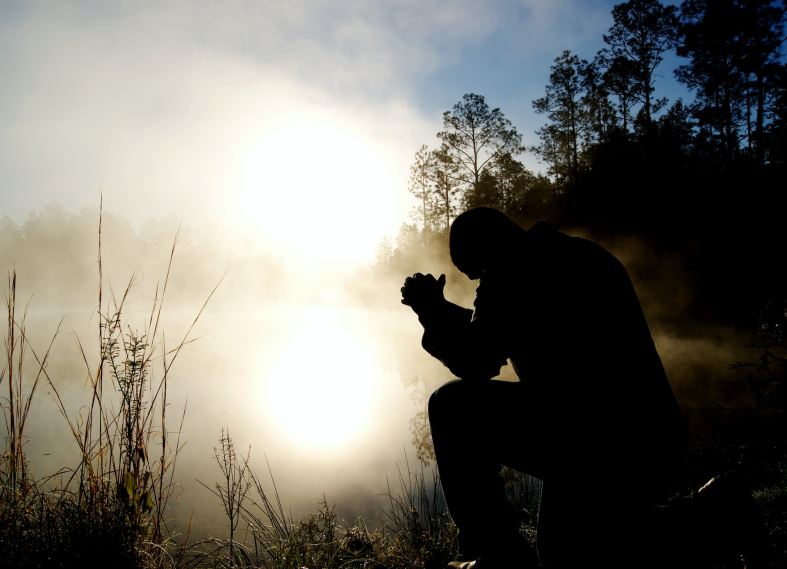
Photo by Worshae on Unsplash

Because of the word “for,” there’s a connection between the unfaithful wife and the people of the land: God’s people Israel.  It’s as if God commanded this marriage because Israel was unfaithful.  God had something to say about that.  While Hosea’s marriage was real, it was also a symbol meant to give a message: that, like Hosea marrying Gomer, God is willing to love unfaithful people.  After all, there is no other kind of person.  We all fit the description, yet He is willing to love us so much that the church is called the bride of Christ, like Gomer was the bride of Hosea.

While some think God’s command to Hosea is too scandalous to have really happened, it is no more scandalous than God choosing sinners to be His bride in Christ, which He did.  From the beginning of time God knew that His people would be unfaithful to Him, yet He designed and implemented a plan to bring those same people back into a right, intimate relationship with Him.  This plan meant taking on human flesh, being abused, and dying horribly for His people, but then being raised from the dead and taken back up into heaven.  This was the cost of restoring sinners to fellowship with their Maker who loves them.  And He thought it was worth it.

So, what is the lesson of God’s command to Hosea?  That there is no limit to who or how God can love.  Nobody deserves God’s love because all are unfaithful, but in spite of that, God loves His unfaithful people.  Why?  Because in His love He chooses to.

Praise God that He does!

Amen.

The Spirit and the Bride say, “Come.” And let the one who hears say, “Come.” And let the one who is thirsty come; let the one who desires take the water of life without price.” – Revelation 22:17

Insurrection Ironies

Jesus knew what He was getting into when, near the end of His earthly ministry, He determined to go to Jerusalem.  After being betrayed by one of His own disciples, arrested and turned over to the authorities, Jesus was tried up to six times as Jewish and Roman authorities passed Him back and forth.  There are a number of ironies that happen during these trials, but this post will focus on the comparison of Jesus and Barabbas.

One of the American Heritage Dictionary’s definitions for insurrection is “The act or an instance of open revolt against civil authority or a constituted government.”  This idea of insurrection is important in Jesus’ final trial before Pilate, the Roman governor of Judea and Samaria, who condemned Jesus to be crucified even though he saw no fault in Him.

An irony in this story is that there was a tradition whereby Pilate would release one prisoner as a way of doing the Jews a favor.  Pilate asked the crowd whether he should release Jesus or a man named Barabbas, and the crowd insisted on Barabbas.  Who is Barabbas?  He was an insurrectionist and murderer.  He had been involved in a plot started in Jerusalem to overthrow Roman rule.[1]  The irony is that the charge against Jesus according to the Jewish leaders was that He was “misleading our nation and forbidding us to give tribute to Caesar, and saying that he himself is Christ, a king.”[2]  Anyone in Caesar’s realm claiming to be king was revolting against Roman authority.  In other words, they were accusing Jesus of insurrection, while asking for the release of a man who had actually participated in an insurrection.  This is also strange because one of the reasons the Jewish leaders rejected Jesus as Messiah was that He wasn’t actually going to revolt against Rome.  They didn’t like that Jesus was not an insurrectionist.

Why did Pilate agree with the crowd about releasing Barabbas?  Pilate was a man under higher authorities in the Roman empire, and one way he could lose his position is if he didn’t effectively silence any opposition to Rome.  When the crowd grew more and more belligerent in their crying out for Barabbas to be released and for Jesus to be crucified, there was a risk of riots or even a larger uprising.  Therefore, to keep from attracting unwanted attention and criticism from his superiors, Pilate decided to let the crowd have its way.  Barabbas was released instead of Jesus because of what?  The threat of an insurrection by this crowd.

There’s even another layer to this when we consider who Jesus is and what the name “Barabbas” means.  Jesus is the only human ever who never participated in a revolt against the highest authority, His Father.  He, the Son of God the Father, was condemned to die in place of an actual insurrectionist, Barabbas, whose name means “son of father.”  Since everyone has a father, the meaning of the name Barabbas could apply to anyone.  So symbolically, Jesus died in place of someone whose name represents everyone, or all of us, so we could be sons of the Father. In summary, Jesus was killed in place of an actual insurrectionist because the Jewish leaders didn’t like that He wasn’t really an insurrectionist but accused Him of being one anyway.  This all happened in spite of the fact that Jesus is the only person ever to not commit insurrection against the highest authority, God the Father.


[1] Luke 23:19
[2] Luke 23:2

Barbs in Our Eyes

As Israel was preparing to enter the Promised Land of Canaan after wandering in the wilderness, God gave them many instructions through Moses about how they were to live when they got there.  One of the instructions was to eliminate all of Canaan’s inhabitants.  Part of the warning not to ignore this comes in Numbers 33:55, which says:

But if you do not drive out the inhabitants of the land from before you, then those of them whom you let remain shall be as barbs in your eyes and thorns in your sides, and they shall trouble you in the land where you dwell.”

What this is communicating is the urgency of getting rid of anything that could influence us to sin, and this applies as much to us as to ancient Israel.  In Israel’s case, the nations they were to remove from Canaan were under God’s judgement for centuries of worship of false gods, which included practices like ritual prostitution and child sacrifice.  God knew that His people would be tempted by these foreign gods and practices unless all trace of them was eliminated.

For us, God also wants to protect us from false gods and harmful practices and habits, and the phrase “barbs in your eyes” is a picture of the urgency for us to get rid of anything that would tempt us.  Think about it: If I had a thorn in my eye, I would drop everything and not be able to do anything else until I got it out.  Until the thorn was gone, it would be my one and only priority.  In modern times, God doesn’t tell His people to attack other nations in judgement, but He does want His people to attack sin with the same zeal.

So when I read “But if you do not drive out the inhabitants of the land from before you, then those of them whom you let remain shall be as barbs in your eyes and thorns in your sides, and they shall trouble you in the land where you dwell” it leads me to ask the question:

Do we remove sources of sin from our lives as urgently as we would a barb in our eye?

Serving Other Gods

Foundational to God’s relationship with His people – His covenant – is the idea that He will be our God and we will be His people.  If we forsake all other “gods,” we will be blessed immeasurably by the true God, Yahweh.

However, in the time of the Old Testament prophet Jeremiah, right before the exile of Judah into Babylon, God’s people were not being faithful to Yahweh and were worse than prior generations in their rebellion.  So, Jeremiah says in chapter 16, verse 13 – “Therefore I will hurl you out of this land into a land that neither you nor your fathers have known, and there you shall serve other gods day and night, for I will show you no favor.”

This punishment has 2 parts: banishment from the Promised Land, and also “you shall serve other gods day and night.”  Have you ever thought that serving gods other than Yahweh is a punishment, or just that its bad or sinful?   It certainly isn’t the way the world sees it: many consider serving any god as punishment.  Others might have their own gods and would only consider serving other gods, including Yahweh, as punishment.  But here the Bible says that it is only punishment to follow false gods.

Why is this?  A good explanation comes from another prophet, Zechariah, in chapter 10, verse 2:

For the household gods utter nonsense,
            and the diviners see lies;
they tell false dreams
            and give empty consolation.
Therefore the people wander like sheep;
            they are afflicted for lack of a shepherd.”

Compared to a loving, omniscient, wise God, these other gods have no knowledge or wisdom and are not benevolent.  They cannot give us what we need to live and are not worthy of worship.  They cannot guide us like our Good Shepherd can.  Therefore, when we choose to follow anything other than Yahweh, are we punishing ourselves?

When Yahweh said “You shall have no other gods before me” in Exodus 20:3, He said it for our own benefit, and for His glory.

Amen.

Don’t Ignore Ebenezer Today

Reminders of God’s word can guide our daily lives, but only if we follow those reminders.  Earlier, I introduced the blog’s mascot, “Ebenezer, the ‘But God…’ Squirrel.”  Ebenezer is a reminder that however difficult or frustrating our situation, if we actively and intentionally inject God into the situation, He can and will show us the best way forward.  However, what if we try to say “But God” but take the wrong path anyway?  If we do, we are not alone.

Ebenezer, trying to get your attention.

A search of the exact words “but God” in the ESV Bible gives 43 results, and the first one is found in Genesis 3:3, which says “but God said, ‘You shall not eat of the fruit of the tree that is in the midst of the garden, neither shall you touch it, lest you die.’”  This verse occurs when the serpent in the garden questions God’s word that Adam and Eve were limited by God in what they should and shouldn’t do.  Eve, the speaker in the quote above, responds rightly that God had been specific about what not to do.  As most of my readers will know, even though Eve knew God’s word, the serpent was able to convince her to ignore it.

As they say in the financial industry, “past performance is no guarantee of future results,” but I will guarantee anyway that today and every day every one of us face temptation to do something God wants to protect us from.  I also am confident of the words “but God…” that “If you recall them daily and live by them, they will transform your life completely,” as I quoted earlier from James Montgomery Boice.  But we must live by them to be transformed by God, not just quote them.

Today, pray that we all would be distracted by God’s word as easily as we are sometimes distracted by a passing squirrel when we are tempted to ignore His voice in our souls.  And if God delivers you from temptation today, make a note, a perpetual “stone of help” that God’s word is good!


Keep an eye out for Ebenezer as an ongoing series here, covering the 43 direct “but God” references, but also others.