The Fog God Hath Wrought – History for August 30

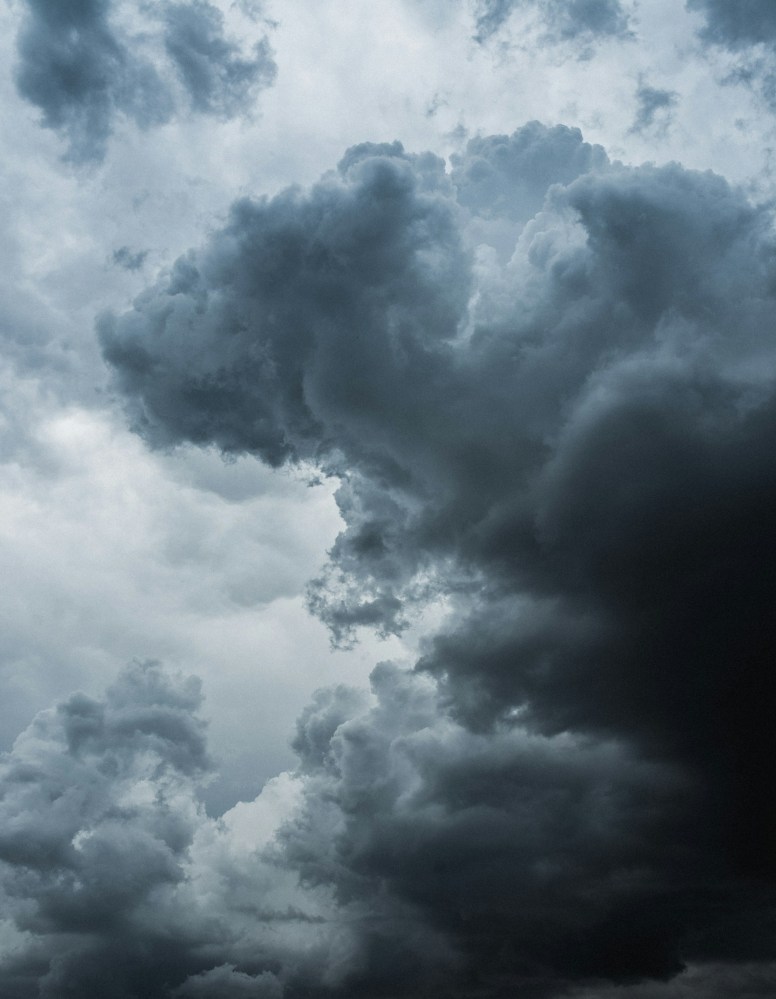
Photo by Carsten Stalljohann on Unsplash

On March 5th, 1776, a sudden change in the weather led to a decisive victory for the American Revolutionary Army and an end to the British occupation of Boston (see my post on that date here).  On this date, August 30, in 1776, weather intervened again.  The American Revolution could have ended in bitter loss, but for “a peculiar providential occurrence” – Pea-soup fog.  “So very dense was the atmosphere,” remembered Benjamin Tallmadge, “that I could scarcely discern a man at six yards’ distance.”  For the book “What Ifs? Of American History”, historian David McCullough wrote a chapter describing the significance of these events.[1]

After a humiliating loss in Brooklyn (including more than 1,000 surrendered troops), George Washington found himself and his 9,000-man army cornered at the end of a peninsula by a British force numbering over 30,000, plus a vast navy.  Left with few options and overwhelming odds, George Washington quickly ordered the army to evacuate Brooklyn overnight by anything they could find or make that would float, across the East River to Manhattan.  The escape depended entirely on the element of surprise and the cover of darkness.  The scale and boldness of the escape was enormous – one Connecticut man recalled crossing the river 11 times that night, ferrying troops and equipment across.  The evacuation continued well into the morning, when the British might easily have seen what was happening, close in, and utterly destroy Washington’s army.

However, the escape remained concealed under a different kind of darkness, because “a heavy fog settled in over the whole of Brooklyn, concealing everything no less than had the night”[2]  By the time the fog cleared, the escape was complete, and the British, expecting a victorious day, were instead astonished by another overnight, weather-assisted, disappearing act by the American army.

McCullough says that without the fog: “Washington and half the Continental Army would have been in the bag, captured, and the American Revolution all but finished. Without Washington there almost certainly would have been no revolution.”  Because of the fog, “the entire force, at least nine thousand troops, possibly more, plus baggage, provisions, horses, field guns, everything but five heavy cannon that were too deep in the mud to budge, had been transported over the river in a single night with a makeshift emergency armada assembled in a matter of hours. Not a life was lost.”

This was not the first time, nor would it be the last time, that weather – or Providence – would play a key role in the American struggle to break away from British rule.  Therefore, let every people and nation seek the LORD this day, who can wield nature itself in favor of – or against – the very nations.

“Are there any among the false gods of the nations that can bring rain?
Or can the heavens give showers?
Are you not he, O LORD our God?
We set our hope on you,
for you do all these things.” – Jeremiah 14:22


[1] From “What the Fog Wrought.” David McCullough and Robert Cowley.  What Ifs? Of American History (2003).  P. 52-54.
[2] McCullough, David.  1776 (2005).  P. 191.

Victory by Storm: History for March 5

During the American Revolutionary war, British troops besieged Boston leading to a long stand-off with troops led by George Washington.  Seeking a decisive move to gain advantage and end long weeks of inactivity that weighed on troop morale, George Washington ordered his men to fortify Dorchester Heights, a hill overlooking Boston, in the middle of the night.  These fortifications included artillery that had been painstakingly snuck down from Fort Ticonderoga over rough winter terrain by boat and sleds pulled by oxen.  These cannons had earlier been abandoned by the French.  The date of March 5th was intentionally chosen by Washington in part because it was the 6-year anniversary of the Boston Massacre, giving it symbolic meaning and motivating the troops.

On the morning of March 5th, the British awoke to find the Heights fortified, “with an expedition equal to that of the genie belonging to Aladdin’s wonderful lamp”, according to an unattributed letter to London newspapers.  Some, remembering losses sustained at Bunker Hill, urged retreat, but British General Howe was determined to drive the Americans off the Heights.  However, sudden, sustained storms including high winds and sleet, caused Howe to reconsider, leaving no option but to evacuate Boston.[1]

Because of this sudden change in weather, a long, deadly battle was avoided, and Boston was surrendered by the British without loss of life on either side.  This would not be the last time that weather – or Providence – would play a key role in the American struggle to break away from British rule.

Let every people and nation seek the LORD this day, who can wield nature itself in favor of – or against – the very nations.

“Are there any among the false gods of the nations that can bring rain?
            Or can the heavens give showers?
Are you not he, O LORD our God?
            We set our hope on you,
            for you do all these things.” – Jeremiah 14:22


[1] McCullough, David.  1776 (2005).  P. 90-97.

The Fog God Hath Wrought – History for August 30

Photo by Carsten Stalljohann on Unsplash

On March 5th, 1776, a sudden change in the weather led to a decisive victory for the American Revolutionary Army and an end to the British occupation of Boston (see my post on that date here).  On this date, August 30, in 1776, weather intervened again.  The American Revolution could have ended in bitter loss, but for “a peculiar providential occurrence” – Pea-soup fog.  “So very dense was the atmosphere,” remembered Benjamin Tallmadge, “that I could scarcely discern a man at six yards’ distance.”  For the book “What Ifs? Of American History”, historian David McCullough wrote a chapter describing the significance of these events.[1]

After a humiliating loss in Brooklyn (including more than 1,000 surrendered troops), George Washington found himself and his 9,000-man army cornered at the end of a peninsula by a British force numbering over 30,000, plus a vast navy.  Left with few options and overwhelming odds, George Washington quickly ordered the army to evacuate Brooklyn overnight by anything they could find or make that would float, across the East River to Manhattan.  The escape depended entirely on the element of surprise and the cover of darkness.  The scale and boldness of the escape was enormous – one Connecticut man recalled crossing the river 11 times that night, ferrying troops and equipment across.  The evacuation continued well into the morning, when the British might easily have seen what was happening, close in, and utterly destroy Washington’s army.

However, the escape remained concealed under a different kind of darkness, because “a heavy fog settled in over the whole of Brooklyn, concealing everything no less than had the night”[2]  By the time the fog cleared, the escape was complete, and the British, expecting a victorious day, were instead astonished by another overnight, weather-assisted, disappearing act by the American army.

McCullough says that without the fog: “Washington and half the Continental Army would have been in the bag, captured, and the American Revolution all but finished. Without Washington there almost certainly would have been no revolution.”  Because of the fog, “the entire force, at least nine thousand troops, possibly more, plus baggage, provisions, horses, field guns, everything but five heavy cannon that were too deep in the mud to budge, had been transported over the river in a single night with a makeshift emergency armada assembled in a matter of hours. Not a life was lost.”

This was not the first time, nor would it be the last time, that weather – or Providence – would play a key role in the American struggle to break away from British rule.  Therefore, let every people and nation seek the LORD this day, who can wield nature itself in favor of – or against – the very nations.

“Are there any among the false gods of the nations that can bring rain?
Or can the heavens give showers?
Are you not he, O LORD our God?
We set our hope on you,
for you do all these things.” – Jeremiah 14:22


[1] From “What the Fog Wrought.” David McCullough and Robert Cowley.  What Ifs? Of American History (2003).  P. 52-54.
[2] McCullough, David.  1776 (2005).  P. 191.

General Washington Crosses the Delaware – History for December 25-26

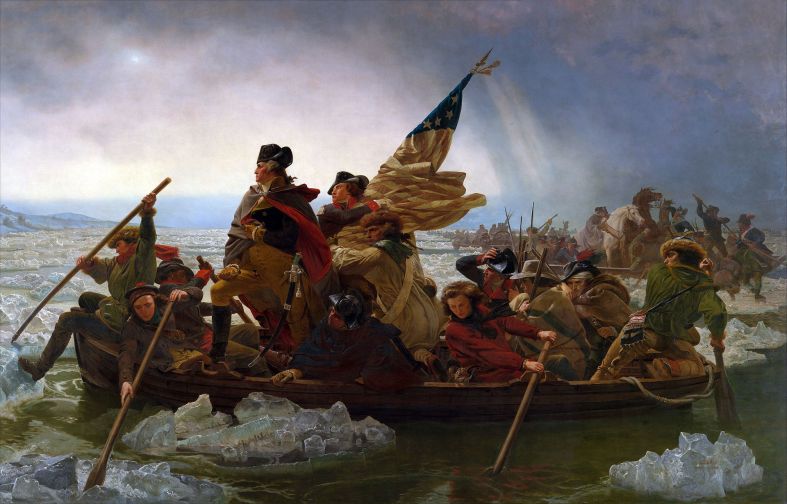
General George Washington leading the Continental Army on small boats across the Delaware River in the middle of the freezing night, surrounded by chunks of ice, is a popular story and image from early American history.  Depicted famously by German-American artist Emanuel Leutze in the painting nearby, this desperate effort was a significant turning point in the war.  The daring crossing was an act of desperation and made necessary (and possible) by a long string of events in 1776.

It had not been a good year for Washington’s army, suffering a string of defeats at Brooklyn, Kips Bay, and White Plains.  With little hope or troops left, Washington retreated with much of his army across the Delaware around November 7th, expecting the British to soon cross and strike Philadelphia, taking full advantage of their momentum and Washington’s weakness.  On November 16, 2,837 Americans surrendered at Fort Washington, after General Washington trusted Nathaniel Greene’s report that the fort could be defended.[1]  Another defeat at Fort Lee left Washington with perhaps 3,500 troops after losses and desertions.[2]  On top of this, many troops’ commitments were due to expire in early December, reminiscent of when the army had massive turnover during the siege of Boston in 1775.

Washington Crossing the Delaware by Emanuel Leutze. Public Domain.

Desperate to defend Philadelphia (where Congress had been held since the First Continental Congress in 1774), Washington expected General Lee to reinforce him soon with more troops.  However, Lee – effectively Washington’s second-in-command – had inexplicably spent the night of December 12th apart from his troops at a tavern.  Lee was ratted out and captured in a raid that took less than 15 minutes on the 13th.  Things looked bleak, but on the same day, Washington learned that Congress had relocated from Philadelphia to Baltimore for safety.

More importantly, continuing a string of possibly Providential, but certainly weather-assisted, events like a storm that allowed Washington to end the British siege of Boston with minimal bloodshed (see this post), and surprise fog that covered Washington’s overnight escape from Brooklyn (see this one), on December 13th, British General William Howe decided to cease military operations for the winter.[3]  Absent this decision, the war may have been over soon, with a British victory, but with this decision, we have the backdrop for the famous crossing of the Delaware.

Seeking opportunity for a decisive move, Washington kept his army as intact as he could manage until the time arrived.  With Christmas approaching and the British ceding the initiative, Washington now had about 6,000 troops and intelligence that about 2,000 Hessian mercenaries (the actual number was probably lower, around 1,500) were defending Trenton.  After the “Long Retreat,” as the string of defeats above came to be known, the Continental Army needed a victory, and got one.  Three separate groups were planned to cross the Delaware, but only Washington’s main force made it.  Regardless, Washington caught Hessian commander Johann Rall unprepared, in spite of warnings Rall received and disregarded.  After all, the sturdy British had closed down for the winter – why wouldn’t everyone do the same?

Just after 8am on December 26th, Washington’s force attacked, killing 21 Hessians, wounding 90, and capturing 900.  500 escaped over a bridge that was supposed to be defended by one of the two forces unable to make the crossing.[4]  Washington went on to another victory at Princeton on January 3, as the British were again caught by surprise, thinking the army was still in Trenton.[5]  The momentum had turned, with the central event being the daring crossing of the Delaware on Christmas night, in freezing weather surrounded by ice.


[1] McCullough, David.  1776  (2005).  P. 234.
[2] McCullough, David.  1776  (2005).  P. 249.
[3] McCullough, David.  1776  (2005).  P. 264-267.
[4] McCullough, David.  1776  (2005).  P. 270-281.
[5] McCullough, David.  1776  (2005).  P. 288.
Victory by Storm: History for March 5

During the American Revolutionary war, British troops besieged Boston leading to a long stand-off with troops led by George Washington.  Seeking a decisive move to gain advantage and end long weeks of inactivity that weighed on troop morale, George Washington ordered his men to fortify Dorchester Heights, a hill overlooking Boston, in the middle of the night.  These fortifications included artillery that had been painstakingly snuck down from Fort Ticonderoga over rough winter terrain by boat and sleds pulled by oxen.  These cannons had earlier been abandoned by the French.  The date of March 5th was intentionally chosen by Washington in part because it was the 6-year anniversary of the Boston Massacre, giving it symbolic meaning and motivating the troops.

On the morning of March 5th, the British awoke to find the Heights fortified, “with an expedition equal to that of the genie belonging to Aladdin’s wonderful lamp”, according to an unattributed letter to London newspapers.  Some, remembering losses sustained at Bunker Hill, urged retreat, but British General Howe was determined to drive the Americans off the Heights.  However, sudden, sustained storms including high winds and sleet, caused Howe to reconsider, leaving no option but to evacuate Boston.[1]

Because of this sudden change in weather, a long, deadly battle was avoided, and Boston was surrendered by the British without loss of life on either side.  This would not be the last time that weather – or Providence – would play a key role in the American struggle to break away from British rule.

Let every people and nation seek the LORD this day, who can wield nature itself in favor of – or against – the very nations.

“Are there any among the false gods of the nations that can bring rain?
            Or can the heavens give showers?
Are you not he, O LORD our God?
            We set our hope on you,
            for you do all these things.” – Jeremiah 14:22


[1] McCullough, David.  1776 (2005).  P. 90-97.