Be a Cloud of Witness – Psalms of Ascent #8

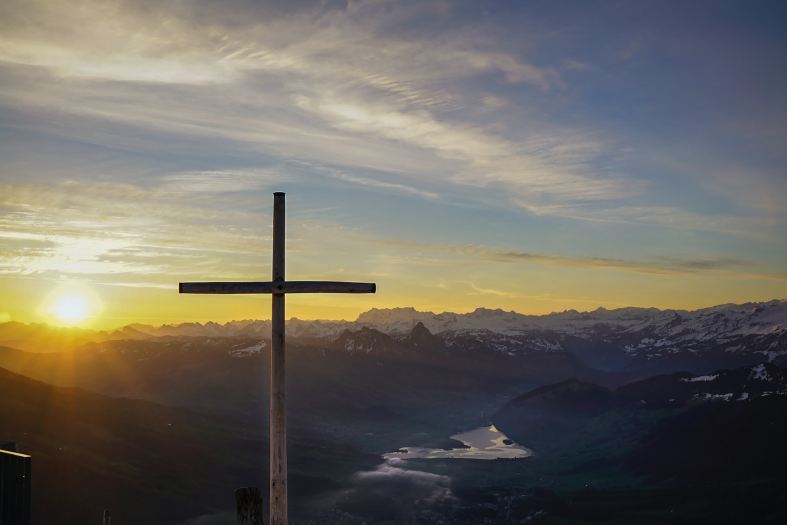
Photo by Aaron Burden on Unsplash

The last post on the Psalms of Ascent ended with God’s people dealing with “the scorn of those who are at ease” and “the contempt of the proud” at the end of Psalm 123.  That Psalm emphasized the Lordship of the Lord, who is “enthroned in the heavens.”  Those who follow the kingdoms of the world often have contempt and scorn for those who follow another way, who declare another Lord.  However, Psalm 124 explains that our Lord has not left us alone:

“A Song of Ascents. Of David.

If it had not been the LORD who was on our side—
            let Israel now say—
if it had not been the LORD who was on our side
            when people rose up against us,
then they would have swallowed us up alive,
            when their anger was kindled against us;
then the flood would have swept us away,
            the torrent would have gone over us;
then over us would have gone
            the raging waters.

Blessed be the LORD,
            who has not given us
            as prey to their teeth!
We have escaped like a bird
            from the snare of the fowlers;
the snare is broken,
            and we have escaped!

Our help is in the name of the LORD,
            who made heaven and earth.” (emphasis mine)

This Psalm speaks of times when we know only the Lord could have saved us, and we’ve learned that, “When all you have is God, He is enough.”  Sometimes life is hard because of circumstances that force us to depend on Him, and we learn to trust Him and Him alone.  The best way to know for ourselves that He is good is to act on our trust in Him, even when it’s hard or doesn’t make sense.  When God works wonders for us, we should keep a record of God’s power and faithfulness in your life, like the memorial stones Israel placed after crossing the Jordan.[1]

The other thing to notice about Psalm 124 is that it is entirely written with plural pronouns.  David, the author, is telling us that the works of God in our lives, especially when there seemed no other way forward, are to be shared with the community of believers.  “Let Israel now say” is something we do together.  The church must be a community of people who share God’s work in their lives, as a contrast to “the proud” and “those who are at ease.”  The One we serve – and the One they ridicule – wants us to testify to His salvation, and not any other hoped-for salvation.

John Calvin notes on the last verse (8): “The contrast between the help of God, and other resources in which the world vainly confides, as we have seen in Psalm 20:7, ‘Some trust in chariots, and some in horses, but we will remember the name of the Lord our God,’ is to be noticed, that the faithful, purged from all false confidence, may betake themselves exclusively to his succor, and depending upon it, may fearlessly despise whatever Satan and the world may plot against them.”

We know what God has done for us, but as a community we amplify the common witness of God being faithful.  Hebrews 11 chronicles the faith of God toward His people in the Bible, in order that we may have a “cloud of witnesses” encouraging us not to “grow weary or fainthearted” as we endure hostility from sinners for serving our Lord.[2]  Psalm 124 is part of a liturgy for ancient Israelites traveling to corporate worship in Jerusalem and can be applied to corporate worship today.  God calls all of His people to join the cloud of witnesses.

Therefore, when you attend worship this week, find a way to join someone else’s cloud of witness.  Tell them what God has done for you, that only He could do.  Then tell someone else.  If you need encouragement yourself, pray that God would meet your need.

Dear fellow travelers: Be a cloud of witness.  Show others your memorial stone.


[1] See Joshua 4
[2] See Hebrews 12:1-4

The Joy, Unity, and Peace to Come – Psalms of Ascent #6

Today we return to a series on the Psalms of Ascent (Psalms 120-134), used as a liturgy for ancient Israelites travelling to Jerusalem for annual worship festivals.  Today’s post focuses on Psalm 122, where David writes of the joy found in the destination – the house of the LORD in Jerusalem.  When first written, this house would be the tabernacle, since the temple was built under David’s son Solomon, but when the Psalm was organized into its present order, this house would be the temple.  After the pilgrims look up from their circumstances in Psalm 121 to find their help in the LORD, in Psalm 122 they reflect on what they will find at the end of their journey.

This short, 9-verse Psalm has three sections: an expectation of joy, a path to unity, and a prayer for peace.  I’ll summarize each as we go.

First, expectant joy.  Verses 1 and 2 of the Psalm say:
I was glad when they said to me,
            ‘Let us go to the house of the LORD!’
Our feet have been standing
            within your gates, O Jerusalem!

David was glad to attend corporate worship, and this joy would be an encouragement to other when worship required a lot of travel, large crowds, and disruption of daily routines.  In the following sections, David explains where his joy comes from: that worshipping with others reminds him of what only God can truly provide: Unity and Peace.  David doesn’t expect everyone arriving in Jerusalem to get along and have a perfect experience, but it doesn’t ruin his joy because God promised these things to those who worship Him.  While perfect is unattainable in this imperfect world, corporate worship acknowledges that this world is not all there is, and that God’s people will worship perfectly in eternity.

Second, a path to unity.  In verses 3 to 5 David writes:
Jerusalem—built as a city
            that is bound firmly together,
to which the tribes go up,
            the tribes of the LORD,
as was decreed for Israel,
            to give thanks to the name of the LORD.
There thrones for judgment were set,
            the thrones of the house of David.

Corporate worship is a physical, visible reminder of our membership in a tribe that is not of this world.  From all the tribes of the world, God calls His people and promises to make a perfect unity out of vast diversity.  However, unity only exists when differences are resolved through either forgiveness or judgment.  Worship should remind us that every injustice ever committed will be judged.  Every offense to God’s laws of love will be paid for by either the sinner, or by Christ on the cross, and we can be thankful for both.  We do not experience perfect unity or justice yet, but we know that the price has been paid for God’s people to be perfectly unified in eternity.  Jesus ultimately sits on the throne David established; therefore Jesus’ authority in mercy and in judgment provides a hopeful expectation that overcomes the current, inevitable conflict that exists among God’s people, and between God’s people and the world.  He remains “glad when they said to me, ‘Let us go to the house of the LORD!’”

Lastly, peace.  The final verses of the Psalm say:
Pray for the peace of Jerusalem!
            “May they be secure who love you!
Peace be within your walls
            and security within your towers!”
For my brothers and companions’ sake
            I will say, “Peace be within you!”
For the sake of the house of the LORD our God,
            I will seek your good.

The Holman Bible Commentary notes that these prayers for peace are “a reference to divine protection from hostile nations. They needed an indivisible unity and impregnable safety that can come only from God. Where God finds unity, he commands his blessing there.”  While Christians do not take pilgrimages to Jerusalem, in Matthew 18:20 Jesus says, “For where two or three are gathered in my name, there am I among them.”  God does not promise absence of trial and persecution to His people, but He asks that in worship we do all we can to promote joy and unity within His church, wherever His people congregate.  Peace can, and should, exist within the church even if peace is absent outside the church, since God’s peace is not dependent on circumstance.

David found joy in expectation of worshiping with God’s people, based on God’s promises.  This week, pray for joy, unity and peace as God’s people gather locally, but also globally.  While we remain yet unperfected by His grace, we hold fast to His promises and to His call to ascend to His sanctuary for worship.

Amen.

There’s a Place for Us – Psalms of Ascent #3

Fellow travelers,

Today we come back to a weekly series on the Psalms of Ascent, a group of 15 Psalms used as a liturgy for Jews in ancient Israel traveling to Jerusalem for feasts.  Previously I wrote: “To today’s Christian, the Psalms of Ascent remind us not only of our need for salvation apart from law, but they prepare us to regularly contemplate His provision to accomplish that salvation.”  Psalm 119 praises God’s law, but the following Psalms let us know that the law cannot deliver salvation.

The first Psalm of Ascent, Psalm 120, picks up from verse 136 of Psalm 119: “My eyes shed streams of tears, because people do not keep your law,” but it also starts where the pilgrimage starts geographically.  The full Psalm 120 is:

“A Song of Ascents.

In my distress I called to the LORD,
            and he answered me.
Deliver me, O LORD,
            from lying lips,
            from a deceitful tongue.

What shall be given to you,
            and what more shall be done to you,
            you deceitful tongue?
A warrior’s sharp arrows,
            with glowing coals of the broom tree!

Woe to me, that I sojourn in Meshech,
            that I dwell among the tents of Kedar!
Too long have I had my dwelling
            among those who hate peace.
I am for peace,
            but when I speak, they are for war!”

Each person traveling to Jerusalem came from a different place.  Meshech was in the far north; Kedar in the far southeast.  The Psalmist does not live in either place, but the picture is that the same problems exist everywhere.  Everyone lives among people with lying lips, a deceitful tongue, and who hate peace.  Each of us in our own way are such people.  In verse 3 the Psalmist is frustrated about what to do about this: “what more shall be done to you, you deceitful tongue?”  The next verse says that force or coercion won’t solve the problem.  It must be solved internally because mankind is fundamentally broken.  Society isn’t the cause of the problem, but an outcome of the problem, and we are frustrated with it.

However, those following the familiar liturgy of these Psalms would know that this frustration is only the beginning of their preparation to worship in Jerusalem.  The place we all live – this entire creation – is groaning for a solution, a way out, and struggling to find it.  All of mankind is in this boat together, but we’re “gonna need a bigger boat.”  The pilgrimage begins with knowing we have a need that we can’t satisfy ourselves.

On their days- or weeks-long journeys to Jerusalem these pilgrims had to bring the baggage from their home lives with them – literally and figuratively.  They certainly lied to and fought with each other on the way.  The trip lasted too long for them to pretend.  Their baggage was visible to all, and they couldn’t make the trip without it.  But they went.  In today’s church, do we go to a place that is full of “good” people, however we define that?  No, we go to a place with people just like us.  We begin as sinners among sinners, from Meshech to Kedar, but we long for a better place.

If you are in distress, call out to the LORD for a place of peace, not just for eternity but for your journey to it.  The church is “called out” to both places.  The journey is worth it.

Coda
The title of this post, if you haven’t already guessed, comes from the musical West Side Story.  The song is about the love between Tony and Maria, members of rival ethnic groups that insist on fighting even though they aren’t sure why.  Therefore, Tony and Maria long for a place where the world’s hate doesn’t tear them apart.

In more ways than one, the sentiments of the song echo the last verses of today’s Psalm:

“Too long have I had my dwelling among those who hate peace.
I am for peace, but when I speak, they are for war!”

Here is the song from the 1961 West Side Story film:


This post continues a series on the Psalms of Ascent. To start at the beginning, click here, and for the next post click here.

Rules Aren’t Enough (No Matter What You Call Them) – Psalms of Ascent #2

Fellow travelers,

Last week I introduced a weekly series on the “Psalms of Ascent”, grouped together from 120-134 and used as a liturgy for pilgrims going to Jerusalem for annual festivals.  Before jumping into Psalm 120 next week, today we consider what it might mean that Psalm 119 precedes it.  Was this order intentional (as the grouping of Psalms 120-134 was) and for what reason?

Laws, Precepts, Statutes, Rules, and More
Psalm 119 is the longest chapter in the Bible, with 22 sections, or stanzas, one for each letter of the Hebrew alphabet.  In it, the Psalmist poetically praises God’s moral law, using 8 different words to describe it, and including at least 6 of these in every stanza.[1]  It seems repetitive, but by approaching it from so many angles, the Psalmist is saying “no matter how you look at it, everyone is better off if they know and follow this law.”  For example, verse 105 – “Your word is a lamp to my feet and a light to my path” – says that not knowing the law is like walking in darkness, but that following the law keeps you on the right path.  Verse 98 – “Your commandment makes me wiser than my enemies, for it is ever with me” says the law is a reliable source of wisdom, and better than the rules of God’s enemies.  There are many such examples in the 176 verses.

But, while declaring that following the right moral law is good for us, Psalm 119 also declares that none keep it regularly.  The Psalmist says “My eyes shed streams of tears, because people do not keep your law” in verse 136, and also that “I have gone astray like a lost sheep” in verse 176.  God’s word may be a lamp to our feet, but our feet go elsewhere anyway.  Therefore, we mourn sin – that of us and that of others – because we are all guilty and we all suffer the consequences[2].  We take no joy in other’s misfortune because we are not immune.  Any moral law – including a perfect one from God – always shows us how far short we fall.  Rules cannot make us perfect; they can only define perfection.

Christ Crucified
Therefore, there is another part of God’s law – the ceremonial law – which is never mentioned in Psalm 119 unless you want to include the “freewill offerings of praise” mentioned in verse 108.  The Psalms of Ascent follow a Psalm praising God’s moral law because, although His law is good, it is not enough.  Only by going to the temple regularly could God’s people see what sacrifices God prescribed to compensate for their failures and satisfy His justice.  While these ceremonial sacrifices were insufficient, they always pointed forward to the ultimate, perfect sacrifice of Christ which would fully cover our sin, empower us to grow in obedience to His good moral law over time, but also make the temple sacrifices irrelevant and unnecessary from that time forward.

To today’s Christian, the Psalms of Ascent remind us not only of our need for salvation apart from law, but they prepare us to regularly contemplate His provision to accomplish that salvation.  As these Psalms provided instruction on what Israelites should have been thinking about along the way to the temple in Jerusalem, we can benefit from them also as we travel to congregate with other sinners seeking our only hope together.  God’s people didn’t just arrive in Jerusalem and become magically transformed by ceremonies.  The Psalms of Ascent encouraged them to prepare and participate.


[1] As noted in the Reformation Study Bible.
[2] See this blog’s series on “Blessed are those who mourn,” which starts here.

Worship Does Not Come Naturally: Intro to the “Psalms of Ascent”

Today begins a weekly, Saturday series on the “Psalms of Ascent.”  But what are they and why write about them?

Each Psalm from 120 to 134 is titled as a “Psalm of Ascent,” referring to pilgrimages to the three annual feasts of Passover, Pentecost, and the Feast of Booths, where every male (often bringing their extended families) was required to “ascend” up to Jerusalem.  Together, these Psalms form a type of hymnal or liturgy that these groups could sing or recite on their way to these festivals from the sometimes-distant areas where they lived.

These were reminders that their well-being depended on God’s blessing, that even though they were living in the “Promised Land” they were still pilgrims in this world, and that in spite of affliction and persecution they could rely on God to deliver them, if they worshiped Him faithfully.

Driving Toward Morning is a place to “set your minds on things that are above, not on things that are on earth” (Colossians 3:2), and also about encouragement “to stir up one another to love and good works” (Hebrews 10:24).  Local churches are the ideal place to do the same and discussing these Psalms here will hopefully prepare pilgrims everywhere for their weekly (and daily) worship and fellowship.

Just like the travelers in ancient Judah and Israel, who could not just show up at the temple in Jerusalem and expect God to magically transform them, the church today does not benefit from merely physically showing up to church.  The three annual pilgrimages were time-consuming, costly, and deliberate.  They provide us a model for intentional preparation for group worship.

In the words of early 20th century evangelist Billy Sunday: “Going to church doesn’t make you a Christian any more than standing in a garage makes you a car”