Serving Other Gods

Foundational to God’s relationship with His people – His covenant – is the idea that He will be our God and we will be His people.  If we forsake all other “gods,” we will be blessed immeasurably by the true God, Yahweh.

However, in the time of the Old Testament prophet Jeremiah, right before the exile of Judah into Babylon, God’s people were not being faithful to Yahweh and were worse than prior generations in their rebellion.  So, Jeremiah says in chapter 16, verse 13 – “Therefore I will hurl you out of this land into a land that neither you nor your fathers have known, and there you shall serve other gods day and night, for I will show you no favor.”

This punishment has 2 parts: banishment from the Promised Land, and also “you shall serve other gods day and night.”  Have you ever thought that serving gods other than Yahweh is a punishment, or just that its bad or sinful?   It certainly isn’t the way the world sees it: many consider serving any god as punishment.  Others might have their own gods and would only consider serving other gods, including Yahweh, as punishment.  But here the Bible says that it is only punishment to follow false gods.

Why is this?  A good explanation comes from another prophet, Zechariah, in chapter 10, verse 2:

For the household gods utter nonsense,
            and the diviners see lies;
they tell false dreams
            and give empty consolation.
Therefore the people wander like sheep;
            they are afflicted for lack of a shepherd.”

Compared to a loving, omniscient, wise God, these other gods have no knowledge or wisdom and are not benevolent.  They cannot give us what we need to live and are not worthy of worship.  They cannot guide us like our Good Shepherd can.  Therefore, when we choose to follow anything other than Yahweh, are we punishing ourselves?

When Yahweh said “You shall have no other gods before me” in Exodus 20:3, He said it for our own benefit, and for His glory.

Amen.
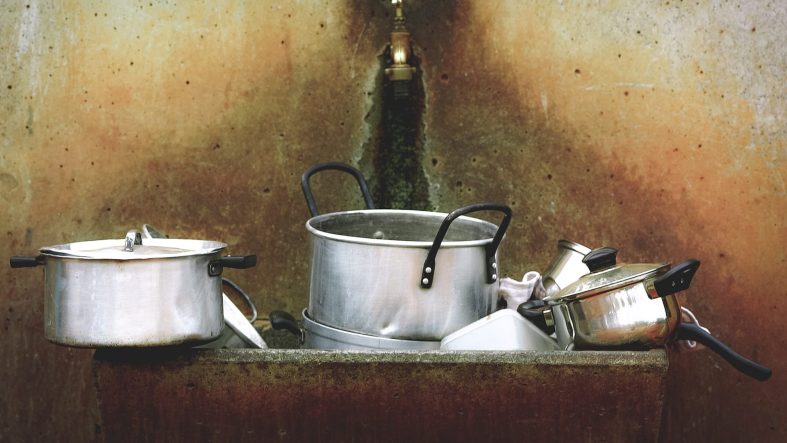
God Cares About Your Pots and Pans

The book of Zechariah, one of the “minor prophets”, contains many puzzling visions and predictions of the then-coming (and now coming-again) Messiah, Jesus.  Zechariah prophesied after the Babylonian exile and God’s purpose through him was to give hope to His people in the form of a glorious future under a perfect King.  The book ends with these verses:

And on that day there shall be inscribed on the bells of the horses, ‘Holy to the LORD.’ And the pots in the house of the LORD shall be as the bowls before the altar.  And every pot in Jerusalem and Judah shall be holy to the LORD of hosts, so that all who sacrifice may come and take of them and boil the meat of the sacrifice in them. And there shall no longer be a trader in the house of the LORD of hosts on that day.” – Zechariah 14:20-21

Photo by Scott Umstattd on Unsplash

While this seems a very strange ending for a book about Jesus, Zechariah’s words give us an amazing expectation of what Paradise will be like.  The phrase “Holy to the LORD” references Exodus 28:36-38, where the words were inscribed on the high priest’s turban.  The idea is that only very rarely are items recognized as set aside for only Godly use.  However, Zechariah is telling us that this was only the beginning.  When the King comes again in glory, He will establish a kingdom where even the most mundane household items will put to perfect use.  There is nothing He does not care about.

And this concept is not just about bells and pots.  While the Old Testament high priest was a sign of the way back to God, eventually the way encompasses every aspect of us.  Zechariah promises us that every bit of our lives, even those we may give no thought to – our proverbial bells and pots – are to be perfected in glory.  By caring about even these common items, God is telling us He leaves nothing undone.  Nothing will be left in us that is set apart for other “gods.”

In Paradise we will be perfected, fully set apart for His glory, and His work in us has already begun.  “And I am sure of this, that he who began a good work in you will bring it to completion at the day of Jesus Christ.” – Philippians 1:6

Serving Other Gods

Foundational to God’s relationship with His people – His covenant – is the idea that He will be our God and we will be His people.  If we forsake all other “gods,” we will be blessed immeasurably by the true God, Yahweh.

However, in the time of the Old Testament prophet Jeremiah, right before the exile of Judah into Babylon, God’s people were not being faithful to Yahweh and were worse than prior generations in their rebellion.  So, Jeremiah says in chapter 16, verse 13 – “Therefore I will hurl you out of this land into a land that neither you nor your fathers have known, and there you shall serve other gods day and night, for I will show you no favor.”

This punishment has 2 parts: banishment from the Promised Land, and also “you shall serve other gods day and night.”  Have you ever thought that serving gods other than Yahweh is a punishment, or just that its bad or sinful?   It certainly isn’t the way the world sees it: many consider serving any god as punishment.  Others might have their own gods and would only consider serving other gods, including Yahweh, as punishment.  But here the Bible says that it is only punishment to follow false gods.

Why is this?  A good explanation comes from another prophet, Zechariah, in chapter 10, verse 2:

For the household gods utter nonsense,
            and the diviners see lies;
they tell false dreams
            and give empty consolation.
Therefore the people wander like sheep;
            they are afflicted for lack of a shepherd.”

Compared to a loving, omniscient, wise God, these other gods have no knowledge or wisdom and are not benevolent.  They cannot give us what we need to live and are not worthy of worship.  They cannot guide us like our Good Shepherd can.  Therefore, when we choose to follow anything other than Yahweh, are we punishing ourselves?

When Yahweh said “You shall have no other gods before me” in Exodus 20:3, He said it for our own benefit, and for His glory.

Amen.

God Cares About Your Pots and Pans

The book of Zechariah, one of the “minor prophets”, contains many puzzling visions and predictions of the then-coming (and now coming-again) Messiah, Jesus.  Zechariah prophesied after the Babylonian exile and God’s purpose through him was to give hope to His people in the form of a glorious future under a perfect King.  The book ends with these verses:

And on that day there shall be inscribed on the bells of the horses, ‘Holy to the LORD.’ And the pots in the house of the LORD shall be as the bowls before the altar.  And every pot in Jerusalem and Judah shall be holy to the LORD of hosts, so that all who sacrifice may come and take of them and boil the meat of the sacrifice in them. And there shall no longer be a trader in the house of the LORD of hosts on that day.” – Zechariah 14:20-21

Photo by Scott Umstattd on Unsplash

While this seems a very strange ending for a book about Jesus, Zechariah’s words give us an amazing expectation of what Paradise will be like.  The phrase “Holy to the LORD” references Exodus 28:36-38, where the words were inscribed on the high priest’s turban.  The idea is that only very rarely are items recognized as set aside for only Godly use.  However, Zechariah is telling us that this was only the beginning.  When the King comes again in glory, He will establish a kingdom where even the most mundane household items will put to perfect use.  There is nothing He does not care about.

And this concept is not just about bells and pots.  While the Old Testament high priest was a sign of the way back to God, eventually the way encompasses every aspect of us.  Zechariah promises us that every bit of our lives, even those we may give no thought to – our proverbial bells and pots – are to be perfected in glory.  By caring about even these common items, God is telling us He leaves nothing undone.  Nothing will be left in us that is set apart for other “gods.”

In Paradise we will be perfected, fully set apart for His glory, and His work in us has already begun.  “And I am sure of this, that he who began a good work in you will bring it to completion at the day of Jesus Christ.” – Philippians 1:6