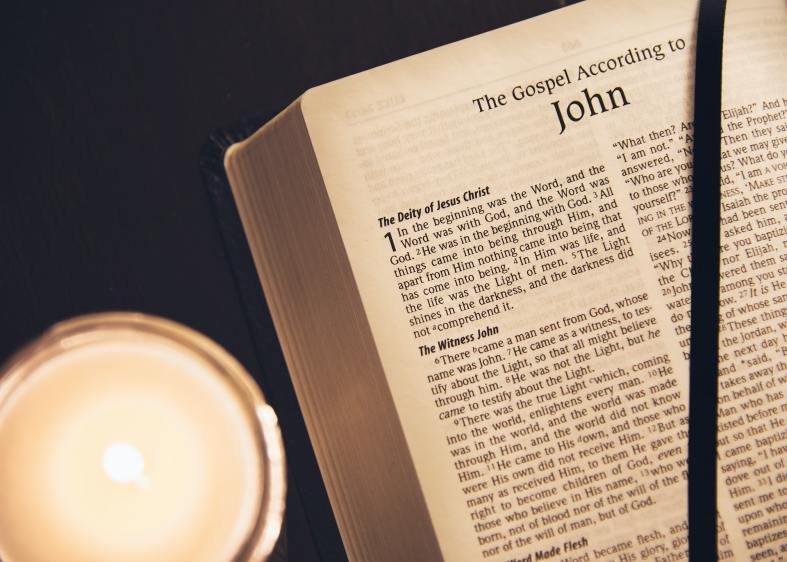
An Ethic That Prioritizes the Gospel

The gospel is more than just the good news that Jesus took the punishment for our sin, dying for sinners like us so that we may be saved.  The gospel is also the good news of what the punishment has been replaced with – the kingdom of heaven.  If the gospel is about a kingdom, our lives should reflect the values of our King and we should seek for others what our King would offer.

This post, another in the series on James 1:27 (“Religion that is pure and undefiled before God the Father is this: to visit orphans and widows in their affliction, and to keep oneself unstained from the world,”) is about that verse as an ethic that prioritizes the gospel over all other issues by looking briefly at the issue of slavery.

The period of the American Civil War was similar to modern times in its obsession over issues.  While its naïve and vastly simplified to say the North was anti-slavery and the South was pro-slavery, it is not entirely false either.  Those views were typical of many in each area.  Both sides had a high conviction in their cause, using the Bible to justify why their side needed to win, and at what costs.

Paul’s Concern Was for Individuals
Part of the reason for this confusion comes from the apostle Paul’s comments on slavery, which seem ambivalent to many on the actual issue of slavery.  One relevant passage is Ephesians 6:5-9, in which Paul writes:

Bondservants, obey your earthly masters with fear and trembling, with a sincere heart, as you would Christ, not by the way of eye-service, as people-pleasers, but as bondservants of Christ, doing the will of God from the heart, rendering service with a good will as to the Lord and not to man, knowing that whatever good anyone does, this he will receive back from the Lord, whether he is a bondservant or is free.  Masters, do the same to them, and stop your threatening, knowing that he who is both their Master and yours is in heaven, and that there is no partiality with him.”

Verses like these were used to justify slavery during the American Civil War and at other times, by people claiming that Paul did not condemn it.  Since the War, others have said that Paul was cruel not to condemn slavery and a few even refuse to read Paul’s words in the Bible, claiming they have no authority because of this cruelty.  This topic goes way beyond what can be covered here, but the reason for Paul’s seeming ambivalence on the issue is that his focus was somewhere else: on the specific individuals involved in all aspects of slavery, including both masters and slaves.  He even addresses them directly and separately: “Bondservants” and “Masters.”  One group was to follow what was addressed to them, and the other group was to follow what was addressed to them.  Why did he take this approach?  Because people matter more than issues.

Photo by Anthony Garand on Unsplash

Having no power to end slavery, which still exists today, Paul did have influence and authority as an apostle to improve the lives of specific masters (who would have to justify their actions to God), and of specific slaves (who would have to do the same).  Paul knew the real question before him was: If slavery currently exists and I have no power to end it, should I do nothing to improve the condition of slaves until slavery is 100% abolished?  Should Paul have focused on ending slavery, or on improving the lives of people affected by it, and offering them a way to eternal life without slavery?  Paul knew God’s heart goes out to individual souls, and the issue of slavery would be eliminated in eternity.  However, many would condemn Paul for not going straight to an all-or-nothing, hyperbolic position we expect when talking about issues.  Also, it’s not necessarily an either/or, but a matter of priority and emphasis.

Some approach contentious issues like the Pharisees of Jesus’ day, “They tie up heavy burdens, hard to bear, and lay them on people’s shoulders, but they themselves are not willing to move them with their finger.[1]  These burdens take the form of ostracism, public humiliation, insistence on use of #hashtags and slogans, rude comments, and other means of hating others simply because those others don’t think the weight of all the issues in the entire world need to be on everyone’s shoulders.  But Paul presents a contrast to this.  He knew God called him to proclaim grace and peace to all people, in Jesus’ name.  Paul’s ministry saved many souls for an eternity where slavery is no longer an issue, and in the meantime, slavery still exists as an issue people mistreat each other over.  Yes, we should fight for peace and justice, but not at the expense of individuals, on either side.

D. A. Carson, a professor at Trinity Evangelical Divinity School, said, “The overthrowing of slavery, then, is through the transformation of men and women by the gospel rather than through merely changing an economic system…In the final analysis, if you want lasting change, you’ve got to transform the hearts of human beings. And that was Jesus’ mission.”[2]

During the Civil War, Abraham Lincoln said “My concern is not whether God is on our side; my greatest concern is to be on God’s side, for God is always right.”  This should be our main concern as well.

Religion that is pure and undefiled before God the Father is this: to visit orphans and widows in their affliction, and to keep oneself unstained from the world.

To start the series on James 1:27 from the beginning, the first post is at this link.


[1] Matthew 23:4
[2] Strobel, Lee.  The Case for Christ (1998).  P. 168

“Let Not the Flood Sweep Over Me”

Yesterday’s post was about Jeremiah’s comparison of false religion to a broken cistern, with God alternatively being “the fountain of living waters.”[1]  Jeremiah lived when most of God’s people – including most of the priests and prophets – had turned from Him to follow other gods.  As Jeremiah remained faithful, correctly predicting that Jerusalem would fall to Babylon, he was persecuted, including this instance in Jeremiah 38:6, where King Zedekiah’s officials “took Jeremiah and cast him into the cistern of Malchiah, the king’s son, which was in the court of the guard, letting Jeremiah down by ropes. And there was no water in the cistern, but only mud, and Jeremiah sank in the mud.”

Since God is “the fountain of living waters,” the only path to eternal blessing, it’s incredibly ironic that Jeremiah, one of the few remaining faithful prophets and therefore a rare source of God’s “living waters,” should be cast into a cistern with no water.  Perhaps it was broken.  King Zedekiah thought he could silence the “living waters” Jeremiah represented by casting them into a cistern, trading truth for falsehood.

Photo by Mishal Ibrahim on Unsplash

Later, Jeremiah seems to recall the cistern experience in Lamentations 3:52-57, where he said:

I have been hunted like a bird
            by those who were my enemies without cause;
they flung me alive into the pit
            and cast stones on me;
water closed over my head;
            I said, ‘I am lost.’
‘I called on your name, O LORD,
            from the depths of the pit;
you heard my plea, ‘Do not close
            your ear to my cry for help!’
You came near when I called on you;
            you said, ‘Do not fear!’”

Returning to the book of Jeremiah, we read that Ebed-melech, an Ethiopian eunuch, heard of Jeremiah’s situation and pleaded his case: “My lord the king, these men have done evil in all that they did to Jeremiah the prophet by casting him into the cistern, and he will die there of hunger, for there is no bread left in the city.”[2]  This unlikely source – a foreigner – was Jeremiah’s deliverance from God to rescue Jeremiah from the well.  Ebed-melech gathered 30 men, “Then they drew Jeremiah up with ropes and lifted him out of the cistern. And Jeremiah remained in the court of the guard.”

Jeremiah was not the only Old Testament figure to suffer for his faithfulness.  Many years earlier, King David also referred to “sinking in the mire” in the Messianic Psalm 69, verses 14-15:

“Deliver me
            from sinking in the mire;
let me be delivered from my enemies
            and from the deep waters.
Let not the flood sweep over me,
            or the deep swallow me up,
            or the pit close its mouth over me.”

David knew this feeling of sinking came not because of his sin, but when he was faithfully serving his Lord.  David’s “sinking in the mire” happened under these circumstances from verse 9 of the same Psalm:

For zeal for your house has consumed me,
            and the reproaches of those who reproach you have fallen on me.”

In Jeremiah’s case, as well as David’s and that of Jesus, whom Psalm 69 foreshadowed[3], we know that cannot judge our faithfulness based on whether it improves our circumstances.  When we do, we might stop being faithful because it seems we are “sinking in the mire.”  Being reproached by the world and feeling down aren’t the circumstances we prefer, but “Blessed are those who are persecuted for righteousness’ sake, for theirs is the kingdom of heaven.”[4]  Through these and all other circumstances, God develops in us deeper trust in Him.

Therefore, with David may we pray:

But as for me, my prayer is to you, O LORD.
            At an acceptable time, O God,
            in the abundance of your steadfast love answer me in your saving faithfulness.” – Psalm 69:13

And in His time, He will deliver us, perhaps in ways we don’t expect.

Coda

In 1995, Christian rock group Jars of Clay released their self-titled album, and the track “Flood” has similar themes to this post.  The song was also a mainstream hit, charting as high as No. 12 on the Billboard Modern Rock Tracks chart,[5] amazing for a song that is essentially a prayer like David’s in Psalm 69.

You can check out the song’s lyrics here: https://genius.com/Jars-of-clay-flood-lyrics

Or, if you have 3 ½ minutes, watch the music video here:


[1] Jeremiah 3:13
[2] Jeremiah 38:9
[3] John 2:17, 15:25, Acts 1:20, Romans 11:9-10, 15:3
[4] Matthew 5:10
[5] https://en.wikipedia.org/wiki/Flood_(Jars_of_Clay_song)

Broken Cisterns Can Hold No Water

Sometimes word pictures in the Bible weren’t written for people like me.  In my life I haven’t thought much of cisterns, but the Old Testament prophets Isaiah and Jeremiah refer to them a few times in their prophecies, and Jeremiah ends up thrown into one.  To Jeremiah’s original audience, and others living now, the meaning behind these pictures might be obvious.  But for me, it took a little research.

A cistern-centered comparison in Jeremiah 3:12-13 particularly drew my attention, where broken cisterns are used as a picture of false religion and idolatry:

Be appalled, O heavens, at this;
            be shocked, be utterly desolate,
            declares the LORD,
for my people have committed two evils:
they have forsaken me,
            the fountain of living waters,
and hewed out cisterns for themselves,
            broken cisterns that can hold no water.”

God is the “fountain of living waters,” but how is false religion like “broken cisterns”?

Looking up “cistern” in the American Heritage Dictionary I find it is: “A receptacle for holding water or other liquid, especially a tank for catching and storing rainwater.”  So, a cistern is not a fountain, a source of water, but instead is dependent on another source (usually rain) for its water.  So, Jeremiah’s accusation is that false religion can’t create its own water, which brings us to the second point…

The false religions of Judah in Jeremiah’s day weren’t even good cisterns – they were broken.  While a cistern is a vessel for storing water in reserve when there is no rain, when broken it’s not even that.  Even with another source of water, putting it into a broken cistern was no better than pouring it out into the sand.  Jeremiah’s second accusation is that false religion can’t even store good things from other sources.  The picture here is that if they took parts of true worship and mixed them with other religions, not only were the other religions wasted, but whatever they would have gained from God is also wasted.

Without God, many things are like broken cisterns.  Things that make us happy in this world are temporary and require our Creator God to provide us with more.  A food you like might satisfy you for a while, but eventually you need to find more food.  Rain may satisfy your garden plants, but eventually they will need more water.  Money may seem alluring for its own sake, but it only buys things that are temporary like everything else.

In Jeremiah 2:18, he tells the people not to look anywhere other than the true God of Israel for the source of living water and eternal satisfaction:

And now what do you gain by going to Egypt
            to drink the waters of the Nile?
Or what do you gain by going to Assyria
            to drink the waters of the Euphrates?”

Like a cistern, even the Nile and Euphrates only get their water from some other source.  They can’t make their own, and God can even determine if the rivers are empty or full.  Later, in Jeremiah 14:2-3, he says that because Judah had forsaken God, He had caused a drought, and therefore:

Judah mourns,
            and her gates languish;
her people lament on the ground,
            and the cry of Jerusalem goes up.
Her nobles send their servants for water;
            they come to the cisterns;
they find no water;
            they return with their vessels empty;
they are ashamed and confounded
            and cover their heads.”

The people mourned their earthly problem but did not care about their spiritual problem which is infinitely more important.  No provision – any science, philosophy, or religion – can defend against a drought caused by forsaking God, because false gods – anything we put in His place – cannot deliver rain.  They are but broken cisterns.

Consider that if there is no Creator behind the workings of nature, or if that Creator doesn’t care about us, why should we expect the world to act in ways that predictably bless us, instead of just being completely unpredictable and random?  Why do things seem to work most of the time?  Rain, friction, food, gravity, math, and on and on.  Fortunately, our God “sends rain on the just and on the unjust,”[1] and to His own He gives “a spring of water welling up to eternal life”[2]

He calls all people to know Him as “the fountain of living waters.”  No cistern needed.

Soli Deo Gloria


[1] Matthew 5:45
[2] John 4:14

Goodness By Design: A Quint of Quotes

Fellow travelers,

Here is another “Quint of Quotes” from my collection, on the theme of “Goodness By Design.”  I did not group these together by accident…

“The world is full of obvious things which nobody by any chance ever observes” – Sherlock Holmes, in Hound of the Baskervilles

“If you wish to make an apple pie from scratch, you must first invent the universe.” – Carl Sagan

“Even if you’re an atheist, you face…the problem of good…if the world is a chance assembly of accidental phenomena, why is there so much that we want to praise and celebrate?” – NT Wright

“A moment after they have admitted that good and evil are illusions, you will find them exhorting us to work for posterity, to educate, revolutionize, liquidate, live and die for the good of the human race” – CS Lewis, in Miracles

Finally, brothers, whatever is true, whatever is honorable, whatever is just, whatever is pure, whatever is lovely, whatever is commendable, if there is any excellence, if there is anything worthy of praise, think about these things.” – Philippians 4:8

Suffering Proves We Are Real: Sunday Share from Marshall Segal

Today’s (early) Sunday Share comes from Marshall Segal, writing at desiring God.org on Romans 5:3-4, which says: “We rejoice in our sufferings, knowing that suffering produces endurance, and endurance produces character, and character produces hope.”

Segal asks “how we can rejoice even while still in the midst of our sufferings,” and notes that “suffering in itself does not produce hope from scratch. Suffering will not create hope where there is none. But it can serve to strengthen and refine an already living hope.”

Full article linked below. Check it out.

(Estimated reading time 7 minutes)

Click Here for Full Article