The story of the Tower of Babel, recorded in just 9 verses in Genesis 11, has a lot more to say than its length might suggest. It’s not just the story of a tower being built, or a story about the origin of different languages. It is also a story of why the tower was built and what it meant about the builders’ relationship with God.
The Tower of Babel was mankind’s best effort at achieving salvation, a path to heaven, based on their own works. In the tower we see man declaring his independence from God, his lack of need for the God, or any god. This act of rebellion was similar to Adam and Eve’s sinful desire to know good and evil for themselves in the garden of Eden, because the builders of the tower were saying that they know better than God. “We’ll get to perfection on our own,” they thought. They were the progressives of their day, believing in the infinite potential of mankind.
Also, verse 4 tells us that part of the motivation for building the tower was to prevent man from being “dispersed over the face of the whole earth,” but God had told His people to “fill the earth,”[1] not to settle down in one spot. In the next chapter God would tell Abraham that he would become a nation, and that through that nation, “all the families of the earth shall be blessed.”[2] God’s people are not meant to hide in their own dwellings, but to bless the world by telling it of God’s love and by living out that love to “all the families of the earth.” Babel’s builders had the wrong priorities.
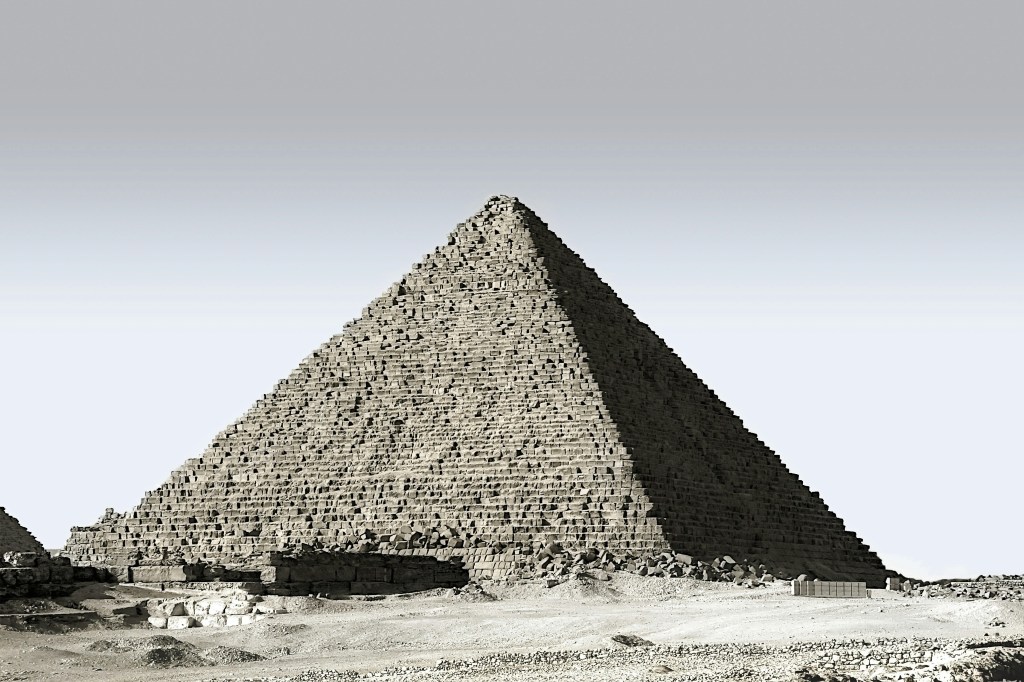
The story of the Tower also tells us that our best efforts will always fall short. In the story, note that “the LORD came down to see the city and the tower.” Mankind intended for this tower to reach heaven, but God had to “come down” to see it. Our best efforts fall way below God’s standards and intention for us. While we might achieve a lot and take pride in it, but it’s never as good as what God can do for us, and we know that “God opposes the proud but gives grace to the humble.”[3] Later in history, He would show us that only He, in Christ Jesus, could be the path that gets us to heaven. There is no other way no matter how hard we try.
Another subtle point from the story is that the materials we decide to work with are never better than what God has already given us. Babel’s builders “had brick for stone,” meaning the tower was built with manmade bricks, not stones. We might think of stones as “natural” but really, they’re what God created in the form He created it, and they’re much stronger than bricks. In the same way, if we follow God’s intention for our lives rather than inventing our own ways, we will find that His ways are better and stronger than anything else available.
Lastly, the tower’s very name, Babel, is a form of “Babylon,” which is a literal city, but also in Revelation 17-18 Babylon represents any society where man attempts to live independently of God. To seek perfection without Him and by His righteousness. Revelation also tells us that Babylon will be destroyed, and everything that Babylon represents.
God has given us everything we need to live and to glorify Him today. Will we use it, or try to go our own way?
[1] Genesis 1:28, Genesis 9:1
[2] Genesis 12:3
[3] James 4:6, 1 Peter 5:5
 Driving Toward the Morning Sun
Thank you for your reflections on the Tower of Babel. I found your information interesting and informative-with an important lesson attached! 🙂
LikeLiked by 1 person