Beware the Bugblatter Beast of Traal

Regular readers will know that I am a fan of Douglas Adams’ science fiction comedy novel The Hitchhiker’s Guide to the Galaxy.  Adams makes a comic art form of extreme absurdity, and one such creation is the Ravenous Bugblatter Beast of Traal.  In the book, intergalactic hitchhikers are urged to always travel with a towel, and among the reasons is that a towel is handy to wrap around your head to “avoid the gaze of the Ravenous Bugblatter Beast of Traal (such a mind-boggingly stupid animal, it assumes that if you can’t see it, it can’t see you)”[1]  By simply covering your eyes, you can escape being devoured by this Beast, one of the least intelligent creatures in existence.

I thought of this Beast when reading Psalm 50:17, which says: “For you hate discipline, and you cast my words behind you.”  Why cast words behind us?  So we can’t see them, and if we can’t see them, we think we can safely ignore them.  Perhaps God will leave us alone, as if He does not exist.  But the verse is a warning not to be like the Ravenous Bugblatter Beast of Traal.  God can’t be swept under a rug and ignored.

There is an episode in the book of Ezekiel that would be comical if it weren’t so tragically similar to this Beast.  Ezekiel’s many images, object lessons, and visions are designed to stir God’s people from complacency and turn back to Him.  To fully convince Ezekiel that the nation was casting God’s word behind them, Ezekiel was taken in a vision inside the temple in Jerusalem, and this is what he saw:

“So I went in and saw. And there, engraved on the wall all around, was every form of creeping things and loathsome beasts, and all the idols of the house of Israel.  And before them stood seventy men of the elders of the house of Israel, with Jaazaniah the son of Shaphan standing among them. Each had his censer in his hand, and the smoke of the cloud of incense went up.  Then he said to me, “Son of man, have you seen what the elders of the house of Israel are doing in the dark, each in his room of pictures? For they say, ‘The LORD does not see us, the LORD has forsaken the land.’” – Ezekiel 8:10-12

Ezekiel was a prophet to Jews already exiled to Babylon, but Jerusalem itself had not yet fallen, and many Jews thought it was impossible.  But inside the temple, the very place symbolizing God’s presence and glorious light, the elders of Israel were worshipping Egyptian-style animal deities and using incense to ward off evil spirits.  They sinned, while saying God couldn’t see them because they don’t see evidence of Him in their circumstances: “the LORD has forsaken the land.”  How like the Ravenous Bugblatter Beast of Traal!

Later, in Ezekiel 9:9, the prophet records:“Then [God] said to me, “The guilt of the house of Israel and Judah is exceedingly great. The land is full of blood, and the city full of injustice. For they say, ‘The LORD has forsaken the land, and the LORD does not see.’”

Can this dry land live again? Photo by Tobias Jelskov on Unsplash

Sometimes by casting His words behind us, we may think we are forsaken.  We interpret His word in light of our circumstances, instead of interpreting our circumstances in light of His word.  It is when the church acts like God doesn’t see that we should be fearful.  When the church claims Jesus as Savior but not as Lord.  When the church trusts in worldly power, not God’s power.  When the church struggles to see how their very Maker and King is, as they say, “relevant.” 

In Ezekiel chapter 10, the glory of Lord departs the Jerusalem temple entirely, and all of Judah was exiled, but Ezekiel’s message wasn’t finished.  He also proclaims hope, most dramatically in chapter 37, the “Valley of Dry Bones” vision.  Ezekiel sees dry bones scattered everywhere across a valley, symbolizing how spiritually dead God’s own people appear.  The vision is a test for Ezekiel: would he look at the valley and assume, based on the immediate circumstances, that “The LORD has forsaken the land, and the LORD does not see”?  In verse 3, he writes: “And he said to me, ‘Son of man, can these bones live?’”  Ezekiel doesn’t jump to conclusions but trusts that God knows best: “And I answered, ‘O Lord GOD, you know.’”  Symbolizing new life in Christ, even from death, God re-assembles the dry bones, adds sinew and flesh and skin, then breathes life into them, “and they lived and stood on their feet, an exceedingly great army.”[2]

In the Valley of Dry Bones, Ezekiel learned that God does see our dire situation, and He has a plan, even if we choose to look the other way.  This plan is infinitely and eternally more “relevant” than any present (and temporary) circumstances.

In the New Testament the plan continues with an Ebenezer[3] moment, as the apostle Paul wrote: “But God, being rich in mercy, because of the great love with which he loved us, even when we were dead in our trespasses, made us alive together with Christ – by grace you have been saved – and raised us up with him and seated us with him in the heavenly places in Christ Jesus” (Ephesians 2:4-6)


[1] Adams, Douglas. The Hitchhiker’s Guide to the Galaxy.  (1980).
[2] Ezekiel 37:10b
[3] Ebenezer, the ‘But God…’ Squirrel, is the blog’s mascot and a reminder that, no matter the situation, God can overcome it, and the words “But God…” in the Bible are often moments where that happens.

Daily Readings for September 14 – 20

Fellow travelers:

For those looking for a Bible reading plan, each week I post 2 chapters to read per day as a main reading plan, and for anyone who wants to read the whole Bible in 2026, I’ll post the extra chapters to read that week.  The main readings will include nearly all of the New Testament, plus Psalms, Proverbs, Ecclesiastes, the Prophets, and a few other Old Testament books.

Reading 3 chapters a day on weekdays and 4 on weekends almost exactly covers the 1,189 chapters of the Bible, so the “extra” readings will be about 9 chapters per week.  These readings will cover the Pentateuch, the OT histories, a few other OT books, plus Jude and Revelation from the NT.

Regardless, I hope this schedule encourages others to read and study their Bible more, whatever parts they decide to read.  Follow along (or not) any way you choose!

2 chapter a day plan:
Monday, September 14: Galatians 5 – 6
Tuesday, September 15: Philippians 1 – 2
Wednesday, September 16: Philippians 3 – 4
Thursday, September 17: Nahum 1 – 2
Friday, September 18: Nahum 3, Zephaniah 1
Saturday, September 19: Zephaniah 2 – 3
Sunday, September 20: Ephesians 1 – 2

Extra chapters for those reading the whole Bible in 2026:
2 Kings 20 – 25, 1 Chronicles 1 – 2

The Snares of Death

Sometimes a particular Psalm, or part of a Psalm can be hard to identify with.  Often the writers were going through circumstances unlike anything we have faced or ever will face.  The author of Psalm 116 mentions such a situation in verse 3.  Here are the first 4 verses:

“I love the LORD, because he has heard
            my voice and my pleas for mercy.
Because he inclined his ear to me,
            therefore I will call on him as long as I live.
The snares of death encompassed me;
            the pangs of Sheol laid hold on me;
            I suffered distress and anguish.
Then I called on the name of the LORD:
            “O LORD, I pray, deliver my soul!””

Have you ever felt like this: “The snares of death encompassed me; the pangs of Sheol laid hold on me”?  The Reformation Study Bible notes on this that “It was as if ropes came out of a grave, pulling the psalmist into the ground.”  Has death ever felt this imminent?  I can imagine someone who has experienced war or terminal disease can relate to this, but many of us can’t fully understand it.

But even if we have never felt this way, there’s an important part of the image for all of us: evil is not passive.  The “snares of death” do things.  They come after us.  There are forces of evil that actively seek to derail us from following Jesus.  If we’re not actively fighting these forces, we will lose ground.  These battles may take place within ourselves, as we war against the flesh, or the battles may be with external influences in the world around us.

My pastor once referenced a similar idea when during a sermon he said: “the culture is trying to kill you.”  When Proverbs 16:25 tells us, “There is a way that seems right to a man, but its end is the way to death,” it suggests that most people believe things that they think are fine, but that actually lead to death.  And when most people in a group believe something, it becomes part of the culture.  Every culture endorses thoughts and actions that should be condemned by Christians, because they aren’t putting us on the path of life, but on the path to death.

But there’s more to it.  Part of American culture that’s trying to kill us is the part that tells us we’re in a war against other people, instead of in a war against sin.  Many aspects of our culture assume that we should love people who are like us and hate people who aren’t.  Maybe we hate those who have a different ethnic background, religion/denomination, or a different political party.  Maybe they have a different economic status, color of their skin, or sexual orientation.  Sometimes all it takes is that someone likes a different sports team.  This hate is a “way that seems right to a man.”  Should we war against the culture, or against sin?  Are those different goals?

In the book of Joshua (1:7b) we are told about the law of God: “Do not turn from it to the right hand or to the left, that you may have good success wherever you go.”  Why point out the left and the right?  I believe this is like Scylla and Charybdis from Greek mythology.  Scylla and Charybdis were two very dangerous monsters that lurked on either side of a narrow water passage.  Therefore, if you drifted too far left you were killed by one of them, if you drifted too far right, you’d be killed by the other.  And also, trying too hard to avoid one would inevitably put you in the path of the other one.

Sometimes in life we end up too far from the correct path because we define our path as being against the other path.  We go right because we are avoiding going left, and vice versa.  We define ourselves by what we are against rather than by what we are for and end up hating the other side.  And then, either Scylla or Charybdis have devoured us!  The “snares of death” and the “pangs of Sheol” are upon us and we might not even know it.

How to avoid this path?  By defining right behavior and attitudes by Christ’s standard, which includes commands to love our enemies.  Once we think someone is our enemy, we need to reject the instinct to hate them and accept Christ’s grace which enables us to love them.  We define the Christian life by what it is for, not by what it is against.  We love God and love our neighbor, regardless of who they are.  To do otherwise may put us on “the way to death,” where “the snares of death encompassed me; the pangs of Sheol laid hold on me.”

“Be sober-minded; be watchful. Your adversary the devil prowls around like a roaring lion, seeking someone to devour.” – 1 Peter 5:8

Profit in Reading Genealogies

Some parts of the Bible are harder to read than others.  Some things seem repetitive or pointless, but we know that “All Scripture is breathed out by God and profitable for teaching, for reproof, for correction, and for training in righteousness”. (2 Timothy 3:16). For me, it can be very hard to concentrate while reading the many long genealogies, mostly of people I know nothing about.  But maybe the point is that God does know all those people.

Photo by Rod Long on Unsplash

I’ve heard a story that may or may not be true, but I’m sure it’s at least possible, and an example of how God can use long genealogies in a profitable way.  The story goes like this: a Christian who attended church regularly invited a non-Christian friend to church, and they finally accepted.  They had been having some discussions and the friend was curious, so the Christian was hopeful.  However, the pastor on that day decided to preach on one of the long genealogies in the Old Testament.  The Christian sat there disappointed because they were hoping their friend would hear the gospel.  In a complete surprise to the Christian, the friend said soon after the service that they had decided to follow Christ.  When asked why, the friend said something like: “I never was close with my family, but the idea that God cared about each and every one of the people listed in those genealogies convinced me that God cares about me.  He didn’t leave them out of His book.  He cares about me and wants me to be part of His family.”

Like I said, I’m not sure that this is a true story, but the point that mattered to the friend in the story remains: God cared enough about every person in those genealogies to have them recorded in the Bible.  He thought of every one of them.

God has another book full of names in addition to the Bible and its genealogies: His book of life[1] which has the name of every one of His people listed in it.  If you are a Christian, your name is in that book and God loves you as His adopted family.  Like the genealogies, this book tells us that every person is precious to God and He knows each one personally and intimately.

If you find books like 1 Chronicles (which begins with many genealogies) hard to read, maybe as you read each name, remember that God loves that person, and loves you as well.  Nobody is irrelevant to God, and that’s a key part of the good news of the gospel!

[1] Philippians 4:3, Revelation 3:5, 13:8

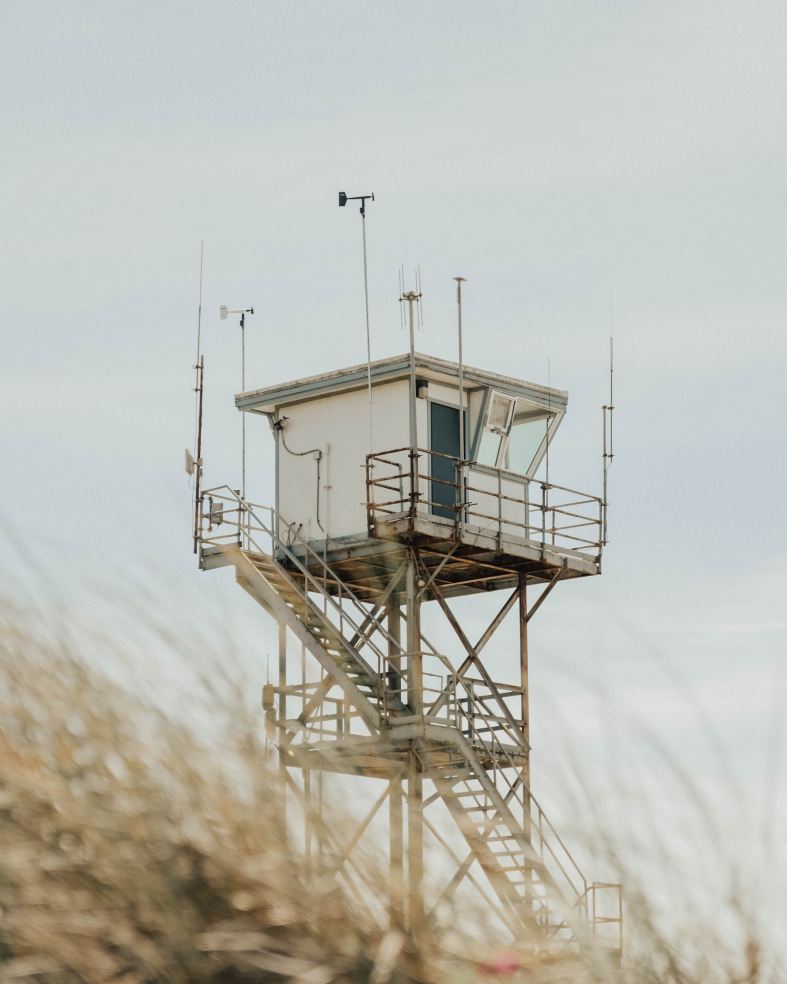
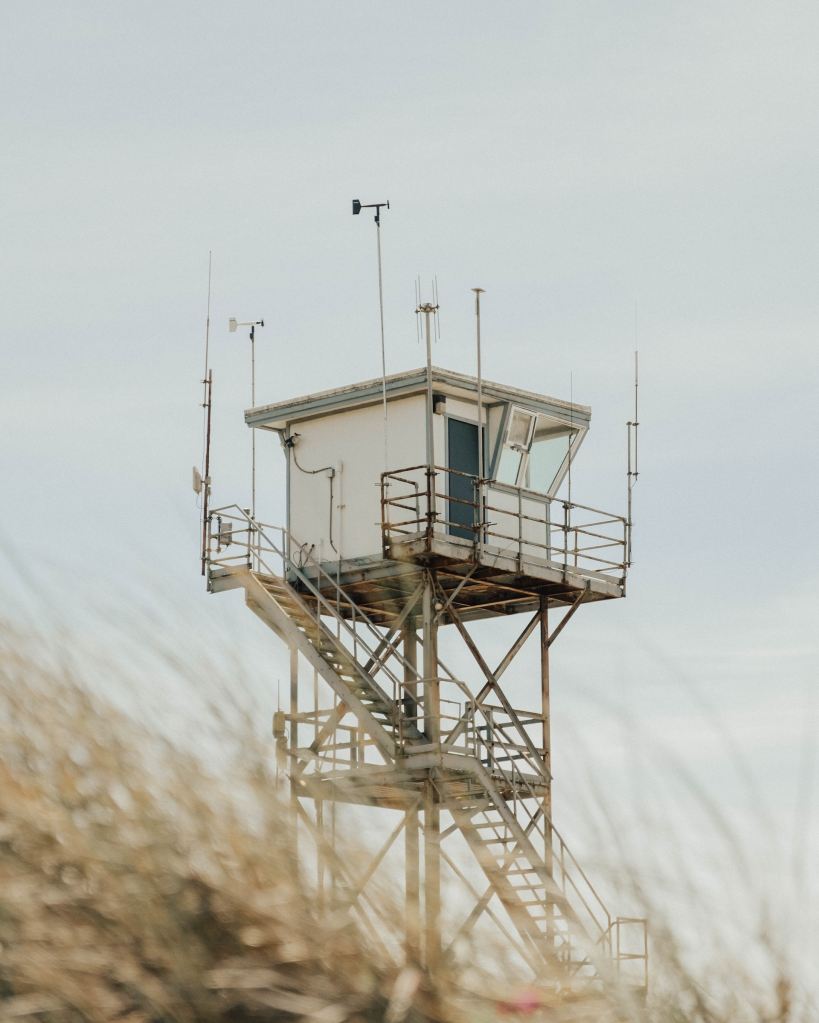
Manning the Watchtower

 “I will take my stand at my watchpost
            and station myself on the tower,
and look out to see what he will say to me,
            and what I will answer concerning my complaint.” – Habakkuk 2:1

Photo by Casey Olsen on Unsplash

People like to look for patterns and predictability in the world, and even in God’s behavior.  But in Habakkuk’s case, he saw a situation that didn’t make sense to him, that God would use Babylon to brutally punish His people in Judah.  God knew it wouldn’t make sense to Habakkuk, saying “I am doing a work in your days that you would not believe if told.”[1]

Habakkuk would have gone into a private corner to sulk, but instead he brought it to God and was willing to be patient and wait to see how He would answer.

Is there something that doesn’t make sense right now in your life?  In my experience, there almost always is.  Therefore, be as vigilant and patient as Habakkuk.  Take your place in watchful hope on the watchtower and see what God will do.


[1] Habakkuk 1:5b