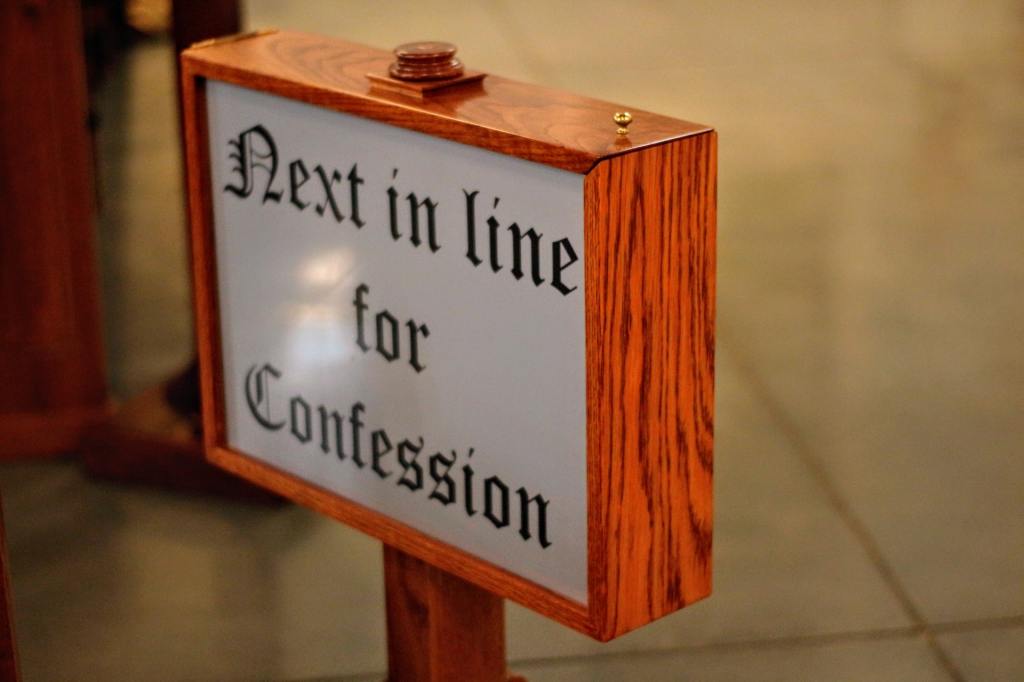
Caught in the Act

The beginning of John chapter 8 has quite an enigmatic and controversial story about a woman caught in adultery.  The basics of the story are: Jesus was teaching in the temple in Jerusalem, and some Pharisees brought Him a woman they caught in the act of committing adultery.  They asked Jesus whether they should stone her, and the first thing Jesus does is write something on the ground with His finger (the only recorded instance of Jesus writing I believe).  Then Jesus stands and says, “Let him who is without sin among you be the first to throw a stone at her.”[1]  Then He goes back to writing on the ground, and the woman’s accusers end up walking away.  Jesus then tells the woman He does not condemn her, but that she should “sin no more.”[2]

One problem with the story is that it is not included in the earliest manuscripts of John’s gospel, and so it’s questionable whether it should be in the Bible at all.  Another part of the story commentators talk about is what Jesus was writing on the ground.  From what John (or someone else) wrote, we don’t know.  We can only suspect that what was written had something to do with why the accusers went away.

I don’t like to speculate on what Scripture left out, especially on verses that may not even be inspired, but if this story actually happened, I do have my own guess at what Jesus wrote.  He probably wrote more than one thing, but part of what He wrote may have been “where is the man?”

See, Old Testament law said that both parties in the adultery (it always takes 2 people to commit adultery) should be stoned (see Leviticus 20:10 and Deuteronomy 22:22).  If these Pharisees truly caught the woman in the act, the man must have been present at the time or she wasn’t “in the act”.  Why wasn’t he being brought before Jesus?  We know the Pharisees were desperate to catch Jesus saying something wrong, so maybe, perhaps[3], the “guilty” man was in conspiracy with the Pharisees to embarrass Jesus?  In a male-dominated society, did the Pharisees think it was ok for the man to get away with it, especially if it led to a situation where the Pharisees could make Jesus look bad?  They may have been tired of losing arguments with Him.

In this situation, if Jesus wrote “where is the man?” on the ground it would let the Pharisees know that He was on to their scheme and knew they were being hypocritical.  Jesus always knows.

My handy dandy study Bibles warn not to make doctrine from this story that may not have actually happened, but I think there’s a lesson to be learned anyway, and it is that every one of us is “caught in the act” by Jesus.  Jesus knew that, under the law, both the woman that the Pharisees brought forward, and the unseen man were both guilty of adultery.  Likewise, whether our own sins are brought to public attention or whether they happen in secret, Jesus knows about them.  Also, not all of our sins are physical.  Some may be spiritual, where we put something else in the place of God in our hearts and minds.  Nothing escapes His notice.  Knowing this should terrify us, except…

I read a devotional by James Boice where he said that the person we want to be in this story is the woman caught in the act of adultery.  Why?  Because although her sins were revealed, she was forgiven and was alone left standing with Jesus when everyone else went away.  We may be too proud to admit we belong in her place, but maybe that’s because we aren’t aware enough of our won sins.  See, from Jesus’ perspective we are all “caught in the act.”  Not just once or twice, but many times over.  We may not be physical adulterers, but we are all spiritual adulterers.  Therefore, we need His grace and mercy, which He freely grants.  The cross paid for all our sins.

However, the story also teaches that grace is not license.  Christ died that He may give us grace and we must not scorn His sacrifice.  This woman’s forgiveness was free for her, but not for Him.  Our forgiveness is free to us, but not for Him.  It required the ultimate sacrifice, but He was willing and able to make it.

Jesus may have done a “gotcha” with the hypocritical Pharisees, and 1 John 1:10 says “If we say we have not sinned, we make him a liar, and his word is not in us,” but the verse right before that says “If we confess our sins, he is faithful and just to forgive us our sins and to cleanse us from all unrighteousness.”  As long as we admit our guilt (which He already knows about), the grace He makes available to us is endless and eternal.

Let us then with confidence draw near to the throne of grace, that we may receive mercy and find grace to help in time of need.” – Hebrews 4:16


[1] John 8:7
[2] John 8:11
[3] Maybe and perhaps are two words I hate to use when referring to Scripture, but maybe, perhaps, today is an exception.

The Likeness of Christ

As told in Genesis, Joseph served Pharaoh faithfully.  Even after being wrongly accused and imprisoned, he served while in prison and eventually rose again to prominence in Pharaoh’s kingdom.  When Pharaoh dreamed of famine, Joseph interpreted the dream, and under God’s direction, came up with a plan to survive it.  “And Pharaoh said to his servants, “Can we find a man like this, in whom is the Spirit of God?” – Genesis 41:38

In the gospels, Peter and John began as uneducated fishermen, yet they were personally discipled by Jesus for 3 years.  In Acts chapter 4, these former fishermen forcefully proclaim the gospel, and about five thousand people came to faith in Christ.  “Now when they saw the boldness of Peter and John, and perceived that they were uneducated, common men, they were astonished. And they recognized that they had been with Jesus.” – Acts 4:13

Pharoah recognized the Spirit in Joseph and people noticed Peter and John were different – do people notice the Spirit in you?  Can they tell you’ve been with Jesus?

“A Christian should be a striking likeness of Jesus Christ.” – Charles Spurgeon

The God of Intended Consequences

Case studies, detailed write ups of real-life business situations, are a common teaching tool for business students.  From these examples, students are supposed to draw lessons for their own job and for management.  One case study I read covered Nordstrom; a large retailer famous for their strong customer service[1].  At the time studied in the case, Nordstrom had recently hired an up-and-coming manager with a strong track record and trusted him with a lot of power to run the business.  Since the purpose of a retailer is to sell things, management decided to pay every employee in every store more if they sell things.  Seemed to make sense.

However, there’s a thing called the “Law of Unintended Consequences,” or more simply, a lack of foresight.  In the Nordstrom case study, this Law led to disaster.  Employees stopped cleaning the store.  They stopped stocking shelves and organizing displays.  Customers couldn’t find what they wanted, but they were hounded by enthusiastic employees who were eager to sell them something (and get credit for it).  Instead of each employee doing what they specifically needed to do, they all swarmed around annoyed customers.

Photo by Viktor Bystrov on Unsplash

Not only did sales go down as a result, but Nordstrom damaged what had been its key strength of customer service.  This happened decades ago, and Nordstrom has recovered, but what an interesting story.  More recently, JC Penney had a similar disaster when they decided to back off their aggressive discounting strategy – the entire reason many people shopped there.  A lack of foresight can lead to disastrous unintended consequences.

Nordstrom’s problem was what economists call a “coordination problem,” where a group of people aren’t properly organized to achieve a goal.  Even if you have a theory that sales are the sole objective, making everyone focus on sales might not be the right way to coordinate.  As Yogi Berra apparently said: “In theory there’s no difference between theory and practice. But in practice, there is.”  Humans don’t usually behave the way theory says they will.

Ecclesiastes 3:9-11, titled “The God-Given Task” in my study Bible, says this:

“What gain has the worker from his toil?  I have seen the business that God has given to the children of man to be busy with.  He has made everything beautiful in its time. Also, he has put eternity into man’s heart, yet so that he cannot find out what God has done from the beginning to the end.”

The point is the scope of man’s awareness, in his business, or economically.  Man works, and sometimes it looks like pointless toil, and sometimes it is beautiful.  But, as an image-bearer of God, man knows there is more to it – eternity in his heart.  Therefore, we have some sense of a bigger picture, but the whole picture can’t be seen, only bits of it.

God on the other hand sees all, and nothing appears as unpredictable chaos to Him.  His foresight includes all future circumstances, and everything is predictable.  In the movie Jurassic Park, Jeff Goldblum’s character explains chaos by putting drops of water on the back of someone’s hand and saying there’s no way of knowing which direction the water will flow.  But, when God watches Jurassic Park, he knows exactly which way the water would go.  Every.  Single.  Time.  And not because He’s seen the movie before.  We look at water and see chaos, but God looks at it and says “Peace!  Be still!”

Proverbs 3:19 tells us:

“The LORD by wisdom founded the earth;
            by understanding He established the heavens;
 by His knowledge the deeps broke open,
            and the clouds drop down the dew.”

Because the world was created with wisdom (and not by accident), gravity does what it’s supposed to do, photosynthesis does what it’s supposed to do, and likewise with many “laws” of science.  God as omnipotent creator orchestrates all those laws of science how He wants, but in terms of people He has the same raw material as the managers of Nordstrom.

However, God doesn’t get blindsided by anything, including but not limited to:
People not doing what they’re told – He can, and does, include this in His plan.
Second- and third-order effects of rules, such as employees not stocking shelves.
Theory that might not apply in practice.

Managers of your company or organization don’t have perfect foresight.  They can’t be certain that their strategy is correct, and they probably don’t know what every employee does on a daily basis, but God as CEO of the entire universe knows all and has a personal relationship with every member of the “company” – and all its competitors.

He has a plan, and while He doesn’t tell us the entire plan, He “has put eternity into man’s heart” that we may learn to trust Him and know that everything will be fixed in the end.  Therefore, dedicate more of your time, treasure, and talent to God and see what happens.  He intends that there will eternally be good consequences, and when He intends something, it happens.  Guaranteed.

Our God is the God of Intended Consequences.


[1] I can’t find the case online or in my files so I’m going from memory here.  Forgive me if I go astray, or if you work at Nordstrom.

The Cross of Christ is History

Christians rightly focus on the historical fact of the life, death, and resurrection as the foundation of their faith.  Paul writes in 1 Corinthians 15:14 – “And if Christ has not been raised, then our preaching is in vain and your faith is in vain.”  For Christianity to matter, these things must have actually happened.  Therefore, a lot has been written providing evidence that these events happened, and that Christian faith is not based on speculation, but on solid history.

Today I’m going to take a different angle on the significance of the “historical” part of “historical fact.”  This post is about the more straight-forward meaning that these events happened in the past.

Why This Matters
Because Christ lived in the past, the life of righteousness He lived for us, and that we inherit through faith, is unchangeable.  There is no other life that could be lived, or will be lived, that could be better or achieve more than what God intended it to achieve.  Perfection is assured because it already happened.  He has not fallen short.

Because Christ died on the cross in the past, He did it in consideration of every past, present, and future sin of His people.  Nothing you, or I, or any of His people have done, are doing now, or will do in the future, can undo the cross, because it has already happened.  He will not change His mind, and He will stand by those who have faith in Him.

Because Christ was resurrected in the past, He has proven that death cannot hold Him and that He will raise His people to new life as well.  He is alive now, and aware of everything happening not only in the global 24/7 news cycle, but also in the hearts and minds of every man.  The same power that raised Him works in His people, telling them through His Spirit that there is no better plan than the cross to create a world where man perfectly loves God and loves his fellow man.

For if we have been united with him in a death like his, we shall certainly be united with him in a resurrection like his. We know that our old self was crucified with him in order that the body of sin might be brought to nothing, so that we would no longer be enslaved to sin. For one who has died has been set free from sin. Now if we have died with Christ, we believe that we will also live with him. We know that Christ, being raised from the dead, will never die again; death no longer has dominion over him. For the death he died he died to sin, once for all, but the life he lives he lives to God. So you also must consider yourselves dead to sin and alive to God in Christ Jesus.” – Romans 6:5-11

In a world full of pain and despair, “Preach the gospel at all times. And if necessary, use words.” – St. Francis of Assisi

Sustaining the Wonder

My knowledge of art and art history is just a bit above zero.  I appreciate good art, but it’s just never been a significant interest of mine.  However, that doesn’t mean I don’t have favorite works, and I’m pretty sure my number one is Supper at Emmaus by Caravaggio, painted in 1602 and posted below.  The original can be found in the National Gallery in London, where I’ve seen it in person twice.

It’s truly a great work of art.  Stylistically, I’m fascinated by the realism and the use of shadow and depth.  But what really brings it to life for me is the shocked expressions on the two disciples at the right and left, who had doubts, but suddenly realized they were talking to the resurrected Christ.

The story behind the painting can be found in Luke chapter 24, verses 13-35, where the two disciples in the painting were walking from Jerusalem to Emmaus and were joined by Jesus after His resurrection, but they didn’t realize it was Him.  They shared with Him that “some women of our company” had visited His tomb, where they did not find His body, but instead found angels who told them Jesus was alive.  Then Luke tells us:

And he said to them, “O foolish ones, and slow of heart to believe all that the prophets have spoken!  Was it not necessary that the Christ should suffer these things and enter into his glory?”  And beginning with Moses and all the Prophets, he interpreted to them in all the Scriptures the things concerning himself.

The two disciples invited this “stranger” to stay with them, still not realizing who He was, and during dinner when Jesus blessed and broke the bread, “their eyes were opened and they recognized Him.”  This is the moment captured in Caravaggio’s painting, where you can see both their shock and their excitement, preserved for all time in oil on canvas.

What strikes me when I consider this moment and this painting is whether my shock and excitement that Jesus is alive is as permanent as the disciples in the painting.  I don’t consistently have the feelings these two men had at realizing Jesus Christ is alive.  I almost never have the uncontrollable, physical response that they had, one jumping out of his seat and the other with arms spread wide in wonder.  Granted, those two are permanently captured in paint, but isn’t their reaction as real as it should be?

Also, after Jesus “vanished from their sight” (we don’t know how), the two disciples said, “Did not our hearts burn within us while he talked to us on the road, while he opened to us the Scriptures?”  Through His Spirit, He communicates to us through His Word whenever we are willing to pay attention about how “Moses and all the Prophets” testify to Him and His glory.  Does my heart “burn within” me when I study the Bible?  Most often not.

While the two disciples in the painting were real people, what was captured there was not all that those men were.  Those men weren’t always that excited about Jesus.  They surely had doubts at times and weren’t perfect.  They were more like you and me than the moment represented by Caravaggio could show us.  When they were weak, God’s grace was there for them, and it is there for us in our weakness.  We’d love to always have the passion these two men had on, or shortly after, that first Easter when He rose from the dead, but the truth is we are inconsistent in our devotion and excitement.

Today let’s pray for God to give us more of what we see in Caravaggio’s painting.  A more sustained sense of wonder at God’s work accomplished through the life, death and resurrection of Jesus.  Let’s pray for the uncontrollable emotional and physical response of those two disciples.  Let’s pray for God to carry us during the inevitable times when we don’t feel that way.  And let’s pray that He would remove the things in our life that distract us.

Amen.