Walking Safely with God

Many people, both Christian and non-Christian, think of obedience to God as a dreadful chore, something that robs us of our autonomy and joy.  Sometimes people refuse to believe in God because they reject His requirements, and sometimes people resent God because they see Him as making them labor in futility for the perfection He requires.  However, we know that salvation does not come from our obedience, but Christ’s, and through God’s grace He reveals Himself to us.  Then we learn that the rules we should follow come from a God who loves us and perfectly knows what is good and bad for us – far beyond our own knowledge.  Therefore, those rules become our freedom and joy when we follow them willingly.  He always knows the best and right choice to make.

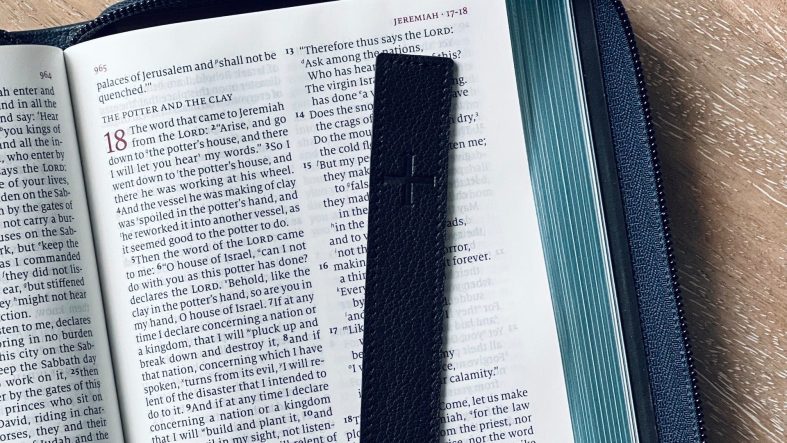
Psalm 119 (the longest chapter in the Bible) is a meditation on the benefits of God’s laws for us, and verses 44-45 give us a picture of those benefits:

“I will keep your law continually,
            forever and ever,
and I shall walk in a wide place,
            for I have sought your precepts.”

The central idea here is that when we are obedient to God, we “shall walk in a wide place,” but what does that mean?  How does that benefit us?

Think about walking along a mountain path, or on stones crossing a river.  Does it make a difference how wide that path is, or how big and flat the stones are?  If we trip and fall on a narrow place, we may fall into a river or off a cliff.  However, if we fall in a wide place on a mountain path or on a very large rock, we may scrape a knee or our hands, but the consequences won’t be as severe as falling off a cliff!

Photo by Ante Hamersmit on Unsplash

The idea of walking in a wide place brings to mind the contrast between the consequences of following our own way versus following God’s.  Going our own way can not only have worse consequences now, in this world, but it can also have consequences in eternity.  Never repenting of going our own way at all leads to an eternity banished from God’s presence and blessings.  But even if we are saved, failure to follow God can rob others of God’s blessings for them that He intends through us and can influence our experience in heaven.  Paul teaches in 1 Corinthians 3:12-15 that there are rewards in heaven for those who follow Him, as well as “loss” for not doing so.  So, doing whatever we please has consequences, some of which may be eternal.

In contrast, obedience to God is like walking in a safe place, where any negative consequence is temporary, or comes with a corresponding blessing.  We may get a scraped knee, but we don’t fall off a cliff, suffering permanent damage, death or other loss.  Following God’s word can’t keep all bad things from happening to you, but it can limit the worldly consequences, and eliminate the eternal consequences.

Therefore, seek God’s guidance and follow it, and we “shall walk in a wide place, for I have sought your precepts.”

It’s a better path to follow than any other.
What Conversion Looks Like

Dear fellow travelers,

One of the apostle Paul’s earliest (if not the earliest) surviving letters is the one we know as 1 Thessalonians.  Early in that letter, Paul wrote about his confidence that the church in Thessalonica had experienced true conversion to Christianity, and part of that confidence came from the strong evidence of changed lives witnessed by others.  In 1 Thessalonians 1:7-8 Paul said that the Thessalonian Christians “became an example to all the believers in Macedonia and in Achaia.  For not only has the word of the Lord sounded forth from you in Macedonia and Achaia, but your faith in God has gone forth everywhere, so that we need not say anything.”  This witness was a result of receiving the gospel from Paul and others, then imitating Paul and Jesus as much as they could.

What were the people in Macedonia and Achaia saying about the Thessalonians?  Paul wrote in 1 Thessalonians 1:9-10, “For they themselves report concerning us the kind of reception we had among you, and how you turned to God from idols to serve the living and true God, and to wait for his Son from heaven, whom he raised from the dead, Jesus who delivers us from the wrath to come.”  The report can be summed up in three words: turned, serve, and wait.

Turned – The Thessalonian Christians showed true repentance when they “turned to God from idols.”  Some say repentance is a U-turn on the road of life, and they definitely had turned around!  Leaving behind the things they used to worship, now they seek and worship the God they now have faith in.  So much that their reputation spread far and wide.  When we don’t prioritize the things those around us do, it’s noticeable.

Serve – After repenting, they began to “to serve the living and true God.”  Not only did their newfound faith affect their worship, but it turned their lives into continual acts of service.  We serve God by loving Him and by loving our neighbors, even when it is difficult or laborious.  Even when we don’t like our neighbors.  This service was visible and obvious to outsiders, because in the world, most people only love those who they like, or who are similar to them.

Wait – They learned “to wait for his Son from heaven.”  They put their hope in the future return of Jesus to this world, instead of putting their hope in this world and its things.  Their hope in Jesus shows that they know this world isn’t going to save itself but needs to reconnect with its Creator.  When Christians hope this way, it can lead to a massive shift in attitudes and priorities.  Peter wrote that we should always be “prepared to make a defense to anyone who asks you for a reason for the hope that is in you.” (1 Peter 3:15). Unless we have a hope that people can see, why would they ask us about it?  Are our attitudes changed by our hope, as we wait for Jesus?

Note that the turning, serving, and waiting correspond to the triad of primary Christian virtues: faith, love, and hope.  Paul used this grouping earlier in 1 Thessalonians 1, in verse 3, and in the very familiar end to 1 Corinthians 13: “So now faith, hope, and love abide, these three; but the greatest of these is love.”  While “faith, hope, and love” may be hard for people to see, if we turn, and serve, and wait, these can be a strong witness to the world of the reality of Christ, the God we worship.  We can show the world the reality of what we believe, true marks of conversion, and evidence that our God is real.

“For they themselves report concerning us the kind of reception we had among you, and how you turned to God from idols to serve the living and true God, and to wait for his Son from heaven, whom he raised from the dead, Jesus who delivers us from the wrath to come.”

Jesus is the Best Fisherman

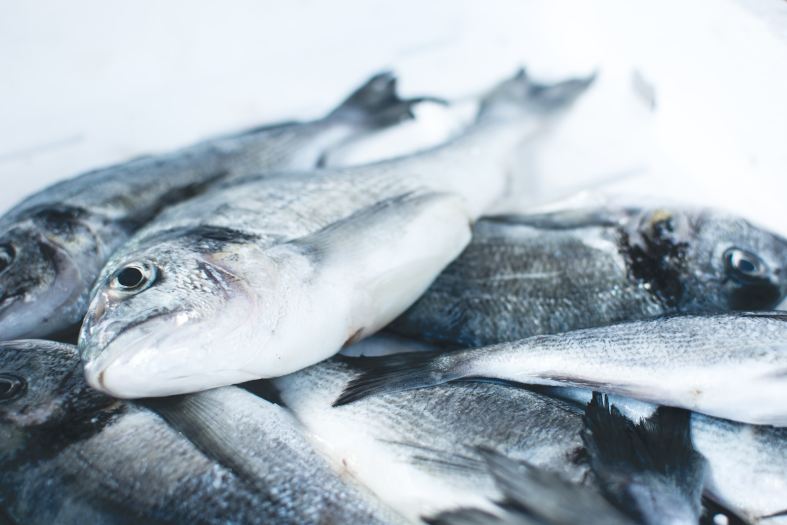
During His life on earth, Jesus called 12 men to special positions as His disciples or apostles.  Out of these 12, at least 4 and possibly 7, were fishermen, a common trade at that time.  The gospels have many fishing stories, including one in Luke 5 when Jesus is about to call His first disciples.

One morning after Simon Peter and some other fishermen had been working all night without catching anything, Jesus decided to preach from Simon’s boat to the crowd that was following Him.  After teaching, Jesus told Simon: “Put out into the deep and let down your nets for a catch.”[1]  Simon answered: “Master, we toiled all night and took nothing! But at your word I will let down the nets.”[2]

Simon ended up obeying, but not before objecting: “Master, we toiled all night and took nothing!”  Some questions may have gone through Simon’s mind: Did this travelling rabbi just tell me how to do my job?  Nighttime was the best time for fishing, and they caught nothing, so why did He tell them to try again?  Maybe Jesus, as a non-professional, didn’t know that?  Maybe he felt like “I’m the expert here!”

However, Jesus knew what He was doing because when they obeyed, “they enclosed a large number of fish, and their nets were breaking.”  There were so many fish that, they “filled both the boats, so that they began to sink.”[3]

One lesson of this story is that Jesus can perform miracles by controlling nature.  Another is that Jesus had an unlimited ability to help Simon and the others do their jobs!  And if Jesus was better than professional fisherman at fishing, what does that mean for other jobs?  Jesus always knows better than we do about any job!

So, whether you’ve had a productive day, or you feel like you’ve “toiled all night and took nothing” don’t hesitate to ask Jesus for career advice! As Simon (later known as Peter) wrote in his own letter, “Humble yourselves, therefore, under the mighty hand of God so that at the proper time he may exalt you, casting all your anxieties on him, because he cares for you.” – 1 Peter 5:6-7


[1] Luke 5:4b
[2] Luke 5:5
[3] Luke 5:6-7

Daily Readings for September 28 – October 4

Fellow travelers:

For those looking for a Bible reading plan, each week I post 2 chapters to read per day as a main reading plan, and for anyone who wants to read the whole Bible in 2026, I’ll post the extra chapters to read that week.  The main readings will include nearly all of the New Testament, plus Psalms, Proverbs, Ecclesiastes, the Prophets, and a few other Old Testament books.

Reading 3 chapters a day on weekdays and 4 on weekends almost exactly covers the 1,189 chapters of the Bible, so the “extra” readings will be about 9 chapters per week.  These readings will cover the Pentateuch, the OT histories, a few other OT books, plus Jude and Revelation from the NT.

Regardless, I hope this schedule encourages others to read and study their Bible more, whatever parts they decide to read.  Follow along (or not) any way you choose!

2 chapter a day plan:
Monday, September 28: 2 Thessalonians 2 – 3
Tuesday, September 29: 1 Timothy 1 – 2
Wednesday, September 30: 1 Timothy 3 – 4
Thursday, October 1: 1 Timothy 5 – 6
Friday, October 2: 2 Timothy 1 – 2
Saturday, October 3: 2 Timothy 3 – 4
Sunday, October 4: Habakkuk 1 – 2

Extra chapters for those reading the whole Bible in 2026:
1 Chronicles 12 – 20

Work, Labor, and Steadfastness

Many are familiar with the Biblical triad of faith, hope and love from 1 Corinthians 13:13, which says: “So now faith, hope, and love abide, these three; but the greatest of these is love.”  In this verse, Paul is calling these 3 characteristics the most important, with love above the other 2.

In another of Paul’s letters he joins this triad with another one.  1 Thessalonians 1:2-3 says, “We give thanks to God always for all of you, constantly mentioning you in our prayers, remembering before our God and Father your work of faith and labor of love and steadfastness of hope in our Lord Jesus Christ.”  He’s saying that faith and works go together, that love and labor go together and that hope and steadfastness go together.  But how do they fit together and do the 3 relationships have anything in common?

When I think of these verses, I see faith, hope and love as the causes of the other 3 characteristics.  Faith motivates works.  Love motivates labor.  Hope motivates steadfastness.  Without the first thing in each pair, it’s hard to consistently have the second thing.  Let’s look at them in order.

The interaction between faith and work is a tricky one, but paraphrasing John Calvin, we are saved by faith alone, but not by a faith that is alone.  In the New Testament book of his name, James wrote “someone will say, “You have faith and I have works.” Show me your faith apart from your works, and I will show you my faith by my works.”[1]  Our Savior spent His life on this earth ministering to others, and if we believe in Him as who He actually is (our God), our faith in Him will naturally result in us ministering to others as He did.  Thus, faith motivates us to work as Jesus worked.  Otherwise, it is a dead faith.

Photo by Jon Tyson on Unsplash

Paul also noted the Thessalonians’ “labor of love.”  The “love” here is more than an emotion or feeling.  It’s the love (agape in Greek) that is a self-sacrificing concern for others.  Any others.  G.K. Chesterton said, “the Bible tells us to love our neighbors, and also to love our enemies; probably because they are generally the same people.”  True love is hard, like labor.  Strong’s Greek dictionary describes the word translated “labor” as toil that wears us out or even causes us pain.  A labor of love is when we serve people so much in love that it wears us out.    Agape love motivates us to labor for others.

The last pair is the “steadfastness of hope.”  In my experience, hope is only useful when it is steadfast.  If we lose hope when things go wrong, we lose the ability to see beyond our current circumstances to our future in Christ.  Its only when we are able to keep our focus on Christ even in tough times that our hope is steadfast and shows its true value.  In the 2 letters he wrote to the Thessalonians, Paul referred to the second coming of Jesus at least 6 times, which would remind them that their hope is sure and won’t fail them.  Just like the Thessalonians, we need to be reminded again and again of where our hope lies in order to keep living for God.  Hope motivates steadfastness.

Today, if Paul were to write a letter to your church, would he note their “work of faith and labor of love and steadfastness of hope in our Lord Jesus Christ”?  I pray that for my church, including me, he could.  Pray the same for you and yours.

“We give thanks to God always for all of you, constantly mentioning you in our prayers, remembering before our God and Father your work of faith and labor of love and steadfastness of hope in our Lord Jesus Christ.”


[1] James 2:18