Let Them See

Dear fellow travelers,

If Jesus was such a good person – a perfect person – why was He killed?

Ultimately it was because He claimed to be God and King, which was blasphemy to the religious leaders and rebellion to the political leaders.  But the hate many people had for Him was also ironically driven by His good deeds.  I suspect that if Jesus had done less good, He might have been hated less.  Why is that?  He often loved the kinds of people that the religious leaders preferred to keep away from, people like tax collectors, prostitutes, and so on.  Jesus also did good deeds in what those who hated Him would consider the “wrong” way, for example by healing on the Sabbath.  Yet, centuries later some call Him a “good teacher” or something similar because they can’t deny His goodness completely.

This isn’t just how Jesus lived His life, but it is also a model for anyone who follows Him.  The apostle Peter wrote in 1 Peter 2:12 that we should:

Keep your conduct among the Gentiles honorable, so that when they speak against you as evildoers, they may see your good deeds and glorify God on the day of visitation.”

When Jesus began His public ministry, every person was a “Gentile” in the sense meant by Peter.  He was referring not to non-Jews but to non-Christians.  Jesus lived His life almost entirely among that type of person, yet He kept His conduct “honorable.”  Instead of acting the way everyone else does, or acting the way they expect Him to act, He loved as God loves and as we also should, and His many “good deeds” are the evidence of that.
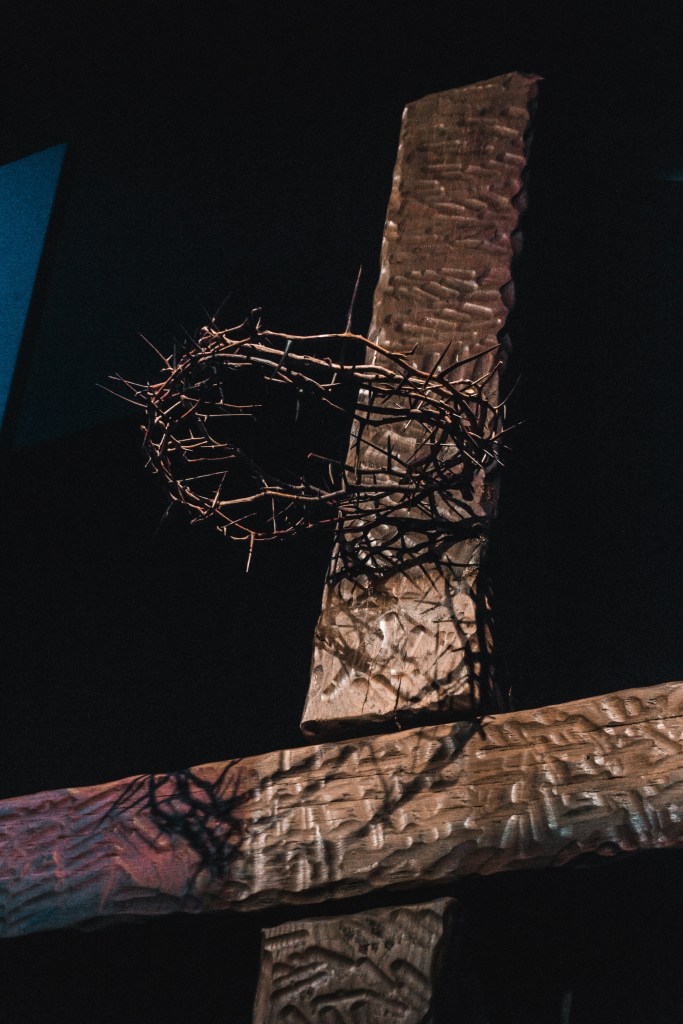
Photo by Ismael Paramo on Unsplash

Yet many slandered Jesus, including saying that He had a demon or that He was doing the devil’s work.  Others hated Him because He was not the kind of Messiah they expected or wanted.  Jesus did not respond in kind, fighting fire with fire, but He kept doing what His Father told Him to do: live the perfect life so that He could be our role model, but more importantly so He could be the perfect sacrifice for our sins.  He loved even those who hated Him, expecting nothing in return.

At the time Peter was writing, Christians faced a lot of opposition, and widespread, official persecution under Nero was coming very soon.  Christians were called disloyal citizens for refusing to participate in the cult of Caesar, cannibals[1], dangerous to the economy[2], and more.  As Jesus was treated, so are His people, for He said, “A servant is not greater than his master.’ If they persecuted me, they will also persecute you.[3]  Christians still face opposition today, and what should we do?

Following God’s commands and Jesus’ example results in “good deeds” that cannot be denied by outsiders, and the ability to love even our enemies is a powerful testimony to a world that doesn’t think that way.  When our faith benefits others, Jesus’ impact on our lives may become undeniable even to outsiders, but just as when Jesus was here, the world is happy to accept His benefits but reject His lordship.  The world will hate us for claiming another Lord and for not hating the enemies they want us to hate.  So, as Peter wrote:

Keep your conduct among the Gentiles honorable, so that when they speak against you as evildoers, they may see your good deeds and glorify God on the day of visitation.”


[1] The Lord’s Supper was misunderstood by many, probably from hearsay and rumor rather than firsthand experience.
[2] See Acts 19:23-41
[3] John 15:20

Things God Counts

Fellow travelers,

Are you ever so fearful or anxious about something that you lose sleep about it? Are there things out of your control that you toss and turn over? Maybe it’s so bad that you even cry. If you’re like this, you’re definitely not alone, and in fact, King David struggled with this kind of anxiety.

In Psalm 56, David laments that his enemies are constantly out to get him, and then in verse 8, David wrote about God:

You have kept count of my tossings;
            put my tears in your bottle.
            Are they not in your book?

What David means is that God sees all of our anxiety and every detail about how it affects us.  He counts every time we toss and turn at night.  He counts every tear you cry, and keeps track of them all, because he cares.

This realization causes David to write in verses 10 and 11:

In God, whose word I praise,
            in the LORD, whose word I praise,
in God I trust; I shall not be afraid.
            What can man do to me?

Prayer or any religious practice won’t always cure anxiety, but as long as we suffer, God knows and cares about it.  We can trust Him to provide for us, sometime between now and eternity.

As Paul wrote about the glory of our salvation:

If God is for us, who can be against us?  He who did not spare his own Son but gave him up for us all, how will he not also with him graciously give us all things?[1]

Amen


[1] Romans 8:31b-32

God Loves His Unfaithful People

The story of the prophet Hosea can be a controversial subject.  In only the second verse of the book, we learn that: “When the LORD first spoke through Hosea, the LORD said to Hosea, ‘Go, take to yourself a wife of whoredom and have children of whoredom’” (Hosea 1:2a).

A common interpretation of the “wife of whoredom” is “prostitute,” but it doesn’t necessarily mean that.  However, it certainly means a wife who is not faithful to her husband.  An adulteress, as Hosea’s wife Gomer is described in Hosea 3:1.  Gomer has 3 children in the story, and the last 2 may have been illegitimate.

Is it scandalous, is it even believable, that God would command His own prophet Hosea to marry this way?  The God who demands that we be holy.  Could He ask one of His spokespeople to “become one flesh” with a woman like this?  What kind of lesson can we take from this?

It only really makes sense when you realize why God did it.  The full verse of Hosea 1:2 says, “When the LORD first spoke through Hosea, the LORD said to Hosea, ‘Go, take to yourself a wife of whoredom and have children of whoredom, for the land commits great whoredom by forsaking the LORD.’

Photo by Worshae on Unsplash

Because of the word “for,” there’s a connection between the unfaithful wife and the people of the land: God’s people Israel.  It’s as if God commanded this marriage because Israel was unfaithful.  God had something to say about that.  While Hosea’s marriage was real, it was also a symbol meant to give a message: that, like Hosea marrying Gomer, God is willing to love unfaithful people.  After all, there is no other kind of person.  We all fit the description, yet He is willing to love us so much that the church is called the bride of Christ, like Gomer was the bride of Hosea.

While some think God’s command to Hosea is too scandalous to have really happened, it is no more scandalous than God choosing sinners to be His bride in Christ, which He did.  From the beginning of time God knew that His people would be unfaithful to Him, yet He designed and implemented a plan to bring those same people back into a right, intimate relationship with Him.  This plan meant taking on human flesh, being abused, and dying horribly for His people, but then being raised from the dead and taken back up into heaven.  This was the cost of restoring sinners to fellowship with their Maker who loves them.  And He thought it was worth it.

So, what is the lesson of God’s command to Hosea?  That there is no limit to who or how God can love.  Nobody deserves God’s love because all are unfaithful, but in spite of that, God loves His unfaithful people.  Why?  Because in His love He chooses to.

Praise God that He does!

Amen.

The Spirit and the Bride say, “Come.” And let the one who hears say, “Come.” And let the one who is thirsty come; let the one who desires take the water of life without price.” – Revelation 22:17

O Ye of Little Faith

Does it sometimes feel like our faith is useless?  Like it’s not big enough to be effective?  To enable us to trust God?  Also, do we often feel like we should be perfect, but we’re not?  Like sin continues to conquer some areas of our lives, regardless of our best efforts?  In Mark 4, Jesus tells two parables that can reassure us that we shouldn’t lose heart when we feel this way.

The first parable is about how the kingdom of God grows from small, scattered seeds to a full and bountiful harvest.  This short parable has a lot to say, and makes (among others) these two points, just in verse 28: “The earth produces by itself, first the blade, then the ear, then the full grain in the ear.”  Jesus says that from the seed, “the earth produces by itself.”  The phrase “by itself” in the original Greek is automatos, where we get the English word automatic.  Like we don’t know how literal seeds grow, we also don’t know how the seed of the kingdom of God grows, but Jesus tells us that it grows automatically, meaning not by our own effort.  In the life of a believer, faith and obedience to the kingdom of God will grow because God causes it to grow.  When we feel our faith has failed, God can and will use that failure to grow our faith more than we could imagine.

The second point is made by the phrase “first the blade, then the ear, then the full grain in the ear.”  In Jesus’ day, many Jews expected the Messiah to come and immediately implement His kingdom, overthrowing Rome and restoring Israel to its glory days under King David, but better.  However, the phrase “first the blade…” points out that the kingdom of God comes slowly and in stages.  It first comes to individual believers, then spreads to others, then “when the grain is ripe, at once he puts in the sickle, because the harvest has come”(verse 29).

Jesus was referring to the kingdom as a whole, but I believe it also refers to the life and growth of each believer’s faith.  First, our faith is only enough to restore our relationship to God and He grants us salvation by His mercy and grace.  Over time, our faith grows into a “blade,” then an “ear” in the different areas of our lives.  In some ways we may be faithful, but in others we may continue to struggle, even for very long periods of time.  But someday, when “the harvest has come,” He will bring us home and perfect our faith forever in every area of our lives.  When the time comes, the kingdom will come suddenly and completely, but until then it grows slowly, both in aggregate and in each individual.

The second parable is the parable of the mustard seed, one of the smallest seeds.  “When sown on the ground, is the smallest of all the seeds on earth, yet when it is sown it grows up and becomes larger than all the garden plants.”  Again, Jesus is speaking most directly about the entire kingdom of God, but the truth is also lived out in the life of each of us.  Sometimes our faith seems as small as a mustard seed, but that faith is destined to be perfect and complete.  As pointed out in the first parable, it’s not our own effort that causes our faith to grow, but the power of God that causes it to grow “automatically.”  Everyone’s faith seems small at first and also may seem small at different times and in different ways, but like the mustard seed, it’s not the size of our faith in the beginning or now that really matters, it’s what that seed is destined to grow up to be that’s important.  We might not even notice our faith at some times because it seems so small, but the size of our faith is not what matters, it’s the power of the One we have faith in.

So, does your faith seem useless and small today?  Does it seem like you can’t trust God enough to follow Him in every area of your life, or to overcome some habitual sin (or sins)?  Remember that faith as small as the smallest seed, the mustard seed, will grow so that it overcomes all of our failures.  God will cause it to grow, in ways that seem “automatic” to us.  If He has given us any faith at all, He will see the growth of that faith through to the end.  As Paul wrote in Phillipians 1:6, “And I am sure of this, that he who began a good work in you will bring it to completion at the day of Jesus Christ.”

Amen.

God’s Mysterious Sovereignty

Although God isn’t explicitly mentioned in the book of Esther, the story (like everything else in the Bible) is really about Him.  On the surface, the story revolves around the plot of Haman, a key advisor to King Ahasuerus, to have all of the Jews in the kingdom of Persia killed.  Haman was probably already an antisemite, but his fury was inflamed when Mordecai, a Jew, refused to bow down to him.  Before the plot to kill all Jews was able to unfold, we read this in Esther 6:1 –

On that night the king could not sleep. And he gave orders to bring the book of memorable deeds, the chronicles, and they were read before the king.”

What the king read there caused him to favor Mordecai and Esther and write a proclamation that saved the Jews from Haman’s plot.  But was this all mere chance, or was there something, or Someone, else behind it?  Here are some interesting “coincidences” that assure us that God was in control of this situation:

First, King Ahasuerus’ insomnia.  One would think that a king, secure in his position, would be able to sleep well.  But while we don’t know how often he couldn’t sleep, we know that he couldn’t on this specific night, right before Esther was going to make her plea for the Jews.

Also, there are many things the king could have requested to do while remaining awake.  On this occasion, he asked for a specific thing: “the book of memorable deeds, the chronicles.”  We don’t know how much time the king wanted to spend having someone read this book, and how big the book was, but we do know that “it was found written how Mordecai had told about Bigthana and Teresh, two of the king’s eunuchs, who guarded the threshold, and who had sought to lay hands on King Ahasuerus.” (Esther 6:2).  What are the chances that the king would be guided to this exact information?

In addition, the event found in the book happened 5 years earlier, yet the king had not done anything to recognize Mordecai for saving his life (verse 3).  If Mordecai had been rewarded earlier, the king would not feel compelled to do anything at this time.  He might have just moved on to the next part of the “chronicles.”  Instead, the king went into the court to find someone who could help him celebrate Mordecai.  Who should he find but Haman, who intended to tell the king that he had gallows ready to hang Mordecai immediately.  Haman “happened” to be in court at a time when the king would ordinarily been asleep.  Before Haman could deliver his intended message, he instead received God’s intended message.  The king ordered him to parade Mordecai through the city, proclaiming “Thus shall it be done to the man whom the king delights to honor.”  Haman, instead of being triumphant over Mordecai, who he hated, was humiliated.

So, we have this set of circumstances: Ahasuerus’ sleeplessness, his choice of what to do while awake, his servant finding the passage about Mordecai, his delay in rewarding Mordecai, and Haman’s presence in the court.  All of this led to Mordecai’s redemption from the gallows but also set up Esther’s plea to the king the very next day to act to save her people, the Jews.

In this whole story of Esther, God is not mentioned, but could these events have just happened right on time, “at random”?  Earlier in Esther, Mordecai says to her, “And who knows whether you have not come to the kingdom for such a time as this?” (Esther 4:14b). Had it not been for the chain of events I’ve laid out, Esther’s purpose might have failed.  Instead of addressing the king, she could have been mourning her uncle Mordecai’s death on the gallows.  Instead of the Jews being saved, they could have been massacred.  Instead of memorializing these events in the annual festival of Purim, Jews could be mourning the deaths of their people under the Persian empire to this very day.

While He sometimes operates in the background (“the Lord works in mysterious ways” they say), He is operating.  He is intervening for the good of His people.  He is sovereign over all, even the minute details of the lives of those who rule us.  When you doubt this, think of Esther 6:1 –

On that night the king could not sleep. And he gave orders to bring the book of memorable deeds, the chronicles, and they were read before the king.”