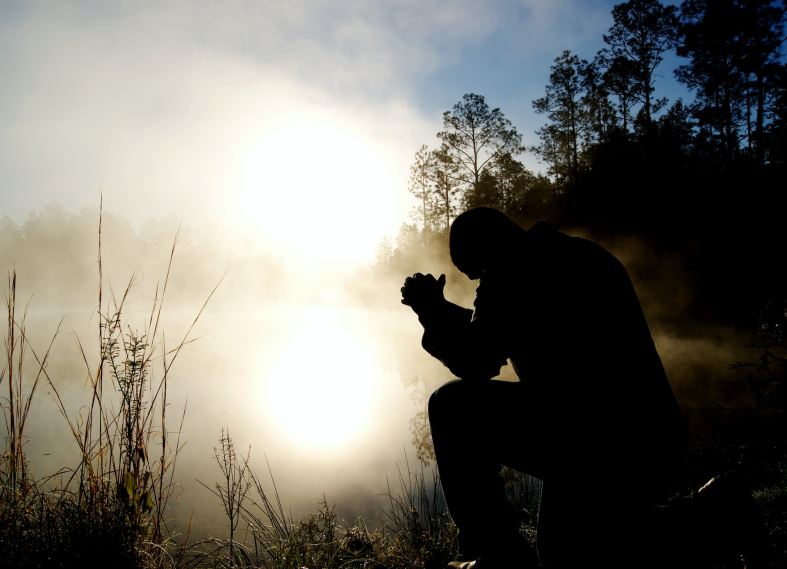
Daily Readings for August 3 – 9

Fellow travelers:

For those looking for a Bible reading plan, each week I post 2 chapters to read per day as a main reading plan, and for anyone who wants to read the whole Bible in 2026, I’ll post the extra chapters to read that week.  The main readings will include nearly all of the New Testament, plus Psalms, Proverbs, Ecclesiastes, the Prophets, and a few other Old Testament books.

Reading 3 chapters a day on weekdays and 4 on weekends almost exactly covers the 1,189 chapters of the Bible, so the “extra” readings will be about 9 chapters per week.  These readings will cover the Pentateuch, the OT histories, a few other OT books, plus Jude and Revelation from the NT.

For the Bible in a year plan, I’m still in Joshua and not sure if I’ll catch up.  I got behind by reading a commentary on the Pentateuch along the way instead of just reading the chapters.

Regardless, I hope this schedule encourages others to read and study their Bible more, whatever parts they decide to read.  Follow along (or not) any way you choose!

2 chapter a day plan:
Monday, August 3: Isaiah 7 – 8
Tuesday, August 4: Isaiah 9 – 10
Wednesday, August 5: Isaiah 11 – 12
Thursday, August 6: Isaiah 13 – 14
Friday, August 7: Isaiah 15 – 16
Saturday, August 8: Isaiah 17 – 18
Sunday, August 9: Isaiah 19 – 20

Extra chapters for those reading the whole Bible in 2026:
2 Samuel 14 – 22

A Blogger’s Wish List

I’ve been writing this blog for over 5 years, and it’s been a great experience.  As a reason for me to more fully consider thoughts I have about God, it’s been a good exercise.  Instead of making a quick note about a verse or idea, having this blog provides an outlet for thinking those things through.  As a way to share with others what I learn about God, it’s also been successful, as the number of readers continues to grow.  (Thank you to all of my readers!). However, there are a few things I wish were a lot better, and here are three examples.

I wish I could interact more with other bloggers
Between job and family responsibilities, I have very, very little time to read other blogs, much less to comment on them or engage with other bloggers.  I subscribe to a bunch of blogs but on a typical day I can only read 1-2 of these (if any).  Retirement is a long way off, but my hope is that I’m still doing this when that happens and that I’ll devote a lot more time to reading and engaging with a lot more Christian blogs.  If I’m not reading and commenting on your blog, I wish I could.

I wish I could finish at least one series I’ve started
I’m much more ambitious when it comes to wanting to write a long blog series than I’m able to finish.  In fact, I haven’t finished a single series I’ve started.  Since I want to post often, it’s a lot easier to write about what’s currently on my mind than to continue a series I’ve started.  So, a wish I have is to complete a long series of posts on one topic.  I’ve started a series on the beatitudes, the songs of ascent, Ebenezers (or instances of “but God…” in the Bible) and others, but haven’t completed any of them.  Maybe I’m supposed to focus on one-shot posts, but I’d like to be able to finish what I start!

I wish I could live up to my blog’s expectations
This will never happen in full until we reach eternity, but my last wish is that I can live up to the life I recommend and encourage on this blog.  I write a lot of “today, do this” type of posts but personally don’t often follow through.  I make a lot of statements about how to better represent Jesus in this world, but in reality, I routinely fail to live that kind of life.  Should this stop me from writing the way I do?  It shouldn’t, but I’m not unaware of the teaching of James 3:1, which says: “Not many of you should become teachers, my brothers, for you know that we who teach will be judged with greater strictness.”  Everything I write on this blog (and do in life) will be judged by God, not to determine my salvation, but to reveal whether I have lived this life as one called to holiness by Christ.  Not an easy task, and this is why Paul tells us to “work out your own salvation with fear and trembling.[1]  This life is not ours to do with as we please, but fortunately we have a God of mercy who saves us and completes the work he began in us[2].

Fellow blog readers and writers, perfection and Christlikeness are not attainable in this world, but that doesn’t mean it shouldn’t be our objective.

May our blogging wishes come true!


[1] Philippians 2:12b
[2] Philippians 1:6

The Scope of Our Need

Today is part 4 of a series on the first Beatitude from Matthew 5:3 – “Blessed are the poor in spirit, for theirs is the kingdom of heaven.

In this post, we begin later in the same chapter as the Beatitudes, where Jesus includes as sin matters of the soul’s inclination, which are entirely internal:

You have heard that it was said to those of old, ‘You shall not murder; and whoever murders will be liable to judgment.’  But I say to you that everyone who is angry with his brother will be liable to judgment; whoever insults his brother will be liable to the council; and whoever says, ‘You fool!’ will be liable to the hell of fire.” – Matthew 5:21-22
You have heard that it was said, ‘You shall not commit adultery.’ But I say to you that everyone who looks at a woman with lustful intent has already committed adultery with her in his heart.” – Matthew 5:27-28

Some people say that what is done in private, either alone or with other “consenting” people, is none of our business.  “Who does it hurt?” they say.  In the Sermon on the Mount, Jesus tells everyone that He cares about what they do, in public and in private.  Even within themselves.  He is not saying this to embarrass anyone, but to break down their spiritual pride and lead them to depend on Him.  To Jesus, intent makes us spiritually poor as much as action does.  Sin is not a matter of consequence; it is a matter of conscience.  It includes not only the action, but the inclination to the action.

But who does it hurt; some might ask?  When excluding from our definition of sin things that other people don’t see, we may be tempted to turn faith into performance art, like the scribes and Pharisees, who “do all their deeds to be seen by others. For they make their phylacteries broad and their fringes long, and they love the place of honor at feasts and the best seats in the synagogues and greetings in the marketplaces and being called rabbi by others.”[1]  Those “ashamed” from Monday’s post who come to church looking for compassion will only feel alienated unless they join in the performance.

If only public righteousness matters, the pressure of keeping up appearances can mean that internal sins – though just as important as external sins that have obvious consequences – remain private and un-dealt with, keeping us from relying on Jesus to restore the joy of our salvation!  Compensating for guilt, and the pressure of managing expectations, become primary drivers of action rather than the guidance of the Spirit, and the fruit of the Spirit is nowhere to be found.    When we know we are not really changed and are failing, we may try to hide it to keep up appearances.  We harbor guilt and bitterness and become unable to accept ourselves and love others.

Instead, testimony of our brokenness is an essential part of Christian witness.  In his letters, the Apostle Paul repeatedly mentions his own past because it highlights the grace of God and power of Christ in redeeming him.  Likewise, those connected to Christ must confess their brokenness openly and ask His help.  Hiding our brokenness – keeping it private (sometimes even trying to keep it from Him) – obscures the power and necessity of the gospel from those who need to hear and understand it, and also keeps us from experiencing its power in our souls.  If we do not count as brokenness things where we do not see the consequence, we keep Jesus at a distance and the kingdom of heaven will not rule us.  Who does it hurt?  Well, us to begin, but also those around us who we love less as a result of hidden, secret sin.

Humanity’s need is spiritual, and our brokenness comes from the inside, not the outside.  From conscience, not consequence.  When humanity denies that brokenness is an internal, sometimes hidden, problem, it will face only the symptoms of the problem, and with the wrong prescriptions.  External forces cannot fix our internal inclinations and will tend toward the original sin of Adam and Eve, seeking the tree of wisdom in the garden that seems to offer an alternate way of governing ourselves.  Any laws, including some forms of religion, or systems of coercion will not fundamentally change us, but may provide an appearance of doing so, or worse, an incentive for a harsher system of coercion.  When coercion isn’t working, and spiritual solutions are denied, greater coercion often follows.  Unless we know we are broken, and how we are broken, we refuse the solution offered by the kingdom of heaven and remain lost looking for an alternative that does not exist[2].

We must not accept anything less than Christ’s righteousness.  But we must accept Christ’s righteousness at our very core.  Only the power of the gospel – the good news of the kingdom of God – can make straight what is crooked at its very internal, often secret, root[3].

And there is salvation in no one else, for there is no other name under heaven given among men by which we must be saved.” – Acts 4:12 “Blessed are the poor in spirit, for theirs is the kingdom of heaven.” – Matthew 5:3


[1] Matthew 23:5-7
[2] I’m not advocating for anarchy or libertarianism or any particular form of government but pointing out that what a society thinks its government can, and should, do reflects that society’s view on what it expects government to solve.
[3] Ecclesiastes 1:15 and 7:13

Not a Matter of Degree

Today is part 2 of a series on the first Beatitude from Matthew 5:3 – “Blessed are the poor in spirit, for theirs is the kingdom of heaven.”  Today’s post highlights that seeing our spiritual condition as a matter of degree or magnitude, rather than as absolute spiritual poverty, keeps us from seeing, accepting, and experiencing Jesus as He is.

We’ll focus on this passage from Mark 10:17-22:

And as He was setting out on His journey, a man ran up and knelt before Him and asked Him, ‘Good Teacher, what must I do to inherit eternal life?’  And Jesus said to him, ‘Why do you call me good? No one is good except God alone.  You know the commandments: ‘Do not murder, Do not commit adultery, Do not steal, Do not bear false witness, Do not defraud, Honor your father and mother.’’  And he said to him, ‘Teacher, all these I have kept from my youth.’  And Jesus, looking at him, loved him, and said to him, ‘You lack one thing: go, sell all that you have and give to the poor, and you will have treasure in heaven; and come, follow me.’  Disheartened by the saying, he went away sorrowful, for he had great possessions.

Did Jesus tell this man that he only needed to do more, or to work harder, to earn eternal life?  Was this man rich in spirit, nearly blessed, and just shy of the kingdom of God?  The first Beatitude and yesterday’s post would suggest not, but how then does this story make sense?

A key to this is Jesus’ first response to the man, which questioned the man’s own premises, and revealed he was not “negotiating in good faith.”  After Jesus’ response, instead of saying “if only God is good, why am I chasing eternal life in my own work?” this man persisted in seeking to earn his way.  Jesus knew the man’s heart was set, and in a way was saying “you know the law, what do you need Me for?”  The man did not see Jesus for who He is – the One who offers Himself.

The man was looking for help on the way he had predetermined for himself; he was not looking for the Way that Jesus offered.  He wanted a God who helps those who help themselves, but that’s not who God is.  In the same way that Jesus does not want us to literally cut off a hand or foot, or gouge out an eye, to avoid sin (Mark 9:43-47), neither does He mean that selling all his goods will save this man.  He “went away sorrowful.”

Warren Wiersbe wrote: “Of all the people who ever came to the feet of Jesus, this man is the only one who went away worse than he came. And yet he had so much in his favor!”  But because he did not know he was poor in spirit, he left without either the kingdom of God or the blessing of Christ.

What exactly does Christ offer?  The infinite and perfect righteousness required for entering eternal life!  He is the only one who ever earned the title of Christian; everyone else gets it by His merit, by His grace, through faith.  99.9% righteous does not count because infinity is the target and insisting on working for that last 0.1% only keeps us from accepting the gift.  Also, if we think we are 67% righteousness, but doing better than someone we see as 66% righteousness, we misunderstand what righteousness is.  Conversely, if our 67% righteousness makes us miserable compared with someone else’s 75%, we misunderstand grace.  It’s not a matter of degree so much as a matter of type, “so that no one may boast.” (Ephesians 2:9)

Any time we ask, “what must I do to inherit eternal life”, we are thinking that what we have, plus some more, is the answer.  Sometimes we are not immediately rebuked but allowed to pursue our own way and eventually realize we’ve become lost.  Sometimes, like this man, we are gently rebuked but refuse to listen.

For the wages of sin is death, but the free gift of God is eternal life in Christ Jesus our Lord.” – Romans 6:23
Blessed are the poor in spirit, for theirs is the kingdom of heaven.” – Matthew 5:3

All this man needed to do was accept the work of Christ on his behalf, but he could not admit his poverty.  And it’s all we need to do.

Blessed are the Poor in Spirit

This week I’m reposting a series on the first of the Beatitudes, the series of statements at the beginning of Jesus’ Sermon on the Mount that each begin with “Blessed are…”   The first Beatitude is Matthew 5:3 – “Blessed are the poor in spirit, for theirs is the kingdom of heaven.”    Today’s angle on it is how the statement addresses different people’s needs in such a simple way with only a few words.  This was the opening of a speech to great crowds that had followed him, crowds with all sorts of people.

The Greek word for “poor” in the Beatitude is a word suggesting one who has been reduced to begging.  They have nothing of their own and are entirely dependent on others.  Some in the crowd, who I’ll call “proud” would have felt rebuked, thinking their own works made them blessed, and might have been shocked to be compared with a beggar.  Others in the crowd I’ll call “ashamed” of their own works would have been comforted that they are blessed since they didn’t feel they measured up to the achievements of the proud.  They knew they were poor, but not blessed.  The proud think they’re ok because of what they’ve accomplished; the ashamed think they aren’t ok because their accomplishments seem smaller.  The “proud” and “ashamed” were both in need of good news.

Note that I did not contrast “proud” with “humble”, because I don’t think these are opposites.  Instead, humility is contentedness in our proper place before God and others.  The “proud” become humble when Christ rebukes them so that they can experience His blessing.  The “ashamed” become humble when Christ reassures them of His love and acceptance so that they can experience His blessing.

Photo by Aaron Burden on Unsplash

The first beatitude reminds everyone listening to Jesus that acknowledging our spiritual poverty is the first step in a process, but also that being poor is not incurable.  Knowing we are poor in spirit may actually be desirable, but only when paired with knowledge of His provision.  The more we realize our need and beg Him for the solution, the more He can, and will, bless us.  The crowds coming to hear Him needed to hear this Beatitude first of all because if anyone refuses to be humble before Christ, the rest of His speech won’t matter.  The kingdom is not for them (at least not yet).

In Christ, we are blessed because He is infinitely rich in spirit.  However, sometimes our pride or our shame prevent us from knowing that we are blessed!  Then when we lack hope in that blessing, we miss our King’s will for us in His kingdom.  We can’t be good enough, and don’t have to be good enough, and we don’t have be better or worse than anyone else.

Today the Great Physician waits to cure you if you will come and be humbled by Him.  Seek His blessing and His will.