Marlboro Man Needs the Gospel

Marlboro Man was a character used to advertise Marlboro cigarettes starting in 1954.  He became a cliché of a rugged man, often shown on horseback with a cowboy hat and some rope, confidently smoking a cigarette, and was portrayed by several different actors until 1999.  However, the origin of this famous ad campaign isn’t as well known.

Before the manly Marlboro Man manifested in 1954, Marlboro was sold as a feminine cigarette, with a red-colored filter at the tip.  Ads had phrases like “Ivory Tips Protect the Lips,” and touted that lipstick on the cigarette wouldn’t matter since it was red anyway.  But later, when the health risks of cigarette smoking came to light, Philip Morris & Co. wanted to sell Marlboro to men on the idea that filters made smoking “safer.”  However, given Marlboro’s feminine image – created through advertising – Philip Morris had to overcome that connotation, so the red tips were removed, and Marlboro Man was born as a way to sell Marlboro cigarettes to men concerned about lung cancer and other health risks.

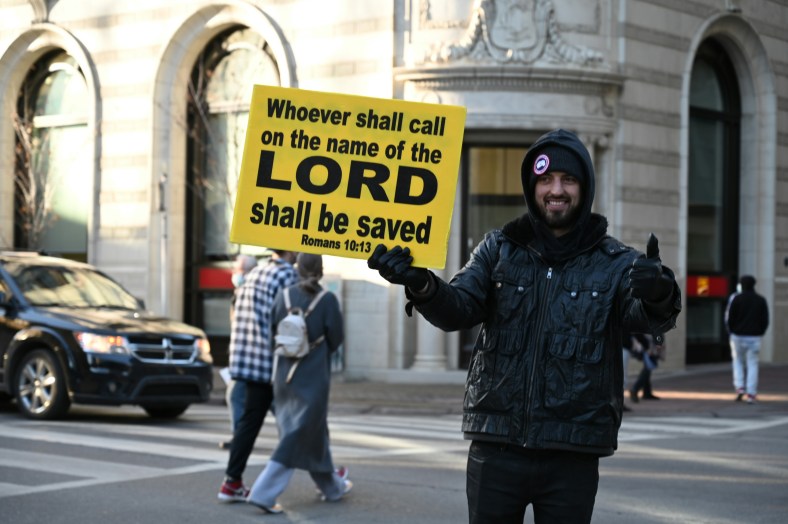
Marlboro Man ad on a Warsaw, Poland building.

With hindsight, we know that filters don’t make smoking safer.  Ironically, and sadly, five different men who appeared in Marlboro advertisements died of smoking-related diseases, earning Marlboro cigarettes the nickname “cowboy killers.”[1]

Also with hindsight, we can see the massive power of advertising to shape our perceptions.  The Marlboro Man campaign is considered in the ad industry to be one of the best of all time, changing a “feminine” product into one of stereotypical masculinity almost overnight.  But the campaign also shows us that “There is a way that seems right to a man, but its end is the way to death”, as Proverbs 14:12 and 16:25 say.  In this case, it was very literal death in this world.

To make Philip Morris money, the ads declared that smoking was not a “way to death,” but that it was “right to a man” to be like the Marlboro Man.  It’s not entirely unlike the line “the greatest trick the Devil ever pulled was convincing the world he didn’t exist,” which was spoken by Kevin Spacey’s character in the 1995 movie, The Usual Suspects.  This line was a paraphrase of a line at least as old as the 1850’s.[2]

I recently heard a sermon where the pastor said, “the culture is trying to kill you,” and I don’t think it was an exaggeration.  Just as Marlboro ads first convinced people it was a feminine product, then turned on a dime to convince people it was a masculine product, without any real change to what was being sold, we’re all bombarded by dangerous messages every day, and many will only be seen in the broader culture as dangerous with the benefit of hindsight.  Smoking used to be considered normal.

I’m not writing this to condemn smokers, because we all have our bad habits, but to spotlight the importance of an eternal perspective.  Any culture is limited to the perspective of its leaders in that time and circumstance, and the pull of peer pressure is real.  Every culture in this world has “a way that seems right to a man, but its end is the way to death,” but also every culture needs the gospel more than it needs effective advertising campaigns.

Therefore, as the apostle Peter wrote in 1 Peter 3:8-9 – “Finally, all of you, have unity of mind, sympathy, brotherly love, a tender heart, and a humble mind.  Do not repay evil for evil or reviling for reviling, but on the contrary, bless, for to this you were called, that you may obtain a blessing.”

Marlboro Man needs the good news of the gospel, not condemnation.


[1] https://en.wikipedia.org/wiki/Marlboro_Man
[2] https://quoteinvestigator.com/2018/03/20/devil/

Sometimes Life is Hard on Purpose

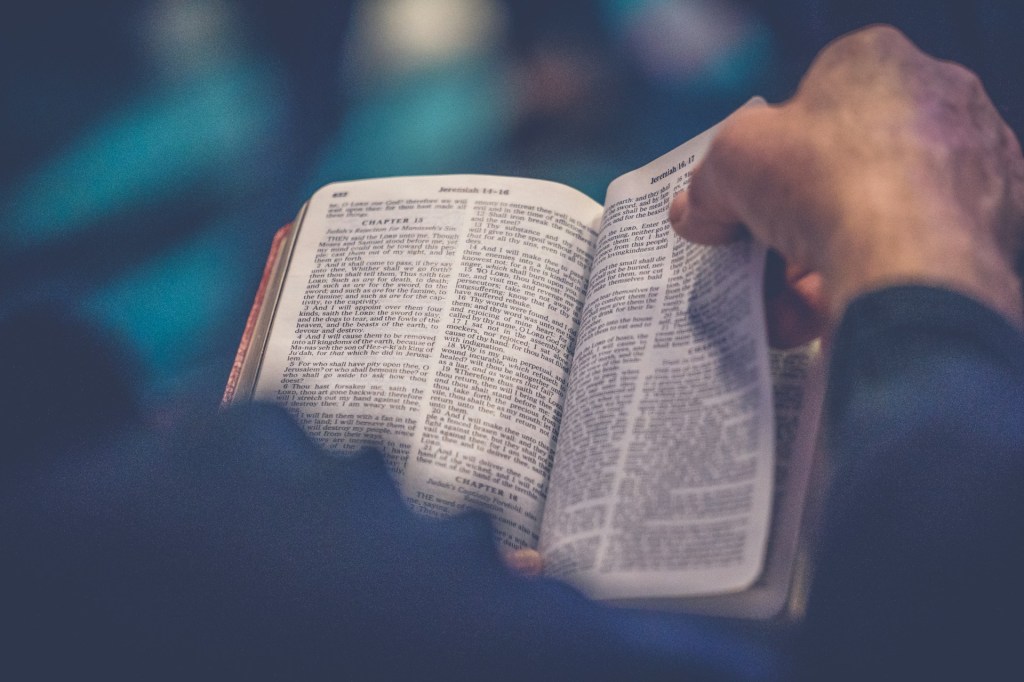
Photo by ål nik on Unsplash

Joshua, Moses’ hand-picked successor, was very aware of the consequences of failing to trust God.  After being delivered from Egypt, Israel was led to Canaan – their promised land – and God had Moses “Send men to spy out the land of Canaan, which I am giving to the people of Israel.[1]  The purpose of the spy mission was not to decide whether or not to move into the land.  God promised to give it to them.  However, when the 12 spies returned, 10 of them said “We are not able to go up against the people, for they are stronger than we are.[2]  Only Joshua and Caleb said they should take the land anyway, because God’s promise and strength was enough for them.  Because the people rebelled, trusting 10 disloyal spies rather than Him, God said Israel must wander the wilderness for years and only Joshua and Caleb would live long enough to enter the land.

After taking 40 years to make what could have been an 11-day journey[3] to the Jordan River where Israel would enter the land, God knew, and Joshua knew, that divided loyalties could doom everyone to another 40-year wilderness adventure.

Arriving at the flooded Jordan River, some people may have doubted whether Joshua could get them across.  Joshua had just become their leader, and perhaps the failure of Moses, who recently died, meant the failure of their dreams of the promised land.  After all, they saw the Red Sea part for Moses.  Could Joshua get them over this river?

Then in Joshua 3:15 we find this note: “(now the Jordan overflows all its banks throughout the time of harvest)”.  Why is this phrase important?  Israel arrived at the Jordan at the most difficult time to cross.  The river would be as deep and as wide as ever, and likely the current would be stronger as well.  A sensible person would avoid crossing at this time, but God chose the most “difficult” time to perform this miracle to show that nothing is difficult for Him.  This phrase is there because entering the promised land should glorify God and God alone.

By coming to the Jordan specifically when it “overflows all its banks” God wanted to remind His people that only He can and will deliver them.  The Red Sea wasn’t parted because of Moses; it was parted because of God.  God could deliver Israel without Moses, but Moses couldn’t deliver Israel without God.  It was never about Moses.  Likewise, Joshua wasn’t going to get them to their land; God was.  The flooding gave the people no reason to credit Joshua for their success.

As instructed, this is how they crossed the flooded river: “as soon as those bearing the ark had come as far as the Jordan, and the feet of the priests bearing the ark were dipped in the brink of the water (now the Jordan overflows all its banks throughout the time of harvest), the waters coming down from above stood and rose up in a heap very far away, at Adam, the city that is beside Zarethan, and those flowing down toward the Sea of the Arabah, the Salt Sea, were completely cut off. And the people passed over opposite Jericho.  Now the priests bearing the ark of the covenant of the LORD stood firmly on dry ground in the midst of the Jordan, and all Israel was passing over on dry ground until all the nation finished passing over the Jordan.” – Joshua 3:15-17

Joshua was very clear about giving God credit, and it’s a lesson for Christians in all times and places.  When God raises up leaders, He also reminds us that they are but men and tools in His hand.  They are also profoundly fallible.  10 out of 12 human leaders being wrong left Israel wandering for 40 years.  Only God leads anyone to salvation and only when they trust Him alone for it.  He often works through fallen human leaders, raising them up to lead His people, not because He prefers sinful leaders over virtuous ones, but because there is no other kind of person and because He is jealous for His own glory.

Is there a flooded river God wants you to cross?  When we attempt things that only make sense because God told us to do them, we may be more likely to do or witness something that glorifies God and God alone, because only He could do it.

Are there rivers you have crossed in the past?  Like God told Joshua after this crossing to lay memorial stones so they would never forget (see Joshua 4), make sure to keep a record of God’s power and faithfulness in your life.

Sometimes life is hard on purpose.
Sometimes the river is flooded because God wants to show you something awesome.

Therefore, “Be strong and courageous.  Do not be frightened, and do not be dismayed, for the LORD your God is with you wherever you go.” – Joshua 1:9b

[1] Numbers 13:1
[2] Numbers 13:31
[3] Deuteronomy 1:2

Time for a Change 2026 (5 of 9)

Fellow travelers,

Are there small changes you can make to improve your life? Are there small things you are doing that are harmful to you?  Can each of us build a better “liturgy” for our lives over time, step by step? Can we accumulate victories in small battles that help us fight bigger ones?  Over time can we better love God, ourselves, and others?

Instead of making New Year’s resolutions or celebrating Lent, every 40 days I try to make a small, but permanent change in my life habits.  I keep a list of the changes I’ve made or want to make.  This is all voluntary, so I don’t criticize myself for missing a deadline or going back on something.  If I fail at some of the changes, the successful ones still add up to a massive shift over time.  I don’t always do “spiritual” changes, just something small I think will make my life better, permanently.  For example, one of my goals from 2021 was to drink at least 32 oz of water a day, and I still do it (with an occasional miss).

Technically yesterday (June 10th) was the 40th day since the last one, but that’s ok.  I’ll still be making a small change (actually revisiting an old change that didn’t stick), and I invite you to participate.  If you do, keep a record of what you’re changing.  As the months and years pass, hopefully the cumulative change becomes enormous. The next date on the schedule (39 days later) is 7/20/26, and I have a couple of things under consideration for then.  I’ll be posting a reminder at about that time; if you want to participate, start making a list of things you might want to do more or less of, and let’s see what we can accomplish!  This habit of changing habits has been helpful to me and might be to you, even if you have your own way of doing it.

Faithful Affliction

Sometimes the Bible surprises us by explaining things differently than how our natural instincts would like.  In the case of Psalm 119:75, there are two words that we might not think of together:

“I know, O LORD, that your rules are righteous,
            and that in faithfulness you have afflicted me.”

How often do we associate God’s faithfulness with affliction?  Don’t we usually associate it with our blessings?  Yet there it is: “in faithfulness you have afflicted me.”

Earlier, in verse 71, David wrote:

“It is good for me that I was afflicted,
                        that I might learn your statutes.”

Then he says the benefit he gets from learning this is more than “thousands of gold and silver pieces”. Since we benefit from discipline, would God be unfaithful if He did not discipline us?  Or do we only consider Him faithful when things seem to go well?

My son, do not despise the LORD’S discipline
            or be weary of his reproof,
for the LORD reproves him whom he loves,
            as a father the son in whom he delights.” – Proverbs 3:11-12

He is faithful, always.  Even in affliction.  Perhaps especially.

From the Ruins of Rome

I really enjoy travelling when I can and one of my favorite places is Bath, England, which I’ve visited twice.  Bath is almost a 3-hour drive west of London and a great place to spend a weekend.  The relatively consistent Georgian architecture in the city is amazing, there are lots of interesting shops to visit, including along the Pulteney Bridge, and certainly a lot of history.  What the city is really known for, and what it is named for, are the Roman Baths that have been there for about 2,000 years.

A photo of the Roman Baths I took in 2022.

Built by the Romans around AD 60 and in use until about the 5th century, the Roman Baths are a symbol of the geographical breadth and technological achievement of the Roman Empire, the greatest civilization the world had ever seen.  Britain was about as far away from Rome one could go and still be in the Empire, and the city was almost like a resort for Roman soldiers to help them deal with being stationed so far from home.  The Romans believed the hot waters of the baths contained magical blessings from the goddess Sulis, and much later in the Victorian Era, the British would drink the hot spring water believing it had healing properties.

The baths themselves were an impressive engineering accomplishment for the time.  In addition to a complex series of baths and springs, a temple was built alongside to facilitate the worship of Sulis and other gods.  One of the most amazing things you learn when visiting the baths is that many of the pools were lined by the Romans with interlocking copper tiles, and that many of these are still waterproof today!

But, as great as Rome was, and the baths were, it is now just ruins.  The gods worshiped at the baths are mostly forgotten by the modern world.  Over time, the Roman Baths were completely abandoned and buried, only rediscovered centuries later.  The springs were used in the early 1700s, but much of what we can now see of the Roman Baths was not excavated until the late 1800s and early 1900s, but they remain in ruins.

The view of the Abbey from the Baths in 2022.

What I like better about visiting Bath is what you see when you look up from the Roman Baths: Bath Abbey, one of my favorite buildings.  Like the stone from Daniel’s vision that destroyed the image of this world’s kingdoms and “became a mountain that filled the while earth[1], the Abbey to me symbolizes the expansion of God’s eternal church, and when you look up at the Abbey from within the baths, it almost seems to have risen right out of the ruins.

Mankind likes to celebrate our achievements, our breadth of knowledge and technological achievement, but the view of the Abbey from the ruins of the Roman Baths reminds us that all human civilization will one day be less than ruins.  Even Bath Abbey won’t last forever, but the church it represents will, in a new earth.  God will discard this world, which will “wear out like a garment” and He will “change them like a robe.”[2]  Starting over, God will create a new, perfect world where all of our accomplishments will seem as nothing in comparison, and where we will be able to create even more amazing things as reborn children of God, giving God all the glory.

Until then, thinking of Bath, England reminds me that everything we see here is temporary, no matter how impressive it seems.  That all of our work here should be done for the glory of God, as it will be in heaven.  That everything man accomplishes here won’t last, but that God’s church is eternal.

Amen.


[1] Daniel 2:35
[2] Psalm 102:26