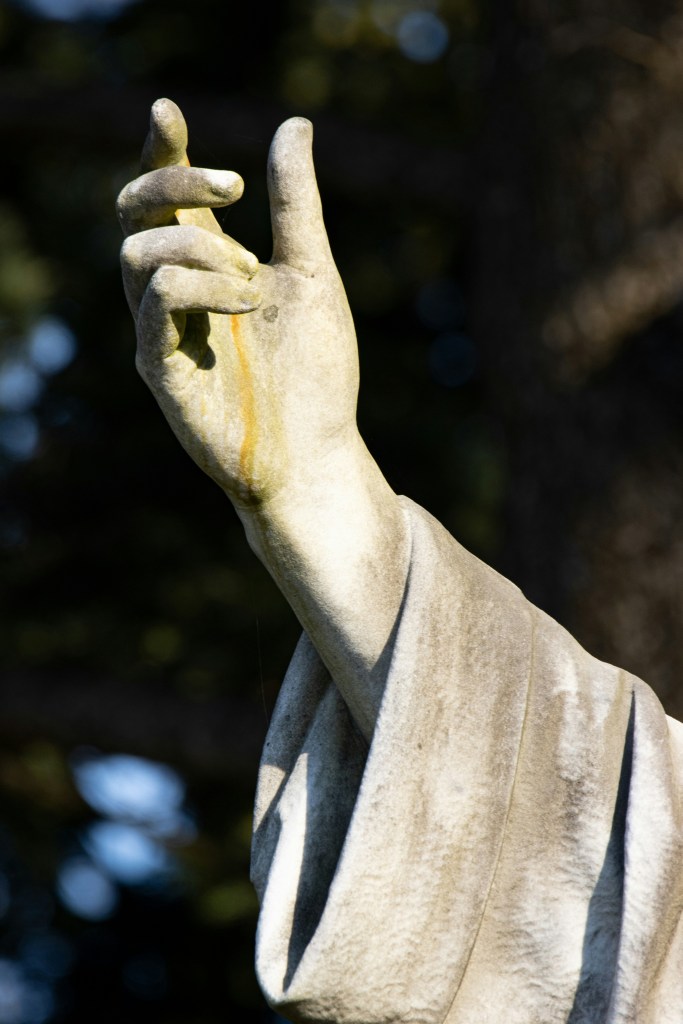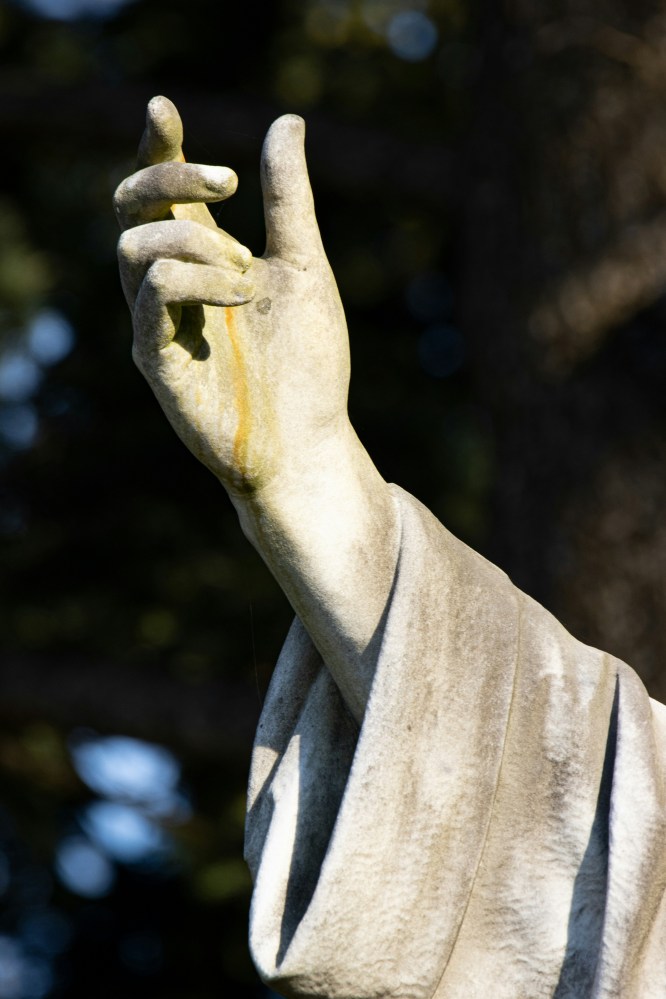
Let God Speak to Your Inner Wilderness

John the Baptist announced the coming of Jesus, baptized Him, and led the way for His ministry to begin.  This John was identified with “The voice of one crying in the wilderness: ‘Prepare the way of the Lord; make his paths straight’”[1] prophesied in Isaiah 40:3-5, which says:

A voice cries: ‘In the wilderness prepare the way of the LORD;
            make straight in the desert a highway for our God.
Every valley shall be lifted up,
            and every mountain and hill be made low;
the uneven ground shall become level,
            and the rough places a plain.
And the glory of the LORD shall be revealed,
            and all flesh shall see it together,
            for the mouth of the LORD has spoken.’”

Is Isaiah talking about a massive, miraculous geological event, creating an easier route for Jesus to take to His kingdom?  Perhaps in the future something like this will happen, but I think Isaiah is saying that God’s power over nature is a symbol of His power to reform and perfect us into the character of His Son Jesus.

Before Jesus comes into our lives, we are a spiritual wilderness full of uneven ground and rough places.  The path of our salvation begins in this wilderness, an unorganized chaos of thoughts and desires.  We are like “children, tossed to and fro by the waves and carried about by every wind of doctrine, by human cunning, by craftiness in deceitful schemes.”  However, the power of the LORD enters our low valleys – our guilty secrets, shame and depression – which will be raised up.  It progresses through our mountains and hills – areas of pride, self-sufficiency, and our desire for power – which will be made low.  God, with the same power that created the universe, removes all obstacles to the coming of His kingdom to us, and to the world.  He has given us His word, His Spirit, and fellow believers to strengthen us, “until we all attain to the unity of the faith and of the knowledge of the Son of God, to mature manhood, to the measure of the stature of the fullness of Christ, so that we may no longer be children, tossed to and fro by the waves and carried about by every wind of doctrine, by human cunning, by craftiness in deceitful schemes.”  (Ephesians 4:13-14)

John the Baptist called his followers to confession and repentance.  In announcing the coming of the kingdom of God, John anticipated a time when our internal and external wildernesses will become a paradise.  Until then, we each have different hills and valleys, different uneven and rough areas.  Until then, the world remains full of false doctrine, cunning, craftiness and deceit.

Today, pray that the powerful voice of our LORD will reach into your wilderness and remove obstacles on the path to His kingdom.  Pray that His word and His Spirit will reveal His glory.  Pray that all believers will answer the call of “the voice of one crying in the wilderness” to build up His church.

Amen.


[1] Isaiah 40:3, quoted in Matthew 4:3.

The Zealot and the Tax Collector

Mark 3:18 lists among Jesus’ 12 disciples “Andrew, and Philip, and Bartholomew, and Matthew, and Thomas, and James the son of Alphaeus, and Thaddaeus, and Simon the Zealot.”

Matthew was a former tax collector for the Roman Empire, while Warren Wiersbe notes that “The Zealots were a group of Jewish extremists organized to overthrow Rome, and they used every means available to advance their cause. The historian Josephus called them ‘daggermen.’ It would be interesting to know how Simon the Zealot responded when he first met Matthew, a former employee of Rome.” They learned to prioritize following Jesus, but I suspect it took some time and patience on Jesus’ part.

No enemy of God is beyond His grace, and no enemy of yours is beyond His grace either!

Photo I took at the entrance to Westminster Abbey in July 2022.

The Tribulation of the Cross, Part 2

When we read Matthew 24:13 – “But the one who endures to the end will be saved” – what do we think of?  I’m currently reading a book about the life of Queen Elizabeth I of England that focuses on her life before becoming Queen, and there is a lot that reminds me of Matthew 24:9-10, which says, “Then they will deliver you up to tribulation and put you to death, and you will be hated by all nations for my name’s sake.  And then many will fall away and betray one another and hate one another.”  Elizabeth’s older sister Mary, a Catholic, pursued often violent methods to purge the country of Protestantism[1], as chronicled in the sensational book, Foxe’s Book of Martyrs[2], which soon became the 2nd most-read book in England after the Bible.  John Foxe listed story after story of Protestants being tortured, burned alive, and persecuted in other extreme ways that sometimes are what we think of reading Matthew 24:13.

But there is more to the context than that.  Matthew 24:11-12 say, “And many false prophets will arise and lead many astray.  And because lawlessness will be increased, the love of many will grow cold.”  This idea of love growing cold is immediately before “But the one who endures to the end will be saved.”  In a martyrdom scenario, enduring is not the same as living, so enduring means something other than staying alive.  So, what does a Christian endure in order to be saved?

When Jesus was on the cross and said “Father, forgive them, for they know not what they do” in Luke 23:34 I believe He was modeling this endurance.  On the cross, the lawlessness of the world had increased to the point where God Himself was abandoned and killed by a populist mob, fueled by a conspiracy of religious and political leaders.  All of Christ’s followers were scattered like sheep without a shepherd, yet He continued to love.  Yet, instead of calling upon an army of angels and freeing Himself from the cross, He forgave.

Matthew quotes Jesus as saying that while lawlessness is increasing, “many false prophets will arise and lead many astray.”  Jesus said in Matthew 24:6 that “you will hear of wars and rumors of wars. See that you are not alarmed, for this must take place, but the end is not yet.”  In opposition to this, false prophets will tell us to be alarmed and they will tell us that there is so much lawlessness that we need to do something other than love God and love our neighbor.  Some of these prophets will claim to be the Christ (Matthew 24:5), but they will insist on a path other than that of the cross.  Perhaps using a Facebook post fed through a heartless algorithm, they will say “The time is coming when good people will have to do bad things to very bad people,” even though Jesus says, “Love your enemies and pray for those who persecute you.”  (Matthew 5:44)

Repeating yesterday’s post, when I’m struggling to face the world as I see it, I ask about John 3:16, “Exactly which world did Jesus love enough to die for?”  The answer is this one.  Not just the part of it I get along with or that I’d pick to be in my Facebook feed if I had full control.  Sometimes bearing our cross is just being willing to love those Christ loved, even when we don’t want to, and even when they hate us as they hated Him.

I praise God that Christ loved me, because I too easily find people I’d really prefer to stay away from, but if Christ had taken that approach, maybe He would have never come down to earth to die for me.

Father, forgive us, for we do not know what we do.  We praise You that You endured to the end for our sake.

Be kind to one another, tenderhearted, forgiving one another, as God in Christ forgave you.” – Ephesians 4:32


[1] At other times and places, Protestants have persecuted Catholics, or each group has fought among themselves.  This is only one example among (sadly) many.
[2] I’m planning a history post for next March 20, the first publication date of this book in 1563.

The Tribulation of the Cross, Part 1

Do you ever get so frustrated with the world that you just want to check out?  I certainly do.  For example, as a blogger who posts to both Facebook and on WordPress, for me it is a lot easier to keep up with WordPress, since I can choose to see only what I want to see.  Facebook, on the other hand, exists to sell advertising and sometimes the best advertising is the kind that sparks emotion – even (or especially) bad emotions.

While Facebook is great for keeping up with friends and family, but sometimes you get lots of posts with statements like one I saw that said, “The time is coming when good people will have to do bad things to very bad people.” There are lots of examples of other sarcastic, angry, and bitter political posts.  Like many, I like to have my comfortable space where I’m in control, and I didn’t want to be on Facebook while knowing they were trying (and, sadly, succeeding) at manipulating my emotions.  I started feeling sarcastic, angry, and bitter, which was by their design.  Sometimes I ask myself why I am even there?

Some surprising advice comes in Philippians 2:6-8, where Paul writes about Jesus that, “though he was in the form of God, did not count equality with God a thing to be grasped, but emptied himself, by taking the form of a servant, being born in the likeness of men.  And being found in human form, he humbled himself by becoming obedient to the point of death, even death on a cross.”  In times when I want to check out from the uncomfortable parts of living in this world, these verses remind me that Jesus, as God, might have taken an attitude of preferring to stay in a comfortable space where He could be in control, but instead He jumped into the mess that is this world we see every day to show the world what love is.

Another verse that calls this to mind is the familiar John 3:16 – “For God so loved the world, that he gave his only Son, that whoever believes in him should not perish but have eternal life.”

When I’m struggling to face the world as I see it, I ask about John 3:16, “Exactly which world did Jesus love enough to die for?”  The answer is this one.  The world He died for is the one where sex, anger, bitter tribalism, and political partisanship sells.  The one with a lot of sarcastic, angry, and bitter people.  The one with a lot of people who are more like us than we’d usually like to admit.  The one where it’s easy for our love to grow cold if we focus on the problems, and not on the cross, where God took the punishment for all of it.

To be continued tomorrow

Daily Readings for May 25 – 31

Fellow travelers:

For those looking for a Bible reading plan, each week I post 2 chapters to read per day as a main reading plan, and for anyone who wants to read the whole Bible in 2026, I’ll post the extra chapters to read that week.  The main readings will include nearly all of the New Testament, plus Psalms, Proverbs, Ecclesiastes, the Prophets, and a few other Old Testament books.

Reading 3 chapters a day on weekdays and 4 on weekends almost exactly covers the 1,189 chapters of the Bible, so the “extra” readings will be about 9 chapters per week.  These readings will cover the Pentateuch, the OT histories, a few other OT books, plus Jude and Revelation from the NT.

This week, if you’re following along with the Bible in a year plan, you’ll finish both the Gospels and the Pentateuch.  We also finish the Psalms this week, and I miss them every year when they’re finished.  Most Psalms are like a helpful prayer guide for me, whereas the Proverbs sometimes feel like a (much needed) lecture.

Regardless, I hope this schedule encourages others to read and study their Bible more, whatever parts they decide to read.  Follow along (or not) any way you choose!

2 chapter a day plan:

Monday, May 25: Psalm 145, John 15
Tuesday, May 26: Psalm 146, John 16
Wednesday, May 27: Psalm 147, John 17
Thursday, May 28: Psalm 148, John 18
Friday, May 29: Psalm 149, John 19
Saturday, May 30: Psalm 150, John 20
Sunday, May 31: Proverbs 1, John 21

Extra chapters for those reading the whole Bible in 2026:
Deuteronomy 34; Joshua 1 – 8