“If Necessary”

All Christians face trials for following Jesus.  These can range from being disregarded or ignored, all the way to physical persecution and even death.  In the face of these trials, Christians can feel targeted or that their trials are unfair.  However, Peter assures us that all the trials we face for Jesus have a purpose.

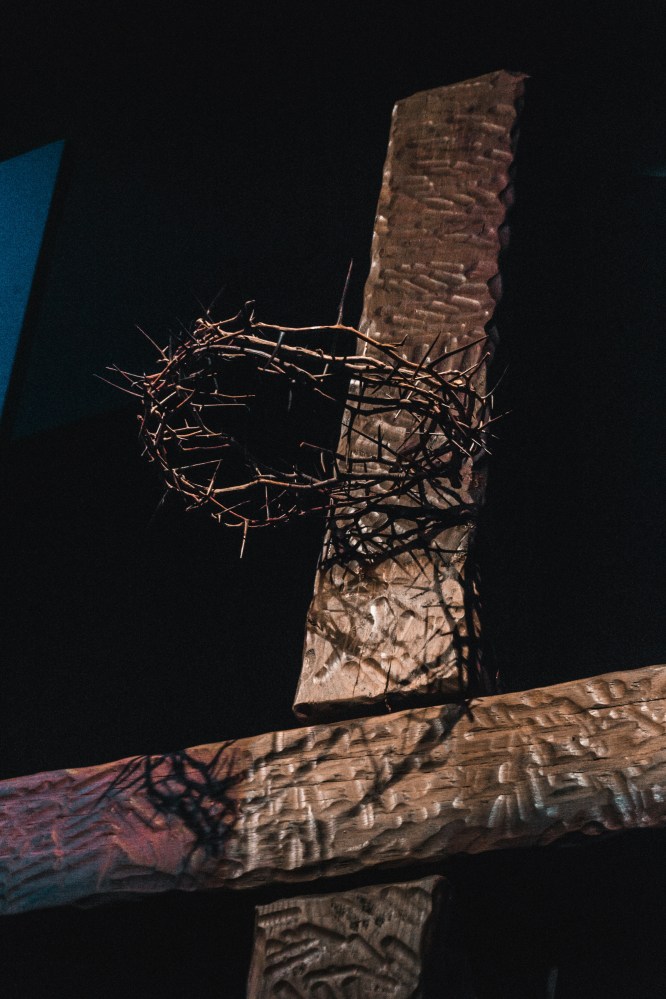
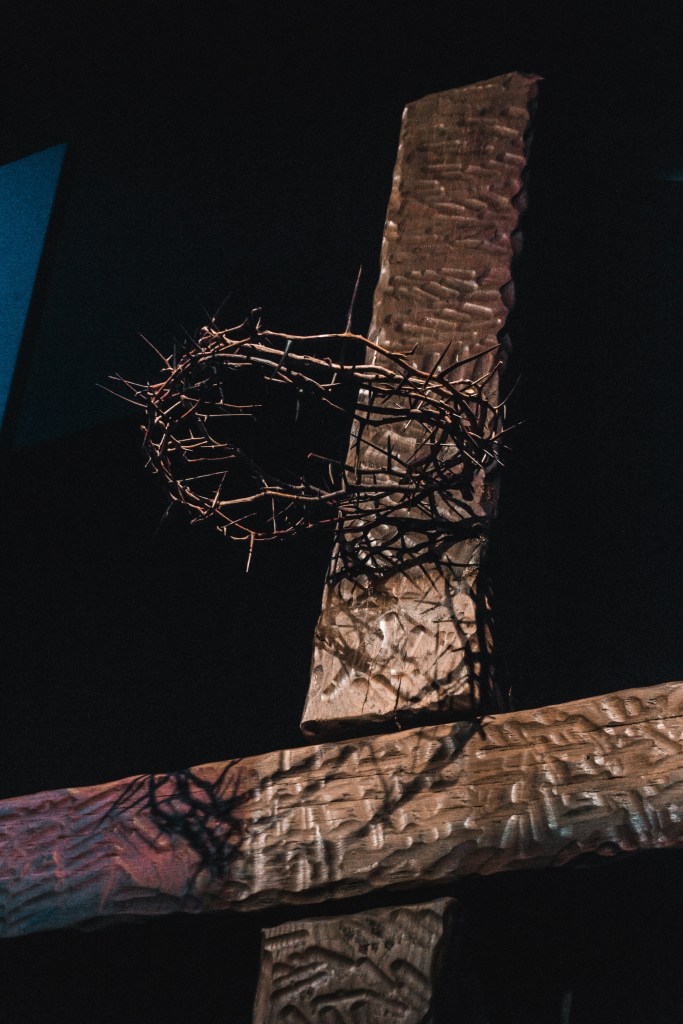
In 1 Peter 1:6-7, he wrote: “In this you rejoice, though now for a little while, if necessary, you have been grieved by various trials, so that the tested genuineness of your faith—more precious than gold that perishes though it is tested by fire—may be found to result in praise and glory and honor at the revelation of Jesus Christ.”

Note the words “if necessary.”  Those words beg the question of what is necessary and who decides that it is necessary?  Do we get to pick and choose our own trials, or would we probably choose to avoid them altogether?  Should we trust ourselves to choose wisely?  If we chose for ourselves, we might pick only trials we’ve already overcome or ones we are sure we can handle, but as Warren Wiersbe wrote: “We must not think that because we have overcome one kind of trial that we will automatically ‘win them all.’ Trials are varied, and God matches the trial to our strengths and needs.”[1]

Fortunately for all of us, God is the one who decides if, when, and why trials are “necessary.”  He decides whether we have trials, and only He knows all of the flaws in our faith and the best way for us to overcome them and grow in faith.  He ensures we face only “necessary” trials that test the “genuineness” of our faith and turn it into something “more precious than gold.”  These trials expose our impurities so that they may be removed.  Because of the words “if necessary,” we can rejoice in our salvation even when going through trials of all kinds.  They aren’t random or meaningless.

Therefore, we can rejoice even in our trials knowing they will “result in praise and glory and honor at the revelation of Jesus Christ.”  Any time we feel “grieved by various trials” we know they are temporary, and they serve God’s purpose for us.

Amen.


[1] Wiersbe, Warren.  Be Hopeful (1 Peter) (1982).  P. 35.

Happy 5th Blogiversary to Driving Toward Morning!

Fellow travelers,

Has it really been 5 years?  May 20, 2021, is the date of the first post, so yes.  Happy Blogiversary to me!

A big thank you to everyone who has been reading along, and especially to those who comment and share!  I don’t know what happened, but somehow after 3 years of hardly any growth, my number of daily readers (according to WordPress’ standard reports) doubled in 2025 and is on pace to almost double again in 2026.  The chart below shows the total visitors (the dark bar) and the total views (the lighter bar) for every calendar year from 2021 to so far this year.  2026 is already the 2nd-most popular year.

Views and popularity aren’t a goal here, but it’s certainly not a negative!  I am very thankful that the things I write about (which are very meaningful to me) are resonating with other people.  When writing, I “consider how to stir up one another to love and good works,”[1] and my hope is to take ideas that are impactful to me and make them impactful to others by sharing them.

A lot has changed in 5 years.  In that time and looking back at prior Blogiversary posts, I’ve learned it’s best not to set goals other than my informal one to try and post something every day.  Using my library of old posts, that really should be attainable, but sometimes life gets in the way, and sometimes I’m just not up to it.  I don’t like continuing to post old stuff if I haven’t written anything new in a while.

But when I think of the growth of viewership, I’m mindful of this story about Charles Spurgeon told by Warren Wiersbe:

“A young preacher once complained to Charles Spurgeon, the famous British preacher of the 1800s, that he did not have as big a church as he deserved.
“How many do you preach to?” Spurgeon asked.
“Oh, about a hundred,” the man replied.
Solemnly Spurgeon said, “That will be enough to give account for on the day of judgment.””

As James wrote, “If the Lord wills, we will live and do this or that.[2]  Only God knows where this blog will go, but above all, I hope to follow where He leads faithfully.

We are not home yet, so let us all keep “driving toward the morning sun.”


[1] Hebrews 10:24
[2] James 4:15

Mercy for Mephibosheth

The English writer Samuel Johnson noted that “the true measure of a man is how he treats someone who can do him absolutely no good.”  There is a great example of this in the story of King David and Mephibosheth in the book of 2 Samuel.

Before becoming king, David had a deep friendship with Jonathan, the son of King Saul who despised David and persistently tried to kill him.  In response, David did not try to kill Saul, but relied on God to keep his promise that David would become king and eventually Saul was killed in battle against the Philistines.  Soon after, David was anointed king and surprisingly asked: “Is there still anyone left of the house of Saul, that I may show him kindness for Jonathan’s sake?[1]  Mephibosheth, a lame son of Jonathan, was found, given Saul’s land and servants to work it, and also given a place at David’s table.

There are at least 3 ways David’s treatment of Mephibosheth did David no good from a worldly perspective:

  • It was typical for kings to wipe out the entire family of political rivals to remove any threats from claims to the crown.  David, showing mercy to Mephibosheth instead, took a risk by keeping a descendant of Saul alive.
  • Mephibosheth, lame in both feet, was limited in what service he could offer to David.  He was not a great warrior and otherwise had little to offer David.  However, David had mercy on him because of his love for Mephibosheth’s father Jonathan, not because of what he could get in return.
  • David restored Saul’s land to Mephibosheth, land that David could have kept for himself.  Instead, David fed Mephibosheth from his own possessions for the rest of his life.  Mercy for Mephibosheth had an economic cost to David.

While from this worldly perspective David might seem foolish, from an eternal perspective he was wise, foreshadowing the teaching of Jesus in Matthew 5:43-45 –

You have heard that it was said, ‘You shall love your neighbor and hate your enemy.’  But I say to you, Love your enemies and pray for those who persecute you, so that you may be sons of your Father who is in heaven. For he makes his sun rise on the evil and on the good, and sends rain on the just and on the unjust.”

Are there Mephibosheths in our lives who could be shown mercy, regardless of the worldly impact on us?


[1] 2 Samuel 9:1

Daily Readings for May 18 – 24

Fellow travelers:

For those looking for a Bible reading plan, each week I post 2 chapters to read per day as a main reading plan, and for anyone who wants to read the whole Bible in 2026, I’ll post the extra chapters to read that week.  The main readings will include nearly all of the New Testament, plus Psalms, Proverbs, Ecclesiastes, the Prophets, and a few other Old Testament books.

Reading 3 chapters a day on weekdays and 4 on weekends almost exactly covers the 1,189 chapters of the Bible, so the “extra” readings will be about 9 chapters per week.  These readings will cover the Pentateuch, the OT histories, a few other OT books, plus Jude and Revelation from the NT.

I hope this encourages others to read and study their Bible more, whatever parts they decide to read.  Follow along (or not) any way you choose!

2 chapter a day plan:

Monday, May 18: Psalm 138, John 8
Tuesday, May 19: Psalm 139, John 9
Wednesday, May 20: Psalm 140, John 10
Thursday, May 21: Psalm 141, John 11
Friday, May 22: Psalm 142, John 12
Saturday, May 23: Psalm 143, John 13
Sunday, May 24: Psalm 144, John 14

Extra chapters for those reading the whole Bible in 2026:
Deuteronomy 25 – 33

Being a Master at Washing Feet

English author Samuel Johnson said, “The true measure of a man is how he treats someone who can do him absolutely no good.”  I recently read The Residence, a book of real stories about White House staff over the years.  In a chapter on how staff often go unnoticed comes this humiliating negative example:

President [Lyndon] Johnson often undressed in front of staffers and was famous for rattling off orders while he was sitting on the toilet.  Once, reporter Frank Cormier was shocked to see Air Force One Steward Sergeant and Valet Paul Glynn kneel before the president while they were in midair and wash his feet – all the more so because Johnson never once acknowledged Glynn.

“Talking all the while, Johnson paid no heed except to cross his legs in the opposite direction when it was time for Glynn to attend to the other foot,” Cormier observed.[1]

When looking for an example of a servant being humiliated, author Kate Andersen Brower chose the washing of feet.  Worse than having someone undressing in front of you and worse than being bossed around from a toilet.

Photo by Felicia Montenegro on Unsplash

Jesus, looking for an example of how his disciples should serve and love each other, chose the same act, but from a different perspective and with a different attitude:

“Jesus, knowing that the Father had given all things into his hands, and that he had come from God and was going back to God, rose from supper. He laid aside his outer garments, and taking a towel, tied it around his waist. Then he poured water into a basin and began to wash the disciples’ feet and to wipe them with the towel that was wrapped around him.” – John 13:3-5

Jesus does not need anything from us, we cannot provide anything He cannot provide for Himself, but He showed us how much He cares by washing His disciples’ feet.  He was willing to experience humiliation for His people, and He asks us to care in the same way:

“For I have given you an example, that you also should do just as I have done to you. Truly, truly, I say to you, a servant is not greater than his master, nor is a messenger greater than the one who sent him.” – John 13:15-16

“The true measure of a man is how he treats someone who can do him absolutely no good.”

Ask Him to give us compassion for those with dirty feet, and to give us the strength to serve as He did.  Because He has washed our dirty feet again and again.


[1] Brower, Kate Andersen.  The Residence: Inside the Private World of the White House.  (2015).  P. 88.