O Ye of Little Faith

Does it sometimes feel like our faith is useless?  Like it’s not big enough to be effective?  To enable us to trust God?  Also, do we often feel like we should be perfect, but we’re not?  Like sin continues to conquer some areas of our lives, regardless of our best efforts?  In Mark 4, Jesus tells two parables that can reassure us that we shouldn’t lose heart when we feel this way.

The first parable is about how the kingdom of God grows from small, scattered seeds to a full and bountiful harvest.  This short parable has a lot to say, and makes (among others) these two points, just in verse 28: “The earth produces by itself, first the blade, then the ear, then the full grain in the ear.”  Jesus says that from the seed, “the earth produces by itself.”  The phrase “by itself” in the original Greek is automatos, where we get the English word automatic.  Like we don’t know how literal seeds grow, we also don’t know how the seed of the kingdom of God grows, but Jesus tells us that it grows automatically, meaning not by our own effort.  In the life of a believer, faith and obedience to the kingdom of God will grow because God causes it to grow.  When we feel our faith has failed, God can and will use that failure to grow our faith more than we could imagine.

The second point is made by the phrase “first the blade, then the ear, then the full grain in the ear.”  In Jesus’ day, many Jews expected the Messiah to come and immediately implement His kingdom, overthrowing Rome and restoring Israel to its glory days under King David, but better.  However, the phrase “first the blade…” points out that the kingdom of God comes slowly and in stages.  It first comes to individual believers, then spreads to others, then “when the grain is ripe, at once he puts in the sickle, because the harvest has come”(verse 29).

Jesus was referring to the kingdom as a whole, but I believe it also refers to the life and growth of each believer’s faith.  First, our faith is only enough to restore our relationship to God and He grants us salvation by His mercy and grace.  Over time, our faith grows into a “blade,” then an “ear” in the different areas of our lives.  In some ways we may be faithful, but in others we may continue to struggle, even for very long periods of time.  But someday, when “the harvest has come,” He will bring us home and perfect our faith forever in every area of our lives.  When the time comes, the kingdom will come suddenly and completely, but until then it grows slowly, both in aggregate and in each individual.

The second parable is the parable of the mustard seed, one of the smallest seeds.  “When sown on the ground, is the smallest of all the seeds on earth, yet when it is sown it grows up and becomes larger than all the garden plants.”  Again, Jesus is speaking most directly about the entire kingdom of God, but the truth is also lived out in the life of each of us.  Sometimes our faith seems as small as a mustard seed, but that faith is destined to be perfect and complete.  As pointed out in the first parable, it’s not our own effort that causes our faith to grow, but the power of God that causes it to grow “automatically.”  Everyone’s faith seems small at first and also may seem small at different times and in different ways, but like the mustard seed, it’s not the size of our faith in the beginning or now that really matters, it’s what that seed is destined to grow up to be that’s important.  We might not even notice our faith at some times because it seems so small, but the size of our faith is not what matters, it’s the power of the One we have faith in.

So, does your faith seem useless and small today?  Does it seem like you can’t trust God enough to follow Him in every area of your life, or to overcome some habitual sin (or sins)?  Remember that faith as small as the smallest seed, the mustard seed, will grow so that it overcomes all of our failures.  God will cause it to grow, in ways that seem “automatic” to us.  If He has given us any faith at all, He will see the growth of that faith through to the end.  As Paul wrote in Phillipians 1:6, “And I am sure of this, that he who began a good work in you will bring it to completion at the day of Jesus Christ.”

Amen.

Fighting Our Passions

The Christian life is hard.  From a worldly point of view the Christian life is unnatural, and when given a choice, the right one is often the tough one.  As long as we live on this earth, we struggle to please God even when we have already been saved by Jesus through faith.  In 1 Peter 2:11, the apostle wrote about our difficulties:

Beloved, I urge you as sojourners and exiles to abstain from the passions of the flesh, which wage war against your soul.”

There are several important truths in this one verse, but the first is that we can’t ignore “the passions of the flesh” or pretend they don’t exist.  The apostle Paul wrote in Romans 7:18-19, “For I know that nothing good dwells in me, that is, in my flesh. For I have the desire to do what is right, but not the ability to carry it out.  For I do not do the good I want, but the evil I do not want is what I keep on doing.”  In the surrounding verses, Paul separates the spiritual, redeemed part of us from the flesh, or the “sin that dwells within me.”[1]  The sinful flesh wants what it wants and isn’t concerned about what God thinks of it.  Our passions do not have our eternal soul’s destiny in mind, only the near-term reward.  Following the “passions of the flesh” is like saying this world is just fine rather than knowing it is fallen and needs redemption, yet even Christians do it anyway.

3 other parts of the verse are important, and I’ll take them in reverse order.  Peter wrote that these passions “wage war against your soul.”  This means that defeating them won’t be easy; and that the enemy must be taken seriously.  We are soldiers in this war against the flesh and defeat is harmful to our souls.  Once we are redeemed, sin can’t take away our salvation, but it can make our lives miserable, hobble our witness, and even affect our rewards in heaven.[2]  We are all susceptible to different sins, and none of us are immune from any of them.  We must “wage war” against what is at war against our souls.  This is no picnic.

However, Peter encourages us in the other 2 parts of the verse.

First, Peter reminds us that we are “sojourners and exiles.”  We live here, but don’t belong here.  Our time in this world is temporary, and we are just passing through.  People say about our worldly goods that “you can’t take it with you” but what we also won’t take with us are the harmful “passions of the flesh.”  While they are natural to our earthly bodies, they will not be natural to our glorified bodies.  If we grow weary of fighting this war, it helps us to know that the war is temporary.  God will see us through it in His time and help us each step along the way.[3]  We don’t need to give in.

Also, Peter says at the beginning of the verse that we are “Beloved.”  God loves us, and He doesn’t stop loving us because we regularly fail against “the passions of the flesh.”  We remain His “Beloved” even when we sin, because He has chosen to love us, knowing everything about us, past, present and future.  Even after repeated sin, He will not turn away from us.  As Jesus said in John 6:44, “No one can come to me unless the Father who sent me draws him. And I will raise him up on the last day.”  He will always call us back and in the end, He will raise us up.

So, in our battles with “the flesh,” we must remember who we are.  We are beloved by God, we are not of this world, and we are soldiers in a serious battle.  Here, we will fight hard and experience repeated failure, but in eternity we will not fail at all.  We will perfectly reflect the character of Christ.

But in the meantime:

Beloved, I urge you as sojourners and exiles to abstain from the passions of the flesh, which wage war against your soul.”


[1] Romans 8:20
[2] 1 Corinthians 3:15, also the “Parable of the talents” in Matthew 25:14-30.
[3] 1 Corinthians 10:13

“Consider Well Her Ramparts”: Participating in the Psalms

Reading the Psalms is a great devotional habit, and every now and then a Psalm or a section of a Psalm gives instructions to its reader.  The author is inviting us to participate in something about God that they have experienced by taking specific actions.  Earlier posts on participating in the Psalms (here, here, and here) have covered Psalms 96 and 100, which asked us to sing a new song and to give thanks, respectively.  Today’s post is about Psalm 48, which is a little harder to see how to participate.  Most of the Psalm praises God by talking about His city, Jerusalem, and His mountain, Mount Zion.  If our God’s dwelling place is worthy of praise, then He must be as well.  The “participating” part comes at the end, with verses 12-14:

Walk about Zion, go around her,
            number her towers,
consider well her ramparts,
            go through her citadels,
that you may tell the next generation
            that this is God,
our God forever and ever.
            He will guide us forever.

The Psalmist wrote in ancient times that it was worth it to take the time to walk around Zion, to consider the things of God and not just gloss over them quickly, but how do we do that when Christians do not consider Jerusalem and Mount Zion to be the dwelling place of God?  How do we “consider well her ramparts”?

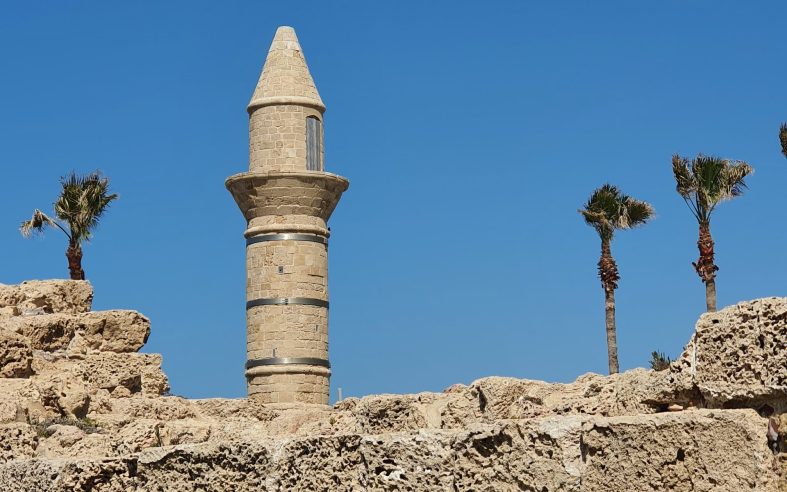
Photo by Boris Izmaylov on Unsplash

Currently, what was represented by the temple in Jerusalem on Mount Zion is represented by His body of believers, indwelt by His Holy Spirit.  Peter wrote that members of the church, “like living stones are being built up as a spiritual house, to be a holy priesthood, to offer spiritual sacrifices acceptable to God through Jesus Christ.”[1]  Therefore, do we participate in this Psalm by considering God’s strength through the church throughout history?  When we consider the “towers”, “ramparts”, and “citadels” of the church, do we consider the great “cloud of witnesses” listed in Hebrews 12, in addition to the faithful members of the church through the centuries since then?

Do we consider well not only the strength God has given His church through history, but also the strength that He protects it with even now?  Do we consider our own “ramparts” – the armor of God listed in Ephesians 6:13-17 –

Therefore take up the whole armor of God, that you may be able to withstand in the evil day, and having done all, to stand firm.  Stand therefore, having fastened on the belt of truth, and having put on the breastplate of righteousness, and, as shoes for your feet, having put on the readiness given by the gospel of peace.  In all circumstances take up the shield of faith, with which you can extinguish all the flaming darts of the evil one; and take the helmet of salvation, and the sword of the Spirit, which is the word of God.

Consideration takes time, so to participate in this Psalm take some time, if not today then soon, to consider God’s strength as shown through a person in the Bible, in church history, or even your own community or family.  Praise God for His strength and protection over His faithful!

As the “Sons of Korah” who wrote Psalm 48 believed, it’s worth the time and effort to:

Walk about Zion, go around her,
            number her towers,
consider well her ramparts,
            go through her citadels,
that you may tell the next generation
            that this is God,
our God forever and ever.
            He will guide us forever.

Many of this blog’s posts on History (click here) are a decent starting point.


[1] 1 Peter 2:5

God’s Mysterious Sovereignty

Although God isn’t explicitly mentioned in the book of Esther, the story (like everything else in the Bible) is really about Him.  On the surface, the story revolves around the plot of Haman, a key advisor to King Ahasuerus, to have all of the Jews in the kingdom of Persia killed.  Haman was probably already an antisemite, but his fury was inflamed when Mordecai, a Jew, refused to bow down to him.  Before the plot to kill all Jews was able to unfold, we read this in Esther 6:1 –

On that night the king could not sleep. And he gave orders to bring the book of memorable deeds, the chronicles, and they were read before the king.”

What the king read there caused him to favor Mordecai and Esther and write a proclamation that saved the Jews from Haman’s plot.  But was this all mere chance, or was there something, or Someone, else behind it?  Here are some interesting “coincidences” that assure us that God was in control of this situation:

First, King Ahasuerus’ insomnia.  One would think that a king, secure in his position, would be able to sleep well.  But while we don’t know how often he couldn’t sleep, we know that he couldn’t on this specific night, right before Esther was going to make her plea for the Jews.

Also, there are many things the king could have requested to do while remaining awake.  On this occasion, he asked for a specific thing: “the book of memorable deeds, the chronicles.”  We don’t know how much time the king wanted to spend having someone read this book, and how big the book was, but we do know that “it was found written how Mordecai had told about Bigthana and Teresh, two of the king’s eunuchs, who guarded the threshold, and who had sought to lay hands on King Ahasuerus.” (Esther 6:2).  What are the chances that the king would be guided to this exact information?

In addition, the event found in the book happened 5 years earlier, yet the king had not done anything to recognize Mordecai for saving his life (verse 3).  If Mordecai had been rewarded earlier, the king would not feel compelled to do anything at this time.  He might have just moved on to the next part of the “chronicles.”  Instead, the king went into the court to find someone who could help him celebrate Mordecai.  Who should he find but Haman, who intended to tell the king that he had gallows ready to hang Mordecai immediately.  Haman “happened” to be in court at a time when the king would ordinarily been asleep.  Before Haman could deliver his intended message, he instead received God’s intended message.  The king ordered him to parade Mordecai through the city, proclaiming “Thus shall it be done to the man whom the king delights to honor.”  Haman, instead of being triumphant over Mordecai, who he hated, was humiliated.

So, we have this set of circumstances: Ahasuerus’ sleeplessness, his choice of what to do while awake, his servant finding the passage about Mordecai, his delay in rewarding Mordecai, and Haman’s presence in the court.  All of this led to Mordecai’s redemption from the gallows but also set up Esther’s plea to the king the very next day to act to save her people, the Jews.

In this whole story of Esther, God is not mentioned, but could these events have just happened right on time, “at random”?  Earlier in Esther, Mordecai says to her, “And who knows whether you have not come to the kingdom for such a time as this?” (Esther 4:14b). Had it not been for the chain of events I’ve laid out, Esther’s purpose might have failed.  Instead of addressing the king, she could have been mourning her uncle Mordecai’s death on the gallows.  Instead of the Jews being saved, they could have been massacred.  Instead of memorializing these events in the annual festival of Purim, Jews could be mourning the deaths of their people under the Persian empire to this very day.

While He sometimes operates in the background (“the Lord works in mysterious ways” they say), He is operating.  He is intervening for the good of His people.  He is sovereign over all, even the minute details of the lives of those who rule us.  When you doubt this, think of Esther 6:1 –

On that night the king could not sleep. And he gave orders to bring the book of memorable deeds, the chronicles, and they were read before the king.”

Barbs in Our Eyes

As Israel was preparing to enter the Promised Land of Canaan after wandering in the wilderness, God gave them many instructions through Moses about how they were to live when they got there.  One of the instructions was to eliminate all of Canaan’s inhabitants.  Part of the warning not to ignore this comes in Numbers 33:55, which says:

But if you do not drive out the inhabitants of the land from before you, then those of them whom you let remain shall be as barbs in your eyes and thorns in your sides, and they shall trouble you in the land where you dwell.”

What this is communicating is the urgency of getting rid of anything that could influence us to sin, and this applies as much to us as to ancient Israel.  In Israel’s case, the nations they were to remove from Canaan were under God’s judgement for centuries of worship of false gods, which included practices like ritual prostitution and child sacrifice.  God knew that His people would be tempted by these foreign gods and practices unless all trace of them was eliminated.

For us, God also wants to protect us from false gods and harmful practices and habits, and the phrase “barbs in your eyes” is a picture of the urgency for us to get rid of anything that would tempt us.  Think about it: If I had a thorn in my eye, I would drop everything and not be able to do anything else until I got it out.  Until the thorn was gone, it would be my one and only priority.  In modern times, God doesn’t tell His people to attack other nations in judgement, but He does want His people to attack sin with the same zeal.

So when I read “But if you do not drive out the inhabitants of the land from before you, then those of them whom you let remain shall be as barbs in your eyes and thorns in your sides, and they shall trouble you in the land where you dwell” it leads me to ask the question:

Do we remove sources of sin from our lives as urgently as we would a barb in our eye?